


Where Exactly Is Cedar Hills?
Cedar Hills is an unincorporated community in Washington County, Oregon, positioned in the eastern portion of the county directly adjacent to the Portland city boundary — bordered by the Portland West Hills residential neighborhoods and Raleigh Hills to the east and southeast, Beaverton to the west and southwest, and the US Highway 26 Sunset Highway corridor defining its northern boundary. The community sits at the base of the Tualatin Mountains, on the flat to gently rolling terrain between the West Hills' eastern rise and the broader Tualatin Valley floor, in a location that gives it immediate access to both the Portland urban core to the east and the Washington County commercial and employment infrastructure to the west.
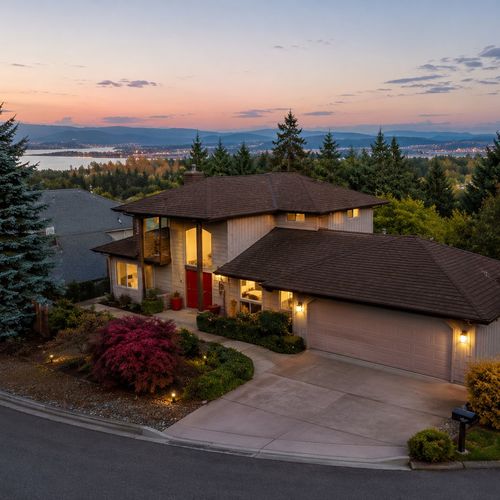
The neighborhood's primary identity is residential — established, owner-occupied, mid-century single-family housing on generous lots beneath mature Douglas firs and deciduous trees that give the community a canopy coverage uncommon in flat suburban neighborhoods at this proximity to a major city. The Cedar Hills Crossing shopping center — one of Washington County's most established retail hubs — anchors the commercial life of the community along SW Cedar Hills Boulevard and provides the retail, grocery, dining, and everyday service infrastructure that makes Cedar Hills function as a self-sufficient residential community rather than a bedroom suburb requiring a drive to another city for routine needs.
Cedar Hills falls within the Beaverton School District — consistently one of the strongest public school systems in Oregon, with academic programming depth, dual-language immersion options, strong extracurricular infrastructure, and the kind of documented performance outcomes that families making school district a primary purchase criterion consistently find at or near the top of their Oregon metro evaluation. The Beaverton School District assignment, combined with Cedar Hills' Washington County property tax structure and its location at the border of Portland's cultural and employment infrastructure, produces the value combination that drives demand in this community across every market cycle and that has made Cedar Hills one of the most consistently competitive residential markets in Washington County for family buyers who have done their homework.
Portland International Airport is approximately 15 to 22 miles from Cedar Hills, typically a 25 to 40 minute drive depending on traffic, time of day, and your specific route. The most direct driving paths run east on US-26 through the Sunset Highway tunnel into Portland and north via I-5 to PDX, or via surface streets connecting to the I-205 corridor east toward the airport. More significantly, the MAX Blue Line runs through Cedar Hills with the Cedar Hills MAX station providing direct light rail connection east toward downtown Portland and west toward Beaverton and Hillsboro — and through the Gateway Transit Center connection, access to the Red Line serving PDX. For residents who prefer transit airport access over driving, the MAX connection from Cedar Hills to PDX is one of the more convenient in the Washington County market, making the airport run a genuine transit option rather than exclusively a driving calculation. For frequent travelers, the combination of a manageable driving distance and a functional transit alternative gives Cedar Hills a PDX access profile that most comparable Washington County communities cannot match simultaneously.
What Your Money Gets You: Homes at Every Price Point
Cedar Hills' housing market is defined by its mid-century residential character — the community was developed primarily in the 1950s and 1960s as a planned residential neighborhood at a time when Washington County was beginning the suburban expansion that would ultimately make it one of the most populous counties in Oregon. The result is a housing stock with the generous lot sizes, the established tree coverage, and the single-level and ranch-style floor plans that characterize mid-century Pacific Northwest residential development at its most livable, alongside the condition variability that housing stock of this age always produces and that rewards buyers who know how to evaluate what they are looking at rather than relying on surface presentation alone.
New construction within Cedar Hills' established residential footprint is limited — occasional infill on vacant parcels and the replacement of older structures on desirable lots — making this primarily a resale market where the gap between properties that have been maintained and updated with genuine care and properties that have been held without meaningful investment is more visible than in newer construction markets where the baseline condition is more consistent across comparable age cohorts. That gap is opportunity for the buyer who approaches it correctly.
Here is a realistic look at what different price points deliver in this market:
$450,000 – $575,000 Entry-level Cedar Hills delivers the community's older residential stock in its most original or least-updated form — primarily 1950s and 1960s ranch-style and split-level homes in the 1,100 to 1,600 square foot range, three bedrooms, one to two baths, and the single-level or modest split-level configurations that mid-century residential construction in this part of Washington County tended to produce. Lots at this price point reflect the community's development-era generosity — deeper than most comparable suburban neighborhoods in the broader metro, with the mature tree coverage that fifty to seventy years of Pacific Northwest growing conditions produce on properties that have been left to develop their natural canopy rather than cleared for maintenance convenience. Condition varies with the honest reality of this age cohort — original kitchens and baths in some cases, systems approaching or at replacement age in others, and the kind of inspection report that mid-century residential stock produces when it has been held without major investment over multiple ownership cycles. The value at this price point is entirely genuine: Beaverton School District assignment, Washington County tax structure, MAX light rail access within walking distance, and Cedar Hills Crossing's commercial infrastructure minutes away — at a price that the school district and the location combination would not produce in any inner Portland neighborhood regardless of the property's condition. For first-time buyers, investors evaluating renovation potential, and buyers who know how to evaluate structure over surface, this range produces the clearest version of what Cedar Hills has historically offered the buyers who paid attention.
$575,000 – $725,000 This is the most active and most revealing price band in the Cedar Hills market — the range where the community's full value proposition becomes most clearly legible against the broader metro context and where the buyers who have done the honest comparison with inner Portland alternatives tend to arrive with the most conviction. Homes in this range tend to be updated or thoughtfully maintained single-family properties in the 1,500 to 2,100 square foot range — three to four bedrooms, two baths, kitchens that have been addressed with genuine intention rather than cosmetically refreshed for a sale, and yards that reflect the community's lot culture in ways that feel qualitatively different from what comparable money produces anywhere east of the Portland city boundary at this price. Some homes at the upper end of this range have been renovated with genuine care — new roofs, updated electrical and plumbing, remodeled kitchens and baths that respect the home's mid-century character without being captured by it — and represent the most complete and immediately livable version of Cedar Hills that this price band delivers. For move-up buyers, families prioritizing the Beaverton School District and Washington County financial structure simultaneously, and relocators from higher-cost markets who want established neighborhood character with MAX access and Portland adjacency at a price that inner Portland stopped offering at this property size years ago, this is the range where Cedar Hills most fully delivers on what it promises.
$725,000 – $925,000 Homes at this level represent the strongest residential product that Cedar Hills currently offers in its established mid-century inventory — fully renovated or comprehensively updated single-family properties where owners have invested seriously and intelligently in bringing older residential stock to a contemporary living standard without sacrificing the architectural character, the lot depth, or the mature tree coverage that defines the community's most desirable properties. Three to four bedrooms, two to three baths, kitchens rebuilt with professional-grade appliances and the kind of spatial generosity that mid-century floor plans — when opened thoughtfully — can deliver in ways that the efficient layouts of contemporary new construction frequently cannot. Primary baths reconfigured with walk-in showers, double vanities, and the finish quality that buyers at this price point have earned the right to expect. Outdoor spaces that reflect genuine investment — covered patios, established gardens, privacy landscaping that has had decades to mature into the kind of natural screening that new construction neighborhoods spend years waiting for. For buyers who want a fully realized, move-in-ready property in an established Washington County community with MAX access, Beaverton School District quality, and Portland adjacency — without the inner Portland price per square foot or the Portland Public Schools assignment that comes with a Portland address — this range delivers the most complete version of the Cedar Hills proposition.
$925,000 – $1,200,000 At this level, Cedar Hills delivers its most exceptional properties — homes where the combination of lot size, renovation quality, mature natural setting, and neighborhood positioning converges at a standard that places them at the top of the unincorporated Washington County residential hierarchy adjacent to Portland. Some properties in this range have been custom-built or fully rebuilt on established Cedar Hills lots, where the combination of mature tree coverage, generous lot dimensions, and West Hills adjacency produces a site quality that new construction lots in planned Washington County subdivisions cannot replicate regardless of their acreage. Four bedrooms, three-plus baths, primary suites with genuine scale and architectural intention, kitchens with the kind of design investment that reflects an owner who built to stay rather than to sell, and outdoor spaces that blur the line between Pacific Northwest garden and living room. These are properties that attract buyers who have been watching Cedar Hills long enough to understand that its most exceptional inventory represents a value proposition against comparable product in Lake Oswego or the West Hills that is difficult to argue against once the comparison is made honestly with specific properties rather than neighborhood reputations.
Median home price in Cedar Hills: The median sits in the $620,000 to $700,000 range — a figure that reflects the community's established quality, its Beaverton School District positioning, its MAX light rail access, and the consistent demand that the combination of those factors generates from buyers who understand what they are evaluating. Against inner Portland neighborhoods in the same price range, Cedar Hills consistently delivers more square footage, more lot, better-documented school district performance, a lower property tax burden through the Washington County structure, and the Washington State income tax advantage for buyers who work in Washington but prefer Oregon residency — a nuance that affects fewer buyers than the Clark County cross-river argument but that surfaces in specific household financial situations worth understanding. Against Beaverton and Hillsboro at comparable prices, Cedar Hills delivers the Portland adjacency, the established tree-canopy character, and the MAX station walking distance that planned valley-floor suburban developments cannot replicate regardless of their amenity packages. The premium relative to the broader Beaverton market is earned through those differentials, and it has been sustained across market cycles in a way that reflects structural rather than trend-driven demand.
What About Renting in This Area?
The Cedar Hills rental market is active in a way that reflects the community's growing desirability and its position as one of the more accessible entry points into the Beaverton School District for renters who have been priced out of the district's more premium neighborhoods. The inventory mix includes single-family homes offered by individual landlords, older apartment complexes that reflect the community's mid-century development era, and newer rental construction that has come online along the Cedar Hills Boulevard corridor and near the MAX station as the community's transit-oriented demand has begun to attract more intentional rental investment.
Single-family rentals in Cedar Hills typically run between $2,100 and $3,400 per month depending on size, condition, lot character, and proximity to the MAX station and Cedar Hills Crossing. A three-bedroom, two-bath home in solid condition rents around $2,100 to $2,700. A larger, updated four-bedroom home with quality finishes and a meaningful yard pushes into the $2,700 to $3,400 range. Apartment and smaller unit rentals in the community's existing apartment stock start around $1,300 to $1,900 for one to two bedroom configurations depending on building age, unit size, and amenity level — a figure that represents genuine value relative to comparable product in inner Portland neighborhoods with the same MAX line access but Multnomah County tax and Portland Public Schools assignments.
The Cedar Hills MAX station creates a baseline of transit-oriented rental demand that stabilizes vacancy rates in the properties closest to it year-round — well-located rentals within walking distance of the station and Cedar Hills Crossing tend to lease quickly and to attract a consistent tenant profile of Portland commuters and Washington County workers who value the transit connectivity and the school district access simultaneously. For renters establishing themselves in the market before purchasing, Cedar Hills provides the relatively rare combination of accessible rental pricing and genuine neighborhood quality that most Washington County communities with comparable school district assignments no longer offer at entry-level rental price points.
Things to Do In and Around Cedar Hills
Cedar Hills' location at the eastern edge of Washington County places residents within reach of a genuinely complete range of outdoor, recreational, transit-connected cultural, and community amenities — a reflection of the community's particular geography, which gives it simultaneous access to the West Hills natural infrastructure to the east and the broader Washington County recreational and cultural ecosystem to the west and south.
Cedar Hills Park is the community's primary neighborhood green space — a well-maintained community park with athletic facilities, open lawn, walking paths, and the kind of accessible outdoor infrastructure that established residential neighborhoods depend on for daily quality of life. The park's mature tree coverage reflects the community's age in a way that gives it a natural character uncommon in suburban parks of similar size, and it functions as a genuine community gathering point rather than a designed object placed in a residential development to satisfy an amenity checklist.
Tualatin Hills Nature Park is directly accessible from Cedar Hills — one of Washington County's most significant natural area assets, with 222 acres of wetland, forest, and riparian habitat managed by the Tualatin Hills Park and Recreation District with accessible boardwalk trails, bird watching infrastructure, and the kind of natural immersion that urban nature parks provide for residents who want consistent outdoor contact without the terrain demands of the West Hills trail system. For Cedar Hills residents whose outdoor practice includes regular morning walks through natural habitat, Tualatin Hills Nature Park provides exactly the right infrastructure within a distance that most addresses in the community can reach without a drive.
The Tualatin Hills Park and Recreation District — THPRD serves Cedar Hills with one of the most comprehensive parks and recreation systems in Oregon — community centers, swimming pools, fitness facilities, athletic fields, organized programming across age groups, and the trail and greenway network that connects Washington County's residential communities to each other and to the natural areas that define the county's outdoor character. For families with children whose daily and weekly routines include organized recreational programming, the THPRD infrastructure accessible from Cedar Hills is a genuine and meaningful quality-of-life asset that buyers from inner Portland neighborhoods served by Portland Parks and Recreation — a system with significantly less per-capita investment — consistently describe as one of the most pleasant surprises of making the Washington County transition.
Forest Park is accessible from Cedar Hills via the West Hills residential streets and the trailhead network that threads through the hillside terrain above SW Cedar Hills Boulevard — placing the largest urban forest in the United States within a short drive or an ambitious walk of most Cedar Hills residential addresses. For outdoor-oriented buyers who want daily trail access in 5,000 acres of Douglas fir and western red cedar forest from a Washington County address, Cedar Hills' proximity to the Forest Park trail network is a differentiator that flat-valley Washington County communities to the west cannot replicate at any price.
Cedar Hills Crossing — the community's primary commercial anchor at SW Cedar Hills Boulevard and TV Highway — is one of Washington County's most established and most complete neighborhood retail centers, anchored by a full-service grocery and surrounded by pharmacy, medical, dental, fitness, and everyday service tenants that make the commercial footprint of Cedar Hills function as a genuinely self-sufficient neighborhood rather than a residential island requiring a drive to another city for routine needs. The integration of the MAX station with the Cedar Hills Crossing retail center creates a transit-retail hub that gives the community a walkable commercial access point uncommon in suburban Washington County residential neighborhoods at this distance from the Portland core.
The MAX Blue Line running through Cedar Hills is among the most significant daily quality-of-life assets the community offers — a light rail connection that takes residents east toward downtown Portland, the Pearl District, and the city's cultural and employment core in approximately 20 to 30 minutes without traffic, and west toward Beaverton's commercial and tech employment corridor in approximately 10 to 15 minutes. For households with one car, for commuters whose employment is along the MAX corridor, and for residents who want the option of accessing Portland without navigating the Sunset Highway at peak hour, the Cedar Hills MAX station transforms the community's practical mobility in ways that the surrounding car-dependent Washington County suburban fabric cannot provide. The Red Line connection to PDX via the Gateway Transit Center is the transit airport option that makes Cedar Hills' airport access competitive with communities significantly closer to PDX in straight-line distance.
Beaverton's commercial and cultural corridor — 10 to 20 minutes west — provides the full Washington County commercial infrastructure that Cedar Hills' residential character does not generate independently: the Beaverton Farmers Market, a diverse and genuinely excellent dining ecosystem anchored by exceptional Asian dining culture, the Beaverton library system, and the commercial variety that a substantial Washington County city delivers to the surrounding residential market. For Cedar Hills residents whose daily life requires commercial options beyond what Cedar Hills Crossing provides, Beaverton is the practical extension of the neighborhood's commercial range that most residents access with the casual frequency that reflects how short the drive actually is.
Nike World Headquarters in Beaverton and Intel's Ronler Acres campus in Hillsboro are 15 to 25 minutes west — the anchor employers of Washington County's significant technology and corporate employment base, accessible from Cedar Hills via MAX or by car in a commute that most Washington County tech workers describe as entirely workable from a Cedar Hills address. For households where one or both partners work at the major Washington County campuses, Cedar Hills offers the combination of Portland adjacency and short Washington County employment commute that defines the community's positioning for the dual-income professional household.
Washington Square Mall in Tigard is 15 to 20 minutes south — the regional retail anchor for the Washington County southwest corridor, providing the department store, specialty retail, and commercial infrastructure that serves the broader Washington County residential market for the shopping categories that neighborhood retail does not fully cover.
Willamette Valley wine country is accessible from Cedar Hills via the Beaverton-Hillsboro-Newberg corridor — the Chehalem Mountains, Dundee Hills, and northern Willamette Valley wine region's tasting rooms and winery operations within 40 to 55 minutes for residents who want Oregon Pinot Noir and Pinot Gris country within practical day-trip range. For Cedar Hills residents oriented toward wine country as a lifestyle asset rather than an occasional destination, the western approach to the Willamette Valley from Washington County is more direct and less traffic-affected than the inner Portland approach through Beaverton and Newberg.
The Oregon Coast is approximately 75 to 90 minutes west via US-26 through the Sunset Highway and Coast Range — the most direct Oregon coast approach available from the Portland metro, giving Cedar Hills residents access to Seaside, Cannon Beach, and the Tillamook Bay area on a timeline that inner Portland addresses navigating through city traffic to reach the same highway cannot match at peak weekend departure times.
Downtown Portland is 20 to 30 minutes east by car on US-26, or 25 to 35 minutes east by MAX — the Pearl District, the South Park Blocks, the Arlene Schnitzer Concert Hall, the Portland Art Museum, Moda Center, the waterfront, and the full cultural and culinary infrastructure of a major Pacific Northwest city accessible when the occasion calls for it. The MAX connection from Cedar Hills makes downtown Portland genuinely car-optional for cultural evenings, dining nights, and professional events that the city's center delivers — a transit relationship with the city that most Washington County suburban communities cannot offer at Cedar Hills' proximity.
Where to Eat
Cedar Hills' dining landscape is built from the community's own SW Cedar Hills Boulevard commercial corridor, the Cedar Hills Crossing retail center's restaurant tenants, and the broader Beaverton and western Portland dining ecosystems that the community's location makes accessible in multiple directions — a dining radius that delivers more variety and more quality than the community's unincorporated suburban character initially suggests.
The Cedar Hills Crossing corridor carries a mix of casual and chain dining options that serve the community's everyday meal rotation — accessible, practical, and consistently used by residents whose weeknight dining needs do not always call for a drive to Beaverton or a MAX trip to Portland. The specific tenants along this corridor evolve with the market, but the commercial density and the traffic generated by the MAX station and the grocery anchor ensure a consistent and commercially viable dining baseline within the community.
Beaverton's Asian dining corridor — 15 to 20 minutes west along the Beaverton-Hillsboro commercial spine — is the primary destination for Cedar Hills residents seeking genuine culinary quality within a practical drive. The concentration of Vietnamese, Korean, Chinese, Thai, and Japanese restaurants along the Beaverton and Tanasbourne corridors is among the finest and most diverse in the Pacific Northwest, driven by Washington County's significant Asian-American community and the culinary investment that a food-literate residential and tech-professional population generates and sustains. For Cedar Hills residents oriented toward great Asian food as a regular dining practice rather than an occasional outing, the Beaverton dining corridor is a neighborhood resource available on a Tuesday evening that most inner Portland residents drive past on the way to Beaverton specifically to access.
Koji and the broader Japanese dining culture accessible along the Beaverton corridors near Cedar Hills represents the kind of serious, specific Japanese cuisine — ramen executed with genuine technique, izakaya formats with regional specificity, and the kind of food-culture depth that requires a significant Japanese-American residential community to develop and sustain — that Cedar Hills residents access with a short drive that rewards the investment consistently.
Wildwood Restaurant and the broader NW District dining corridor — accessible via MAX in 25 to 30 minutes east — bring the inner Portland dining landscape within reach for the occasions that call for Pacific Northwest fine dining, craft cocktail culture, or the full restaurant variety that Portland's nationally recognized food city identity produces. For Cedar Hills residents who want serious dining without a car on a Friday evening, the MAX connection turns the inner Portland restaurant landscape into a transit-accessible option that most Washington County communities require a drive to reach regardless of transit marketing language to the contrary.
The Pearl District dining corridor — similarly accessible via MAX — provides the Bullard, Oven and Shaker, and Grassa options that anchor the Pearl's walkable dining environment within a transit ride that Cedar Hills residents with a MAX pass can execute as casually as an inner Pearl resident walks to their neighborhood restaurant. The transit connection makes the dining geography of Cedar Hills meaningfully larger than its suburban footprint suggests.
Lake Oswego is 20 to 25 minutes southeast and provides the upscale suburban dinner destination that Beaverton's casual and ethnic dining variety complements rather than duplicates — independent restaurants, wine bars, and the culinary investment that Lake Oswego's income level and residential character generate along its downtown corridor. For proper dinner nights out within the Washington County and southwest Portland metro corridor, Lake Oswego fills the elevated casual dining need that Cedar Hills' own commercial footprint does not independently deliver.
McMinnville and Yamhill County wine country — 50 to 65 minutes southwest — provide the most ambitious Pacific Northwest dining within practical day-trip distance for Cedar Hills residents who want a proper culinary excursion combining great food with Oregon wine country landscape. The Joel Palmer House in Dayton, Thistle in McMinnville, and the growing roster of farm-to-table restaurants that Oregon wine tourism has attracted to the northern Willamette Valley make the southwest drive worth planning for the right occasion.
The honest framing: Cedar Hills is a community where the everyday dining experience draws from a combination of the commercial corridor's practical options and the Beaverton dining ecosystem's genuine quality, and where the MAX connection transforms Portland's restaurant landscape from a driving destination into a transit-accessible extension of the neighborhood's own range. Residents who engage with that assembled dining radius rather than expecting a walkable neighborhood restaurant strip consistently find the variety more than adequate — and the quality ceiling, once the full MAX-accessible range is factored in, genuinely exceptional for a community at Cedar Hills' price point.
Who Buys in Cedar Hills?
After nearly three decades working both sides of the Columbia River and across the full Portland metro landscape, the Cedar Hills buyer is one of the most consistently analytically rigorous profiles I encounter in the Washington County market. They have typically run the full comparison — inner Portland versus Washington County, Portland Public Schools versus Beaverton School District, Multnomah County property tax structure versus Washington County, MAX access versus car-dependent suburban commute — and arrived at Cedar Hills through a process that is more spreadsheet than instinct, more comparison than impulse, and more durable than either.
They are families for whom the Beaverton School District's documented performance advantage is a genuine and non-negotiable purchase criterion — not a vague preference for suburban schools but a specific evaluation of graduation rates, test score distributions, dual-language program availability, AP course breadth, and the kind of extracurricular depth that a well-funded district in one of Oregon's wealthiest counties produces. They compared those metrics against Portland Public Schools assignments at comparable price points, they found the comparison unambiguous in the Beaverton School District's favor across most measured dimensions, and they concluded that Cedar Hills delivers the school district quality they require at a price that PPS-served Portland neighborhoods with comparable proximity to employment and cultural infrastructure no longer offer at any livable property size.
They are Portland professionals whose employment is downtown or along the MAX corridor and for whom the Cedar Hills MAX station is a genuine daily mobility asset rather than a theoretical transit option — buyers who have been commuting by MAX from various inner Portland addresses and who found, upon running the numbers on Cedar Hills versus a Hawthorne or Alberta neighborhood rental or ownership situation, that the Washington County financial structure, the school district quality, and the property size per dollar delivered by Cedar Hills produces a household financial position that the inner Portland address cannot match once every variable is quantified rather than approximated.
They are buyers from California, Seattle, and the Bay Area who have looked at the full Portland metro market with the financial sophistication that markets like the Bay Area instill through years of expensive lessons, and who found that Cedar Hills occupies the same relative position in the Portland metro's value hierarchy that the neighborhoods they bought in twenty years ago occupied before the market discovered them — established character, transit access, quality school district, affordable relative to comparable amenity sets in the same metro — and who have concluded that buying into that position deliberately is a better strategy than paying the premium for the neighborhoods that have already been discovered.
They are households that have been renting in inner Portland, watching the Beaverton School District access question become increasingly unresolvable through the Portland address, and finally concluded that the combination of school district quality, property size, and Washington County financial structure that Cedar Hills delivers is worth the MAX commute rather than the reverse. That decision, once made, tends to produce buyers who stay — because the combination that drove the decision continues to compound in their favor with every year of ownership rather than eroding the way the justification for the more expensive inner Portland alternative tends to do when the school-age years arrive.
What You Should Know Before You Commit
Cedar Hills rewards buyers who engage with the community's mid-century housing stock honestly — and that honesty means understanding specifically what the inspection is going to tell you before you fall in love with a property based on its lot, its trees, and its school district assignment, and then encounter the systems and structural deferred maintenance that homes of this age carry when they have been held without active investment over extended periods.
The mid-century housing stock in Cedar Hills carries the age-related infrastructure considerations that any residential building from the 1950s and 1960s produces on a thorough inspection — electrical systems approaching or at the end of their serviceable life in some cases, plumbing configurations that reflect the materials and standards of their era rather than contemporary requirements, roofing and HVAC systems at various stages of their replacement cycles, and the kind of deferred cosmetic and systems work that properties in this age cohort accumulate when ownership priorities have been elsewhere. None of this is unusual for mid-century residential stock in the Pacific Northwest — it is the baseline condition of an entire category of housing that rewards buyers who budget for it explicitly and punishes buyers who treat it as a negotiating point to be resolved after closing rather than a cost to be priced into the offer before it.
The Sunset Highway — US-26 — defines Cedar Hills' northern boundary and generates the traffic and noise profile that highway-adjacent residential communities always carry. Properties immediately adjacent to the highway boundary reflect that proximity in their acoustic environment in ways that properties several blocks south into the residential fabric do not, and understanding the specific location of any property you are seriously considering relative to the highway rather than treating the community's highway boundary as uniformly affecting all addresses is the right pre-offer diligence.
The community's unincorporated status means that Cedar Hills is governed by Washington County rather than a city — a status that produces some flexibility in land-use situations and some uncertainty about long-term annexation or incorporation questions that communities adjacent to growing cities periodically face. The current annexation landscape for Cedar Hills specifically is worth a brief conversation before the offer to ensure that any active or anticipated changes to the community's governance structure are understood before they become post-closing news.
Thinking About a Home in Cedar Hills?
Cedar Hills inventory at the quality end of the market moves with the momentum of a community where the Beaverton School District assignment, the MAX station walking distance, and the established residential character create a buyer pool that engages with well-priced properties quickly rather than deliberating while the market makes the decision for them. I know Washington County, I know Cedar Hills' mid-century housing stock at the level the due diligence this market requires, and I will give you a straight read on what you are looking at — the property, the inspection framework, the school assignment confirmation, and the total cost of ownership picture — before you write anything.
See more about Cedar Hills
Want to learn more about Cedar Hills neighborhoods and homes?
Homes for sale in Cedar Hills: https://jamiemeushawrealestate.com/properties/place-Cedar%20Hills,%20OR/
Watch more local real estate insights on my YouTube channel:
https://www.youtube.com/@JamieMeushaw
Sign up for my weekly newsletter for real estate tips and market updates:
https://jamiemeushawrealestate.com/newsletter
Check out this article next