


Where Exactly Is Cedar Mill?
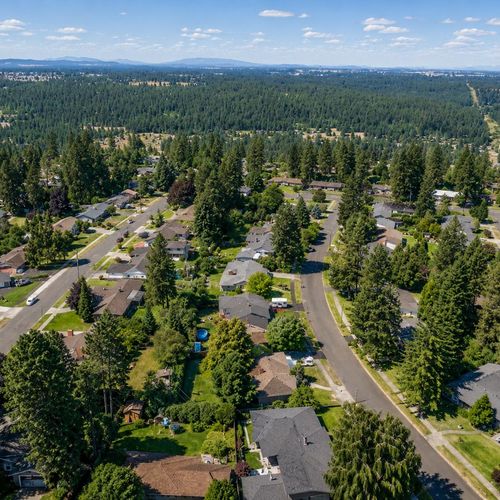
Cedar Mill is an unincorporated community in Washington County, Oregon, situated in the eastern portion of the county along the US Highway 26 Sunset Highway corridor — directly adjacent to the Portland city boundary to the east, Cedar Hills to the south, and the city of Beaverton to the west and southwest. The community occupies gently rolling terrain at the base of the Tualatin Mountains, where the West Hills' eastern slopes flatten into the broader Tualatin Valley floor and the residential fabric of Washington County's eastern edge meets the urban development of Portland's western boundary.
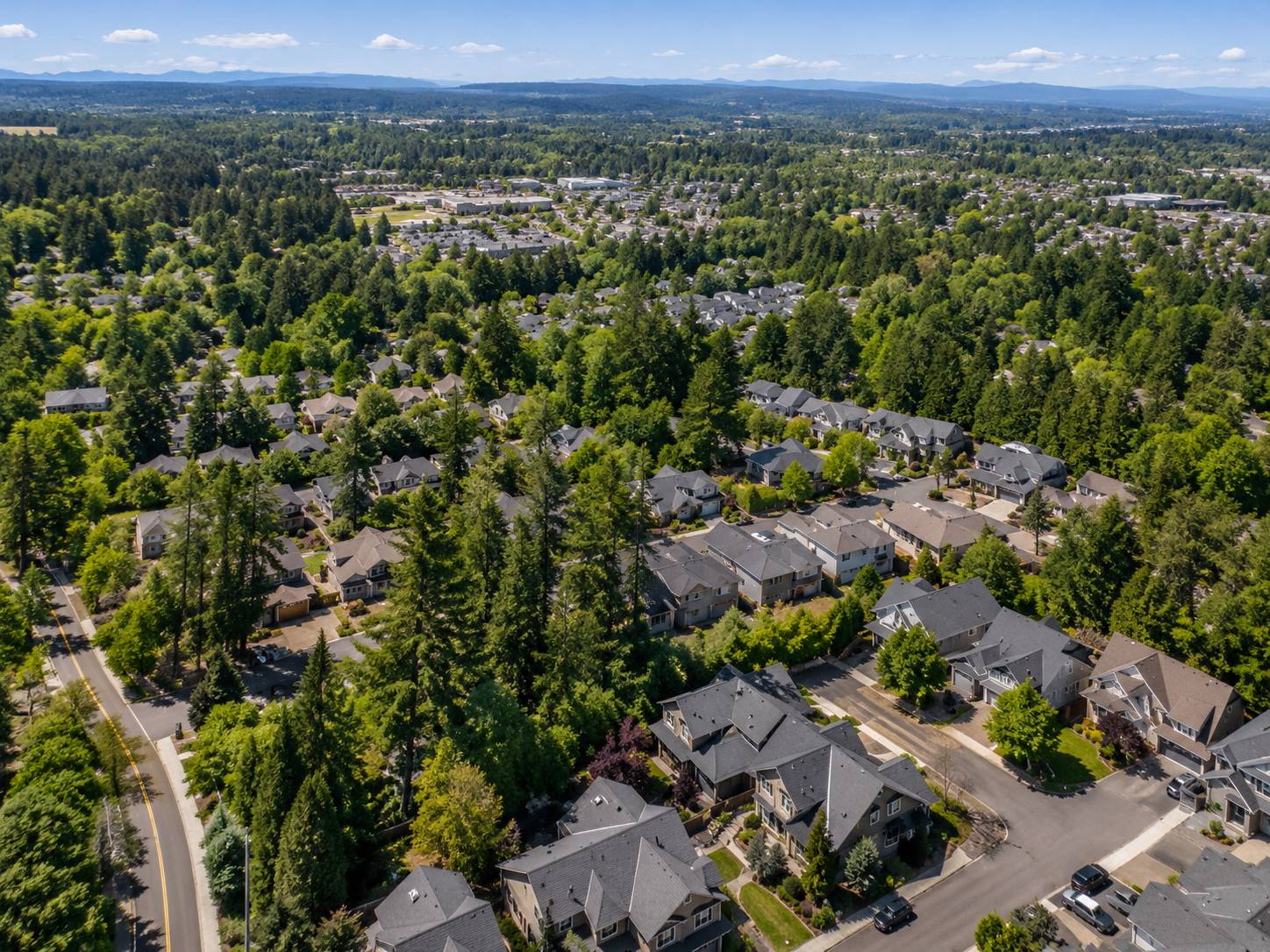
Cedar Mill's residential character is defined by the same mid-century development era that shaped Cedar Hills and the surrounding unincorporated Washington County communities — primarily 1950s through 1970s single-family residential construction on generous lots beneath mature Douglas firs and the mixed deciduous canopy that five to seven decades of Pacific Northwest growing conditions produce on properties that have been allowed to develop their natural overhead coverage rather than being cleared for maintenance convenience. The result is a neighborhood that feels greener, quieter, and more established than its proximity to two major metro cities would predict — a combination of natural canopy, residential lot depth, and the unhurried pace that unincorporated communities adjacent to but not inside major cities tend to preserve when their residents value it deliberately.
Cedar Mill falls within the Beaverton School District — one of Oregon's strongest public school systems by most measured dimensions, with academic programming depth, dual-language immersion options at the elementary level, AP and IB course availability at the secondary level, and the kind of extracurricular infrastructure breadth that a well-funded district in one of Oregon's wealthiest counties produces and sustains. The Beaverton School District assignment is the primary engine of residential demand in Cedar Mill for family buyers who have done the school district comparison against Portland Public Schools and arrived at the same conclusion that most comparison-driven buyers arrive at — and it is a factor that has sustained Cedar Mill's competitive market position through every cycle the Portland metro has experienced over the last three decades.
Portland International Airport is approximately 14 to 20 miles from Cedar Mill, typically a 25 to 38 minute drive depending on traffic, time of day, and your specific route. The most direct path runs east on US-26 through the Sunset Highway tunnel into Portland and north via I-5 or surface connections toward PDX. The MAX Blue Line is accessible from the adjacent Cedar Hills MAX station — within a short drive or an extended walk from most Cedar Mill addresses — providing transit connectivity east toward downtown Portland and, via the Gateway Transit Center Red Line connection, to PDX. For frequent travelers and households where airport access is a meaningful quality-of-life factor, Cedar Mill's combination of manageable driving distance and adjacent MAX transit access gives it a PDX profile that most comparable Washington County communities without MAX station proximity cannot match. The airport run is not the 10-minute sprint that north Portland neighborhoods deliver, but it is predictable, manageable, and significantly enhanced by the transit option that Cedar Mill's proximity to the Blue Line corridor provides.
What Your Money Gets You: Homes at Every Price Point
Cedar Mill's housing market shares the mid-century residential DNA of Cedar Hills to its south while carrying its own distinct neighborhood character — slightly more elevated in some sections, with residential streets that thread through gentle hillside terrain in ways that give certain areas of Cedar Mill a topographic variety that the flatter Cedar Hills grid does not produce. The housing stock is primarily single-family residential from the 1950s through 1970s, with more recent construction from the 1980s and 1990s filling in the remaining buildable parcels as the community's desirability attracted incremental development without fundamentally altering the neighborhood's established character.
New construction within Cedar Mill's established footprint is limited to occasional infill — individual lot purchases and teardown-rebuilds on the most desirable parcels — making this a resale market where the condition spectrum between maintained and deferred is wide enough to reward buyers who approach their evaluation with genuine rigor rather than surface-level assessment. That spectrum is opportunity when it is navigated correctly, and it is risk when it is ignored in favor of the lot, the trees, and the school district assignment that make the neighborhood immediately appealing regardless of what the inspection ultimately reveals.
Here is a realistic look at what different price points deliver in this market:
$475,000 – $600,000 Entry-level Cedar Mill delivers the community's older residential stock in its most original or least-updated configuration — primarily 1950s and 1960s construction in the 1,100 to 1,650 square foot range, three bedrooms, one to two baths, and the ranch-style or modest split-level layouts that mid-century residential construction in the West Hills corridor produced in response to the terrain and the era's residential design conventions. Lots at this price point reflect the community's development-era generosity — deeper and more heavily treed than comparable suburban lots in the broader Beaverton market, with the mature canopy coverage that gives Cedar Mill addresses a natural overhead character that newer construction neighborhoods spend decades waiting for and frequently never fully achieve. Condition at this range is the defining variable — some homes have been maintained and incrementally updated by long-term owners who understood the community's value and invested accordingly. Others carry the accumulated systems and cosmetic deferred work that mid-century residential stock develops through extended ownership cycles without active maintenance investment. The value is genuine and legible: Beaverton School District, Washington County tax structure, established neighborhood character, and proximity to the MAX corridor — at a price point that the school district and the location combination would not produce anywhere inside the Portland city boundary in comparable condition. For first-time buyers, buyers with renovation budgets and the competence to deploy them effectively, and investors evaluating the Cedar Mill market's long-term trajectory, this range consistently produces the kind of opportunity that buyers shopping only for visual readiness walk past on the way to something more expensive and less structurally sound.
$600,000 – $760,000 This is the most active and most instructive price band in the Cedar Mill market — the range where the community's complete value proposition becomes most clearly legible and where buyers who have conducted the honest metro-wide comparison tend to arrive and stay. Homes in this range tend to be updated or well-maintained single-family properties in the 1,500 to 2,100 square foot range — three to four bedrooms, two baths, kitchens addressed with genuine intention in the last decade, and yards that take full advantage of Cedar Mill's lot culture in ways that feel qualitatively different from what comparable money produces anywhere east of the Washington County line. Some homes at the upper end of this range have been renovated with genuine care and architectural respect — original character preserved where it adds to the home's identity, systems and surfaces updated where they add to its livability, and outdoor spaces improved to reflect the Pacific Northwest's serious relationship with covered outdoor living rather than left as undeveloped extensions of the interior's deferred maintenance list. For families prioritizing the Beaverton School District, move-up buyers from smaller Portland properties, dual-income households setting a defined budget ceiling, and relocators from higher-cost markets who want established neighborhood character without the inner Portland price per square foot, this is the range where Cedar Mill most clearly delivers on what it promises.
$760,000 – $975,000 Homes at this level represent the strongest established residential product Cedar Mill offers — fully renovated or comprehensively updated single-family properties where owners have invested seriously in bringing older residential stock to a contemporary living standard without sacrificing the lot depth, the mature tree coverage, or the mid-century character that gives Cedar Mill's best properties their distinct quality within the Washington County market. Three to four bedrooms, two to three baths, kitchens rebuilt with quality appliances and the spatial generosity that mid-century floor plans — when opened thoughtfully by a renovation team that understands what they are working with — can deliver in ways that the efficient layouts of contemporary production construction frequently cannot replicate. Primary baths reconfigured with walk-in showers, double vanities, and the finish quality that buyers at this price point have earned the right to expect and the market has trained them to find if it is absent. Outdoor spaces that reflect genuine Pacific Northwest outdoor living investment — covered patios with real roof structures, established gardens on lots that have had decades to develop their natural screening, and the kind of privacy from neighboring properties that newer suburban developments spend years attempting to approximate through landscaping that is simply too young to deliver what Cedar Mill's mature canopy produces without effort. For buyers who want a fully realized, move-in-ready property in an established Washington County community with Beaverton School District quality, Portland adjacency, and MAX access — without the inner Portland per-square-foot premium or the Portland Public Schools assignment that a Portland address carries — this range delivers the most complete version of the Cedar Mill proposition.
$975,000 – $1,250,000 At this level, Cedar Mill delivers its most exceptional inventory — properties where the combination of lot size, renovation quality, site character, and neighborhood positioning converges at a standard that places them at the top of the unincorporated eastern Washington County residential hierarchy. Some properties in this range have been custom-built or fully rebuilt on Cedar Mill's most desirable lots — parcels where the mature tree coverage, the gentle terrain variation, and the West Hills adjacency produce a site quality that planned Washington County subdivisions to the west cannot replicate regardless of their lot acreage. Four bedrooms, three-plus baths, primary suites with genuine architectural intention and spatial scale, kitchens designed rather than specified, and outdoor spaces that reflect a thoughtful engagement with what the site actually offers rather than a standard deck appended to the back of a house whose design never considered its relationship to the land it sits on. These are properties that attract buyers who have been watching Cedar Mill long enough to understand that its most exceptional inventory represents a value proposition against comparable product in Lake Oswego, the West Hills, or Dunthorpe that is genuinely difficult to argue against once the comparison is conducted with specific properties rather than neighborhood reputations and zip code assumptions.
$1,250,000 and above The upper end of the Cedar Mill market is defined by the rarest and most site-specific properties in the community — homes where the convergence of lot character, architectural investment, natural setting, and neighborhood position places them in a category of their own within the broader Washington County residential landscape. These properties surface infrequently, attract buyers who have been specific about their criteria long enough to recognize the right property without requiring time to decide, and move to buyers who were already prepared rather than sitting for the market to organize around them. If you are in this range and serious about what Cedar Mill's most exceptional inventory offers, being connected and ready is the correct posture.
Median home price in Cedar Mill: The median sits in the $640,000 to $720,000 range — a figure that reflects the community's established residential quality, its Beaverton School District positioning, its Washington County financial structure, and the consistent demand that buyers who have run the comparison honestly generate year over year regardless of broader market conditions. Against inner Portland neighborhoods at the same median, Cedar Mill consistently delivers more square footage, more lot, more canopy, a more favorable school district by most measured metrics, and a lower carrying cost through Washington County's property tax structure. Against Beaverton at comparable prices, Cedar Mill delivers the Portland adjacency, the mature tree coverage, and the established residential character that the valley floor's newer planned developments cannot replicate. The premium relative to the broader Beaverton market is earned through differentials that are structural rather than trend-driven, and it has been sustained across market cycles in a way that reflects durable demand rather than speculative enthusiasm.
What About Renting in This Area?
The Cedar Mill rental market is active in proportion to the community's growing desirability — more inventory and more variety than strictly rural Washington County communities, meaningfully tighter than the broader Beaverton apartment market to the west, and competitive at the single-family quality end in the way that established neighborhoods with generous lots and strong school district assignments consistently are when the purchase market has moved above the reach of households who might otherwise own.
Single-family rentals in Cedar Mill typically run between $2,200 and $3,500 per month depending on size, condition, lot character, tree canopy coverage, and the presence of any updated systems or finishes that command a premium in the rental market as consistently as they do in the purchase market. A three-bedroom, two-bath home in solid condition with a usable yard rents around $2,200 to $2,800. A larger, updated four-bedroom home with quality finishes, meaningful outdoor space, and the mature tree coverage that defines Cedar Mill's most desirable residential character pushes into the $2,800 to $3,500 range. Smaller and older inventory without recent updates tends to sit at the lower end of that range and can represent genuine value for renters who prioritize school district access and lot space over contemporary interior finishes.
Apartment and smaller unit rentals in the broader Cedar Mill and adjacent Beaverton corridor start around $1,300 to $1,900 for one to two bedroom configurations — a price point that reflects Washington County's generally more favorable rental economics relative to comparable inner Portland neighborhoods with the same MAX line connection but Multnomah County overhead and Portland Public Schools assignments. For renters planning to establish themselves in the market before purchasing, the combination of accessible rental pricing at the apartment end and genuine single-family inventory at the upper end gives Cedar Mill a rental landscape that serves a wider range of household configurations than the community's predominantly owner-occupied character initially suggests.
Well-priced single-family rentals in genuinely good condition move with more urgency than the community's quiet residential character implies — the Beaverton School District access, the lot sizes, and the Portland adjacency create a consistent and motivated renter demographic that engages with quality inventory quickly. Being organized, having documentation ready, and being willing to commit when the right property surfaces rather than waiting to see if something better appears is the right posture regardless of how much runway your relocation timeline appears to offer.
Things to Do In and Around Cedar Mill
Cedar Mill's location at the eastern edge of Washington County gives residents simultaneous access to the West Hills natural infrastructure to the east and the broader Washington County recreational, cultural, and commercial ecosystem to the west — a geographic position that produces a daily quality-of-life range uncommon in suburban communities at this proximity to a major city.
Tualatin Hills Nature Park is one of Cedar Mill's most immediate and most significant outdoor assets — a 222-acre natural area managed by the Tualatin Hills Park and Recreation District with wetland trails, boardwalk access through riparian and forested habitat, bird watching infrastructure, and the kind of accessible natural immersion that urban nature parks provide at their best. For Cedar Mill residents whose daily outdoor practice includes consistent contact with natural habitat at an accessible grade and pace, Tualatin Hills Nature Park provides exactly the right infrastructure within a distance that most addresses in the community can reach without a drive. The park's bird watching culture in particular — migratory species in spring and fall, resident raptors and waterfowl year-round — gives it a natural variety that rewards repeated visits across the full annual cycle in ways that manicured community parks cannot replicate.
Forest Park is accessible from Cedar Mill via the West Hills residential street network and the trailhead system that threads through the hillside terrain above the Sunset Highway corridor — placing the largest urban forest in the United States within a short drive and, for the most elevated Cedar Mill addresses, within an ambitious walk of the trailhead network. The Wildwood Trail, the Leif Erikson gravel road, and the connector trail system accessible from the West Hills corridor provide the 80-plus miles of Douglas fir and western red cedar forest that define Portland's outdoor identity from a Washington County address — a combination that no community further west in the Tualatin Valley can offer at any price point, and that Cedar Mill shares with Cedar Hills and Raleigh Hills as the eastern Washington County communities positioned closest to the Forest Park boundary.
The Tualatin Hills Park and Recreation District — THPRD serves Cedar Mill with one of Oregon's most comprehensive and best-funded parks and recreation systems — community centers with fitness and aquatic facilities, organized programming across age groups, the trail and greenway network that connects Washington County's residential fabric to its natural areas, and the athletic infrastructure that families with school-age children and active adult residents alike build their weekly recreational routines around. For buyers relocating from inner Portland neighborhoods served by Portland Parks and Recreation — a system with meaningfully less per-capita investment than THPRD — the difference in recreational infrastructure accessibility tends to be one of the more pleasant and immediately tangible surprises of making the Washington County transition.
Cedar Mill Community Library is a branch of the Washington County Cooperative Library Services and reflects the community's investment in its own civic and cultural infrastructure — a well-resourced library serving the Cedar Mill residential community with programming, collections, and community space that reflects the priorities of a well-educated residential base with meaningful expectations for its public institutions.
The West Hills trail network above Cedar Mill — the Balch Creek drainage, the Marquam Trail system, and the network of paths that thread through the hillside terrain connecting the West Hills residential fabric to Forest Park — extends the outdoor range available to Cedar Mill residents beyond the formal Forest Park trail system into a broader hillside exploration zone that rewards residents who take the time to learn its geography rather than limiting themselves to the established trail corridors that most visitors default to.
Cedar Hills Crossing — the commercial retail center anchored by a major grocery along SW Cedar Hills Boulevard, accessible within a short drive of most Cedar Mill addresses — provides the everyday commercial infrastructure that makes the broader Cedar Mill and Cedar Hills corridor function as a self-sufficient residential community. Grocery, pharmacy, medical, fitness, and the everyday service tenants that a well-established neighborhood retail center assembles over decades of serving a stable residential base are all within practical reach for Cedar Mill residents whose routine errands do not require a drive to Beaverton's larger commercial corridors.
The MAX Blue Line at the Cedar Hills station — within a short drive or extended walk of most Cedar Mill addresses — provides the light rail connection east toward downtown Portland and west toward Beaverton and Hillsboro that transforms Cedar Mill's practical mobility in ways that distinguish it from Washington County communities without adjacent transit access. The transit connection to downtown Portland in 25 to 35 minutes, to the Pearl District and the cultural core of the city, and via the Gateway Transit Center to PDX on the Red Line, gives Cedar Mill a daily transportation flexibility that most suburban communities at this proximity to a major city require a car to replicate. For households organized around one car, for commuters whose employment is along the MAX corridor, and for residents who want the ability to access Portland without navigating the Sunset Highway at peak hour, the adjacent MAX station is one of Cedar Mill's most significant and most underappreciated daily quality-of-life assets.
Nike World Headquarters in Beaverton and Intel's Washington County campuses are 15 to 25 minutes west — the anchor employers of Washington County's substantial technology and corporate employment base, accessible from Cedar Mill by car or by MAX in commute times that most Washington County tech workers describe as entirely workable and that position Cedar Mill as a realistic residential choice for the dual-income household where one partner commutes to Washington County tech and the other commutes to inner Portland by MAX.
The Beaverton Farmers Market — one of the most established and well-attended in the Portland metro — is 15 to 20 minutes west in Beaverton, providing the direct-farm produce, artisan food, and local vendor culture that Pacific Northwest residents with a serious relationship with local food systems treat as a weekly essential rather than an occasional outing. For Cedar Mill residents oriented toward the regional food economy as a lifestyle practice, the Beaverton Farmers Market is the primary community expression of that culture within practical reach.
Willamette Valley wine country is accessible from Cedar Mill via the Beaverton-Hillsboro-Newberg corridor — the Chehalem Mountains AVA, the Dundee Hills, and the northern Willamette Valley wine region's tasting rooms and winery operations within 40 to 55 minutes for residents who want Oregon's most celebrated wine country within practical day-trip range. The western approach to the Willamette Valley from Washington County via Highway 8 through Hillsboro and south toward Newberg is more direct and less congested than the inner Portland approach, making Cedar Mill's wine country access more casual than the drive time alone suggests.
The Oregon Coast is approximately 70 to 85 minutes west via US-26 through the Sunset Highway and Coast Range — the most direct Oregon coast corridor from the Portland metro, placing Seaside, Cannon Beach, and the Tillamook Bay area within day-trip range at a driving time that residents of Cedar Mill can execute with a casualness that inner Portland addresses navigating through city traffic to reach the same highway cannot match at peak weekend departure windows.
Washington Square Mall in Tigard is 15 to 20 minutes south — the regional retail anchor for the Washington County southwest corridor, providing the department store, specialty retail, and commercial variety that serves the broader Washington County residential market for the categories that neighborhood commercial infrastructure does not independently cover.
Downtown Portland is 20 to 28 minutes east by car on US-26, or 25 to 35 minutes east by MAX from the adjacent Cedar Hills station — the Pearl District, the South Park Blocks, the Arlene Schnitzer Concert Hall, the Portland Art Museum, Moda Center, the waterfront, and the full cultural and culinary infrastructure of a Pacific Northwest city accessible when the occasion calls for it without requiring it to define the rhythm of daily life in a community that has organized itself around a different pace. The MAX connection makes downtown Portland genuinely car-optional for cultural evenings, dining nights, and professional events — a transit relationship with the city that most Washington County suburban communities cannot offer from Cedar Mill's proximity to the Blue Line corridor.
Where to Eat
Cedar Mill's dining landscape is built from the community's residential character — limited commercial footprint within the community's own boundaries, immediate access to the Cedar Hills Crossing corridor, and the broader Beaverton and western Portland dining ecosystems that the community's location makes accessible in multiple directions. That assembled dining radius delivers more variety and more quality than Cedar Mill's quiet suburban character initially suggests to buyers arriving with expectations calibrated to a neighborhood commercial main street rather than a dispersed suburban dining ecosystem.
The Cedar Hills Crossing corridor provides Cedar Mill's most immediate dining infrastructure — a mix of casual dining options along SW Cedar Hills Boulevard that serve the community's everyday meal rotation without requiring a drive to Beaverton's more concentrated commercial corridors. The specific tenants evolve with the market, but the commercial density generated by the grocery anchor and the MAX station traffic ensures a consistent baseline of accessible casual dining within the community's practical orbit.
Beaverton's Asian dining corridor is the primary destination for Cedar Mill residents seeking genuine culinary quality and variety within a practical drive — the concentration of Vietnamese, Korean, Chinese, Thai, and Japanese restaurants along the Beaverton commercial spine is among the finest and most diverse in the Pacific Northwest, driven by Washington County's significant Asian-American population and the culinary investment that a food-literate tech-professional residential community generates and sustains over time. For Cedar Mill residents who treat great Asian food as a regular dining practice rather than an occasional excursion, the Beaverton corridor is a neighborhood resource that most inner Portland residents would describe as extraordinary if they discovered it existed twenty minutes from a MAX station they already ride.
Hazel Dell and the broader Vancouver corridor is accessible across the Columbia River for Cedar Mill residents whose dining orbit extends north, though the bridge crossing makes this a deliberate destination rather than a casual drop-in — relevant for specific restaurants or cuisine types that the Washington County ecosystem does not independently deliver at the same quality level.
The NW District and Pearl District dining corridors — accessible via MAX east from the adjacent Cedar Hills station in 25 to 35 minutes — bring the inner Portland dining landscape within transit reach for the occasions that call for Pacific Northwest fine dining, craft cocktail culture, or the full restaurant variety that Portland's nationally recognized food city identity produces. Paley's Place on NW 21st, Ken's Artisan Pizza, Ataula, and the broader NW 23rd corridor are accessible from Cedar Mill without a car on evenings when the MAX schedule aligns with the dining plan — a transit-dining relationship that most Washington County communities at Cedar Mill's distance from the Blue Line corridor cannot offer.
Lake Oswego is 20 to 25 minutes southeast and provides the upscale suburban dinner destination that complements Beaverton's casual and ethnic dining variety with the independent restaurants and wine bars that Lake Oswego's income level and residential character generate along its downtown corridor. For proper dinner nights out within the southwest Portland metro, Lake Oswego fills the elevated casual dining need that Cedar Mill's immediate commercial footprint does not independently deliver.
McMinnville and Yamhill County wine country — 50 to 65 minutes southwest — provide the most ambitious Pacific Northwest dining within day-trip range for Cedar Mill residents who want a proper culinary excursion combining great food with Oregon wine country landscape. The combination of Yamhill County's farm-to-table restaurant culture and the wine country setting makes the southwest drive worth planning for the right occasion with enough regularity that most Cedar Mill residents oriented toward food culture schedule it quarterly rather than annually.
Downtown Portland at 20 to 30 minutes east or 25 to 35 minutes by MAX rounds out the dining radius with the full Portland restaurant landscape — every price point, every cuisine, and the culinary depth of a city that has built one of the strongest regional food identities in the American West. Accessible when the occasion justifies the effort, and close enough that the effort never feels unreasonable.
The honest framing: Cedar Mill is a community where the dining experience is assembled from multiple nearby ecosystems rather than concentrated along a neighborhood commercial strip — a combination of the Cedar Hills Crossing corridor's everyday practical options, Beaverton's exceptional Asian dining diversity, Lake Oswego's upscale suburban destination dining, and Portland's full restaurant landscape for the occasions that call for it. Residents who engage with that assembled radius rather than expecting a walkable neighborhood dining street consistently find the variety and the quality ceiling more than adequate — and the MAX connection's ability to make inner Portland's restaurant landscape car-free accessible on a weeknight is the kind of dining infrastructure that buyers from inner Portland neighborhoods consistently underestimate until they have used it from a Cedar Mill address.
Who Buys in Cedar Mill?
After nearly three decades working both sides of the Columbia River and across the full Portland metro landscape, the Cedar Mill buyer is a profile I recognize for a specific and consistent combination of analytical rigor and genuine neighborhood discernment. They have typically done the full metro comparison, followed the numbers where they led, and arrived at Cedar Mill through a process of honest evaluation rather than address aspiration — which is precisely why the buyers who end up here tend to stay.
They are families for whom the Beaverton School District is a non-negotiable purchase criterion evaluated against the documented performance metrics that distinguish it from Portland Public Schools at comparable price points — graduation rates, course availability, facility investment, dual-language programming, and the extracurricular depth that a well-funded district in Oregon's wealthiest county produces. They have done that comparison, they found it unambiguous in the Beaverton School District's favor across the dimensions they weighted most heavily, and they concluded that Cedar Mill delivers the school district quality they require at a price that Portland neighborhoods with comparable proximity to employment, transit, and cultural infrastructure no longer offer at livable property sizes.
They are Portland professionals who commute by MAX — buyers who discovered, often by accident at first and then with increasing conviction, that the Cedar Hills MAX station accessible from Cedar Mill addresses makes their downtown Portland commute by transit not just theoretically possible but genuinely more comfortable, more predictable, and ultimately less expensive than the parking, the fuel, and the time cost of the same commute by car from an inner Portland address that costs more per square foot for fewer rooms on a smaller lot with a less compelling school district assignment.
They are buyers from California, Seattle, the Bay Area, and other high-cost Pacific Northwest and Western markets who have looked at the full Portland metro with the financial sophistication that expensive real estate markets instill and who found that Cedar Mill occupies a specific and undervalued position in the metro's price hierarchy — established residential character, mature natural canopy, strong school district, MAX access, Washington County financial structure, and Portland adjacency — at a price point that the combination of those factors would not produce in any other Portland metro community where all five are simultaneously present.
They are move-up buyers from smaller Washington County properties — Beaverton condominiums, Hillsboro townhomes, starter homes in outer Beaverton neighborhoods — who have been watching the Cedar Mill market long enough to understand that the mature tree canopy, the lot depth, and the Portland adjacency that Cedar Mill delivers relative to the Beaverton communities they are leaving justifies the price step-up in ways that the square footage comparison alone does not fully capture. They are buying the setting as much as the structure, and they understand that the setting is the variable Cedar Mill's less expensive neighbors cannot replicate on any timeline.
They are, consistently, buyers who stay. The school district keeps them through the child-rearing years. The mature character keeps them through the empty-nesting years. And the Washington County financial structure keeps them from ever running the convincing calculation that moving to an inner Portland address with its tax and school district trade-offs is the right next move for their household. Cedar Mill has low turnover for reasons that are structural rather than sentimental, and that structural retention is itself a signal worth paying attention to when you are choosing a community rather than a transaction.
What You Should Know Before You Commit
Cedar Mill rewards buyers who bring genuine rigor to the mid-century housing stock evaluation and punishes buyers who assume that the lot, the trees, and the school district assignment insulate them from the inspection discoveries that housing of this age consistently produces when it has been held without active maintenance investment.
The mid-century residential stock in Cedar Mill carries the infrastructure age considerations that any residential building from the 1950s through 1970s delivers on a thorough inspection — electrical systems at or approaching end-of-life in some cases, plumbing configurations that reflect the materials and standards of their era, roofing and HVAC systems at various stages of their replacement schedules, and the kind of accumulated deferred work that properties in this age cohort develop through extended ownership cycles without active systems investment. None of this is unusual or disqualifying — it is the baseline condition of an entire residential age cohort that the Pacific Northwest's established mid-century neighborhoods are defined by, and it is manageable when it is budgeted honestly before the offer rather than treated as a negotiating point to be resolved after closing.
The Sunset Highway — US-26 — defines Cedar Mill's northern boundary with the same acoustic and traffic profile that highway-adjacent residential communities always carry. Properties immediately adjacent to the highway reflect that proximity in their daily sound environment in ways that properties several blocks south into the residential fabric do not, and understanding the specific location of any property you are seriously considering relative to the highway rather than treating all Cedar Mill addresses as equally removed from its influence is basic pre-offer diligence that pays for itself before the first night in the new house rather than on it.
The community's unincorporated status produces both the advantages and the occasional uncertainties that unincorporated communities adjacent to growing cities always face — Washington County governance rather than city governance, some flexibility in land-use situations that incorporated city zoning frameworks would handle differently, and the periodic question of annexation or incorporation that communities in Cedar Mill's position face when their surrounding cities grow in ways that make the governance gap increasingly visible. Understanding the current state of any annexation or long-term planning discussions affecting the specific area of Cedar Mill you are considering is worth a brief and direct conversation before the offer rather than a post-closing discovery.
Thinking About a Home in Cedar Mill?
Cedar Mill inventory at the quality end of the market moves with the momentum of a community where the Beaverton School District assignment, the mature canopy, the Portland adjacency, and the Washington County financial structure create a buyer pool that engages with well-priced properties seriously rather than casually. I know Washington County, I know the Cedar Mill market at the level the mid-century housing stock and the due diligence this community requires, and I will give you a straight read on what you are looking at — the property, the inspection framework, the school assignment confirmation, and the complete cost-of-ownership picture — before you write anything.
See more about Cedar Mill
Want to learn more about Cedar Mill neighborhoods and homes?
Homes for sale in Cedar Mill: https://jamiemeushawrealestate.com/properties/place-Cedar%20Mill,%20OR/
Watch more local real estate insights on my YouTube channel:
https://www.youtube.com/@JamieMeushaw
Sign up for my weekly newsletter for real estate tips and market updates:
https://jamiemeushawrealestate.com/newsletter
Check out this article next