


Where Exactly Is King City?
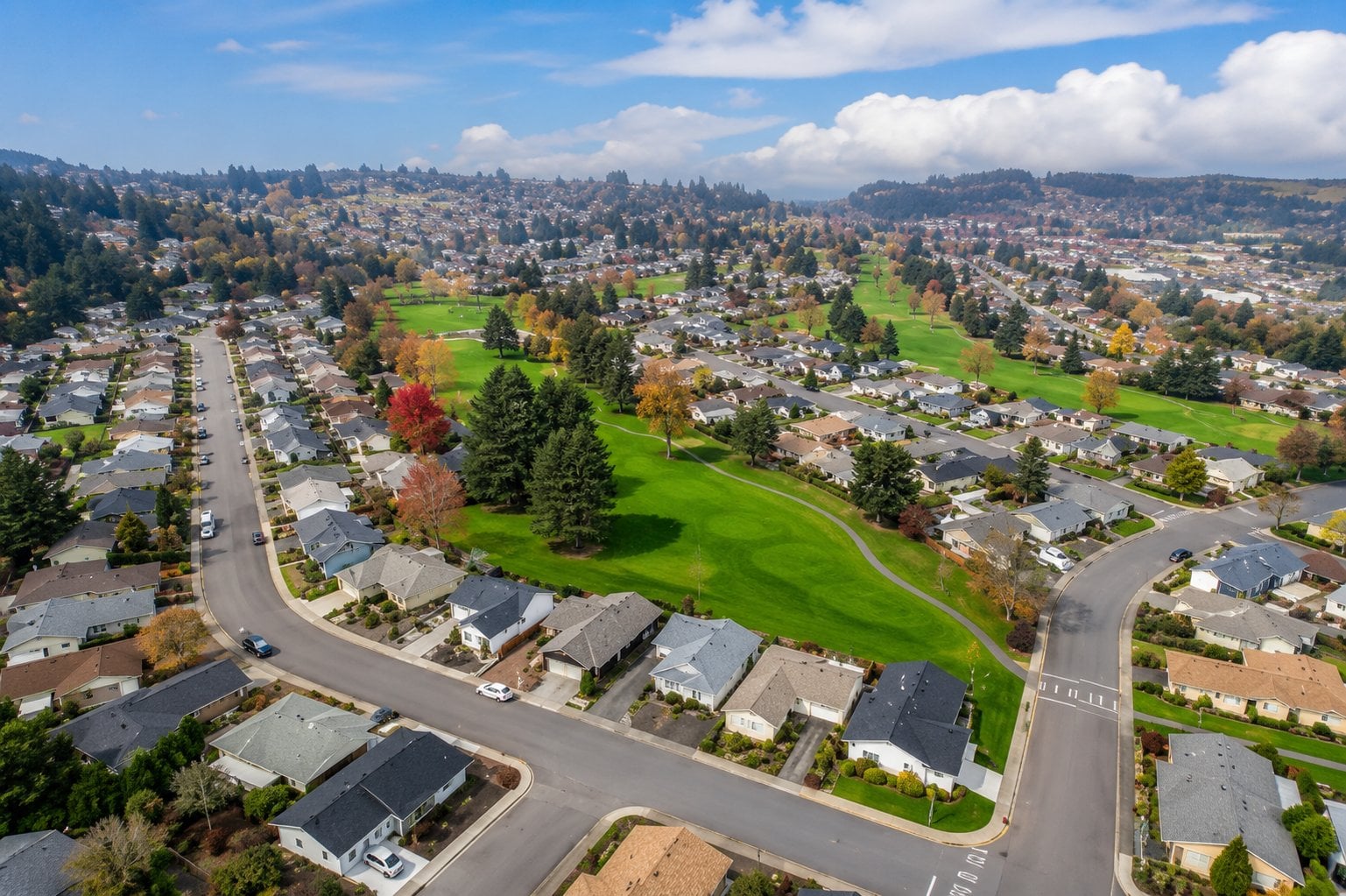
King City is an incorporated city in Washington County, Oregon, situated in the southwestern portion of the Portland metro — bordered by Tigard to the north and east, the Bull Mountain residential area to the south, and the broader Washington County residential fabric pushing toward Sherwood to the west and southwest. It sits approximately 12 to 14 miles southwest of downtown Portland, within a fully developed suburban landscape that gives it immediate access to the commercial, medical, and retail infrastructure of Tigard and the broader Washington County southwest corridor without requiring residents to maintain the pace of a larger, denser city for their daily needs.
The city is served by the Tigard-Tualatin School District for purposes of district jurisdiction, though King City's 55+ residential character means that school-age children are not a meaningful factor in the community's daily life or its residential decision-making framework. Buyers with school-age children are not the audience King City serves, and the school district context — while technically applicable — is not a meaningful driver of purchase decisions within this community.
The 55+ Requirement: King City operates under federal Fair Housing Act provisions that permit age-restricted communities meeting specific qualifications — including the requirement that at least 80 percent of occupied units be occupied by at least one person aged 55 or older, and that the community publish and adhere to policies demonstrating its intent to operate as a 55+ housing community. This means that the overwhelming majority of homes in King City are available only to households in which at least one resident is 55 or older. Buyers who do not meet this requirement are not eligible to purchase in the majority of King City's residential inventory, and understanding this framework before falling in love with a specific property is the first and most important piece of due diligence this market requires. If you or your household meets the 55+ threshold and you are looking for an active adult community in the Washington County market, King City belongs at the top of your consideration list. If you do not, this guide provides accurate context but King City is not the right market for your purchase.
Portland International Airport is approximately 18 to 25 miles from King City, typically a 25 to 40 minute drive depending on traffic, time of day, and your specific route — northeast through Tigard and into the Portland metro via I-5 or Highway 217 north to I-84 east toward PDX, or via surface streets connecting to I-205 north. For residents in the 55+ demographic who travel for leisure, visit family in other states, or maintain any level of travel activity in retirement or the years approaching it, the airport proximity is practical and workable without being exceptional. MAX light rail is accessible from nearby Tigard's transit center and provides a connection to the broader TriMet network, including the Red Line to PDX, for residents who prefer transit airport access over driving.
What Your Money Gets You: Homes at Every Price Point
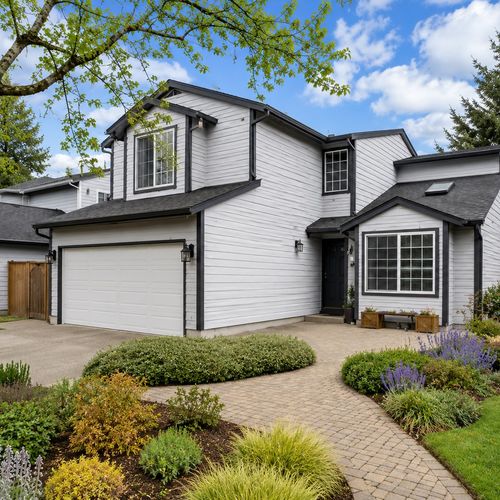
King City's housing market is almost entirely single-family residential — a mix of detached homes on individual lots and some attached configurations that reflect the community's development over several decades of planned active adult residential construction. The housing stock reflects the community's organizing philosophy: homes designed for the way people actually live in the 55-and-older phase of life — single-level or primary-level-living layouts, lower-maintenance exterior configurations, manageable yard footprints, and the kind of spatial efficiency that reflects decades of thinking clearly about what matters and what does not in a home you intend to live in comfortably rather than maintain perpetually. New construction within King City's geographic boundaries is limited by the city's constrained footprint, making this primarily a resale market where condition, update history, and the specific layout's compatibility with the buyer's current and anticipated physical needs are the primary evaluation framework.
Here is a realistic look at what different price points deliver in this market:
$250,000 – $350,000 Entry-level King City delivers older single-family homes — primarily 1960s through 1980s construction reflecting the community's original development era — in the 900 to 1,400 square foot range. One to two bedrooms, one to two baths, and the single-level or near-single-level layouts that define the community's housing stock and that reflect both the era of construction and the original developer's understanding of what active adult buyers prioritize in a residential floor plan. Condition at this price point is the defining variable — some homes have been maintained meticulously by long-term residents who made the property a point of personal pride. Others carry the accumulated deferred maintenance of aging residential stock held through the physical and financial limitations that long-term elderly ownership sometimes produces. The value at this range is genuine: you are getting a single-level home in a fully established, well-managed active adult community in a Washington County location with excellent medical access, strong commercial infrastructure, and a peer community of residents who have made the same life-stage decision — at a price point that comparable new active adult community inventory in the broader Portland metro cannot approach. For buyers entering the active adult market for the first time and establishing a maximum budget ceiling, this range provides real access to the King City community without requiring the financial stretch that the mid-range of the market produces.
$350,000 – $475,000 This is the most active price band in the King City market and where the community's value proposition becomes most clearly legible. Homes in this range tend to be updated or well-maintained single-family properties in the 1,200 to 1,800 square foot range — two bedrooms, two baths in most cases, single-level layouts with the kitchen, primary bedroom, and primary bath all on the main floor, updated appliances and finishes that reflect genuine investment in the property's livability rather than deferred cosmetic refreshment before a sale. Some homes at the upper end of this range have been meaningfully renovated — new roofs, updated electrical and plumbing, remodeled baths with walk-in showers and accessibility features that anticipate the physical realities of aging in place rather than requiring a future retrofit. Yards at this price point in King City tend to be appropriately scaled — large enough to enjoy, small enough to manage without the physical overhead that larger suburban lots impose on residents whose relationship with yard maintenance has appropriately shifted with their life stage. For buyers downsizing from larger suburban homes who want to maintain ownership in a community of their peers without the maintenance burden their current property has become, this range delivers the clearest version of what King City offers.
$475,000 – $625,000 Homes at this level represent the strongest residential product in the King City market — updated or extensively renovated properties where owners have invested seriously in bringing older residential stock to a contemporary standard of livability without sacrificing the single-level accessibility and manageable scale that define the community's housing philosophy. Two to three bedrooms, two baths, kitchens rebuilt with quality appliances and finishes that reflect genuine investment, primary baths reconfigured with walk-in showers, wider doorways, and the kind of accessibility thoughtfulness that aging-in-place planning requires rather than approximates. Some homes in this range have been fully transformed — new systems throughout, cosmetically updated from floor to ceiling, and outdoor spaces improved into manageable but genuinely enjoyable patios and gardens that reflect the Pacific Northwest's relationship with outdoor living adapted to a scale that King City residents can actually use rather than maintain. For buyers coming from higher-cost markets — California, Seattle, the Bay Area — with real equity to deploy and a clear intention to right-size into an active adult community without sacrificing the quality of their indoor environment, this range delivers the most complete version of King City living.
$625,000 and above The upper end of the King City market is defined by the most extensively updated and best-positioned properties in the community — homes where the convergence of location within the neighborhood, update quality, lot orientation, and overall livability places them in a category that attracts buyers who have been specific about wanting the best King City has to offer and who have the resources to insist on it. These properties are not common and they do not sit when they are priced correctly — the buyer pool for fully renovated, move-in-ready active adult community homes in well-located Washington County at this quality level is smaller than the broader market but consistently motivated and well-qualified. When the right property surfaces at this level, it tends to attract buyers who have been watching and waiting rather than sitting for extended market time.
Median home price in King City: The median sits in the $375,000 to $450,000 range — a figure that positions King City as one of the most financially accessible active adult homeownership communities in the Portland metro while delivering a location, a community character, and a peer residential environment that purpose-built active adult developments in the broader Washington County market charge significantly more to approximate. For buyers who have been comparing King City against newer 55+ community developments in Tigard, Beaverton, or the broader Oregon southwest suburban corridor, the value differential at comparable quality levels is real and worth understanding specifically before concluding that newer necessarily means better in this particular market category.
What About Renting in This Area?
The King City rental market is limited — a reflection of the community's predominantly owner-occupied character and the 55+ qualification framework that applies to the rental market with the same legal structure that governs ownership. Renters in King City are subject to the same age qualification requirements as buyers — at least one occupant of the household must be 55 or older — and the community's rental inventory is small enough that availability at any given time reflects more about the individual circumstances of specific property owners than about a functioning rental market with predictable supply.
Single-family rental homes in King City when they do surface typically run between $1,800 and $2,800 per month depending on size, condition, and recency of updates. A two-bedroom, two-bath home in solid condition rents around $1,800 to $2,300. An updated two to three bedroom home with quality finishes and a well-maintained yard pushes toward $2,400 to $2,800. The honest guidance for any buyer or renter approaching this market: do not count on finding rental inventory in King City through conventional listing platforms with any regularity or lead time. The community's small size, its owner-occupied character, and the age qualification framework mean that rental properties surface through local real estate networks and community connections rather than through the listing pipeline that larger rental markets generate. If renting in King City is part of your relocation plan, engage with a local real estate professional familiar with the community's specific inventory dynamics before you set a timeline that depends on finding availability.
The broader Tigard rental market immediately adjacent to King City provides a significantly larger rental inventory across apartment, townhome, and single-family configurations — though without the 55+ community character that defines King City itself. For buyers who want to experience the immediate neighborhood before purchasing, renting in Tigard and spending time in King City's community before committing is a practical and sensible approach that allows the purchase decision to be made with full experiential context rather than from a distance.
Things to Do In and Around King City
King City's location in the Washington County southwest corridor places residents within reach of a genuinely complete range of outdoor, recreational, cultural, and community amenities — a reflection of both the active adult community's intentional programming and the broader Washington County suburban infrastructure that surrounds it.
King City's Community Center and Recreation Programming is the neighborhood's primary social and recreational anchor — a community facility that serves the active adult population with fitness programs, social events, clubs, organized activities, and the kind of peer programming that a community of residents who have all chosen the same life stage deliberately tends to generate and sustain with genuine energy. For residents of King City, the community center is the social infrastructure of daily life rather than an amenity they occasionally use — the place where the relationships that define the community are built and maintained over the years of shared residence that King City's stable ownership base tends to produce.
Summerlake Park in Tigard is accessible from King City and provides one of the more pleasant community park experiences in the Washington County southwest corridor — a lake-centered park with walking paths, water features, and the kind of accessible green space that active adult residents use for daily walks, bird watching, and the outdoor routine that the Pacific Northwest's favorable outdoor climate supports across most of the calendar year.
Cook Park along the Tualatin River in Tigard is a short drive from King City and delivers one of Washington County's most complete community park experiences — river access, walking and cycling trails along the Tualatin River corridor, picnic infrastructure, and the natural riparian setting that the Tualatin River Greenway provides along its length through the southern Washington County community. For King City residents whose daily outdoor practice includes a walk along the water, Cook Park fills that need without requiring more than a brief drive.
Tualatin River National Wildlife Refuge is approximately 10 to 15 minutes from King City and provides one of the finest wildlife viewing experiences accessible from any suburban community in the Pacific Northwest — a restored wetland and riparian habitat along the Tualatin River that hosts migratory waterfowl, shorebirds, raptors, and the kind of wildlife population that makes every visit to the refuge seasonally distinct from the last. The refuge's walking trails and observation platforms are designed for accessible use, which reflects the broader character of what the Tualatin Valley's conservation infrastructure has built along the river corridor. For King City residents oriented toward bird watching and natural observation as a daily or weekly practice, the Tualatin River refuge is a neighborhood resource rather than a regional destination.
Fanno Creek Trail connects Tigard, King City's adjacent community, to the broader Fanno Creek Greenway — a paved multi-use trail running through the riparian corridor from Portland's southwest neighborhoods through Beaverton and Tigard toward Tualatin. The trail's accessible grade and paved surface make it particularly well-suited for King City residents who want consistent outdoor walking and cycling access without the elevation and terrain variability that trails in the West Hills and Coast Range foothills produce. For residents whose outdoor practice prioritizes accessibility and consistency over adventure and challenge, the Fanno Creek Trail system provides exactly the right infrastructure.
Washington Square Mall in Tigard is 10 to 15 minutes from King City — one of the larger regional shopping centers in the Portland metro with department stores, specialty retail, dining, and the commercial infrastructure that serves as the primary retail anchor for the Washington County southwest corridor. For active adult residents who value proximity to comprehensive retail without requiring a drive to downtown Portland or a navigation of the Pearl District's parking challenges, Washington Square delivers the full regional mall experience within a drive that most King City residents consider entirely practical.
Providence St. Vincent Medical Center in Beaverton and Legacy Meridian Park Medical Center in Tualatin are among the medical facilities within practical proximity of King City — a fact that matters meaningfully to the active adult buyer demographic and that reflects the intentional positioning of King City within a Washington County medical service corridor that provides the healthcare access that buyers in this life stage appropriately factor into their location decision. The proximity to quality medical infrastructure is one of the most undermarketed practical advantages of King City's Washington County position, and buyers who have been comparing it against more rural active adult communities in the Oregon market tend to find this proximity differential meaningful in their final evaluation.
The Tualatin Valley wine country — with tasting rooms and winery operations from the Chehalem Mountains to the Ribbon Ridge AVA accessible within 30 to 45 minutes — brings Oregon's Pinot Noir wine culture within practical weekend reach for King City residents who have found that wine country day trips represent one of the more consistently enjoyable leisure patterns available in the Pacific Northwest for residents who are no longer managing the schedule constraints that full-time employment produces.
The Oregon Coast is approximately 75 to 90 minutes west via Highway 99W through Newberg or via Highway 18 through McMinnville — a drive that places the coast within range for day trips and extended weekend visits that active adult residents with flexible schedules can execute with a spontaneity that working-age households cannot. For King City residents who came to Oregon for the coast access that defines the state's outdoor identity, the Washington County southwest corridor's access via the wine country route — through Newberg, Dundee, and the Yamhill County wine region before descending to the coast — turns the airport drive into its own destination experience.
Downtown Portland is 25 to 35 minutes northeast for concerts at the Arlene Schnitzer Concert Hall, performances at the Oregon Symphony and Portland Opera, the Portland Art Museum, the Oregon Historical Society, and the full cultural and culinary infrastructure of a major Pacific Northwest city. For active adult residents who have reorganized their time away from the commute obligations of working life and toward the cultural programming that a city like Portland offers for residents who can access it at their own pace rather than around a work schedule, the proximity to downtown Portland's arts and culture landscape is a genuine and underappreciated quality-of-life asset of living in the Washington County southwest corridor.
McMinnville and the broader Yamhill County wine country is 40 to 50 minutes southwest and has developed into one of the Pacific Northwest's most complete small-city cultural and culinary destinations — the International Pinot Noir Celebration, the McMenamins Grand Lodge, the Yamhill County wine trail, and a downtown restaurant scene that reflects Oregon's farm-to-table culinary identity with a regional specificity that Portland's larger dining landscape occasionally loses in its own ambition. For King City residents who want a day or weekend destination with genuine cultural and culinary substance within a drive that does not require a planning commitment, McMinnville fills that role consistently.
Where to Eat
King City's dining landscape reflects its character — a small incorporated city with limited commercial footprint of its own, immediately adjacent to Tigard's substantially more developed restaurant and retail corridor, and within practical reach of the broader Washington County and southwest Portland dining ecosystem that gives active adult residents meaningful variety without requiring a downtown Portland commute.
Tigard's restaurant corridor along Pacific Highway, Hall Boulevard, and the broader commercial infrastructure immediately adjacent to King City is the community's primary dining ecosystem — a full range of casual to mid-range dining options representing multiple cuisines that serves King City residents as effectively as a neighborhood restaurant strip would, at a drive distance that most residents describe as immediately practical rather than requiring planning. The Tigard commercial corridor has developed meaningfully over the last decade and continues to add dining variety that reflects Washington County's growth and the income level of the surrounding residential community.
Bridgeport Village in Tualatin — approximately 10 to 15 minutes south — is one of the Washington County southwest corridor's most complete lifestyle retail and dining centers, with restaurant options across price points and cuisines, outdoor seating that the Pacific Northwest's favorable weather makes genuinely usable, and the kind of upscale casual dining environment that active adult residents who value quality over novelty find consistently satisfying. The development's walkable outdoor format makes it particularly accessible for King City residents whose social dining preferences favor comfortable settings with reliable execution over the energy and noise levels of more youth-oriented dining environments.
Washington Square area dining in Tigard at 10 to 15 minutes north extends the accessible restaurant range with additional variety — the Cheesecake Factory, multiple independent restaurants on the surrounding commercial corridors, and the full mid-range dining ecosystem that a major regional mall anchors in a suburban Washington County location.
Lake Oswego is 15 to 20 minutes northeast and provides one of the Portland metro's most complete upscale suburban dining experiences — a downtown restaurant corridor with quality independent restaurants, wine bars, and the kind of dining culture that reflects Lake Oswego's income level and the sophisticated residential population that the southwest Portland metro has developed over decades. For King City residents who want a proper dinner night out in an environment that reflects their lifestyle preferences, Lake Oswego's downtown dining corridor is the closest destination that delivers at that level without a trip to downtown Portland.
McMinnville and the Yamhill County wine country dining corridor — Thistle, the Joel Palmer House in Dayton, and the growing number of destination restaurants that Oregon wine country tourism has attracted to the region — provide the most ambitious dining within a reasonable drive from King City for residents who are willing to make a proper evening of the experience. The combination of wine country scenery, Oregon Pinot Noir, and a restaurant culture built around the valley's agricultural production makes the drive southwest worth making on the right occasion.
Downtown Portland is 25 to 35 minutes for the full Portland dining landscape — James Beard-recognized restaurants, the Pearl District's dining corridor, the diverse food culture of SE Portland, and the comprehensive culinary infrastructure of a city that has built one of the strongest regional food identities in the American West. For King City residents who want serious dining without the daily commitment of living in the city itself, Portland's restaurant landscape is the occasion destination that the southwest corridor's proximity makes accessible when the evening calls for it.
The honest framing: King City's immediate dining footprint relies primarily on Tigard's adjacent commercial corridor and the broader Washington County southwest restaurant ecosystem rather than on a neighborhood dining destination of its own. That is an accurate description rather than a limitation for residents whose relationship with dining has appropriately shifted toward quality over variety and comfort over discovery — the priorities that the active adult community's established dining culture tends to reflect. Bridgeport Village, the Tigard corridors, and Lake Oswego's downtown together provide a dining radius that consistently satisfies without requiring the energy of downtown Portland on a weeknight that the day's schedule did not set aside for it.
Who Buys in King City?
After nearly three decades working both sides of the river and across the full Portland metro landscape, the King City buyer is one of the most clearly defined and consistently self-aware profiles I encounter anywhere in the region — not because the age qualification creates an obvious demographic, but because the buyers who arrive at King City with genuine conviction have typically done the kind of life-stage evaluation that produces clarity about what they want rather than what they assumed they would want at this point in their lives.
They are downsizers in the truest sense of the word — not buyers who are settling for less but buyers who have genuinely concluded that less maintenance, less square footage, and less landscape management in exchange for more time, more community connection, and more financial flexibility is not a compromise but an upgrade. They have lived in the larger suburban home long enough to have recognized that a significant portion of their time, energy, and financial resources has been going into maintaining a property whose scale no longer reflects the life they are actually living. King City offers them a way out of that dynamic that preserves the ownership model and the Washington County location they have built their lives around without requiring them to rent or to move into a managed care environment that does not reflect where they are in their life.
They are buyers from California, Seattle, and other high-cost markets — often retirees or pre-retirees — who have built significant equity in primary markets and are deploying that equity in the Pacific Northwest with a clear intention to establish a permanent base in a community where their money goes further, their neighbors are in the same life chapter, and the outdoor and cultural amenities of the Portland metro are accessible without the pace and the price that living inside Portland requires. They find King City's median price range genuinely surprising relative to what comparable active adult community living costs in the Bay Area or the Seattle metro, and that surprise tends to produce the kind of conviction that makes their offers clear and their transactions clean.
They are buyers who have already looked at the manufactured home active adult parks in the broader metro market and concluded that the ownership model, the community stability, and the civic identity of an incorporated city with fee-simple residential lots is meaningfully different from a land-lease manufactured home community — regardless of what the surface-level amenity comparison suggests. King City's status as an incorporated city with conventional single-family residential ownership is a distinction that experienced active adult buyers recognize and value.
They are, consistently, buyers who have been talking to people who already live in King City. The community's word-of-mouth referral culture is one of the strongest signals of resident satisfaction in any residential market I have worked, and the percentage of King City buyers who arrive at the community through the recommendation of someone who already lives there — a friend, a sibling, a neighbor from a previous address who made the move earlier — is one of the highest of any community I work in either state.
What You Should Know Before You Commit
King City requires one genuinely essential upfront clarity, and that clarity is the age qualification. The 55+ requirement is not a preference, a guideline, or a community culture that can be opted into or out of depending on the buyer's circumstances. It is a legal framework embedded in the community's qualifying status under federal Fair Housing Act provisions, enforced at the time of sale and occupancy, and applicable to both buyers and household members who will occupy the property. Before any further conversation about a specific property in King City is worthwhile, confirming that your household meets the occupancy requirement is the first step — not the second.
Beyond the age qualification, the practical evaluation framework for King City purchases follows a different logic than conventional suburban residential purchases in several important ways. Single-level accessibility — or the specific nature of any multi-level layout being considered — is worth evaluating against your current and reasonably anticipated future physical needs rather than treating as a purely aesthetic preference. The accessibility features of any property being seriously considered — shower configurations, doorway widths, garage step profiles, pathway grades — are worth assessing with the same attention you give to kitchen updates and roof condition, because their relevance to your daily experience will only increase over the years of ownership you are planning for.
HOA or community association fees where applicable within specific King City communities or sections deserve the same financial health evaluation that urban condominium HOA structures require — reserve fund adequacy, assessment history, and the management quality of the association are ongoing cost factors that need to be incorporated into the total ownership cost picture explicitly rather than assumed to be negligible.
The community's stable, owner-occupied, active adult character is one of its strongest practical assets — King City's turnover is slow, its residents are long-term, and the community fabric reflects the kind of investment that comes from neighbors who chose the same thing deliberately and have stayed with that choice. That stability is a feature, not a limitation, for buyers who chose King City for the same reasons the people who have been living there for a decade already had.
Thinking About a Home in King City?
King City inventory moves with the rhythm of a small, stable active adult community — quality properties in genuinely good condition at honest prices find buyers who have been looking specifically for what King City offers, and they do so without sitting for extended market time when the qualifying buyer pool is engaged and organized. I know Washington County, I know the active adult market at the level this community deserves, and I will give you a straight read on what is available, what it is worth, whether your household meets the occupancy qualification, and what the complete due diligence picture looks like before you invest time, energy, and earnest money finding out on your own.
See more about King City
Want to learn more about King City neighborhoods and homes?
Homes for sale in King City: https://jamiemeushawrealestate.com/properties/place-King%20City,%20OR/
Watch more local real estate insights on my YouTube channel:
https://www.youtube.com/@JamieMeushaw
Sign up for my weekly newsletter for real estate tips and market updates:
https://jamiemeushawrealestate.com/newsletter
Check out this article next