


Where Exactly Is Banks?
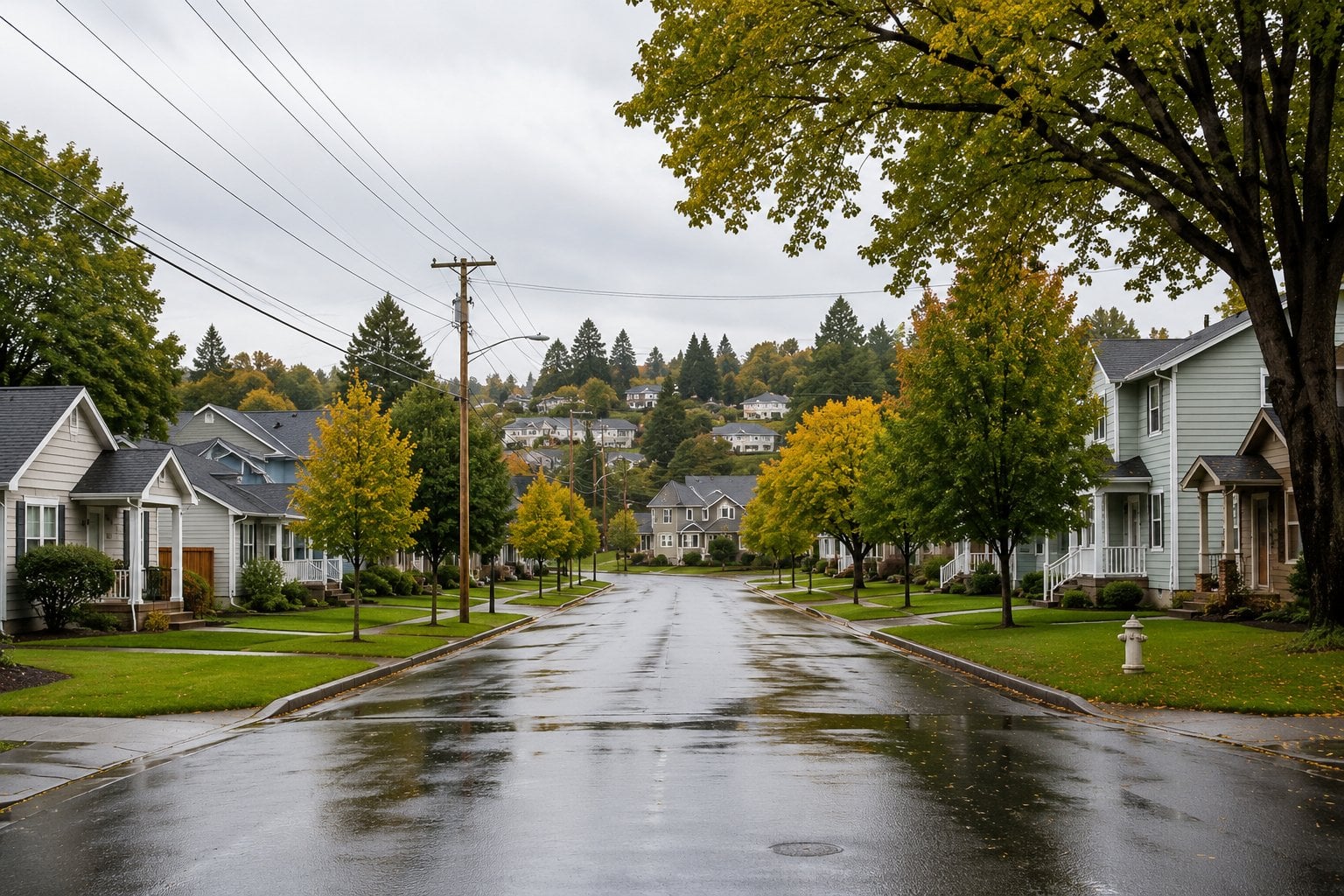
Banks is an incorporated city in Washington County, Oregon, positioned approximately 28 to 32 miles northwest of downtown Portland and 18 to 22 miles west of Hillsboro along US Highway 26 — the Sunset Highway corridor that runs from Portland through the Coast Range to Seaside and Cannon Beach on the Oregon Coast. The city sits at an elevation where the valley floor begins its gradual climb toward the Coast Range, with working farmland, nursery operations, timber land, and the forested ridgelines of the Tualatin Mountains visible in multiple directions from most points within the city.
The surrounding area falls within the Banks School District — a smaller independent district that serves the Banks community and the surrounding rural area with a K-12 program that reflects the close-knit character of the community it serves. The district's small size produces the kind of teacher-to-student relationship and community-embedded school culture that families who have experienced it tend to value highly, and that larger suburban districts cannot replicate regardless of their funding levels or facility quality. For families relocating from larger metro school systems, the Banks School District offers a meaningfully different educational environment — more personal, more community-integrated, and more reflective of the rural Pacific Northwest character that defines the city it serves.
Portland International Airport is approximately 32 to 42 miles from Banks, typically a 45 to 60 minute drive depending on traffic, time of day, and conditions on Highway 26 through the West Hills corridor and into the north Portland airport approach. The Sunset Highway tunnel and the peak-hour congestion it generates on the eastbound approach is the primary variable in that range — outside of morning rush hour the drive runs cleanly and predictably, while peak commute windows can add 15 to 25 minutes to the drive in either direction. For occasional travelers and households with manageable flight schedules, the airport run is entirely workable once it is understood specifically rather than estimated generically. For buyers who travel multiple times per week for work, Banks requires a genuinely honest evaluation of whether the airport distance fits the professional life they are maintaining alongside the rural lifestyle they are choosing. MAX light rail does not serve Banks, making the airport exclusively a driving proposition regardless of how a buyer approaches the rest of their daily transportation.
What Your Money Gets You: Homes at Every Price Point
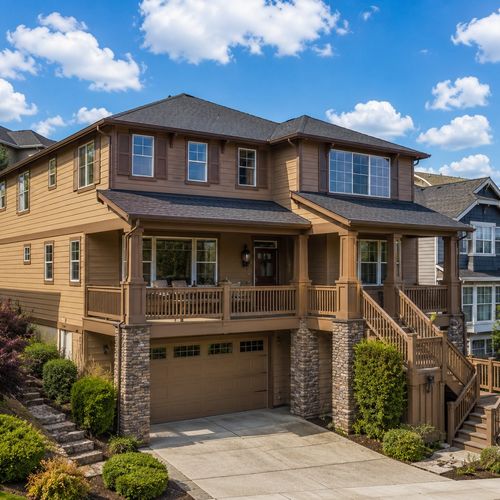
Banks is a rural small-city market with a housing inventory that reflects both its age and its character — a mix of older established residential homes on the lots that define the city's original residential footprint, newer construction that has arrived carefully rather than at the pace of Washington County's larger growth centers, and the occasional larger parcel or agricultural property at the city's edges that reflects Banks' continued adjacency to working rural land. This is not a market defined by phased master-planned development or builder incentive packages — it is a market defined by individual properties, honest lot sizes, and the kind of community stability that small Oregon cities with limited buildable land and strong agricultural identity tend to produce and protect.
Here is a realistic look at what different price points deliver in this market:
$350,000 – $450,000 Entry-level Banks delivers older single-family residential homes — primarily 1960s through 1990s construction — in the 1,000 to 1,600 square foot range, on lots that are consistently more generous than comparable price points anywhere in the closer-in Washington County markets produce. Two to three bedrooms, one to two baths, and the kind of residential land footprint that the Tualatin Valley's agricultural surroundings have historically made available at prices that reflect the land economy of a working rural community rather than the speculative land values of a suburban growth corridor. Condition at this price point is the honest variable — some homes have been maintained by long-term owners who treated the property as a permanent investment rather than a transitional address. Others carry the accumulated deferred work that rural residential properties develop when upkeep takes a back seat to other priorities over extended periods. The value here is real and legible: you are getting more home, more lot, and more community stability per dollar than anything with a Banks zip code's proximity to the Oregon Coast delivers anywhere else in Washington County. Buyers who know how to evaluate a home for its structure and systems rather than its surface treatment consistently find genuine opportunity in this range — provided they bring the inspection investment and the renovation honesty that older rural residential stock always requires.
$450,000 – $590,000 This is the most active and most telling price band in the Banks market — the range where the city's value proposition becomes most clearly legible against the broader Washington County context and where the buyers who have done the comparison honestly tend to land with the most conviction. Homes in this range tend to be updated or well-maintained single-family properties in the 1,500 to 2,200 square foot range — three to four bedrooms, two baths, kitchens that have been addressed with genuine intention in the last decade, and yards that take full advantage of Banks' lot-size culture in ways that feel qualitatively different from the tight suburban lots that comparable money produces in Hillsboro or Beaverton. Some homes at the upper end of this range have been renovated with real care — systems updated, surfaces refreshed without erasing the home's character, outdoor spaces improved to reflect the Pacific Northwest's relationship with outdoor living rather than left as undeveloped afterthoughts. For move-up buyers, relocators from higher-cost markets, and dual-income households setting a defined budget ceiling who want genuine land and genuine quiet without leaving Oregon, this is the range where Banks starts to feel not just practical but genuinely appealing on its own terms rather than as a substitute for something closer.
$590,000 – $775,000 Homes at this level represent the strongest residential product that Banks currently offers — updated or newer construction single-family properties on the most desirable lots in the city's established residential areas and immediate surroundings, in the 2,200 to 3,000 square foot range. Four bedrooms, two and a half to three baths, main-floor layouts that reflect how Pacific Northwest families actually live rather than how an earlier generation of floor plan designers assumed they would, and finish packages that deliver genuine quality without requiring the buyer to immediately begin planning the renovation they were hoping to avoid. Some properties in this range back to greenways, open agricultural land, or the forested terrain that begins to assert itself at Banks' western edges — lot orientations that deliver privacy, natural outlook, and a daily visual experience that no amount of landscaping investment on a standard suburban lot can replicate. Covered outdoor living spaces, meaningful garage configurations, and primary suite layouts that function as actual retreats are standard expectations at this tier in the Banks market, and the builders and sellers operating at this price point understand that clearly.
$775,000 and above The upper end of the Banks market is defined by acreage, agricultural character, and the kind of property specificity that rural Washington County at its best produces — custom or extensively upgraded homes on parcels of two to ten or more acres, where the combination of residential quality and land utility creates a property profile that simply does not exist at comparable prices anywhere in the closer-in Washington County market. Buyers at this level in Banks are typically purchasing a lifestyle rather than a square footage count — a home with a shop building, fenced pasture, established timber, or creek frontage that positions the property as a working rural residence rather than a suburban house on a larger lot. These properties surface infrequently, attract buyers who have been searching with specific criteria long enough to recognize the right property without needing time to decide, and move with conviction when the right buyer finds them. If you are in this range and serious about what Banks and the surrounding rural Washington County corridor offers, being connected and prepared is the right posture rather than browsing casually and hoping for lead time that this market does not typically provide.
Median home price in Banks: The median sits in the $460,000 to $530,000 range — a figure that positions Banks as one of the most accessible owner-occupied markets in Washington County on an absolute basis while significantly understating the value it delivers on a per-acre and per-community-character basis relative to the closer-in suburban markets that its price point is most frequently compared against. For buyers who have been running the Washington County math and finding that the markets with the most established commercial infrastructure have moved beyond what their budget can absorb without overextending, Banks' median represents a genuine recalibration — the point where the math starts working again and the lifestyle starts delivering more than the price tag initially suggests it should.
What About Renting in This Area?
The Banks rental market operates the way small rural Oregon city rental markets always do — with limited inventory, slow turnover, and a transaction dynamic built largely on personal connection and local knowledge rather than listing platforms and application portals. This is not a community with apartment complexes, large-scale rental developments, or a steady rotation of available single-family inventory cycling through the market at predictable intervals. What exists is a modest supply of privately held rental properties offered by long-term area landlords who know their properties, know the community, and tend to fill vacancies through local networks before any public-facing listing process begins.
Single-family rental homes in Banks and the immediately surrounding rural Washington County corridor typically run between $1,600 and $2,600 per month depending on size, condition, lot character, and the presence of any agricultural infrastructure or outbuilding access that commands a premium even in a small market. A two to three bedroom home in solid condition on a standard residential lot rents around $1,600 to $2,000. A larger, updated three to four bedroom home with meaningful land and quality finishes pushes into the $2,100 to $2,600 range. Smaller units and older inventory without recent updates tend to sit at the lower end of that range and can represent genuine value for renters who prioritize space, land access, and community character over contemporary finishes.
The honest guidance for anyone planning to rent in Banks before purchasing: approach this market as a community research project rather than a listing search. Connect with local real estate professionals, introduce yourself to the community networks that exist in every small Oregon city, and be prepared to move quickly when something appropriate becomes visible — because appropriate rentals in a community this size do not develop waiting lists, but they also do not wait for applicants who are still getting organized when the vacancy becomes known.
Things to Do In and Around Banks
Banks' location at the western edge of Washington County and the eastern approach of the Coast Range places residents inside one of the most naturally rich and recreationally diverse corridors in the Pacific Northwest — a landscape where the agricultural Tualatin Valley, the Coast Range forests, the Oregon wine country, and the Pacific Coast itself all fall within a radius that makes genuinely varied outdoor programming possible without the kind of extended driving that most metro-adjacent rural communities require.
Banks-Vernonia State Trail is Banks' signature outdoor asset and the primary reason that trail-oriented buyers find this city on the map — a 21-mile converted rail trail running from Banks west through the Coast Range foothills to Vernonia on a wide, well-maintained paved surface that accommodates cyclists, walkers, runners, and equestrians across the full range of fitness levels and trail configurations. The trail begins effectively in Banks' backyard, with the primary eastern trailhead at the city's edge, and runs immediately into the Coast Range forest that defines the western end of the Washington County landscape. The Buxton trestle, the Tophill tunnel, and the old-growth forest sections of the western trail are among the most memorable trail experiences in Oregon — genuinely surprising to first-time visitors who arrive expecting a flat rail trail and find instead a route that climbs into real forest and delivers real solitude within miles of the trailhead. For residents of Banks, the Banks-Vernonia Trail is not a destination that requires a drive — it is the everyday outdoor infrastructure of the community, accessible on foot or by bicycle from most residential addresses in the city. That immediacy is the kind of trail relationship that buyers who prioritize outdoor access dream about and rarely find this close to a functioning town with a school district and grocery access.
Hagg Lake — Scoggins Valley Park — is approximately 15 to 20 minutes southeast and delivers Washington County's primary open-water recreation experience — a reservoir set in the Coast Range foothills with boating, fishing, swimming, and a 15-mile loop trail around the perimeter that draws cyclists, walkers, and trail runners from across the county. The reservoir's setting gives it a natural character that feels genuinely removed from the suburban Washington County landscape surrounding it, and the variety of recreation it supports — from power boating to stand-up paddleboarding to competitive cycling events on the perimeter road — makes it one of the more complete regional park experiences in the Oregon metro area. For Banks residents, Hagg Lake fills the open-water recreation need that the city's own landscape does not provide, and it does so within a drive that most residents describe as entirely practical rather than as an expedition.
Tillamook State Forest begins effectively at Banks' western edge and extends into the Coast Range in a working forest landscape that provides dispersed hiking, hunting, mountain biking, and the kind of unstructured outdoor access that managed state forest land offers in Oregon with a generosity that most states' public land systems do not match. The Wilson River Trail system within Tillamook State Forest is accessible within 20 to 30 minutes of Banks and delivers river-side hiking through old-growth and managed forest terrain that draws Pacific Northwest outdoor enthusiasts from across the region. For residents of Banks, the entry points to Tillamook State Forest are local resources rather than day-trip destinations — the distinction between a neighborhood trail system and a regional outdoor attraction, compressed into the same geography.
The Oregon Coast is approximately 50 to 65 minutes west on Highway 26 through the Coast Range — the closest significant Oregon coast access from any Washington County city, and one of the primary lifestyle arguments for living in Banks rather than in a closer-in Portland suburb. Cannon Beach, Seaside, Manzanita, and the Tillamook Bay area fall within a drive that Banks residents execute for afternoon beach trips rather than full-weekend commitments. The coast is not a vacation destination from Banks — it is a regular Saturday option that residents of inner Portland neighborhoods and eastern Washington County suburbs cannot access at the same casual frequency. For buyers who moved to Oregon for the coast, Banks' position directly on the Highway 26 corridor makes that access more genuine and more practical than any Washington County address east of the Coast Range provides.
Vernonia — the western terminus of the Banks-Vernonia Trail — is a small Columbia County city approximately 21 miles west of Banks and worth knowing as both a trail destination and a community with its own rural character and limited dining and commercial infrastructure that rounds out the recreational orbit of the Banks corridor. The trail ride or drive to Vernonia and back has become a regular weekend activity for Banks residents who use the trail system as a community connector rather than simply a fitness resource.
Pumpkin Ridge Golf Club in nearby North Plains — approximately 8 to 10 minutes east — is one of the most significant golf facilities in the Pacific Northwest, with 36 holes across the Ghost Creek and Witch Hollow courses that have hosted multiple USGA championships and PGA Tour events. For golf-oriented buyers, proximity to Pumpkin Ridge is an amenity that the Banks address delivers nearly as effectively as a North Plains address, at a price point that reflects Banks' more rural positioning rather than North Plains' closer-in Washington County market.
Sauvie Island is approximately 25 to 30 minutes east — the Columbia River island agricultural and wildlife refuge community that delivers seasonal farm stand access, wildlife refuge bird watching, Columbia River beaches, and the kind of pastoral day-trip experience that Banks residents can access alongside their own agricultural surroundings in a way that inner Portland residents drive past from the other direction. For Banks households oriented around local food systems and agricultural tourism, the combination of the Tualatin Valley farmland immediately surrounding the city and Sauvie Island within a short drive creates a food-system connection that no other Washington County community delivers with the same proximity and variety.
Oregon wine country — the northern Willamette Valley and Tualatin Valley AVAs — surrounds Banks with working vineyard and winery operations within 20 to 40 minutes in multiple directions. Ponzi Vineyards, Elk Cove, David Hill, and dozens of smaller Pinot Noir and Pinot Gris producers whose tasting rooms are accessible from Banks make wine country access a practical weekly option rather than a special occasion trip. For buyers who place genuine lifestyle value on wine country proximity, Banks' position inside the northern Willamette Valley growing region is an underappreciated and undermarketed advantage relative to its eastern Washington County neighbors.
Hillsboro is 20 to 25 minutes east and provides the full Washington County commercial and service infrastructure — major grocery, specialty retail, medical, professional services, and the dining corridor that serves as the practical anchor for Banks residents whose daily life requires more commercial footprint than the small city's own center delivers. The Hillsboro connection is the primary practical complement to Banks' rural character — close enough to use regularly, far enough away to stay in the background of daily life rather than defining it.
Portland is 35 to 45 minutes east for the full urban experience — concerts, professional sports, destination dining, Powell's Books, the waterfront, and the cultural and professional infrastructure of a major Pacific Northwest city accessible when the occasion calls for it without requiring it to define the daily rhythm of life in a small western Washington County city that has chosen a different pace entirely.
Where to Eat
Banks is a small city and its dining scene is honest about what that means — a handful of locally rooted options within the city itself, supplemented by the Hillsboro dining corridor to the east and the broader Washington County restaurant landscape that the Highway 26 connection makes accessible. The dining experience in Banks is built around community institutions rather than dining destinations, and that reflects the city's character more accurately than a longer restaurant list would.
The Banks Pub and Grill is the community dining and social anchor that every small Oregon city needs and that Banks has built around a format — casual pub dining, a local bar scene, and the kind of gathering-place function that a neighborhood restaurant earns by being consistently present rather than consistently reviewed — that reflects the community it serves honestly. For Banks residents, it is the place where you see your neighbors, where the post-trail pint happens, and where the city's social fabric reveals itself on a Friday evening in a way that no amount of restaurant variety in a larger city quite replicates.
Helvetia Tavern — 10 to 15 minutes east toward North Plains on Helvetia Road — is the burger institution that the entire northwest Washington County community treats as its dining anchor, and its proximity to Banks makes it a neighborhood resource for residents who understand what they have access to. One of the most beloved roadhouse dining experiences in the Portland metro, operated in the agricultural flatlands with the institutional confidence of a restaurant that has never needed to explain itself and has never had to.
Vernonia dining options — accessible via the Banks-Vernonia Trail or a short Highway 47 drive west — add a second small-town dining orbit to the Banks resident's practical range, with the kind of casual community dining that a trail terminus town develops when it has enough cycling and outdoor recreation traffic to support a small local restaurant ecosystem.
Hillsboro's restaurant corridor at 20 to 25 minutes east is the destination for genuine dining variety — a full range of cuisines and price points reflecting Washington County's diverse and food-literate residential and professional community, accessible when the occasion calls for more variety than Banks' own footprint delivers on any given evening.
North Plains at 8 to 10 minutes east adds the Helvetia Tavern proximity that Banks already benefits from and the small commercial corridor that North Plains has developed as its own residential growth has attracted additional dining investment.
Portland is 35 to 45 minutes for serious dining nights — the full Portland restaurant landscape across every price point and cuisine, accessible when the occasion justifies the drive and genuinely worth the drive often enough to keep the relationship with the city functional without making it obligatory.
The honest framing that serves buyers best: Banks is a city where the relationship with food is built around what the agricultural landscape produces rather than what restaurants curate from it — a farmers market culture, a direct-farm purchasing mentality, and a home kitchen that reflects the Pacific Northwest's serious relationship with seasonal, local ingredients. Buyers who make that transition quickly tend to find that the limited restaurant footprint is not actually a limitation but a reflection of the way food is organized in a community that lives this close to where it grows. That realization is one of the more pleasant surprises of moving to Banks, and it tends to arrive earlier than buyers who were anxious about it expected.
Who Moves to Banks?
After nearly three decades working markets across the Pacific Northwest on both sides of the Columbia River, the Banks buyer is among the most intentional and clearly self-aware profiles I encounter anywhere in the region. They have not arrived at Banks by accident, by elimination, or by running out of options in markets they preferred. They have arrived by a specific process of deciding what they actually want from the place they live — a process that most buyers never fully complete because the answer keeps getting overridden by proximity requirements, school district boundaries, or the social pressure of choosing an address that requires explanation to no one.
They are remote workers who recognized, often during the broader shift to distributed work, that their address could finally reflect their values rather than their commute radius — and who found, after an honest search of the Pacific Northwest's rural residential landscape, that Banks offers a combination of trail access, coast proximity, agricultural community character, and price point that no other Washington County city delivers simultaneously. They looked at North Plains, appreciated its golf course and its school district, and then drove another eight miles west and found Banks — quieter, more rural, more specific, and exactly what they were looking for once they understood that what they were looking for was not a suburb with more land but a rural community with genuine identity.
They are outdoor-oriented buyers for whom the Banks-Vernonia Trail beginning at the edge of their neighborhood, Hagg Lake within twenty minutes, Tillamook State Forest accessible on a Tuesday afternoon, and the Oregon Coast reachable before lunch on a clear Saturday are not lifestyle bonuses but organizing principles — the criteria around which everything else in the housing search is evaluated rather than factors considered after location and price are settled.
They are buyers from California, Seattle, and the Bay Area who have built real equity in markets that extracted real cost and who are coming to the Pacific Northwest with the clarity that comes from having already learned what they do not want. They are not romanticizing rural life — they have thought about the grocery run, the restaurant question, the airport distance, and the school district, and they have concluded that the trade Banks offers is not just acceptable but actively what they want. That clarity separates them from buyers who love the idea of Banks on a visit and find the reality of it on a November Tuesday more than they bargained for.
They are buyers who stay. The combination of the trail access, the agricultural community character, the coast proximity, and the financial structure of a purchase that left genuine margin for the life they are building rather than consuming it in housing cost means that buyers who arrive in Banks with conviction tend to put down roots rather than treating it as a bridge to the next move. The community reflects that — long-term residents, genuine neighbors, and the kind of social fabric that a small city with a strong identity builds over generations and protects with the same intention that produced it.
What You Should Know Before You Commit
Banks asks something specific of the buyers who choose it, and the buyers who are happiest here are consistently the ones who understood the terms before they arrived rather than discovering them through the first winter.
The Highway 26 commute is the primary variable for any Banks resident maintaining a professional life that requires Portland metro presence with regularity. The Sunset Highway is not a freeway in the conventional sense through its entire route — it transitions from divided highway to two-lane sections in the Coast Range approaches, and the tunnel section eastbound generates peak-hour congestion that adds meaningfully to drive times on a schedule that does not accommodate significant buffer. Driving the route at the time you would actually use it, on the day of the week that represents your most demanding commute, is the right due diligence before the purchase rather than an approximation from a navigation app on a Sunday afternoon.
Internet infrastructure in Banks and the surrounding rural corridor varies by provider, technology, and specific address — a variable that matters enormously for remote workers whose professional life depends on reliable high-speed connectivity and that is worth confirming specifically for any property you are considering seriously before the offer rather than assuming that Washington County's broader broadband investment has reached every residential address within the city limits at equivalent service levels. It has not, and discovering the gap after closing is a meaningfully worse outcome than confirming the availability before it.
The Banks School District serves the community well at the values it is organized around — community connection, teacher-student relationship quality, and the kind of small-school environment that families who prioritize those factors consistently describe as the most positive surprise of moving to Banks. It is not a district with the programmatic breadth, the facility scale, or the specialized curriculum options that the Hillsboro or Beaverton districts deliver — and buyers for whom those specific features are meaningful factors in the school district evaluation should engage with that comparison honestly rather than assuming that small district and strong district are synonymous, even though in Banks' case they are more aligned than the enrollment numbers alone suggest.
The commercial footprint of Banks is what it is — a small city with a grocery limitation that requires planning rather than impulse, a dining scene built around community institutions rather than dining variety, and a service infrastructure that relies on Hillsboro to fill gaps that the city's population size does not generate enough demand to fill independently. Buyers who make peace with that dynamic before they move rather than after it tend to find that the trade is worth it on the terms they actually understood rather than the ones they assumed before they arrived.
Thinking About a Home in Banks?
Rural Washington County inventory moves on the rhythm of a community where the right properties surface infrequently and attract buyers who are already ready when they do — the gap between being organized and being a week behind in a market this size is the difference between the home you wanted and the contingency search you did not plan for. I know Washington County, I know the rural west side market at the level Banks deserves, and I will give you a straight read on what is available, what it is actually worth, and whether Banks is the right fit for the specific life you are building before you invest the emotional energy and the earnest money that discovering the answer after the offer costs.
See more about Banks
Want to learn more about Banks neighborhoods and homes?
Homes for sale in Banks: https://jamiemeushawrealestate.com/properties/city-Banks,%20OR/
Watch more local real estate insights on my YouTube channel:
https://www.youtube.com/@JamieMeushaw
Sign up for my weekly newsletter for real estate tips and market updates:
https://jamiemeushawrealestate.com/newsletter
Check out this article next