


Where Exactly Is Wilsonville?
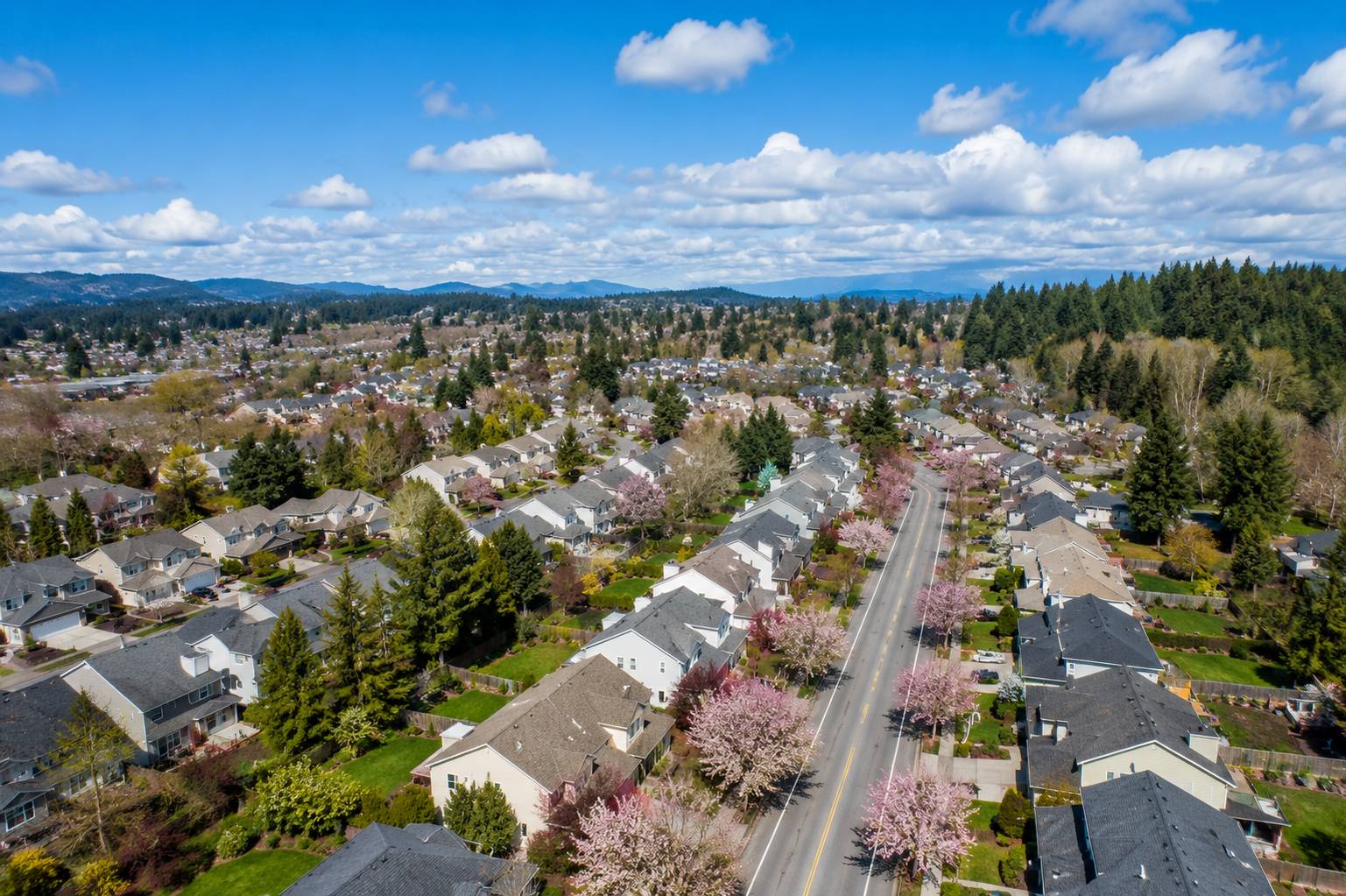
Wilsonville is an incorporated city primarily in Clackamas County — with a smaller portion extending into Washington County — positioned approximately 17 to 22 miles south of downtown Portland along Interstate 5 at the I-5 and Boone's Ferry Road interchange corridor. The city sits at the point where the Willamette River curves westward through the Tualatin Valley, with the river forming the community's northern boundary and the broader Willamette Valley agricultural plain extending to the south and west beyond the city's commercial and residential development. The I-5 corridor is Wilsonville's defining geographic asset — providing the freeway access that makes Portland, PDX, and the broader metro's employment centers genuinely accessible at drive times that the southern Clackamas County communities covered in the preceding guides cannot replicate from their highway-dependent approaches.
The city's development pattern reflects its growth management history — a relatively compact, intentionally planned urban growth boundary that has produced a community with commercial density along major corridors, residential variety across multiple planned neighborhoods, and the parks, trails, and recreational infrastructure that deliberate civic investment over multiple decades creates when the planning process takes amenity quality as seriously as residential absorption rates. The Charbonneau District on the city's western edge is a notable planned community within Wilsonville — a private residential community organized around golf courses and the particular lifestyle infrastructure that an established 55-plus community develops when its members have built their residential environment with genuine care and genuine resources over generations of ownership tenure.
Wilsonville is served by the West Linn-Wilsonville School District — one of the strongest and most consistently recognized public school systems in the Portland metro's Clackamas County corridor, whose academic quality, extracurricular depth, and community investment level reflect the combined educational priorities of two of Clackamas County's most resource-committed residential communities. The district's consistent placement in Oregon's top-performing school district rankings is a genuine and measurable differentiator that drives meaningful residential demand from family buyers who have done the school district comparison across the Portland metro and arrived at West Linn-Wilsonville as a top-tier outcome. For families with school-age children, the West Linn-Wilsonville School District is one of the primary and most honest drivers of Wilsonville's residential demand — and it is worth understanding specifically rather than assuming from reputation, confirming school assignments for specific Wilsonville addresses and the specific programming available at each level of the K-12 experience the district provides.
Portland International Airport is approximately 22 to 30 miles from Wilsonville, typically a 30 to 45 minute drive depending on traffic, time of day, and conditions on I-5 north toward the airport. The I-5 freeway approach to PDX from Wilsonville is one of the most efficient available from any southern Portland metro community at this distance from the airport — a freeway rather than a two-lane highway commute that absorbs the distance more efficiently than the Highway 99W and Highway 99E approaches that serve the Yamhill County and eastern Clackamas County communities. For frequent travelers and households where airport access is a meaningful daily quality-of-life factor, Wilsonville's I-5 freeway connection to PDX is a genuine practical advantage that distinguishes it from every other southern Portland metro community covered in this content library — the freeway architecture absorbs peak-hour traffic with the infrastructure capacity that two-lane highway approaches simply cannot replicate, making the Wilsonville airport run more predictable and more consistently timed than any comparable community at similar absolute distances from PDX that relies on two-lane state highway approaches to the metro.
The SMART transit system — South Metro Area Regional Transit — operates bus routes connecting Wilsonville to the broader TriMet network at the Barbur Transit Center and the Wilsonville Transit Center, providing transit connectivity to downtown Portland and the broader metro for residents whose daily movement can accommodate transit scheduling. The transit connection gives Wilsonville a public transportation option that most southern Portland metro communities at comparable distances from the city's core do not independently deliver.
What Your Money Gets You: Homes at Every Price Point
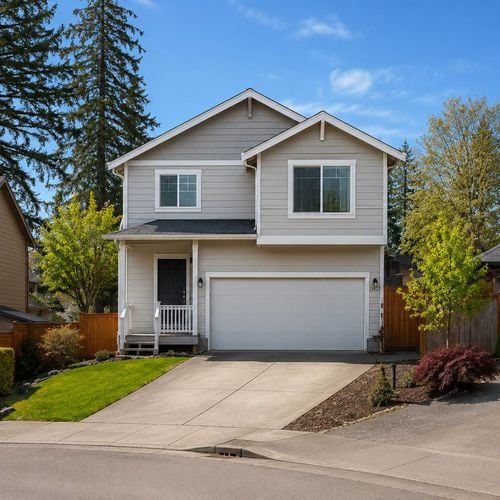
Wilsonville's housing market reflects the community's planned development history, its West Linn-Wilsonville School District premium, and its I-5 freeway accessibility in a pricing structure that is meaningfully higher than the rural and small-city Clackamas County communities covered earlier in the content library while remaining meaningfully more accessible than the recognized premium Clackamas County communities of West Linn and Lake Oswego to the north. The residential inventory spans the full range from established older residential neighborhoods in the city's original development areas through multiple waves of planned residential additions that reflect three decades of managed growth alongside the Charbonneau District's private community character and the most recent residential phases in the city's western and southern growth areas.
Here is a realistic look at what different price points deliver in this market:
$450,000 – $575,000 Entry-level Wilsonville delivers the city's older established residential stock alongside the smaller configurations in more recent planned residential additions — primarily 1980s through 2000s single-family construction in the 1,200 to 1,800 square foot range, three bedrooms, two baths, and the residential configurations that Wilsonville's earlier development eras produced with the lot generosity and the neighborhood stability that older planned community residential fabric delivers relative to the tighter configurations of the most recent production builder phases. The West Linn-Wilsonville School District assignment is fully present at this price point regardless of the property's interior update level — and for buyers whose primary criterion is accessing the district's educational quality at the most accessible price point the Wilsonville market currently sustains, this range delivers that access at a number that the district's more recognized West Linn addresses stopped producing at comparable property sizes several market cycles ago. Condition at this range reflects the honest variability of residential stock from these eras — some homes have been maintained thoughtfully by long-term owners who understood the community's value and invested accordingly. Others carry the deferred work that extended ownership without active maintenance produces over time. The value is genuine for the buyer whose school district priority, I-5 freeway accessibility, and West Linn-Wilsonville residential community character combine to produce Wilsonville as the honest answer to what they are specifically looking for.
$575,000 – $730,000 This is the most active and most varied price band in the Wilsonville market — the range where the community's full residential value proposition becomes most clearly legible and where buyers who have run the southern Portland metro and Clackamas County comparison honestly tend to arrive with conviction. Homes in this range encompass the best of the older established residential stock in updated or well-maintained form alongside the newer planned residential additions that Wilsonville's managed growth has produced in the city's expanding western and southern neighborhoods. Three to four bedrooms, two to two and a half baths, kitchens that reflect genuine renovation investment or builder-standard finishes in newer construction that have held up with normal maintenance, and the outdoor spaces that a southern Clackamas County planned community's residential fabric produces when it has been engaged with over the ownership tenure that the community's long-term resident culture reflects. For families prioritizing the West Linn-Wilsonville School District alongside I-5 freeway accessibility and southern Portland metro residential quality, technology sector employees whose employment is anchored in Wilsonville's corporate base, and relocators from higher-cost markets who want the most complete version of the southern Portland metro planned community lifestyle at the price point that distinguishes Wilsonville from the premium northern Clackamas County alternatives — this range delivers the clearest and most complete version of what the community offers.
$730,000 – $950,000 Homes at this level represent Wilsonville's strongest conventional residential product — fully renovated or newer construction single-family properties on the most desirable lots in the city's established and newer residential areas, in the 2,300 to 3,200 square foot range. Four bedrooms, two and a half to three baths, kitchens and primary baths rebuilt at a level that reflects genuine investment in both function and finish, and outdoor spaces that reflect the Pacific Northwest's serious relationship with outdoor living in configurations that Wilsonville's more generous planned community lots make accessible. Some properties in this range access the elevated terrain or the Willamette River proximity that the city's northern and western residential positions create — the view corridors across the Tualatin Valley and the river's natural edge that give the community's most advantageously sited residential addresses a natural setting quality that the flat development corridor's interior positions do not independently provide. For buyers whose residential criteria combine West Linn-Wilsonville School District quality, technology employment proximity, southern Portland metro planned community character, and Willamette River adjacency at a price that the premium northern Clackamas County alternatives price meaningfully beyond — this range delivers the most complete version of the Wilsonville residential proposition.
$950,000 – $1,300,000 At this level, Wilsonville's market delivers the most compelling residential product in the city's conventional inventory alongside the premium end of the Charbonneau District's private community residential market. Custom or extensively renovated homes on the city's most desirable sites — Willamette River adjacency, elevated valley view corridors, or the Charbonneau District's golf course positions — deliver a residential experience that combines the West Linn-Wilsonville School District assignment with the natural setting quality that the community's most advantaged sites produce. The Charbonneau District properties at this level provide the private golf course community lifestyle that the established 55-plus community has built over decades of residential investment — the golf course orientation, the community amenity infrastructure, and the particular residential character that a mature private planned community produces when its members have maintained genuine long-term investment in the collective residential environment they share.
$1,300,000 and above The upper end of Wilsonville's market is defined by the rarest and most site-specific properties in the community — Willamette River frontage homes with direct water access, the most commanding elevated positions with panoramic valley and mountain views, and the custom residential properties on the largest and most naturally positioned lots that the city's development history has produced. These properties surface infrequently, attract buyers whose specific Willamette River or view corridor criteria make Wilsonville's northern and elevated positions the natural answer regardless of the premium they command, and move to buyers who were already prepared.
Median home price in Wilsonville: The median sits in the $560,000 to $650,000 range — a figure that positions Wilsonville as meaningfully more accessible than the recognized premium Clackamas County communities of West Linn and Lake Oswego to the north while delivering a comparable West Linn-Wilsonville School District assignment and a comparable I-5 freeway infrastructure at a price differential that reflects honest geographic positioning rather than meaningful quality differential for the buyer whose criteria are organized around school district quality and freeway access rather than address prestige and waterfront property premium. Against the smaller and more rural Clackamas County communities of Canby, Molalla, and Mulino covered in the preceding guides, Wilsonville delivers more commercial completeness, more transit connectivity, more technology employment proximity, and more planned community infrastructure at a price premium that honestly reflects those differentials. The positioning within the Portland metro's southern corridor reflects a genuine value opportunity for buyers who have compared the West Linn-Wilsonville School District with the premium it commands in West Linn and Lake Oswego addresses and found that Wilsonville delivers the district quality at a price that the northern premium communities do not sustain for comparable residential footprints.
What About Renting in This Area?
The Wilsonville rental market is active and well-supplied relative to the smaller communities covered earlier in the Clackamas County and Yamhill County content series — a reflection of the city's size, its corporate employment base, and the planned apartment and multi-family development that Wilsonville's managed growth approach has produced alongside the single-family residential expansion. The technology and corporate sector employment at Wilsonville's major employers generates a consistent and professionally qualified rental demand that sustains occupancy rates and supports the rental inventory across apartment, townhome, and single-family configurations.
Single-family rentals in Wilsonville typically run between $2,200 and $3,500 per month depending on size, condition, lot character, neighborhood, proximity to the Willamette River, and the recency and quality of any renovation. A three-bedroom, two-bath home in solid condition with a usable yard rents around $2,200 to $2,800. A larger, updated four-bedroom home with quality finishes, meaningful outdoor space, and a desirable neighborhood position within the city's more established or more premium residential areas pushes into the $2,800 to $3,500 range. Charbonneau District properties, when they appear in the rental market, are subject to the community's specific age and occupancy requirements — confirming the qualification framework before pursuing any Charbonneau rental is essential pre-application diligence.
Apartment and condominium rentals in Wilsonville's purpose-built rental inventory start around $1,400 to $2,100 for one to two bedroom configurations depending on the building's age, amenity level, and proximity to the transit center and commercial corridors. Wilsonville's apartment inventory is more extensive than any other community in the Clackamas County content series — a reflection of the deliberate inclusion of multi-family residential in the city's managed growth approach that has produced rental variety and rental accessibility across price points and household configurations.
For relocating professionals whose employment is at one of Wilsonville's major technology or corporate employers, the rental market's supply depth and the variety of configurations available at accessible price points make Wilsonville a practical rental staging community for the household that wants to establish itself in the West Linn-Wilsonville School District community before committing the purchase capital that the ownership market requires. The SMART transit connection to the broader TriMet network adds a transit commute option for renters whose employment is along the transit corridor — a practical consideration for dual-income households where one partner commutes by transit while the other commutes by car.
Things to Do In and Around Wilsonville
Wilsonville's position at the I-5 and Willamette River intersection at the southern edge of the Portland metro places residents within reach of a genuinely complete range of outdoor, recreational, commercial, and cultural amenities — reflecting the deliberate planning investment that has produced a community with more parks, trails, and recreational infrastructure per capita than most Portland metro communities of comparable size and comparable distance from the urban core.
Memorial Park and the Willamette River Greenway Trail are Wilsonville's most significant outdoor assets — a community park of substantial scale on the Willamette River's south bank that provides fishing access, picnic and open lawn infrastructure, river views, and the particular daily relationship with the Willamette that a river-edge park delivers when its community maintains it as a genuine recreational center rather than a designed landscape object. The Willamette River Greenway Trail connects Wilsonville's riverside park infrastructure to the broader Willamette River trail network — providing cyclists and walkers with a river-edge path that delivers the natural landscape quality of the Willamette corridor in accessible, flat terrain without the elevation demands that the West Hills and the Clackamas River canyon trail systems require.
Ike's Pond and Coffee Lake — natural and constructed water features within Wilsonville's residential fabric — provide the daily walking, fishing, and waterfowl observation access that planned community neighborhoods integrate into their residential character when the planning process takes quality of life seriously alongside lot yield. These are the neighborhood-scale outdoor assets that residents use daily rather than occasionally — the pond walk before work, the weekend loop with the dog, the waterfowl observation that becomes a seasonal routine for households whose children grow up watching migratory ducks appear in the fall and disappear in the spring.
Murase Plaza and the city's planned public spaces reflect Wilsonville's investment in the civic and public realm infrastructure that distinguishes a genuinely planned city from a subdivision development — open plazas, public art, community gathering spaces, and the built environment quality that a city's planning culture produces when it treats the public realm as seriously as the private residential market.
Tualatin River National Wildlife Refuge — accessible approximately 15 to 20 minutes northwest of Wilsonville — is one of the Pacific Northwest's most significant accessible urban-edge wildlife viewing experiences, with restored wetland habitat and the migratory bird populations that a functioning Columbia River tributary wetland refuge supports year-round. The refuge is close enough to Wilsonville to function as a regular rather than occasional outdoor destination — the kind of natural resource that a southern Portland metro community at Wilsonville's position accesses with the casual frequency that living close to something genuinely extraordinary makes possible.
Bridgeport Village in the adjacent Tualatin area — minutes from Wilsonville via I-5 north — is the lifestyle retail and dining center that serves as the primary upscale commercial destination for the southern Washington County and northern Clackamas County residential corridor. For Wilsonville residents, Bridgeport Village functions as an extended neighborhood commercial resource — the upscale casual dining, the lifestyle retail, and the outdoor lifestyle center character that the development has built through the retail investment of a community that has consistently used it as a neighborhood destination rather than an occasional trip.
Washington Square Mall in Tigard is accessible via I-5 north — a full regional retail center providing the department stores, specialty retail, and commercial variety that serves the Washington County and south Portland metro residential market as a major shopping anchor. For Wilsonville residents whose retail needs extend beyond the local commercial corridors, Washington Square provides the regional retail completeness within a practical drive that reflects the I-5 corridor's commercial infrastructure advantage over the two-lane highway approaches of the more rural communities in this series.
Champoeg State Heritage Area — approximately 10 to 15 minutes northwest via Boone's Ferry Road toward the Willamette River corridor — is the historically significant Oregon state park that multiple guides in this series have referenced as a community recreational asset. For Wilsonville residents, Champoeg's riverside trails, camping, and historical programming are among the most directly accessible state park experiences available from any Portland metro I-5 corridor community.
Silver Falls State Park — approximately 45 to 55 minutes southeast via I-5 and the Silverton approach — is the Oregon state park crown jewel that Wilsonville residents access with more casual regularity than Portland metro communities further from the eastern Willamette Valley approach. The Trail of Ten Falls, the waterfall swimming holes, and the old-growth forest corridor that Silver Falls provides are accessible from Wilsonville as a proper Saturday morning plan rather than a full-day expedition requiring departure before sunrise.
Mount Hood and the Cascade mountain recreation corridor — accessible via I-5 north to Highway 26 east — puts Timberline Lodge, Mount Hood Meadows, and the full Cascade mountain recreation landscape within a drive that Wilsonville residents navigate as a regular weekend option. The I-5 freeway infrastructure that defines Wilsonville's access in the Portland direction applies equally to the eastern Cascade approach — freeway efficiency replacing the two-lane highway approaches that lengthen the equivalent drive from the more rural southern communities in this series.
The Willamette Valley wine country — accessible via I-5 south to Highway 18 west through Dayton and the Eola-Amity Hills, or via the Boone's Ferry Road and rural highway approach through Newberg and Dundee — brings the northern Yamhill County wine country within forty to fifty minutes of Wilsonville's residential streets. The wine country day trip is accessible from Wilsonville as a casual Saturday outing that the I-5 corridor's efficient southern approach to the Highway 18 junction makes more spontaneous than the two-lane highway approaches from communities north and east of the wine country's corridor.
The Oregon Coast — approximately 75 to 90 minutes west via I-5 south and Highway 18 through McMinnville — places the central Oregon coast within day-trip range with the I-5 efficiency that makes the first segment of the drive faster than comparable drives from Portland neighborhoods that must navigate city traffic before reaching the freeway. Lincoln City, Pacific City, and the Tillamook Bay area are the most direct coastal destinations from the Wilsonville-Highway 18 approach.
Salem — approximately 35 to 40 minutes south on I-5 — is Oregon's state capital and the mid-sized Oregon city that provides Wilsonville residents with an alternative metro direction for governmental services, specialty medical, and the full commercial infrastructure of a substantial Oregon city when the Portland metro's northern orientation does not serve the specific need at hand.
Downtown Portland — 25 to 35 minutes north on I-5 — is the full urban experience of a major Pacific Northwest city accessible when the occasion calls for it. The I-5 approach delivers Wilsonville residents to downtown Portland's west side via the Barbur Boulevard and Terwilliger Boulevard interchanges or continues to the downtown core via I-405 — a freeway approach that is more efficient and more predictable than the two-lane state highway approaches from the Yamhill County and southern Clackamas County communities covered in the preceding series. Peak-hour congestion on I-5 northbound is a real and recurring variable that Wilsonville buyers should drive at actual commute times rather than estimating from off-peak navigation approximations — the I-5 corridor's traffic volume at peak windows is the primary variable in the Wilsonville-to-Portland commute calculation, and it is a variable that the freeway's infrastructure handles better than two-lane highways but that still produces meaningful timing variability during morning and evening peak commute windows.
Nike World Headquarters and the Washington County technology employment corridor are accessible via I-5 north and Highway 217 west — a freeway commute that gives Wilsonville residents access to the major Washington County tech campus employment base with a drive time that reflects I-5 efficiency rather than surface street navigation. For households where one partner works at Nike, Intel, or in the Beaverton-Hillsboro tech corridor, Wilsonville's I-5 north and 217 west commute is among the more efficient available from any southern Clackamas County residential community.
Where to Eat
Wilsonville's dining scene reflects the community's planned city character and its corporate employment base — more varied and more quality-conscious than the small agricultural communities covered in the Clackamas County and Yamhill County series, anchored by its own commercial corridor alongside Bridgeport Village's upscale casual culture immediately to the north, and built on the repeat business of a residential and professional population whose income and culinary expectations sustain quality independent operators and national casual dining concepts alongside each other in the I-5 corridor's commercial infrastructure.
Boones Ferry Grill is Wilsonville's most established independent dining institution — a restaurant that has served the community's social dining culture with the consistent quality and the community gathering function that a planned city's primary independent restaurant earns through years of showing up rather than through a single defining culinary moment. The Pacific Northwest-influenced menu and the wine list's regional orientation reflect the community's proximity to the Willamette Valley wine country's agricultural production in the way that a restaurant embedded in its residential community naturally develops when the community takes its food and wine culture seriously.
Gustav's German Pub and Grill brings the German pub tradition to the Wilsonville corridor with a beer selection and a menu that has built genuine regional recognition and a loyal local following that extends well beyond the immediate community into the broader southern Portland metro. For Wilsonville residents, Gustav's serves the community pub function that the best neighborhood restaurants and bars always serve — the post-work pint, the weekend dinner, the visiting family meal that explains the local dining culture with a single reliable experience.
Restaurants along the Wilsonville Road commercial corridor provide the full casual dining range — Italian, Mexican, Asian, American casual, pizza, and the quick-service options — that a planned city's primary commercial corridor generates when its residential base reaches the scale that sustains commercial dining variety year-round. The specific tenants evolve with the market, but the commercial density that Wilsonville's I-5 interchange position generates ensures a consistent and commercially viable casual dining baseline accessible without a drive to Bridgeport Village or Tualatin's broader commercial corridor for routine weeknight needs.
Bridgeport Village — accessible minutes away in the adjacent Tualatin community — is the primary upscale casual dining destination for Wilsonville residents and one of the Washington County and north Clackamas County corridor's most complete restaurant collections. The development's restaurant selection across price points and cuisines, combined with the outdoor lifestyle setting that the Pacific Northwest's favorable weather makes genuinely usable across most of the calendar year, gives Wilsonville residents access to a dining destination that functions as a regular rather than exceptional outing given the short drive from the city's residential fabric.
The Tualatin and Sherwood dining corridors — accessible via I-5 north and the surrounding commercial street network — extend Wilsonville's practical dining radius into the broader south Washington County and north Clackamas County commercial ecosystem, adding the dining variety of a larger commercial corridor to the city's immediate footprint without requiring a full Portland metro navigation commitment.
The Yamhill County wine country dining corridor — accessible forty to fifty minutes southwest via I-5 south and Highway 18 through McMinnville — brings the Dayton, McMinnville, and Dundee wine country culinary culture within reach as a regular rather than exceptional dining destination for Wilsonville residents who combine wine country tasting with dinner at Nick's Italian Cafe, Thistle, or the Joel Palmer House on the occasions the drive justifies the combination.
Lake Oswego's downtown dining corridor — accessible approximately 15 to 20 minutes north on I-5 and Boone's Ferry Road — provides the upscale independent restaurant and wine bar culture that complements Bridgeport Village's lifestyle retail dining orientation with the local character and culinary investment that Lake Oswego's established residential and income level generates along its primary commercial street.
Portland's restaurant landscape — twenty-five to thirty-five minutes north on I-5 — provides the full Portland culinary culture for the occasions that call for the Pearl District's dining corridor, the James Beard-recognized restaurants, and the comprehensive culinary infrastructure of a nationally recognized food city. The I-5 freeway approach makes the Portland dining run more efficiently predictable from Wilsonville than from the two-lane highway communities in the preceding series, though peak-hour timing still deserves honest management rather than optimistic approximation for the drive home after a late dinner.
The honest framing: Wilsonville's dining scene is the most complete of any community in the Clackamas County content series and more varied than most of the Yamhill County and Columbia County communities covered in the preceding guides — a reflection of the planned city's commercial density, the corporate employment base's purchasing power, and the residential community's culinary expectations. Bridgeport Village's immediate proximity effectively doubles the dining variety accessible from Wilsonville's own commercial corridor without requiring a dedicated dining-specific trip — the combination producing a dining radius that most southern Portland metro communities at comparable distances from the city's core cannot approach in variety or in quality without a longer and more committed drive.
Who Buys in Wilsonville?
After nearly three decades working markets across the Pacific Northwest on both sides of the Columbia River and across the full Oregon metro, rural, coastal, and wine country corridor, the Wilsonville buyer is the most specifically school-district-driven and the most corporate-employment-anchored residential profile in the southern Clackamas County content series — a buyer whose criteria are organized around the West Linn-Wilsonville School District's recognized quality, the I-5 freeway's commute efficiency, and the planned community's residential completeness at a price point that the northern premium Clackamas County communities stopped delivering for comparable school district quality and comparable property footprints several market cycles before remote work and honest comparison-shopping made the geographic calculus transparent.
They are families for whom the West Linn-Wilsonville School District is the non-negotiable organizing criterion of the purchase decision — buyers who have researched the Portland metro's school district landscape with the thoroughness that a significant residential investment deserves, compared the West Linn-Wilsonville district's academic outcomes, extracurricular depth, and community investment level against the alternatives available at comparable price points across the metro's southern and western corridors, and arrived at Wilsonville as the honest answer to the question of where the district's quality is most financially accessible for the specific property footprint their household requires. These buyers are not making a compromise between school district quality and purchase price — they are making the honest discovery that the West Linn-Wilsonville district is accessible from Wilsonville at a price that West Linn's and Lake Oswego's residential markets stopped offering years before the comparison became obvious to the buyers who were looking at the data rather than at the address prestige.
They are technology and corporate sector professionals whose employment is anchored in Wilsonville's significant corporate employment base — Siemens EDA, Lattice Semiconductor, and the broader tech corridor that has established Wilsonville as one of the Portland metro's most concentrated technology employment centers outside of Washington County's Intel and Nike campus infrastructure. For these professionals, Wilsonville's residential community delivers the specific combination of West Linn-Wilsonville School District assignment, walkable or short-drive corporate campus commute, and planned community residential quality that the technology sector's professional demographic consistently prioritizes when the employment anchor makes a suburban address the natural residential choice.
They are Portland metro upgrade buyers — households that have been living in the closer-in Portland metro's eastside, inner westside, or Clackamas County premium communities and who have run the comparison between their current address's school district quality, their remaining commute efficiency, and the residential square footage and lot size their purchase budget delivers at each geographic option. For this buyer, Wilsonville consistently emerges as the answer that delivers the West Linn-Wilsonville district quality at a price that Lake Oswego and West Linn stopped offering for comparable residential footprints — the geographic move that actually improves rather than maintains the school district quality while delivering more property per dollar than the premium northern alternatives currently sustain.
They are remote workers and dual-income households whose professional flexibility has introduced the question of where within the Portland metro's southern I-5 corridor the combination of school district quality, planned community residential infrastructure, commercial completeness, Willamette River proximity, and price point produces the best answer for their specific household's criteria. For these buyers, Wilsonville's combination of West Linn-Wilsonville district, SMART transit connection for one partner's Portland commute, I-5 freeway efficiency for the other partner's south metro employment commute, and a residential price point below the northern premium community alternatives produces the answer that the honest multi-variable comparison generates when all the criteria are weighted honestly.
They are relocators from California, the Bay Area, and Washington State who have looked at the Portland metro with the financial sophistication and the school district research discipline that purchasing in a high-cost market builds over a career, and who have found that Wilsonville's combination of West Linn-Wilsonville School District quality, I-5 freeway access, planned community residential infrastructure, and median home price represents a Pacific Northwest residential value that the recognized Portland metro premium addresses price thirty to fifty percent above for the same school district quality and the same freeway infrastructure. These buyers understand what they are purchasing and why the price point reflects geographic positioning rather than quality differential — and their retention rate reflects the structural alignment between what Wilsonville delivers and what they specifically came looking for.
They are, consistently, buyers who describe Wilsonville as performing above the expectations that its modest name recognition and its position south of the premium northern Clackamas County communities suggested before they lived there. The West Linn-Wilsonville School District consistently delivers. The I-5 commute to the Portland metro and to PDX consistently performs. The planned community's parks, trails, and recreational infrastructure consistently provides the daily quality of life that the deliberate planning investment that built them was specifically designed to produce. And the price point relative to the northern premium alternatives consistently reflects a genuine value differential that buyers who are still discovering Wilsonville can capture before the gap narrows to the level that the honest school district and infrastructure comparison eventually produces.
What You Should Know Before You Commit
Wilsonville rewards buyers who engage with the I-5 commute's peak-hour dynamics honestly, the planned community's character distinctions across different residential neighborhoods and the Charbonneau District's specific community framework, and the honest school district comparison across the specific dimensions that their household's educational priorities require — with the direct confidence of a community that has been building something genuinely worth living in for long enough to stop needing to defend the choice.
I-5 northbound peak-hour commute dynamics are the primary practical variable for any Wilsonville buyer whose professional or family obligations require Portland metro presence during peak commute hours with regularity. I-5 is a major interstate highway with the traffic volume that connects two Oregon metro areas and handles the freight and passenger traffic of the primary West Coast interstate — and its peak-hour northbound congestion between Wilsonville and the I-205 and downtown Portland interchanges is a real and recurring feature of the I-5 corridor's daily character rather than an occasional disruption. The freeway infrastructure handles the volume more efficiently than the two-lane state highway approaches of the communities to the south and southwest, but it does not eliminate the peak-hour commute time extension that the corridor's traffic volume produces during morning and evening windows. Drive the I-5 northbound at seven-thirty on a Wednesday morning before the purchase. The assessment that experience produces is more useful than any navigation app's average estimate across all times and all days.
The Charbonneau District's specific community framework is worth understanding before pursuing any Charbonneau property — the private community's age qualification requirements, the HOA governance structure, the monthly fee obligations, the golf course membership arrangements, and the community rules that the Charbonneau District's private community governance produces are all specific to the district in ways that differ meaningfully from the city's conventional residential market. Buyers considering Charbonneau properties should confirm the community's current qualification requirements, fee structure, and governance framework directly before the offer rather than assuming them from general planned community expectations.
The West Linn-Wilsonville School District comparison against the Beaverton, Lake Oswego, and other recognized Portland metro school districts should be conducted with the full specificity that the comparison deserves — graduation rates, AP and IB course availability and completion rates, extracurricular program breadth, facility quality, and the specific school assignments for any Wilsonville address — rather than from the general reputation comparison that aggregate district rankings produce. The West Linn-Wilsonville district is genuinely strong — with the academic outcomes and the community investment that a combined district serving two of Clackamas County's most resource-committed communities produces at its best. Knowing specifically what the comparison produces across the dimensions that matter most to any given household's educational priorities is worth the specific research that confirms rather than assumes the district's quality.
The residential neighborhood character variation within Wilsonville across its multiple development eras and planned neighborhood areas is more meaningful than the city's unified planning approach might initially suggest — the older established neighborhoods near the city's original commercial core, the mid-era planned residential additions, the most recent production builder phases in the western and southern growth areas, and the Charbonneau District's private community produce meaningfully different daily residential experiences in terms of lot size, neighborhood maturity, commercial proximity, and the specific character that each development era's planning approach built into the residential fabric. Understanding which neighborhood character any given Wilsonville property reflects — and whether that character aligns with the residential experience the buyer is specifically seeking — is the granular local knowledge that a Wilsonville purchase at any price point rewards.
Thinking About a Home in Wilsonville?
Wilsonville inventory at the quality end of the market — updated single-family homes in the established residential neighborhoods with West Linn-Wilsonville School District assignment, newer construction in the planned residential additions with the contemporary floor plans that buyers moving from older suburban stock find immediately livable, and the Willamette River-proximate properties that represent the community's most specifically compelling natural setting assets — moves with the momentum of a community where the West Linn-Wilsonville School District premium, the I-5 freeway efficiency, and the planned community infrastructure create a buyer pool that engages with well-priced properties decisively rather than casually. I know the southern Clackamas County and Willamette Valley corridor from Oregon City south through Canby, Wilsonville, and into the Yamhill County wine country approach, and I will give you a straight read on what you are looking at — the property, the specific neighborhood character within Wilsonville's varied residential geography, the school assignment confirmation, the I-5 commute at the specific times your household would experience it, the Charbonneau District framework if applicable, and the complete total cost of ownership picture — before you write anything.
See more about Wilsonville
Want to learn more about Wilsonville neighborhoods and homes?
Homes for sale in Wilsonville: https://jamiemeushawrealestate.com/properties/place-Wilsonville,%20OR/
Watch more local real estate insights on my YouTube channel:
https://www.youtube.com/@JamieMeushaw
Sign up for my weekly newsletter for real estate tips and market updates:
https://jamiemeushawrealestate.com/newsletter
Check out this article next