


Where Exactly Is Estacada?
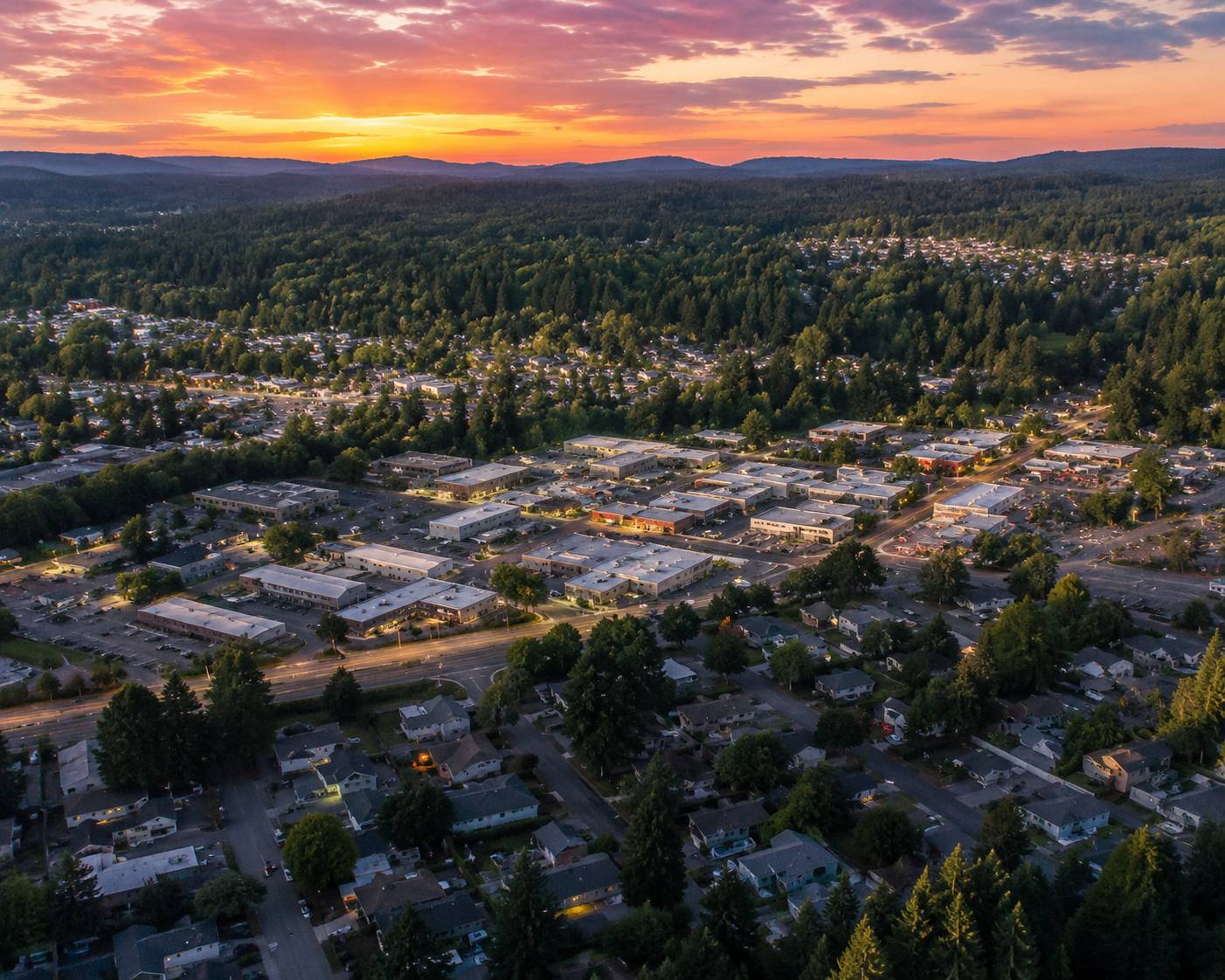
Estacada is an incorporated city in Clackamas County, Oregon, positioned approximately 24 to 28 miles southeast of downtown Portland along Highway 224 — the Clackamas River Highway that follows the river from the Highway 212 junction near Damascus southeast through the canyon to Estacada and continues upstream into the Mount Hood National Forest's western approach toward Timothy Lake, the Ripplebrook Ranger Station, and the Cascade mountain landscape beyond. The city sits at the point where the Clackamas River canyon broadens from its most dramatic section upstream into the flat valley that Estacada's residential and commercial fabric occupies — the river running along the city's northern and eastern edges, the forested foothills terrain rising on the surrounding ridgelines, and the canyon road's scenic approach providing the particular arrival experience that communities embedded in genuine geographic drama consistently deliver to visitors and residents alike.
The Clackamas River is Estacada's defining geographic asset — a Coast Range tributary river running clear and cold through volcanic canyon terrain with the salmon and steelhead fisheries, the whitewater recreation, the swimming holes, and the riverside camping that have made the Clackamas River canyon one of the Pacific Northwest's most specifically celebrated outdoor recreation corridors. The river's designation as part of the Wild and Scenic Rivers system in its upper reaches reflects both its ecological significance and the political commitment of the community around it to preserving the character that makes Estacada's position at the canyon's gateway its most specific and most irreplaceable residential asset.
Estacada is served by the Estacada School District — a small independent Oregon school district serving the Estacada community with a K-12 program that reflects the working-class river canyon community character the district has served for generations. The district's small enrollment produces the teacher-student relationship quality, the community-embedded school culture, and the small-district intimacy that Clackamas County's more rural communities consistently develop in their educational institutions. It is not the West Linn-Wilsonville School District in terms of scale, programmatic breadth, or the specialized curriculum depth that a well-funded suburban district at Wilsonville's income level delivers — and buyers for whom those specific features are meaningful educational criteria should engage with that comparison honestly before the canyon's compelling outdoor character overrides the school district evaluation in the purchase decision. What the Estacada district is, genuinely, is a district embedded in the river canyon community it serves in ways that produce genuine community investment and genuine teacher-student relationship quality that the community's residents consistently describe as one of the more specifically satisfying aspects of raising children in Estacada.
Portland International Airport is approximately 28 to 36 miles from Estacada, typically a 42 to 60 minute drive depending on traffic, time of day, and conditions on Highway 224 and the approach through the Damascus and Clackamas corridor toward the Portland metro and the I-205 airport approach. The Highway 224 approach from Estacada is a two-lane highway through the canyon's most scenic sections before transitioning to a more suburban character approaching the metro corridor — a route that is genuinely beautiful outside of peak hours and that produces the traffic dynamics of a two-lane canyon road delivering volume into the metropolitan area during peak commute windows. For occasional travelers and households with a manageable flight cadence, the airport run is entirely workable with honest timing management. For buyers whose professional life requires weekly or more frequent PDX access, the canyon road's peak-hour dynamics are worth driving at actual-use times rather than estimating from off-peak navigation approximations. The I-205 connection from the Clackamas corridor provides freeway access to PDX once the canyon approach reaches the metro's suburban fabric — the final segment of the airport commute operating on freeway rather than two-lane highway infrastructure.
What Your Money Gets You: Homes at Every Price Point
Estacada's housing market reflects the community's character as a small river canyon gateway city with a working-class economic identity, meaningful outdoor recreational assets, and a price point that has benefited from the Clackamas River canyon's geographic constraints on residential expansion as much as from any deliberate market dynamic. The canyon's topography limits the flat buildable land available for residential development in and around the city — most of the Clackamas River canyon terrain is forested, steeply sloped, and within the Mount Hood National Forest's federal ownership boundary — which means that Estacada's residential inventory is primarily the accumulated result of the flat valley land that the canyon broadens to provide at the city's location, with limited new construction opportunities relative to the demand that the outdoor recreation gateway appeal generates from buyers drawn to the canyon lifestyle from the Portland metro's saturated recreational community market.
Here is a realistic look at what different price points deliver in this market:
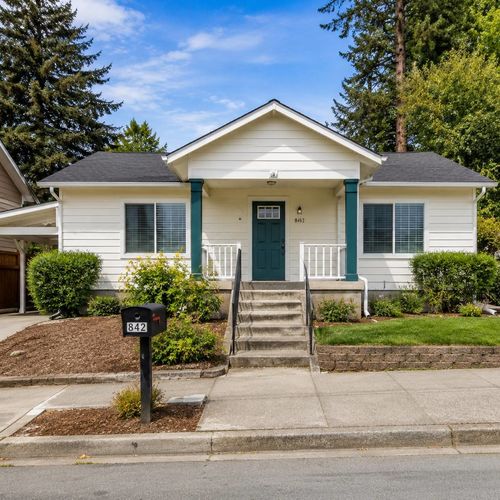
$300,000 – $400,000 Entry-level Estacada delivers the community's established residential stock in its most original or modestly updated form — primarily 1950s through 1980s single-family construction in the 900 to 1,500 square foot range, two to three bedrooms, one to two baths, and the residential configurations that a small Clackamas County river canyon community's working-family development produced across those decades with the structural honesty and lot generosity that building for permanence rather than investment return historically provided. Lots at this price point are consistently more generous than comparable pricing produces in the closer-in Clackamas County suburban markets — deeper, more naturally vegetated, and in some cases positioned on the gentle terrain above the valley floor where the forested ridgeline character of the surrounding canyon landscape begins its immediate presence in the residential lot's visual context. Condition is the honest variable — some homes have been maintained by long-term Estacada community members whose relationship with the property reflects genuine stewardship across decades of canyon community ownership. Others carry the deferred maintenance that older residential properties in small river canyon communities develop through extended ownership cycles without active systems investment. The value at this price point is entirely genuine for the buyer whose primary criterion is the most financially accessible gateway to Clackamas River canyon living at a price the Portland metro's recognized recreational communities stopped producing for properties with comparable outdoor access years before the remote work economy made the geographic calculus worth running honestly.
$400,000 – $530,000 This is the most active and most revealing price band in the Estacada market — the range where the community's full residential value proposition becomes most clearly legible and where buyers who have run the southeastern Clackamas County comparison honestly tend to arrive with conviction. Homes in this range tend to be updated or well-maintained single-family properties in the 1,400 to 2,100 square foot range — three to four bedrooms, two baths in most cases, kitchens addressed with genuine intention in the last decade, and outdoor spaces that engage with the Clackamas River canyon's natural character rather than treating it as background context for a conventional suburban residential lifestyle. Some properties in this range access the river's immediate proximity — lots backing to the Clackamas River corridor, properties with the direct river access or the riparian view orientation that gives Estacada's most compelling residential addresses their specific and irreplaceable character within the Portland metro's recreational community landscape. For remote workers who have specifically identified the Clackamas River canyon as the organizing geographic criterion of their residential search, outdoor enthusiasts whose daily practice centers on the river and the Mount Hood National Forest trail infrastructure that begins at Estacada's eastern edge, and relocators from higher-cost markets who want the most specific and most directly immersive outdoor gateway community life available within a theoretical Portland metro driving radius — this range delivers the clearest and most complete version of what Estacada offers.
$530,000 – $700,000 Homes at this level represent Estacada's strongest conventional residential product — the most extensively updated or best-positioned properties in the community, where renovation quality, lot character, river proximity or canyon terrain view orientation, and overall livability come together at the standard that positions them at the top of the small Clackamas County canyon city's residential hierarchy. Updated three to four bedroom homes with genuine finish quality, outdoor spaces oriented toward the Clackamas River corridor or the forested ridgeline terrain that defines the canyon's visual character, and the specific lot positioning within Estacada's limited flat-land residential geography that delivers the most direct and most immersive version of the river canyon community experience the city provides. Some properties in this range access direct Clackamas River frontage — the most specific and most financially irreplaceable residential asset that any Clackamas County canyon community at Estacada's price point produces, delivering the daily relationship with the river's clear water, the salmon run's annual presence, and the canyon's natural soundtrack that buyers who have lived alongside the Clackamas River consistently describe as the single most difficult aspect of the experience to voluntarily give up.
$700,000 – $950,000 At this level, Estacada's market delivers its most compelling residential product — the Clackamas River frontage properties with direct water access, the custom or extensively renovated homes on the most naturally distinguished sites within the canyon community's residential geography, and the rural residential parcels at the city's edges where the agricultural and forested foothills terrain begins its transition toward the Mount Hood National Forest boundary. River frontage properties at this tier in Estacada represent a value proposition that the Portland metro's recognized river community markets — the Willamette River waterfront in Lake Oswego, the Columbia River-adjacent communities of the Clark County market — price multiples of Estacada's range for the same direct water access and the same daily river residential experience. The gap between what Clackamas River frontage delivers as a residential experience and what it costs at Estacada's market position relative to what recognized waterfront access costs anywhere closer to the metro is the most direct and most specifically compelling expression of the Estacada value proposition for the buyer whose search is organized around the river.
$950,000 and above The upper end of Estacada's market and the immediately surrounding Clackamas County canyon corridor is defined by the most exceptional and most site-specific river properties — significant Clackamas River frontage parcels with established residential structures and meaningful water access infrastructure, custom homes on the canyon's most naturally distinguished sites, and the occasional rural residential estate at the canyon community's agricultural-forest interface that combines residential quality with the outdoor recreational access that the Mount Hood National Forest's adjacency provides from the property itself rather than requiring a drive to a trailhead. These properties surface infrequently in a community with the geographic constraints that Estacada's canyon position produces, attract buyers whose Clackamas River and outdoor lifestyle criteria are specific enough to recognize the right property without deliberation, and move to buyers who were already connected and prepared.
Median home price in Estacada: The median sits in the $380,000 to $450,000 range — making Estacada one of the most financially accessible incorporated Clackamas County cities with direct Clackamas River canyon access, Mount Hood National Forest gateway positioning, and a genuine outdoor gateway community character within any Portland metro driving radius. The absolute gap between what the Estacada median delivers in terms of outdoor recreational access — the Clackamas River's salmon and steelhead fisheries accessible from within the city, Timothy Lake within forty-five minutes upstream, the Pacific Crest Trail accessible from the National Forest corridor above the canyon, the whitewater kayaking corridor that draws paddlers from across the Pacific Northwest — and what comparable outdoor gateway community access costs in the recognized Pacific Northwest mountain and river communities is the most direct expression of the Estacada value proposition for the buyer whose residential search is organized around the outdoor life rather than the urban proximity.
What About Renting in This Area?
The Estacada rental market is limited in the way that small Clackamas County canyon communities with geographic development constraints consistently are — a modest inventory of privately held single-family homes and the occasional smaller unit offered by individual landlords whose properties tend to fill through community networks and local word-of-mouth rather than extended public platform exposure. The canyon's topographic constraints on buildable land have limited the multi-family rental development that larger and more commercially developed communities generate when their population reaches the density that justifies the construction investment — producing a rental market that is genuinely constrained by supply rather than simply reflecting modest demand.
Single-family rentals in Estacada typically run between $1,400 and $2,200 per month depending on the size of the home, the lot character, the river proximity or canyon terrain orientation, the condition and recency of any updates, and the specific position within the community's limited flat-land residential geography. A modest two to three bedroom home in solid condition rents around $1,400 to $1,800. A larger, updated home with meaningful outdoor space and any river proximity or canyon view orientation pushes toward $1,800 to $2,200. River frontage rental properties, when they surface, command the top of that range and are typically filled through established community connections before any public listing process begins.
Smaller apartment and duplex units in Estacada's limited multi-family inventory start around $950 to $1,400 for one to two bedroom configurations — figures that represent genuine affordability for renters whose budget requires the lowest sustainable rental cost that an incorporated Oregon city with its own school district and community infrastructure can provide within any Clackamas County corridor driving distance of the Portland metro.
For relocators planning a rental bridge before purchasing in Estacada, the rental supply's genuine limitations mean that approaching the market through community connection, local real estate professional networks, and early engagement rather than platform monitoring is the practical strategy that produces results — in a community this small and this geographically constrained, the rental opportunity that exists and the rental opportunity that becomes publicly listed are frequently not the same property.
Things to Do In and Around Estacada
Estacada's position as the gateway city to the Clackamas River canyon and the Mount Hood National Forest's western approach places residents within what is, for the outdoor-oriented and river-focused buyer, the most specifically rich and most directly accessible Cascade mountain and river recreation landscape available from any incorporated Oregon city within a theoretical Portland metro driving radius. The outdoor, natural, and community recreational assets that organize daily life in Estacada are the canyon's own — the river, the forest, the trails, the campgrounds, the fishing holes, and the specific outdoor culture that a community embedded in one of the Pacific Northwest's most celebrated river and mountain recreation corridors develops when its residents use what surrounds them as the primary infrastructure of their leisure life rather than driving past it to reach constructed amenities elsewhere.
The Clackamas River is Estacada's entire outdoor identity — a Pacific Northwest river of extraordinary clarity, ecological productivity, and recreational diversity running through volcanic canyon terrain that consistently produces the particular visual and sensory experience that serious outdoor enthusiasts describe as the defining quality of Pacific Northwest river canyon living. The river's salmon and steelhead fisheries are the most specifically celebrated outdoor asset the canyon delivers — the Clackamas River's fall Chinook salmon and winter steelhead runs are among the most significant in the Willamette River tributary system, drawing serious anglers from across the Pacific Northwest to the canyon's access points during the run seasons with the particular dedication that genuinely productive fisheries generate in the communities adjacent to them. For Estacada residents, the seasonal rhythm of the salmon runs is not a distant wildlife event visible from a park overlook — it is the annual marker of the canyon's natural calendar, experienced from the river bank within minutes of the residential address that the community's position on the river makes naturally available.
Clackamas River whitewater and paddling in the canyon sections above Estacada provides some of the Pacific Northwest's most specifically celebrated kayaking and rafting recreation — the Clackamas River's whitewater character ranging from the accessible family-friendly float sections accessible from Estacada's immediate vicinity to the technical Class IV canyon sections upstream that draw serious whitewater paddlers from across the region. For Estacada residents whose outdoor practice includes paddling, the Clackamas River provides the full range of whitewater experience within the same river system — from the casual recreational float to the challenging technical descent — accessible from a residential address rather than a distant trailhead or launch point.
Swimming holes and river recreation access along the Clackamas River corridor within and immediately adjacent to Estacada provide the summer recreation infrastructure that the Pacific Northwest's river canyon communities organize their warm-season outdoor life around — clear, cold water in swimming holes of varying character and depth, riverside camping and picnicking at the established river access points along Highway 224, and the particular summer outdoor culture that a community whose river runs clear and cold through forested canyon terrain develops when its residents know the river well enough to have opinions about which holes are best at what water level and what time of day.
Timothy Lake is approximately 35 to 45 minutes upstream from Estacada along Highway 224 through the Mount Hood National Forest — a large reservoir in the Cascade Mountains with camping, boating, swimming, and fishing access that serves as the primary developed recreation destination in the upper Clackamas River watershed and the most significant constructed water body in the Mount Hood National Forest's western approach. For Estacada residents, Timothy Lake is a regular recreational destination rather than a day trip requiring advance planning — accessible on a Saturday morning before ten without the crowding that the Portland metro's more recognized reservoir recreation destinations generate when their access requires passage through the metro's suburban fabric.
The Pacific Crest Trail is accessible from the Mount Hood National Forest corridor above Estacada — the premier long-distance hiking trail in the American West passing through the Cascade Mountains' volcanic landscape above the Clackamas River watershed, with day hike access to PCT segments providing some of the most dramatic and most specifically Pacific Northwest trail terrain accessible from any Portland metro-adjacent residential community. For Estacada residents whose hiking practice includes serious trail miles in genuinely wild terrain, the PCT's accessibility from the National Forest corridor above the canyon is the trail asset that positions the community's outdoor life at a level of recreational access that no other Portland metro gateway community replicates from a residential address at comparable absolute distance from the city's core.
The Mount Hood National Forest's western approach — accessible via Highway 224 through Estacada and continuing upstream through the canyon — provides the full federal public land system's dispersed recreation access for Estacada residents whose outdoor practice includes hunting, mushroom foraging, backcountry hiking, cross-country skiing, and the kind of unstructured natural exploration that managed federal forest land in the Pacific Northwest offers with a generosity that most public land systems in other states cannot match. The forest's proximity transforms Estacada's recreational range from a river canyon community into a full Cascade mountain gateway — compressing the distance between the residential address and the wild terrain that most Portland metro outdoor enthusiasts drive significantly further to access.
Milo McIver State Park — located immediately adjacent to Estacada on the Clackamas River — provides the state park infrastructure that the canyon gateway community maintains as its most accessible and most extensively developed river recreation site — camping, hiking trails along the river corridor, disc golf, equestrian facilities, and the river access infrastructure that a state park at this specific canyon location has built over decades of serving the Pacific Northwest outdoor community's Clackamas River recreation demand. For Estacada residents, Milo McIver is the neighborhood park in the most literal sense available to a small river canyon city — a state park with full recreation infrastructure accessible from the residential address within a drive that reflects the community's genuine integration with the river rather than its proximity to it from a distance.
Eagle Creek Trail and the broader scenic hiking trail network in the Columbia River Gorge — accessible approximately 30 to 40 minutes northwest of Estacada via the rural Clackamas County highway corridor toward the Gorge's eastern approach — extends Estacada's outdoor recreational range into the Columbia River Gorge National Scenic Area's waterfall hike infrastructure. For residents whose outdoor practice includes the Gorge's most celebrated trails, the Estacada approach provides access to the eastern Gorge trail network with a drive that avoids the Portland metro's congested I-84 corridor approach that most Gorge day-trippers navigate from the metro's westside neighborhoods.
Bagby Hot Springs — accessible approximately 1.5 to 2 hours upstream through the Mount Hood National Forest via Highway 224 and forest road approaches — is one of the Pacific Northwest's most celebrated backcountry hot springs destinations, with primitive hot spring soaking tubs in a forested Cascade Mountain setting that draws visitors from across the region specifically for the combination of backcountry access and geothermal water. For Estacada residents, Bagby is an accessible extended day trip rather than a backpacking commitment — a destination that most Portland metro residents treat as a rare and special occasion and that the canyon's gateway community makes available as a regular rather than annual outdoor practice.
Ripplebrook Ranger Station area — the Mount Hood National Forest's western administrative center approximately 45 to 50 minutes upstream — provides the dispersed camping, trailhead access, and backcountry entry points that the National Forest's western corridor makes available to Estacada residents as a practical recreational range rather than a remote wilderness destination requiring specialized logistical planning.
Sandy and the Mount Hood corridor — accessible approximately 25 to 30 minutes north via the rural Clackamas County highway connections to the Highway 26 Mount Hood corridor — extends Estacada's recreational range into Timberline Lodge, the ski areas, and the full four-season Mount Hood recreation landscape that the Cascade Mountains' most iconic Oregon peak provides from its southern and western approaches. For Estacada residents whose outdoor practice includes ski seasons at Mount Hood Meadows or Timberline and summer hiking on the mountain's southern slopes, the rural highway connection to Highway 26 north provides a practical access route without requiring a Portland metro navigation commitment.
Oregon City — approximately 20 to 25 minutes northwest via Highway 224 and the Clackamas County highway corridor — is the nearest significant commercial service center for Estacada residents, providing county services, grocery, medical, specialty retail, professional services, and the dining variety that a Clackamas County seat city's commercial infrastructure delivers for the surrounding residential communities. For Estacada residents whose routine commercial needs require more than the community's own modest footprint provides, Oregon City fills the gap within a drive that most residents describe as practical rather than burdensome.
Portland is 30 to 45 minutes northwest via Highway 224 and I-205 — the full urban experience of a major Pacific Northwest city accessible when the occasion calls for it. The Highway 224 approach through the canyon's scenic lower sections transitions to the suburban Clackamas County corridor before connecting to I-205 and the Portland metro's freeway infrastructure — a route that is genuinely beautiful in the canyon portion and that produces the two-lane highway peak-hour dynamics that the broader Clackamas County gateway corridor consistently generates before the I-205 freeway access relieves the bottleneck. Drive it at the times your household would actually use it before the canyon's beauty makes the honest commute assessment feel secondary to the experience it delivers.
Where to Eat
Estacada's dining scene reflects the community's small size and its working river canyon character with the honest directness that an incorporated Oregon city of roughly 3,000 residents at the gateway to a major outdoor recreation corridor produces — limited commercial restaurant infrastructure within the city itself, a primary reliance on Oregon City's broader commercial corridor for the dining variety that the community's modest footprint does not independently generate, and the particular outdoor culture food relationship that a river canyon gateway community develops when its residents have built their food life around the river's seasonal fishing, the forest's wild mushroom and berry culture, and the campfire cooking tradition that the canyon's recreation infrastructure naturally produces.
Bob's Burger and Brew is Estacada's most beloved and most community-defining independent restaurant — a casual burger and craft beer establishment that serves the community's social dining function with the consistent presence and the gathering-place character that a small Oregon gateway city's primary independent restaurant earns through years of simply being there and being reliably good. For outdoor enthusiasts returning from the river or the forest, for local families on a Friday evening, and for the Portland metro visitors who bookend a Clackamas River day with a meal before heading home — Bob's serves the specific function that an outdoor gateway community's primary casual restaurant serves when it earns the loyalty of everyone who passes through rather than simply those who live nearby.
Estacada's commercial corridor along Broadway Street and the downtown area carries the casual dining rotation that a small Oregon canyon gateway city's commercial infrastructure maintains — pizza, Mexican, breakfast and lunch spots, and the quick-service options that serve the community's everyday meal needs and the outdoor recreation traffic that the Clackamas River corridor generates from across the Portland metro on weekends and throughout the outdoor season. The specific establishments reflect the gateway community's practical character — serving the angler headed upstream at five AM and the kayaker returning at six PM with equal competence and without the wine country lifestyle aspiration that the Yamhill County communities have layered over their food culture to serve their destination visitor demographic.
The Clarkson House and similar Estacada dining institutions reflect the small canyon city's community dining culture at its most locally rooted — the kind of establishment that earns its following through consistent presence and familiar execution rather than culinary ambition, serving the community's social dining infrastructure in the specific way that small Oregon city restaurants have always served the communities they are embedded in.
Seasonal campground and recreation area food culture along the Clackamas River corridor — the drive-in campground diners, the river access point provisions culture, and the outdoor recreation-adjacent food and beverage infrastructure that the canyon's recreation traffic generates during the outdoor season — extends Estacada's effective dining range into the canyon itself, where the post-float meal and the mid-fishing-day provisions stop produce the kind of casual outdoor food culture that the best Pacific Northwest river communities develop around their recreation traffic and that no urban restaurant concept can approximate regardless of its outdoor aesthetic investment.
Oregon City's restaurant corridor — twenty to twenty-five minutes northwest — provides the most immediately accessible expanded dining variety for Estacada residents, with the full range of casual and mid-range dining options that a Clackamas County seat city's commercial infrastructure generates and sustains for the surrounding residential community. For Estacada residents whose weeknight dining occasionally requires more variety than the immediate canyon community delivers, Oregon City fills the gap within a drive that most residents describe as practical and that most come to treat as the natural commercial extension of the Estacada residential experience.
The broader Portland metro dining landscape — thirty to forty-five minutes northwest — provides the full Portland culinary depth and the nationally recognized restaurant culture for the occasions that genuinely call for the city's scale and variety. Accessible when the canyon's own dining culture and Oregon City's commercial corridor do not fill the specific need the occasion produces — which, for most Estacada residents organized around the river and the forest's outdoor infrastructure rather than the metro's culinary destination circuit, is less frequently than the Portland-adjacent communities' residents might assume.
The honest framing: Estacada is a community where the food culture is organized around the river and the forest — fresh Chinook salmon from the fall run, steelhead from the winter season, wild chanterelles and morels from the Mount Hood National Forest's seasonal harvest, campfire cooking in the canyon campgrounds, and the particular outdoor food relationship that a Pacific Northwest river canyon gateway community builds over generations of living alongside the Clackamas River's seasonal rhythms. Buyers who make that transition — from a food culture organized around restaurant variety to one organized around the river's seasonal production and the forest's natural harvest — consistently describe it as one of the more specifically satisfying aspects of the Estacada outdoor life they chose.
Who Buys in Estacada?
After nearly three decades working markets across the Pacific Northwest on both sides of the Columbia River and across the full Oregon metro, rural, coastal, and wine country corridor, the Estacada buyer is the most specifically river canyon-committed and the most outdoor-identity-organized residential profile in the entire Clackamas County content series — and the specificity of that commitment is the most reliable predictor of how satisfying any given buyer will find the Estacada residential experience across the full annual cycle of canyon weather, canyon commutes, and canyon outdoor life that the purchase decision represents.
They are Clackamas River fishing devotees whose seasonal calendar is organized around the salmon and steelhead runs in a way that transforms the river from an outdoor amenity into the primary organizing rhythm of their residential life — buyers who have been driving the Highway 224 canyon road to their favorite holes for years, maintaining gear and reading the river conditions as a weekly practice, and concluded at some point that the logical next step is living where the fishing is rather than commuting to it from a Portland address that has nothing to do with the river they most want to be near. For these buyers, Estacada is not a residential compromise made in exchange for the outdoor access — it is the residential address that eliminates the compromise between where they live and where they most want to be.
They are whitewater paddlers and canyon outdoor enthusiasts whose primary recreational identity is organized around the Clackamas River's whitewater character, the canyon's swimming holes, and the Mount Hood National Forest's trail and dispersed recreation infrastructure that begins at Estacada's eastern doorstep. These buyers have been driving Highway 224 on Saturday mornings from Portland addresses for long enough to have performed the specific mental calculus that the remote work economy has made genuinely consequential — if the commute constraint is removed, why am I still paying the Portland address premium to live an hour from the place I actually want to be? The answer, followed honestly, produces Estacada.
They are remote workers whose professional practice is fully compatible with the canyon's connectivity infrastructure — and for whom the Clackamas River canyon lifestyle, the Mount Hood National Forest access, and the price point that the community's geographic constraints have preserved at Estacada's market position together produce the residential value that no closer-in Oregon community delivers at comparable outdoor access quality. These buyers have confirmed internet options for their specific Estacada address, have driven Highway 224 at peak commute hours to understand the canyon's approach dynamics, and have concluded that the trade between urban proximity and river canyon immersion is exactly what they came to Oregon to make.
They are Timothy Lake campers and seasonal outdoor culture households whose residential aspiration has always included the idea of living year-round in the landscape they access seasonally from a Portland address — the summer Timothy Lake weekends, the fall salmon season, the winter steelhead run, the spring wildflower corridors above the canyon on the PCT segments — and who have found in Estacada the incorporated Oregon city that makes that aspiration a residential reality at a price point that preserves the financial flexibility the outdoor life actually requires alongside the mortgage.
They are buyers from California, the Bay Area, and the Pacific Northwest outdoor culture markets who have looked at the Oregon outdoor gateway residential market honestly and found that Estacada's combination of Clackamas River fishing access, Mount Hood National Forest gateway positioning, whitewater recreation, and median home price represents a Pacific Northwest outdoor lifestyle value that the recognized river and mountain gateway communities in the region price at multiples of what Estacada's geographic constraints and its working-community character have preserved as the canyon gateway's residential entry point. They are purchasing the outdoor life that Oregon's Cascade mountain and river identity promises from the community that delivers it most directly at the most accessible price — and they are doing so with the clear-eyed knowledge that the Clackamas River canyon's geographic constraints and the I-5 corridor's competitive gravity have preserved that value longer than comparable gateway communities in other Pacific Northwest outdoor recreation corridors managed to sustain it before discovery and demand closed the gap.
They are, consistently, buyers who describe Estacada as overdelivering on the outdoor experience and underdelivering only on the commercial variety and the school district scale that the more suburban southern Portland metro communities provide — which is precisely the trade the honest buyer made before the purchase rather than discovering after it.
What You Should Know Before You Commit
Estacada rewards buyers who engage with the canyon's geographic realities — the commute, the commercial limitations, the school district's honest scale, the internet infrastructure variability, and the canyon weather pattern's specific character across the full annual cycle — with the same honest directness that the Clackamas River itself applies to the seasons, which is to say: the river is always exactly what it is, and the buyer who understood that before they arrived is always the one who finds it more than they expected.
Highway 224 peak-hour commute dynamics are the primary practical variable for any Estacada buyer maintaining any professional relationship with the Portland metro that requires regular physical presence. Highway 224 is a two-lane state highway through the canyon's most scenic sections — a route that is genuinely beautiful in the canyon and that produces the specific traffic dynamics of a two-lane recreational corridor handling both commuter and recreation traffic during peak morning and evening windows. The canyon's geography creates the bottleneck that any two-lane approach to a major metropolitan area produces when it handles the traffic volume of an outdoor recreation gateway community alongside the commuter traffic of a residential community twenty-five miles from the city's core. Drive it at seven-thirty on a Wednesday morning. Drive it on a Friday afternoon at the start of the summer outdoor season when the recreation traffic adds its volume to the commuter flow. The assessment those specific experiences produce is the foundation of a commute conversation that is genuinely useful before the purchase.
Internet infrastructure in Estacada and the Clackamas River canyon corridor carries the rural Oregon variability that communities at this distance from the metro's broadband infrastructure core and within the geographic constraints of a river canyon consistently produce. The canyon's topography creates challenges for some wireless technologies, and the community's distance from the metro's fiber infrastructure core means that specific address confirmation through direct provider inquiry rather than general coverage maps is the remote work-dependent buyer's most important pre-purchase step. Estacada's connectivity has improved over the last several years, but the specific technologies and providers available at any given address vary in ways that the general community-level assessment cannot capture for the buyer whose professional life depends on reliable high-speed connectivity.
The canyon weather pattern is the ambient environmental variable that buyers whose primary Estacada experience consists of summer and early fall recreational visits occasionally encounter as more persistent and more present than their seasonal sampling suggested. The Clackamas River canyon's position in the Cascade foothills produces winter and spring conditions — cloud, rain, fog in the canyon bottom, and the particular moisture that a forested river canyon collects from the Pacific weather systems passing through — that are more consistently overcast and more persistently wet than the Portland metro's already-rainy climate during the wet season. The canyon summer and early fall are among the Pacific Northwest's most specifically beautiful and most outdoor-productive seasonal environments. The November through March period in the canyon is genuinely wet, genuinely foggy at times, and genuinely dark in the forest canopy in ways that buyers whose outdoor practice is primarily warm-season oriented should experience before committing to a twelve-month residential engagement with the canyon's full seasonal character.
The Estacada School District's honest scale relative to the West Linn-Wilsonville, Canby, and larger Clackamas County districts deserves the specific comparison that any family buyer's educational priorities require — confirmation of graduation rates, course availability at each level, extracurricular program depth, and the specific school assignment for any Estacada address before the canyon's outdoor character makes the school district feel like a secondary consideration rather than the foundational assessment that a purchase decision affecting years of a household's children's educational experience deserves.
River flooding and canyon road closure considerations are the geographic realities of a community built in a river canyon on the Clackamas River's banks — the river's periodic high-water events during heavy rain and snowmelt seasons can affect riverside properties through flooding and can occasionally affect Highway 224 through temporary closure or restrictions that isolate the canyon community from the Portland metro approach for the duration of the event. Understanding the specific flood zone designation of any river-adjacent Estacada property being seriously considered, and understanding the historical frequency and duration of the canyon road closure events that winter weather occasionally produces, is basic pre-purchase diligence that serves canyon community buyers better than discovering the flood zone designation or the road closure pattern after the first significant winter weather event following closing.
Thinking About a Home in Estacada?
Estacada inventory is as specific and as limited as the canyon's geography allows — a small market where the river frontage and river-proximity properties that define the community's most compelling residential assets surface infrequently, where the flat-land residential inventory's geographic constraints produce a supply ceiling that community demand consistently approaches, and where connection to the local real estate professionals who know the canyon community provides meaningfully more practical value in identifying what is available and approaching availability than any platform monitoring strategy independently delivers in a community this specific and this geographically contained. I know Clackamas County, I know the Highway 224 canyon corridor from the Damascus approach through Estacada and into the Mount Hood National Forest, and I will give you a straight read on what you are looking at — the property, the flood zone confirmation, the canyon road commute at the specific times your household would experience it, the school district confirmation, the internet infrastructure, and the complete total cost of ownership picture for a canyon community home — before you write anything.
See more about Estacada
Want to learn more about Estacada neighborhoods and homes?
Homes for sale in Estacada: https://jamiemeushawrealestate.com/properties/city-Estacada,%20OR/
Watch more local real estate insights on my YouTube channel:
https://www.youtube.com/@JamieMeushaw
Sign up for my weekly newsletter for real estate tips and market updates:
https://jamiemeushawrealestate.com/newsletter
Check out this article next