


Where Exactly Is Downtown Vancouver?
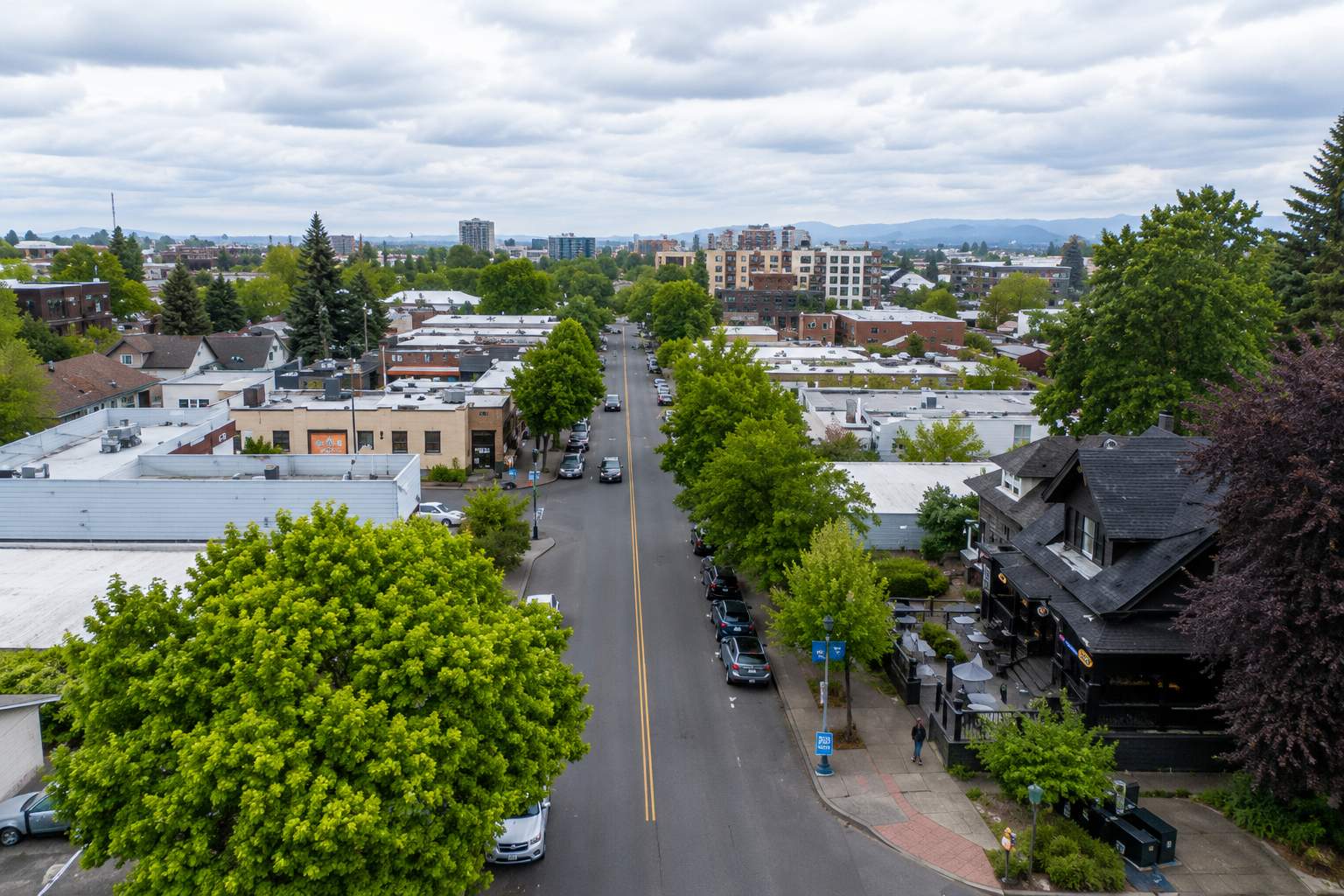
Downtown Vancouver is the urban core of the city of Vancouver, Washington — Clark County's county seat and the fourth-largest city in Washington State — positioned directly on the Columbia River's north bank immediately across from the Portland metro, connected to the Oregon side by the I-5 and I-205 bridges and by the historic Railroad Bridge's pedestrian and cycling crossing at the Columbia River Renaissance Trail's river level. The downtown core encompasses the historic Officers Row residential district, the Pearson Air Museum and the National Historic Reserve, the Vancouver Waterfront's revitalized esplanade and commercial development, the Main Street commercial corridor, and the broader grid of historic residential and commercial streets that constitute the urban fabric of Clark County's most genuinely dense and most genuinely walkable residential environment.
The Columbia River is downtown Vancouver's defining geographic asset — not a river viewed from a distance but a working, living waterway that the downtown's esplanade and waterfront development places at the immediate edge of the urban residential community's daily experience. The renovated waterfront — with its walking and cycling promenade, its restaurant cluster, its event infrastructure, and the working river traffic of barges and commercial vessels moving through the Columbia's main channel — gives downtown Vancouver a daily river relationship that the Portland west side's Pearl District and NW District can approximate from a distance but cannot replicate at the immediate waterfront level that Vancouver's esplanade delivers from a residential address within walking distance of the river's edge.
Downtown Vancouver is served by the Vancouver School District — Clark County's largest school district, with the programmatic breadth, the facility scale, and the K-12 infrastructure that a district serving Washington State's fourth-largest city produces and maintains. The district's specific school assignments for downtown Vancouver addresses and the magnet, specialty, and focus program options available within the district's offerings are worth researching specifically for any family buyer — the Vancouver School District's geographic extent and the diversity of school options it provides within its boundary make the pre-purchase school research more specific and more consequential than a simple district reputation assessment captures.
Portland International Airport is approximately 8 to 14 miles from downtown Vancouver, typically a 15 to 25 minute drive depending on traffic, time of day, and your specific route south across the Columbia River and east toward PDX. The most direct approaches cross the Columbia via I-5 south and access the airport via I-205 north, or cross via I-205 south and approach PDX from the west on Airport Way. For frequent travelers, downtown Vancouver's airport proximity is one of the most practically significant and most consistently underappreciated advantages of a Clark County urban address — the airport run that Portland's inner eastside neighborhoods describe as a twenty-five to forty minute commitment is a fifteen to twenty minute reality from downtown Vancouver under most traffic conditions, with the Columbia River crossing's brevity rather than its extent defining the daily experience. No state income tax on the income earned across the bridge. Airport across the bridge in fifteen minutes. Urban residential living on the waterfront at a price that Portland's urban residential market hasn't produced for years. That combination is downtown Vancouver's honest and specific value proposition stated plainly.
What Your Money Gets You: Homes at Every Price Point
Downtown Vancouver's residential market reflects the urban core's specific character — a mix of historic residential properties in the Officers Row and adjacent historic districts, newer condominium and townhome development in the urban growth areas adjacent to the waterfront and the Main Street corridor, multifamily residential above commercial along the downtown's primary commercial streets, and the occasional single-family home in the urban residential neighborhoods that surround the core. The residential inventory here is more vertical, more compact, and more urban in character than any other community in the Clark County content series — reflecting the downtown's genuine urban density rather than the suburban single-family residential character that defines the majority of the Clark County market. Buyers approaching downtown Vancouver from the Clark County suburban communities need to reframe their residential evaluation framework accordingly — this is a market where walkability, building quality, urban amenity access, and neighborhood character matter as much as square footage per dollar, and where the comparison point is Portland's urban residential market rather than the Clark County suburban communities to the north and east.
Here is a realistic look at what different price points deliver in this market:
$275,000 – $400,000 Entry-level downtown Vancouver residential ownership delivers primarily condominium and townhome configurations in the urban residential buildings that have come online in and adjacent to the downtown core over the last two decades — studio to one-bedroom units in established condominium buildings, two-bedroom configurations in the urban fringe residential developments, and in some cases the smaller single-family residential properties in the older urban neighborhoods immediately surrounding the historic core. Finishes at this price point reflect the building's construction era and the ownership history of the specific unit — some condominiums in this range have been updated by owners who invested in their urban address, others reflect original construction finishes that have held up with normal use and maintenance. The urban residential lifestyle proposition at this price point — walkable access to the Main Street and waterfront restaurant corridors, Columbia River proximity, no Oregon income tax, and PDX fifteen minutes away — is genuinely complete and fully present regardless of the unit's interior finish level. HOA fees for condominium units vary by building age and amenity level and are a real and recurring cost component that the total ownership cost calculation needs to incorporate explicitly. For buyers whose primary criterion is the most financially accessible entry into downtown Vancouver urban living — the walkable waterfront lifestyle, the no-Oregon-income-tax financial structure, and the PDX access — at the lowest ownership cost the market currently sustains, this range delivers that access at a price that Portland's urban condominium market stopped producing for comparable urban lifestyle quality in comparable locations years before the Clark County downtown's waterfront revival made the comparison genuinely compelling.
$400,000 – $575,000 This is the most active and most varied price band in downtown Vancouver's residential market — the range where the urban core's full value proposition becomes most clearly legible and where buyers who have run the Portland versus Vancouver urban residential comparison honestly tend to arrive with the most conviction. Homes in this range encompass the best of the established condominium and townhome inventory in updated or well-maintained form, newer urban residential developments adjacent to the waterfront, and the more modest single-family residential properties in the historic residential neighborhoods surrounding the downtown core. Two to three bedroom configurations in well-located buildings with meaningful urban amenity access, townhome configurations with their own outdoor spaces in the urban fringe residential developments, and the occasional single-family home in the Officers Row adjacent residential neighborhoods that delivers the historic character and the lot depth that the urban core's historic residential fabric produces when it has been maintained rather than converted. For Portland-to-Vancouver relocation buyers who have run the no-Oregon-income-tax calculation on their household's income and found the financial argument for a Washington address genuinely compelling, buyers whose urban lifestyle criteria require the waterfront access and the Main Street walkability that downtown Vancouver's revival has produced, and relocators from higher-cost Pacific Northwest urban markets who want the most complete version of Columbia River urban living at a price that Portland's Pearl District and NW District stopped offering for comparable waterfront access many years before the Vancouver waterfront's investment made the comparison obvious — this range delivers the clearest and most complete version of what downtown Vancouver offers as a residential proposition.
$575,000 – $800,000 Homes at this level represent downtown Vancouver's strongest residential product across both its condominium and its single-family residential inventory — fully updated or newer construction urban residential properties where renovation quality, building amenity level, waterfront proximity, and overall livability come together at the standard that positions them at the top of the downtown Clark County residential hierarchy. Updated two to three bedroom condominiums in the waterfront-adjacent buildings with Columbia River views from primary living spaces and outdoor terraces, townhome configurations in the urban residential developments nearest the esplanade with meaningful outdoor spaces and high-quality finishes, and the single-family historic properties in the Officers Row district and the surrounding historic residential neighborhoods where the combination of architectural character, lot depth, and urban proximity converges in the way that genuine historic urban residential fabric produces when it has been invested in rather than simply preserved. For buyers whose urban residential criteria extend beyond the basic lifestyle proposition to require genuine finish quality, waterfront orientation, and the architectural character that makes downtown Vancouver's historic residential fabric specifically compelling — this range delivers that experience at a price that Portland's recognized urban waterfront residential addresses charge significantly more to approximate.
$800,000 – $1,200,000 At this level, downtown Vancouver delivers its most compelling residential product — the waterfront-facing condominiums and townhomes with commanding Columbia River views and direct esplanade access, the most architecturally significant historic residential properties in the Officers Row district, and the custom or extensively renovated urban residential properties where the combination of historic character, waterfront orientation, and renovation quality produces a residential experience that the broader Pacific Northwest urban residential market prices significantly beyond what downtown Vancouver's current market sustains for comparable river orientation and comparable urban lifestyle completeness. The Columbia River view corridors accessible from the elevated positions in the waterfront residential development — the Mount Hood sightline on the Oregon side, the Clark County foothills rising to the north and east, and the working river traffic of commercial vessels moving through the Columbia's main channel — create a daily residential experience that Portland's Pearl District and NW District cannot replicate from their positions away from the river's north bank at the price point downtown Vancouver delivers it.
$1,200,000 and above The upper end of downtown Vancouver's residential market is defined by the most exceptional and most specifically waterfront-positioned properties in the urban core — historic estate residences in the Officers Row district, penthouse and full-floor configurations in the waterfront residential development with the most commanding Columbia River view corridors, and the occasional custom urban residential property that combines historic architectural significance with the renovation quality and the waterfront positioning that place it in a category of its own within the Clark County urban residential landscape. These properties surface infrequently, attract buyers whose historic urban residential and Columbia River waterfront criteria are specific enough to recognize the right property without deliberation, and move to buyers who were already prepared.
Median home price in Downtown Vancouver: The median in the downtown Vancouver residential market sits in the $380,000 to $480,000 range when the full inventory — condominiums, townhomes, and single-family residential — is considered as a whole. That figure positions downtown Vancouver as meaningfully more accessible than Portland's Pearl District, NW District, and inner eastside urban residential markets at comparable lifestyle quality and comparable walkability indices — and more accessible than most buyers who have been watching the Portland urban market for the last decade expect when they run the Columbia River bridge crossing's practical implications against what the crossing's five minutes actually costs in urban residential premium. The Washington State financial structure's no-Oregon-income-tax advantage compounds the price accessibility story for high-income households in ways that the pure residential price comparison understates significantly — a household earning $150,000 in Oregon income from Portland employment and living in downtown Vancouver rather than Portland proper captures a meaningful annual financial advantage that the residential price differential alone does not fully represent.
What About Renting in This Area?
The downtown Vancouver rental market is the most urban and the most varied of any community in the Clark County content series — a reflection of the downtown's genuine residential density, the multifamily residential development that the waterfront revival and the downtown growth strategy have produced along the waterfront and the Main Street corridor, and the rental demand from the Portland employment market's workers who have identified the Washington State tax advantage and the waterfront lifestyle as worth the Columbia River bridge commute.
Studio and one-bedroom apartments and condominiums in downtown Vancouver's rental inventory typically run between $1,300 and $1,900 per month depending on building quality, unit size, finish level, floor position, and proximity to the waterfront and the Main Street corridor. Two-bedroom configurations run $1,700 to $2,700 per month depending on square footage, building tier, and waterfront or river view orientation. Townhome and larger urban residential rentals push into the $2,400 to $3,500 per month range for three-bedroom configurations with meaningful outdoor space and quality finishes in the urban residential developments adjacent to the waterfront.
The no-Oregon-income-tax financial advantage of a Washington address is a real and recurring monthly financial benefit that renters with Portland metro employment capture from a downtown Vancouver address — a benefit that reduces the effective housing cost differential between a downtown Vancouver rental and a comparable Portland urban rental by the Oregon income tax obligation that the Vancouver address eliminates. For high-income renters in the Portland employment market, this calculation is worth running specifically with a tax professional rather than approximating from general impressions — the financial advantage is real, it is significant at higher income levels, and it is one of the primary drivers of the Portland-to-Vancouver renter migration pattern that the downtown's rental market has benefited from consistently.
Well-priced rentals at the quality end of the downtown Vancouver market — waterfront-adjacent units, updated finishes, river view orientation — move quickly to organized and decisive applicants. The combination of Washington State tax advantage, waterfront lifestyle, PDX proximity, and urban rental pricing that is meaningfully more accessible than comparable Portland urban rental inventory creates a consistent and motivated renter demographic that engages with quality inventory decisively rather than casually.
Things to Do In and Around Downtown Vancouver
Downtown Vancouver's position on the Columbia River's north bank in the urban core of Clark County's largest city places residents within one of the most genuinely complete urban activity and lifestyle landscapes in the Pacific Northwest — one that combines the waterfront's natural and recreational infrastructure, the downtown's commercial and cultural programming, the historic districts' architectural and interpretive depth, and the Columbia River's outdoor and natural corridor in configurations that the broader Clark County suburban community can access from downtown Vancouver more directly than from any other Clark County residential address.
The Vancouver Waterfront is downtown Vancouver's most transformative urban investment and its most immediately compelling daily lifestyle asset — a revitalized esplanade along the Columbia River's north bank that replaced the industrial infrastructure of the former Boise Cascade paper mill site with a riverside park, a pedestrian and cycling promenade, a cluster of restaurants and retail facing the river, event infrastructure, and the particular daily urban waterfront experience that cities invest in when they understand what a functioning river edge does to the quality of daily life in the residential community adjacent to it. The waterfront's development over the last decade has genuinely changed what downtown Vancouver delivers as a residential address — the difference between living near a vacant industrial riverfront and living adjacent to a functioning waterfront esplanade with restaurants, events, and the Columbia River's daily visual and experiential presence is the difference between a neighborhood with river proximity and one with river identity. Downtown Vancouver now has river identity.
The Renaissance Trail along the Columbia River — the paved multi-use path connecting downtown Vancouver's waterfront to the Columbia River's shoreline trail network — provides the daily cycling and walking infrastructure that a river-edge urban community's outdoor culture depends on, connecting residents to the river's south-facing shoreline in both directions along the Columbia's working main channel. The trail's extension into the broader Columbia River trail network gives downtown Vancouver residents a car-free outdoor movement range along the river that the Pearl District's Waterfront Park approximates from the Oregon side.
Fort Vancouver National Historic Site is one of the Pacific Northwest's most historically significant and most extensively interpreted historic sites — the reconstructed Hudson's Bay Company fur trading post that operated at this location from 1825 and whose significance in Pacific Northwest settlement history is genuinely extraordinary. The fort's reconstructed buildings, the costumed interpretive programming, and the archaeological work that continues to reveal the site's layered history give downtown Vancouver residents access to a national historic landmark that most Pacific Northwest cities would center their entire tourism identity around — and that downtown Vancouver residents access as a neighborhood resource within walking distance of the residential address.
Officers Row is one of the Pacific Northwest's most architecturally significant and most intact historic residential streetscapes — a row of 21 meticulously preserved Victorian and later officers' quarters from the Vancouver Barracks military post, now converted to administrative, commercial, and residential uses, that line the tree-canopied Evergreen Boulevard with a historic residential character that gives the immediate downtown neighborhood a specific and irreplaceable architectural identity. For downtown Vancouver residents in the Officers Row-adjacent historic residential neighborhoods, the daily visual environment of the Victorian residential streetscape is the kind of neighborhood character that most Pacific Northwest cities cannot replicate regardless of their historic preservation investment because the underlying historic fabric no longer exists to preserve.
Pearson Air Museum — the oldest operating airfield in the United States, located within the Vancouver National Historic Reserve adjacent to Fort Vancouver — is a genuine aviation history institution that gives downtown Vancouver a cultural asset of national significance within the residential neighborhood's walking range. The museum's aircraft collection and its aviation history programming reflect the specific and historically significant role that Pearson Field played in Pacific Northwest aviation history — including the 1937 transatlantic landing of Soviet aviators who completed the first nonstop transpolar flight from Moscow, landing at Pearson Field in downtown Vancouver.
Esther Short Park — downtown Vancouver's central urban park — provides the gathering space, the farmers market infrastructure, the public event venue, and the urban green space that a functioning city center's public realm requires to produce the community social fabric that distinguishes a living downtown from a commercial district that empties after business hours. The park's Saturday Farmers Market is one of Clark County's most beloved community institutions — reflecting the regional agricultural production of the Columbia River valley and the broader Pacific Northwest food culture in the community gathering format that the best Pacific Northwest farmers markets produce when their community treats them as a genuine weekly institution.
The Propeller Brewing and the downtown brewery and craft beer culture reflect the genuine craft beer community that Vancouver's downtown has developed — multiple independently owned taprooms and craft breweries within the downtown walkable range that serve the residential community's social culture alongside the destination visitors who cross the Columbia River specifically for the Vancouver waterfront dining and drinking experience. The Vancouver craft beer culture has developed its own specific identity distinct from Portland's more globally recognized craft brewing scene — less marketed, more community-rooted, and reflecting the Clark County residential community's relationship with its own downtown commercial character.
The Columbia River Renaissance Trail's extension to the I-5 bridge and the historic Railroad Bridge pedestrian crossing connects downtown Vancouver to the Oregon side's Waterfront Park and the Marine Drive trail system — providing a Columbia River crossing experience that the functional bridge traffic's automotive focus eliminates from the commuting experience and that the pedestrian and cycling bridge crossing restores as a genuinely extraordinary daily outdoor experience. Walking or cycling across the Columbia River between the downtown Vancouver esplanade and Portland's north waterfront parks is the specific urban outdoor experience that downtown Vancouver's river position makes available and that no other residential community in the Clark County content series delivers with the same immediacy.
The Columbia River Gorge is 25 to 35 minutes east — the world-class outdoor recreation corridor whose waterfall hikes, windsurfing, and mountain access represent the Pacific Northwest's most specific and most recognized outdoor identity from a downtown address that is closer to the Gorge's western entry than most inner Portland neighborhoods that the broader market positions as the Gorge's primary residential gateway.
Sauvie Island is 15 to 20 minutes southwest across the Columbia via the St. Johns Bridge — the Columbia River island agricultural and wildlife refuge community that downtown Vancouver residents access as a casual afternoon outing rather than a planned day trip, combining the bridge crossing with the island's farm stands, wildlife refuge bird watching, and Columbia River beach access in a day-trip format that the Columbia River's central position in downtown Vancouver's residential geography makes naturally available.
Portland is across the bridge — the I-5 or I-205 crossing producing a commute to Portland's urban core, its Pearl District dining, its professional sports at Moda Center, its airport, and its full cultural and commercial infrastructure in drive times that downtown Vancouver's river adjacency makes consistently shorter than the Portland metro's inner eastside and southwest neighborhoods experience for the equivalent urban amenity access. For downtown Vancouver residents, Portland is across the bridge in a commute that most days takes less time than many inner Portland neighborhoods' parking searches — and without the Oregon income tax obligation that Portland employment generates for Oregon residents.
Where to Eat
Downtown Vancouver's dining scene has undergone the most significant transformation of any Clark County community addressed in this content library — the waterfront development's restaurant cluster, the Main Street and Washington Street independent restaurant culture, and the broader downtown commercial revival have collectively produced a dining ecosystem that Clark County buyers who haven't visited the downtown in the last five years consistently underestimate relative to what it currently delivers. This is not the Vancouver dining landscape of a decade ago. It is genuinely competitive with comparable distance-from-core urban neighborhoods on the Portland side and in some specific cases exceeds what comparable Portland neighborhoods deliver at equivalent price points.
The Grant Street Pier and Vancouver Waterfront restaurant cluster is the most visible and most destination-oriented expression of downtown Vancouver's dining transformation — the collection of independently owned and regional chain restaurants facing the Columbia River along the waterfront esplanade that serve both the downtown resident community and the broader Clark County and Portland metro destination traffic that the waterfront's renovation has attracted. The river-facing outdoor seating, the Columbia River view from the dining rooms, and the proximity to the esplanade's walking culture give the waterfront dining cluster a setting quality that most Portland river-adjacent restaurants charge considerably more per plate to approximate.
Main Street's independent restaurant corridor is the authentic heart of downtown Vancouver's local dining culture — the independent restaurants, the chef-driven concepts, the wine bars, and the food culture investment that the downtown's resident community has built and sustained through the commercial revival that the waterfront development's foot traffic and the downtown's growing residential population have combined to produce. The specific restaurants along Main Street evolve with the market, but the commercial density and the residential community's food culture expectations ensure a consistent and improving baseline of independent dining quality that the suburban Clark County commercial corridors cannot replicate in character regardless of their commercial footprint.
Beaches Restaurant and Bar on the Columbia River waterfront is a Vancouver dining institution — casual, scenic, and reliably good for a lunch or dinner that earns its repeat business with the setting as much as with the kitchen. The outdoor patio's river orientation on a clear evening with Mount Hood visible on the Oregon side's eastern horizon is the specific Pacific Northwest dining experience that Vancouver's waterfront position makes available and that the institutional knowledge of a long-running river-edge restaurant deepens over years of community use.
The Grocery and similar farm-to-table and Pacific Northwest culinary commitment restaurants in the downtown corridor reflect the food culture investment of a downtown resident community whose culinary expectations have grown alongside the waterfront revival's investment in the broader commercial and lifestyle quality of the urban core. These restaurants reflect the specific Clark County agricultural production's farm-to-table potential — the Columbia River valley's nursery and agricultural production, the Washington State wine country's eastern proximity, and the Pacific Northwest's broader food system character expressed in downtown Vancouver's growing independent restaurant culture.
The craft beer and taproom culture along the downtown corridor — Propeller Brewing, Heathen Brewing's downtown location, and the broader taproom infrastructure that Clark County's craft brewing community has established in the downtown's commercial fabric — gives downtown Vancouver residents the neighborhood brewery culture that urban residential communities depend on for the social gathering function that the best urban taprooms serve when they are genuinely embedded in their community rather than positioned as destinations for visitors from elsewhere.
The Esther Short Park Saturday Farmers Market extends the dining experience into the provisions and direct-to-farm culture that the Columbia River valley's agricultural production makes available to downtown Vancouver residents through the community market format — seasonal produce, artisan food, and the local food system connection that the Pacific Northwest's most engaged residential communities treat as a weekly institution rather than an occasional outing.
The Vancouver Mall and the Mill Plain commercial corridor to the east and northeast provide the everyday casual dining variety and the national chain dining infrastructure that the downtown's independent restaurant culture does not independently generate for every cuisine category and every price point — practical extensions of the downtown's dining range for the routine weeknight meal that the waterfront and Main Street corridors serve less efficiently than the suburban commercial infrastructure immediately accessible to the downtown's east.
Portland's full restaurant landscape across the bridge provides the James Beard-recognized restaurants, the Pearl District's dining corridor, the diverse SE Portland culinary culture, and the comprehensive dining infrastructure of a nationally recognized food city accessible from downtown Vancouver in a commute that most downtown residents execute in fifteen to twenty minutes rather than the extended commitment that the broader Portland metro's outer neighborhoods require for equivalent downtown Portland dining access.
The honest framing: downtown Vancouver's dining scene is genuinely better than it was five years ago, meaningfully better than it was ten years ago, and still in the middle of its development arc rather than at the end of it. The waterfront revival has catalyzed a restaurant investment that the downtown's growing residential population and the destination traffic from both Clark County and the Oregon side have sustained and will continue to sustain as the waterfront's reputation compounds. Buyers who arrive expecting the downtown Vancouver of 2015 will find the downtown Vancouver of 2025 genuinely and pleasantly more complete than their prior experience suggested — and buyers who arrive with honest curiosity about what the downtown currently delivers will find a dining culture that is building its identity with genuine momentum rather than marketing it ahead of the reality.
Who Buys in Downtown Vancouver?
After nearly three decades working the Clark County and Portland metro market on both sides of the Columbia River, the downtown Vancouver buyer is one of the most analytically rigorous and most financially sophisticated residential profiles I encounter in the entire content library — and that sophistication reflects the specific nature of the purchase decision that a Clark County urban address requires, which is to say: a decision that demands honest engagement with the no-Oregon-income-tax financial advantage, the waterfront revival's genuine quality improvement, the Portland commute's Columbia River dynamics, and the Vancouver School District's specific offerings rather than the comfortable assumption that a Portland urban address is automatically superior for reasons that careful analysis no longer consistently supports.
They are Portland employment professionals who have run the no-Oregon-income-tax calculation with genuine financial specificity and found that the difference between a Portland residential address and a Washington residential address on a $150,000 to $300,000 household income from Oregon employment is an annual financial advantage that, compounded over a decade of ownership, produces a capital accumulation that changes the household's financial trajectory in ways that the residential purchase price comparison alone does not capture. These buyers are not making a lifestyle compromise to capture a tax advantage — they are discovering that the downtown Vancouver waterfront lifestyle, the PDX proximity, the Columbia River esplanade, and the Main Street dining culture are genuinely worth choosing rather than merely financially justifiable in comparison to a Portland urban address.
They are waterfront lifestyle buyers whose primary residential criterion is the Columbia River's daily presence as an experiential feature of their residential address rather than a geographic fact visible from an adjacent neighborhood. For these buyers, the Vancouver waterfront esplanade's functional river edge — the ability to walk to the river's bank, watch the commercial traffic on the main channel, cycle along the riverside promenade, and engage with the Columbia River as a daily living environment rather than an occasional recreational destination — is the specific and organizing residential criterion that the Pearl District cannot deliver from its position away from the river's working north bank and that the downtown Vancouver waterfront's investment has made genuinely available from a Washington State residential address at a price the Oregon side's waterfront residential market stopped sustaining years before the Vancouver waterfront's revival made the comparison worth running.
They are historic district buyers whose residential criteria include the architectural character, the neighborhood maturity, and the specific urban residential identity that the Officers Row district and the adjacent historic neighborhoods deliver in a form that no amount of new urban development in either Vancouver or Portland can replicate — because the underlying historic fabric that produces those qualities is a fixed and finite resource that has been preserved in downtown Vancouver's historic districts at a level that reflects decades of community investment in the built environment's historical significance.
They are urban density buyers who have spent careers in the Portland metro's inner neighborhoods, have built equity in those addresses, and have run the comparison between what their equity captures in a continuation of the Portland urban residential market and what it captures in the downtown Vancouver waterfront residential market — finding that the combination of Washington State financial structure, Columbia River waterfront access, and urban residential price differential produces a significantly more compelling capital deployment than a continuation in the Portland urban market at the premium the current market requires.
They are relocators from California, Seattle, and other high-cost Pacific Northwest and West Coast urban markets who have looked at the full Portland metro residential landscape with the financial sophistication that expensive urban markets develop in their residents and who have found that downtown Vancouver's combination of Columbia River waterfront access, Washington State tax structure, PDX proximity, and urban residential price point represents a Pacific Northwest urban lifestyle value that the recognized Portland urban residential market charges thirty to fifty percent above for the same waterfront orientation and the same urban lifestyle completeness. These buyers understand what they are purchasing and why the price point reflects genuine urban value rather than the consolation prize framing that buyers who have not run the honest comparison occasionally apply to the Clark County side of the bridge.
They are, consistently, buyers who describe downtown Vancouver as delivering more than the outside perspective suggested — more dining quality than the suburban Clark County reputation predicted, more waterfront quality than the pre-revival memory of the industrial riverfront allowed, more urban residential character than the historic comparison with Portland's more marketed neighborhoods acknowledged, and more daily river presence than any amount of description communicates before the esplanade walk on a clear evening with Mount Hood framed by the bridge structure on the Oregon side makes the case more directly than any real estate content ever will.
What You Should Know Before You Commit
Downtown Vancouver rewards buyers who engage with the urban residential character honestly — the condominium and townhome due diligence framework that the urban residential market requires, the Columbia River bridge commute's specific dynamics, the Vancouver School District's honest assessment for family buyers, and the downtown's genuine ongoing development arc rather than the fully arrived status that a completed urban revival implies.
The Columbia River bridge commute — specifically the I-5 bridge's congestion pattern during peak morning commute hours in the southbound direction toward Portland — is the primary practical variable for downtown Vancouver buyers whose Portland employment requires regular physical presence during peak hours. The I-5 bridge's Columbia River crossing produces the peak-hour traffic dynamics that a primary metropolitan area interstate bridge handles during the morning and evening commute peaks — the congestion that results from the combination of the Clark County residential base's Portland employment commute and the freight traffic of the primary West Coast interstate corridor. Driving the route at morning peak hours in the southbound direction before the purchase is the pre-purchase assessment that distinguishes buyers who are satisfied with the downtown Vancouver commute from those who found it more consistently demanding than the bridge's brevity suggested before they experienced the peak-hour traffic volume that produces the I-5 Columbia River crossing's morning commute character. The I-205 bridge crossing provides an alternative that avoids the I-5 bridge's most concentrated peak-hour congestion for buyers whose Portland employment centers are accessible via I-205's eastern approach.
Condominium and urban residential due diligence requires the same HOA financial health, reserve fund adequacy, and building management quality assessment that the Pearl District and urban Portland condominium guides addressed earlier in the content library — and for the same structural reasons that apply to any vertical residential market where the building matters as much as the unit and where the ongoing cost of ownership reflects the HOA's financial health as directly as the purchase price reflects the unit's condition. HOA fees, special assessment history, pending litigation, and reserve fund adequacy for any downtown Vancouver condominium building being seriously considered deserve explicit investigation before the offer rather than the assumption that the building's management quality is uniform across the downtown's condominium inventory.
The Vancouver School District's specific school assignments for downtown Vancouver addresses — and the magnet, specialty, and focus program landscape available within the district — are worth confirming specifically for any family buyer whose school district quality is a meaningful purchase criterion. The Vancouver School District serves a large and geographically varied community, and the specific school options available to downtown Vancouver residential addresses reflect the district's urban core positioning within a district whose full geographic extent includes significantly different school communities. Understanding specifically which schools serve the downtown residential address and what program options the district makes available within that assignment framework is the pre-purchase research that serves family buyers more accurately than the general district reputation comparison alone.
The downtown's ongoing development arc — the waterfront's continued commercial and residential expansion, the Main Street corridor's continued restaurant and retail investment, and the broader downtown Vancouver growth management strategy's continued residential densification — creates the particular dynamic of purchasing in a neighborhood that is genuinely becoming something more complete rather than one that has already arrived. For buyers whose tolerance for construction adjacency and neighborhood-in-process character is limited, understanding the specific development projects planned or underway in the immediate vicinity of any downtown Vancouver property being seriously considered is worth explicit pre-purchase investigation rather than the assumption that the downtown's current character represents its settled condition.
Thinking About a Home in Downtown Vancouver?
I have been working the Clark County market for close to three decades, and the downtown Vancouver residential story is one of the most genuinely compelling in the entire content library — a community that has built something real on the Columbia River waterfront and priced it in a way that the honest comparison with Portland's urban residential market makes increasingly difficult to argue against for the buyer who runs the analysis rather than the assumption. The waterfront is real. The no-Oregon-income-tax advantage is real. The PDX proximity is real. The historic district character is real. And the price point relative to what comparable urban waterfront residential access costs on the Oregon side of the bridge is the most specific and most durable expression of the Clark County urban residential value proposition that I know.
See more about Downtown Vancouver
Want to learn more about Downtown Vancouver neighborhoods and homes?
Homes for sale in Downtown Vancouver: https://jamiemeushawrealestate.com/properties/city-Vancouver,%20WA/?box=-122.6975116645872%2C45.61779265231149%2C-122.65483271638591%2C45.642911972595925
Watch more local real estate insights on my YouTube channel:
https://www.youtube.com/@JamieMeushaw
Sign up for my weekly newsletter for real estate tips and market updates:
https://jamiemeushawrealestate.com/newsletter
Check out this article next