


Camas and Beaverton are two of the cities I work in most often, and buyers weighing one against the other ask me the same handful of questions nearly every time. Here's a direct, side-by-side look at how the two actually compare, based on what I see with real listings and real buyers.
Executive Summary
Camas, WA and Beaverton, OR are both part of the broader Portland-Vancouver metro, but sit on opposite sides of the region (Camas in Clark County, Washington, Beaverton in Washington County, Oregon), which means different state tax treatment and a different commute pattern into central Portland.
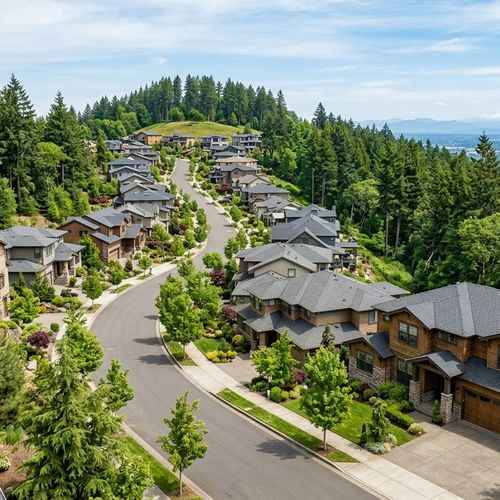
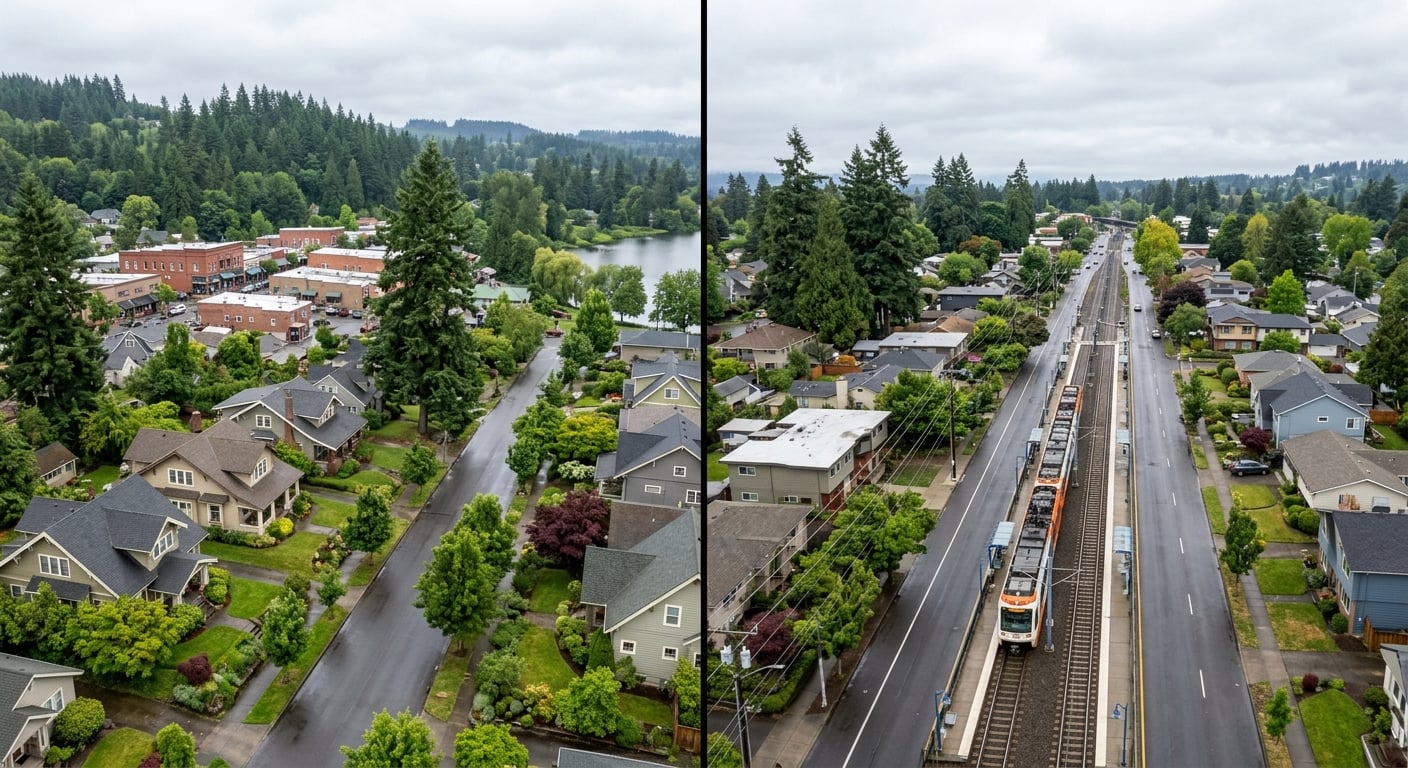
Camas is the smaller of the two, with a historic downtown, Lacamas Lake and a mix of established and newer neighborhoods, built around a working waterfront and more recent semiconductor manufacturing.
Beaverton is a larger, established west-side Portland suburb with direct MAX light rail access, a long-running tech-sector employment base near the Tektronix and Nike campuses, and its own school district.
As of the most recent data available for each, Beaverton's median sale price ran meaningfully lower than Camas's, though both figures move with a fast-changing regional market.
Camas at a Glance
An established historic downtown along NE 4th Avenue, with local shops and restaurants that predate the area's more recent growth.
Lacamas Lake, the Lacamas Heritage Trail and Round Lake Park, for lake access, trails and year-round outdoor recreation close to the city center.
A long-running industrial and employment base on the waterfront, plus semiconductor manufacturing in the surrounding area.
Direct access to SR-14 and I-205, with no Washington state income tax to factor into a budget comparison.
Camas School District, ranked 15th of 238 Washington school districts by SchoolDigger as of 2026 (with 8 five-star-rated schools), a real, often-cited factor in why buyers specifically target Camas.
Camas Price Points & Amenities
Median sale price: $800,000 over the trailing six months (428 closed sales), per Resideline's Camas market report (ZIP 98607) as of October 5, 2026; the middle half of sales closed between $595,000 and $965,000.
Housing stock: a mix of established single-family neighborhoods, newer subdivisions and some ongoing new construction, spanning several decades of development.
Camas community page: https://jamiemeushawrealestate.com/communities/camas/
Check out this neighborhood in Camas (Hunter Ridge Estates): https://jamiemeushawrealestate.com/moving-to-camas-wa-consider-hunter-ridge-estates-reading-camass-gated-community-market/
Watch: Living in Camas, WA (YouTube playlist): https://www.youtube.com/playlist?list=PLEh0DURDVECF3CgeNR6_omDk70sG7Dzzh
Beaverton at a Glance
Direct TriMet MAX light rail access via the Blue and Red lines, with stops including Beaverton Transit Center, Beaverton Central and Millikan Way, plus WES Commuter Rail service south to Wilsonville.
A long-running tech-sector employment base, with the MAX line running past the Tektronix and Nike campuses on its way toward Hillsboro's Intel campuses.
A larger, more established city than Camas, with a wider range of home ages, styles and price points spread across many distinct neighborhoods.
Access via Highway 217 and US-26 (the Sunset Highway), connecting directly into central Portland and the broader west-side suburbs.
Beaverton Price Points & Amenities
Median sale price: $477,450 over the trailing six months (285 closed sales), per Resideline's Beaverton market data (ZIP 97006) as of October 5, 2026. Other recent sources have put Beaverton's median anywhere from roughly $520,000 to $630,000 depending on ZIP code and methodology.
Housing stock: a wide range of home ages and styles spread across many distinct neighborhoods, reflecting the city's larger, longer-established footprint.
Beaverton community page: https://jamiemeushawrealestate.com/communities/beaverton/
Check out this neighborhood in Beaverton (Sexton Mountain): https://jamiemeushawrealestate.com/moving-to-beaverton-or-consider-sexton-mountain-a-quieter-corner-of-a-fast-growing-suburb/
Comparing Camas and Beaverton
Camas, Washington and Beaverton, Oregon both sit inside the Portland metro area, but they represent two very different ways of living in it. Camas is a smaller Clark County city on the Washington side of the Columbia River, while Beaverton is a larger, long-established suburb directly west of downtown Portland in Washington County, Oregon. Buyers comparing the two are usually weighing state tax treatment, commute pattern and city scale against each other, not just price.
Camas built its identity around a working waterfront (a paper mill has operated there for more than a century), and more recently added semiconductor manufacturing to its local employment base. Its downtown along NE 4th Avenue is walkable and historic, with local shops and restaurants that predate the newer subdivisions on the city's outer edges. Lacamas Lake and the Lacamas Heritage Trail sit just north of downtown, giving residents lake access and miles of trail close to the city center. As a Washington city, Camas also carries no state income tax, a real factor for buyers weighing overall cost of living alongside home price.
Beaverton is considerably larger and more built-out than Camas, with a correspondingly wider range of home ages, architectural styles and price points spread across many distinct neighborhoods rather than one compact core. Its defining feature for many buyers is transit: TriMet's MAX light rail runs directly through the city, with stops at Beaverton Transit Center, Beaverton Central and Millikan Way, and WES Commuter Rail extends service south to Wilsonville. The MAX line also runs past the Tektronix and Nike campuses on its way toward Hillsboro, where Intel has a major presence, making Beaverton a genuine option for buyers who work in the area's tech sector and want to limit their commute without living in Portland proper.
Price is where the two cities diverge, though Beaverton's figures have been reported inconsistently across sources recently. As of October 2026, Camas carried a median sale price of $800,000 over the trailing six months, per Resideline's Camas market data (ZIP 98607). Beaverton's most recently dated figure is $477,450 over the trailing six months (285 closed sales), per Resideline's ZIP 97006 report as of October 5, 2026, though other recent sources have put Beaverton's median anywhere from roughly $520,000 up to $630,000 depending on ZIP code and methodology, so current listings in both cities are worth checking directly rather than relying on any single reported figure.
Commute patterns differ meaningfully between the two. Camas connects to Portland via SR-14 along the Columbia River or I-205, a drive that varies significantly by time of day. Beaverton, by contrast, sits close enough to central Portland that MAX light rail is a genuine daily-commute option for many residents, in addition to driving via Highway 217 or US-26. Buyers who want to avoid driving into downtown Portland altogether may find Beaverton's transit access to be the more significant factor, outweighing any price difference on its own.
Both cities fall within their own public school districts (Camas School District and Beaverton School District, respectively), and, as with any city, specific school assignment depends on the exact address. School boundaries and assignments can change, so buyers should verify current assignments directly with the relevant district rather than relying on a city's general reputation. Camas's outdoor draw centers on Lacamas Lake and its trail system close to downtown; Beaverton's parks and green space are spread more broadly across its larger footprint, reflecting its scale as a bigger, more established city.
Neither city is simply a cheaper or more expensive version of the other: they offer genuinely different trade-offs. Camas offers a smaller, lake-adjacent city with no state income tax and a historic downtown, at a meaningfully higher price point. Beaverton offers a larger, more established suburb with direct light rail access to Portland's tech-sector employers and a lower recent median price, though Oregon does carry a state income tax that Washington doesn't. A side-by-side look at current listings in both is the clearest way to see how those trade-offs show up in what's actually available right now.
Should You Consider Camas or Beaverton?
Both Camas and Beaverton are worth a direct look for anyone comparing cities across the Portland-Vancouver metro. The right fit comes down to budget, commute preference and how much transit access matters day to day.
Work With Jamie
Jamie has been in real estate for 30 years and works with relocation buyers to compare cities, neighborhoods, commutes and property types until something actually fits, not to sell one particular neighborhood.
Book a Strategy Call: https://calendly.com/jamiemeushawrealestate
Call / Text: (360) 798-7127
Email: [email protected]
Website: https://www.jamiemeushawrealestate.com
Check out this article next