


Where Exactly Is Dayton?
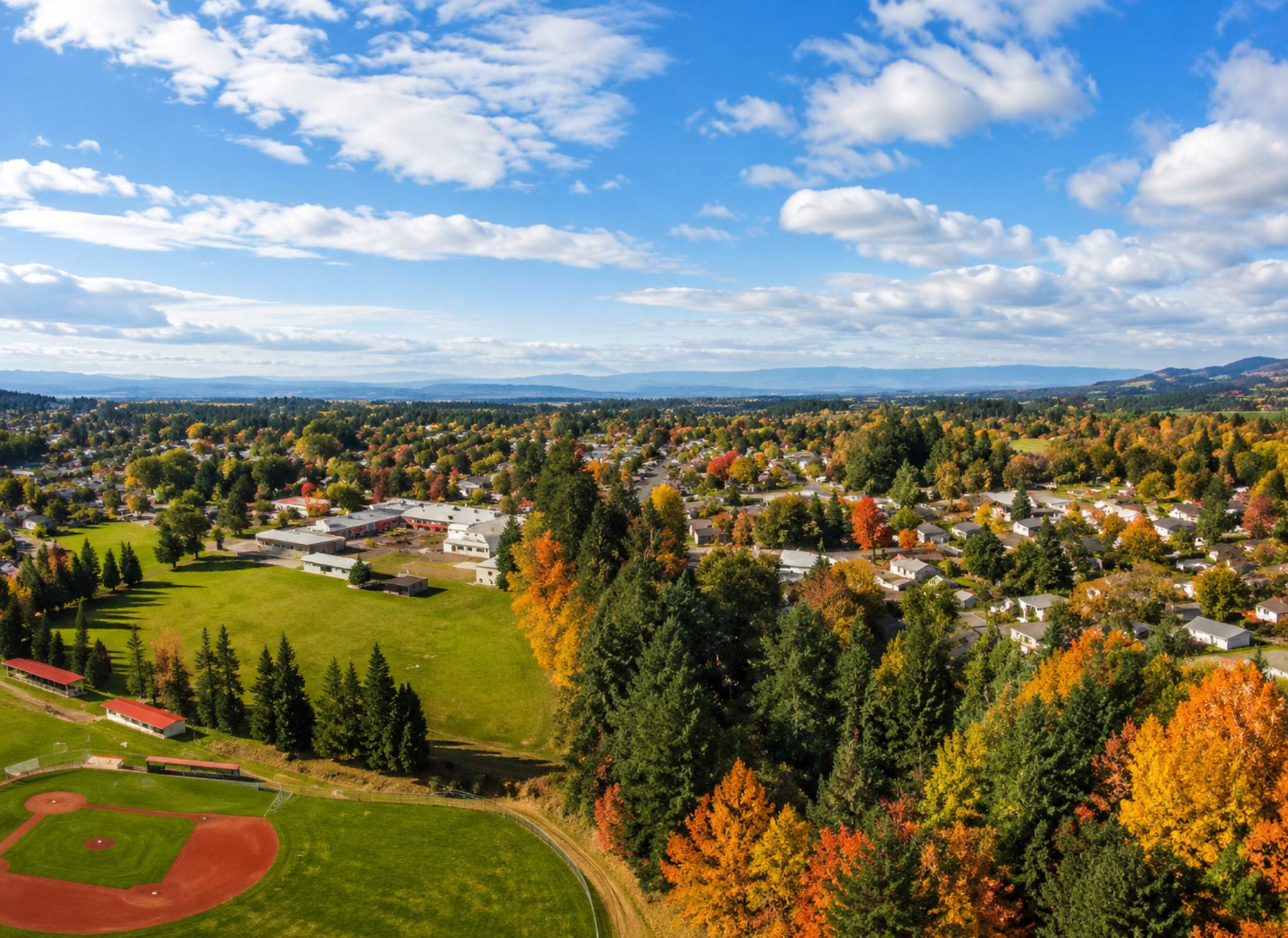
Dayton is an incorporated city in Yamhill County, Oregon, positioned approximately 32 to 38 miles southwest of downtown Portland and approximately 12 miles south of McMinnville along the Highway 18 and Highway 221 corridor in the agricultural heart of the northern Willamette Valley. The city sits on the south bank of the Yamhill River where it broadens and slows at the valley floor, surrounded by the working agricultural landscape of Yamhill County's most productive growing region — grass seed fields, hay operations, hop yards, nursery operations, and the increasingly vineyard-dominated hillsides of the Eola-Amity Hills AVA rising to the south and east.
The Eola-Amity Hills' proximity is Dayton's most specific and most compelling geographic distinction within the Yamhill County wine country series — a wine growing zone whose ocean-influenced climate, produced by the Van Duzer Corridor's marine air penetration through the Coast Range, creates growing conditions that produce a distinctly different expression of Willamette Valley Pinot Noir than the warmer, more continental conditions of the Dundee Hills and the Chehalem Mountains to the north. The Eola-Amity Hills' recognition within the global Pinot Noir conversation has grown significantly over the last decade as the zone's producers have built reputations that extend well beyond the Oregon wine country's existing recognition base — and Dayton's position within this emerging AVA's residential orbit puts buyers at the frontier of the wine country's next chapter of discovery rather than in the middle of its most established territory.
Dayton is served by the Dayton School District — a small independent Oregon school district serving the Dayton community with a K-12 program that reflects the close-knit agricultural community it serves. The district's small enrollment produces the teacher-student relationship quality, the community-embedded school culture, and the small-district intimacy that Yamhill County's more rural communities consistently develop in their educational institutions. The Dayton School District is meaningfully smaller than the McMinnville School District and significantly smaller than the Newberg School District — it does not have the programmatic breadth, the extracurricular depth, or the specialized curriculum availability of the larger Yamhill County districts, and buyers for whom those specific features are meaningful criteria should engage with that comparison honestly before the agricultural community's compelling price point overrides the school district evaluation in the purchase decision. What the Dayton School District is, genuinely, is a district whose schools are the community in the specific and personal way that only very small Oregon school districts fully achieve — and the families who have chosen Dayton specifically for its agricultural community character tend to find that the small-district experience aligns with the values that organized their residential search in the first place.
Portland International Airport is approximately 35 to 44 miles from Dayton, typically a 50 to 70 minute drive depending on traffic, time of day, and your specific route through the southwestern Portland metro toward PDX. The most practical driving paths run north on Highway 221 through Amity and Newberg, or via Highway 18 east to the Highway 99W corridor through Newberg and Tigard and into the Portland metro. The same Highway 99W peak-hour congestion that affects the full Yamhill County commute corridor applies to Dayton, with the additional consideration that Dayton's position south of McMinnville rather than north of it adds the McMinnville-to-Newberg segment of the Highway 99W approach to the commute calculation before the Tigard commercial strip's peak-hour dynamics begin. Salem is approximately 20 to 25 minutes southeast of Dayton via Highway 221 — a practical alternative metro direction for buyers whose professional obligations are compatible with a Salem orientation, providing the Oregon capital's full commercial, medical, and professional service infrastructure at a drive time that makes the Salem alternative genuinely competitive with the Portland direction for a meaningful subset of Dayton's buyer pool. Pre-purchase route assessment at the specific times and in the specific directions that a household's professional and family obligations require is the honest diligence that distinguishes Dayton buyers who are satisfied with their commute reality from those who found it more demanding than anticipated.
What Your Money Gets You: Homes at Every Price Point
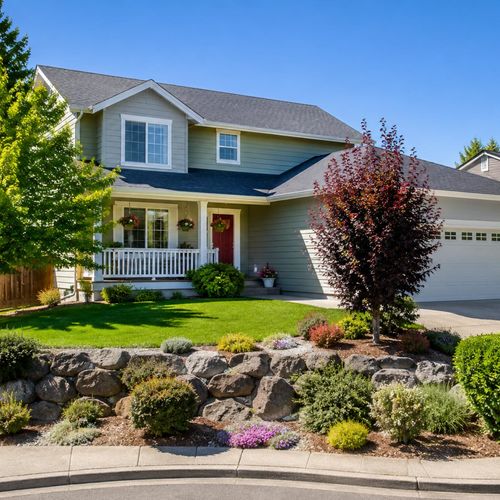
Dayton's housing market reflects the city's character with the directness that a small Yamhill County agricultural community's residential inventory consistently produces — a mix of historic residential stock in the city's established core neighborhoods, mid-century and later construction in the surrounding residential fabric, newer modest residential additions that reflect the community's gradual growth, and the agricultural and rural residential properties at the city's edges where the Yamhill County farmland and the Eola-Amity Hills vineyard terrain begin their transition from the valley floor to the hillside wine growing landscape. New construction within Dayton proper is limited by the community's small geographic footprint and the agricultural land use designations that protect the surrounding farmland from residential conversion — making this primarily a resale market with the character and the condition variability that multi-era small-city agricultural community residential stock consistently produces.
Here is a realistic look at what different price points deliver in this market:
$275,000 – $375,000 Entry-level Dayton delivers the community's older residential stock in its most original or modestly updated form — primarily early to mid-20th century and 1950s through 1970s construction in the 900 to 1,500 square foot range, two to three bedrooms, one to two baths, and the residential configurations that small Yamhill County agricultural community development produced across those eras without architectural distinction but with the structural honesty and the lot generosity that building for permanence rather than investment return historically provided. Lots at this price point are consistently more generous than anything comparable pricing produces in Washington County or the Portland city residential markets — deeper, more naturally vegetated, and in some cases large enough to support the garden operations, fruit trees, and rural lifestyle uses that buyers drawn to the Yamhill County agricultural landscape find genuinely valuable rather than theoretically appealing. Condition is the honest variable at this range — some homes have been maintained by long-term Dayton community members whose relationship with the property reflects genuine stewardship over decades of ownership. Others carry the accumulated deferred work that older residential properties in small agricultural communities develop through extended ownership cycles without active maintenance investment. The value at this price point is entirely genuine: Yamhill County wine country address within the Eola-Amity Hills' emerging recognition corridor, the Dayton community's agricultural character, the Joel Palmer House as a neighborhood restaurant institution, and proximity to the McMinnville culinary and cultural infrastructure at a price that the wine country's broader residential market has not yet adjusted to reflect what Dayton's specific location and community character actually deliver. For first-time buyers, retirees organizing their finances around genuine wine country community access at the most financially accessible ownership cost, and buyers whose renovation competence and budget make an older property an opportunity rather than a risk — this range produces the most specific and most financially accessible version of the Dayton value proposition.
$375,000 – $490,000 This is the most active and most revealing price band in the Dayton market — the range where the community's full residential value proposition becomes most clearly legible and where buyers who have run the full Yamhill County wine country comparison honestly tend to arrive with the most conviction. Homes in this range tend to be the community's best-maintained or most recently updated single-family properties — three to four bedrooms, two baths in most cases, kitchens that have been addressed with genuine intention in the last decade, and the outdoor spaces that a Yamhill River valley agricultural community residential setting produces when it has been engaged with rather than left to the default maintenance that absentee attention produces over time. Some homes at the upper end of this range begin to access the elevated terrain at the city's edges where the Eola-Amity Hills' slope character creates residential positions with territorial views across the Yamhill Valley floor toward the Coast Range — the specific wine country view quality that buyers whose residential criteria include the visual immersion of the wine country landscape find meaningful and specific at a price that no other Yamhill County wine country community delivers for comparable view access. For move-up buyers, wine country lifestyle buyers who have been approaching the Yamhill County market from the McMinnville or Newberg direction and found those communities priced beyond their range, remote workers who have specifically identified the Eola-Amity Hills corridor's emerging recognition as the organizing geographic criterion of their wine country residential search, and relocators from higher-cost markets whose primary criterion is the deepest wine country community authenticity available at the most accessible price point within the Yamhill County corridor — this is the range where Dayton starts to feel not just practical but specifically and completely right.
$490,000 – $650,000 Homes at this level represent Dayton's strongest conventional residential product — the most extensively updated or best-positioned properties in the community, where renovation quality, lot character, Yamhill River proximity or Eola-Amity Hills view orientation, and overall livability come together at the standard that positions them at the top of Dayton's small-city residential hierarchy. Updated three to four bedroom homes with genuine finish quality, outdoor spaces that engage with the Yamhill County agricultural setting rather than treating it as background, and the specific lot positioning within Dayton's residential geography that delivers the most direct and most immersive version of the wine country agricultural community experience the city provides. Some properties in this range sit on the elevated terrain above the valley floor where the Eola-Amity Hills terrain begins its rise from the Yamhill Valley agricultural plain — positions that deliver the territorial views and the vineyard adjacency that give the wine country's most compelling residential addresses their specific and irreplaceable character. For buyers who have specifically identified the Eola-Amity Hills' wine country terrain as the geographic criterion organizing their residential search and who understand what the combination of emerging AVA recognition, hillside vineyard adjacency, and Dayton's agricultural community character delivers as a residential proposition — this range provides access to that experience at a price that the community's current discovery level has not yet fully reflected.
$650,000 – $875,000 At this level, Dayton's market transitions toward the agricultural and vineyard-adjacent properties that most directly represent what the Eola-Amity Hills landscape offers beyond the city's conventional residential fabric — the rural residential parcels on the hillside terrain with established agricultural or viticultural infrastructure, the custom homes on the most commanding sites above the Yamhill Valley floor, and the properties whose combination of residential quality, elevated positioning, and wine country view corridors positions them as the community's most compelling and most specifically wine country-immersive residential assets. Some properties in this range sit within or directly adjacent to the Eola-Amity Hills AVA's active vineyard landscape — positions where the Pinot Noir vine rows, the marine-influenced hillside terrain, and the territorial view corridors across the Willamette Valley converge in configurations that the wine country estate market prices at multiples of what Dayton's emerging market currently sustains for comparable site quality.
$875,000 and above The upper end of Dayton's market and the Eola-Amity Hills corridor is defined by the most site-specific and most vineyard-integrated properties in the community's extended agricultural orbit — estate parcels within the Eola-Amity Hills AVA with established Pinot Noir plantings, custom residential structures on the hillside terrain's most commanding sites, and the occasional property that combines genuine wine country estate character with the Dayton community's agricultural authenticity and the McMinnville urban infrastructure's proximity in configurations that the broader Yamhill County wine country estate market rarely produces at this price point. These properties surface infrequently, attract buyers whose Eola-Amity Hills wine country criteria are specific enough to recognize the right property without deliberation, and move to buyers who were already prepared rather than beginning to organize when the listing appeared.
Median home price in Dayton: The median sits in the $350,000 to $420,000 range — making Dayton the most financially accessible incorporated Yamhill County wine country city in this content library with a genuine wine country agricultural character, Eola-Amity Hills AVA proximity, and the Joel Palmer House as a neighborhood institution. The gap between what the Dayton median delivers in terms of wine country community experience — Eola-Amity Hills vineyard terrain rising above residential streets, the Joel Palmer House within walking distance of multiple residential addresses, the Yamhill River's agricultural corridor threading through the community, and McMinnville's nationally recognized culinary culture twelve minutes north — and what comparable wine country community character costs in Dundee, Newberg, or the Oregon Coast's recognized destination communities is the most direct and most specific expression of the Dayton value proposition. That gap reflects the community's modest discovery level, its small school district's contrast with the larger Yamhill County districts to the north, and its agricultural rather than destination-oriented community character — none of which diminish what the location actually delivers for the buyer whose criteria are organized around those specific assets rather than around the commercial completeness or the school district scale that the larger Yamhill County communities provide.
What About Renting in This Area?
The Dayton rental market is limited in the way that small Yamhill County agricultural community rental markets consistently are — a modest inventory of privately held single-family homes and the occasional smaller unit offered by individual landlords whose properties tend to fill through community networks and local real estate professional referrals rather than extended public platform exposure. The community's small size, its predominantly owner-occupied agricultural character, and the absence of the university enrollment or the wine country hospitality workforce scale that drives rental demand in McMinnville and Newberg mean that Dayton's rental inventory is genuinely limited and turns over slowly.
Single-family rentals in Dayton when they surface typically run between $1,300 and $2,100 per month depending on the size of the home, the lot character, the condition and recency of any updates, and the proximity to the Yamhill River corridor or the Eola-Amity Hills terrain that gives the community's most desirable residential positions their specific wine country character. A modest two to three bedroom home in solid condition rents around $1,300 to $1,700. A larger, updated home with meaningful outdoor space and any hillside or Eola-Amity Hills-adjacent positioning pushes toward $1,700 to $2,100. The McMinnville rental market twelve minutes north provides the most practical expanded rental inventory for buyers who want to orient themselves to the southern Yamhill County wine country corridor before committing to a Dayton purchase — the rental variety, the university-adjacent supply, and the broader rental infrastructure that McMinnville's larger population generates making it the natural staging community for the Dayton-oriented buyer who needs a rental bridge before purchasing.
Things to Do In and Around Dayton
Dayton's position in the Yamhill River valley between the Eola-Amity Hills' emerging wine country terrain and the McMinnville corridor's nationally recognized culinary and cultural infrastructure places residents within a genuinely complete and genuinely specific Yamhill County wine country lifestyle landscape — one that combines the agricultural community's direct relationship with the land, the Eola-Amity Hills' distinctive wine growing character, and the broader Yamhill County wine country's accumulated cultural and recreational infrastructure in configurations that no other residential community in this content library delivers with the same combination of agricultural authenticity and wine country recognition.
The Eola-Amity Hills AVA tasting rooms are Dayton's most specific and most compelling daily lifestyle asset — the wine growing zone whose ocean-influenced climate, produced by the Van Duzer Corridor's marine air penetration through the Coast Range, creates the growing conditions that distinguish Eola-Amity Hills Pinot Noir from the warmer expressions of the Dundee Hills and the Chehalem Mountains in ways that the zone's most committed producers have spent decades articulating through the wines themselves. Bethel Heights Vineyard, Cristom Vineyards, Witness Tree Vineyard, and the broader Eola-Amity Hills producer community have their tasting rooms and vineyard operations within a short drive of Dayton's residential streets — giving residents of the community the kind of daily tasting room access that Dundee delivers for the Dundee Hills producers and that no other residential community in this content library provides for the Eola-Amity Hills' specific terroir character. For buyers who have specifically identified the Eola-Amity Hills' ocean-influenced Pinot Noir and Pinot Blanc expressions as the viticultural criterion organizing their wine country residential search — Dayton is the community that delivers that criterion most directly from a residential address at the most accessible price point within the Yamhill County market.
Fort Yamhill State Heritage Area is one of Dayton's most historically significant and most frequently overlooked community assets — a state heritage site preserving the remains of the Civil War-era military post that played a significant and complicated role in the forced relocation of the Grand Ronde tribes in the 1850s. The site's historical significance within Oregon's settlement history and its interpretation of the Willamette Valley's pre-settlement landscape give Dayton a historical depth that most small Yamhill County communities do not independently possess, and the heritage area's accessible location within the community provides the kind of historically grounded outdoor and interpretive experience that residents who value the full depth of the landscape they inhabit find genuinely engaging rather than merely historically obligatory.
The Yamhill River runs through and adjacent to Dayton and provides the daily water access — fishing, walking along the riparian corridor, and the natural riverside character that the Yamhill River's position within the Yamhill County agricultural valley produces at its most immediate and most accessible for Dayton residents whose addresses sit near the river's south bank. The Yamhill River's fishing access — for bass, catfish, and the migratory fish species that the Willamette tributary system supports — gives Dayton residents a local fishing resource that complements the broader Yamhill County agricultural outdoor culture.
The Joel Palmer House is Dayton's single most nationally recognized cultural institution and one of Oregon's most celebrated and most specifically wine country-committed restaurant experiences — a historic Victorian home on the main street of Dayton's downtown that has operated as a restaurant for over four decades with a kitchen whose commitment to wild mushrooms, truffles, and the Willamette Valley's foraged and farmed ingredients has built a reputation that extends well beyond the Oregon wine country into the national food media's conversation about specifically Pacific Northwest culinary culture. For the majority of Oregon wine country visitors, the Joel Palmer House is a destination that requires advance planning, a reservation made weeks in advance, and a drive specifically organized around the meal. For Dayton residents, it is a neighborhood institution accessible as a regular rather than occasional dining commitment — the kind of proximity to genuine culinary significance that adds a quiet and daily dignity to the residential experience in ways that are difficult to quantify but consistently described by Dayton residents as one of the more unexpectedly meaningful aspects of choosing this specific community.
The Grand Ronde Reservation and Spirit Mountain Casino are approximately 20 to 25 minutes west on Highway 18 — the Confederated Tribes of Grand Ronde's tribal lands and the casino and resort facility that serves as the primary entertainment destination for the broader Yamhill County and Polk County community. Spirit Mountain's concert venue, its dining options, and the casino's entertainment programming provide Dayton residents with an accessible entertainment destination that the community's own modest commercial footprint does not independently generate.
McMinnville is twelve minutes north on Highway 18 — the Yamhill County wine country's most commercially complete community and the nationally recognized Third Street culinary corridor, addressed fully in the McMinnville guide that precedes this one in the content library. For Dayton residents, McMinnville functions as the daily commercial and cultural extension that the city's own small footprint requires an adjacent community to provide — the grocery infrastructure, the medical and professional services, the Third Street dining culture, the Evergreen Aviation Museum, the Linfield University programming, and the IPNC's annual presence all accessible from Dayton as a regular rather than exceptional commitment within a twelve-minute drive that most residents describe as entirely negligible in the context of the wine country lifestyle the combined proximity to both communities delivers.
Salem is approximately 20 to 25 minutes southeast via Highway 221 — Oregon's state capital and a mid-sized city with the full commercial, medical, governmental, and professional service infrastructure that a capital city produces and sustains regardless of its cultural cachet. For Dayton residents whose professional, medical, or commercial obligations align with Salem's infrastructure rather than Portland's, the Highway 221 southeast approach provides a metro direction that is meaningfully shorter than the Portland direction in both mileage and drive time while delivering the essential urban services that small Yamhill County agricultural community life requires access to for practical sustainability.
The broader Yamhill County wine trail extending north from Dayton through the Eola-Amity Hills, the Dundee Hills, the Chehalem Mountains, and the Carlton and Yamhill area is accessible as a regular recreational and social practice from a Dayton residential address — the full northern Willamette Valley wine country's tasting room infrastructure navigable in multiple directions without the commute dynamics that accessing the wine country from Portland or Washington County requires of buyers whose residential addresses are not embedded within the wine growing landscape itself.
The Oregon Coast is approximately 45 to 55 minutes west via Highway 18 through the Coast Range — more directly accessible from Dayton than from any community north of McMinnville in the Yamhill County wine country series, placing the Tillamook Bay area, Pacific City, Lincoln City, and the broader central Oregon coast within day-trip range at drive times that Dayton residents execute with genuine casualness. The Highway 18 coastal approach from Dayton through the wine country landscape and the Coast Range is one of Oregon's most scenically varied and most culturally rich coastal drive experiences — the transition from the Yamhill Valley's agricultural character through the Coast Range's timber country to the Pacific Ocean's working coastal communities providing the full Oregon landscape spectrum within a single drive that most Pacific Northwest residents make as a two-hour commitment from the Portland metro.
Polk County's agricultural landscape immediately south and southeast of Dayton through the Amity and Ballston corridor provides the rural agricultural extension of the Eola-Amity Hills wine country terrain — additional tasting rooms and vineyard operations within the Eola-Amity Hills and the broader Willamette Valley South AVA accessible from Dayton's southern approach that give the community's wine country residential orbit a southward dimension that complements the McMinnville and Dundee Hills access to the north.
Portland is 50 to 65 minutes northeast via the Highway 221 and Highway 99W approach through Newberg and Tigard — the full urban experience of a major Pacific Northwest city accessible when the occasion calls for it. The peak-hour Highway 99W dynamics addressed in the McMinnville, Dundee, and Newberg guides apply with full force to Dayton, and the pre-purchase commute assessment at actual-use times in the Portland-bound direction is the diligence that distinguishes buyers who are satisfied with the Dayton commute from those who found it more demanding than anticipated at the times they most need to use it.
Where to Eat
Dayton's dining scene reflects the community's agricultural character and its small size with the honest directness that a city of roughly 2,500 residents in the Yamhill Valley produces — limited commercial restaurant infrastructure of its own beyond the Joel Palmer House's nationally recognized presence, a primary reliance on McMinnville's Third Street corridor for the everyday and elevated dining variety that the community's modest commercial footprint does not independently generate, and the particular food culture that proximity to the Willamette Valley's extraordinary agricultural production, the Eola-Amity Hills' wine country, and the Joel Palmer House's foraging and farm-to-table tradition develops in residents who have built their food relationship around what the valley and the surrounding landscape produce rather than what a commercial restaurant industry curates from a globalized supply chain.
The Joel Palmer House is the irreplaceable anchor of Dayton's dining identity — and its presence as a neighborhood institution rather than a destination trip for Dayton residents is the single most specific and most culturally significant dining asset that any community in this content library delivers from the immediate residential address. The restaurant's four-decade commitment to wild mushrooms, Oregon truffles, and the Willamette Valley's foraged and farmed ingredient landscape has built a reputation in Oregon culinary history that is both deeply specific and genuinely irreplaceable — a restaurant whose identity is so thoroughly rooted in the specific landscape surrounding Dayton that its presence in the community reflects the agricultural setting's culinary potential rather than the community's commercial ambition. For Dayton residents, a dinner at the Joel Palmer House requires a reservation but not a drive — a distinction that adds a quiet and specific dignity to the residential experience that buyers from more commercially developed communities occasionally find surprising and consistently find valuable once they have lived within it for a full annual cycle of seasonal menu changes.
Dayton's own commercial corridor along Ferry Street and the city's primary commercial street carries the casual dining options that a small Yamhill County agricultural community maintains for its everyday residential population — taverns, casual family dining, and the quick-service options that serve the community's routine meal rotation without requiring a drive to McMinnville for every weeknight dinner. The specific establishments reflect the community's working agricultural character honestly rather than the destination-oriented programming that the wine country's larger communities have developed for the tourism traffic their recognition generates.
McMinnville's Third Street corridor — twelve minutes north — is the primary dining ecosystem for Dayton residents seeking genuine variety, culinary quality beyond the Joel Palmer House's occasion-worthy format, and the daily commercial dining range that a city of McMinnville's nationally recognized culinary depth provides. Nick's Italian Cafe, Thistle, Golden Valley Brewery, La Rambla, Community Plate, and the full Third Street dining culture addressed in the McMinnville guide are accessible from Dayton as a regular dinner destination at a drive time that most Dayton residents describe as negligible — twelve minutes on a clear Highway 18 run is shorter than many urban neighborhood residents drive for comparably accessible restaurant quality from within the cities they inhabit.
The Eola-Amity Hills tasting room hospitality culture — the estate food pairings, the harvest season tastings, the cellar visits with local charcuterie and artisan provisions — extends Dayton's dining culture into the wine country's own hospitality format in the specific way that the Eola-Amity Hills' producer community has built into its tasting room experiences for the residential community and the destination visitors who share the vineyard landscape. Bethel Heights' estate hospitality, Cristom's winemaker dinners, and the broader Eola-Amity Hills producer community's food and wine pairing culture contribute to Dayton residents' food and drink daily life as neighborhood resources rather than destination events — a distinction that reflects the specific value of living within the wine country's production landscape rather than adjacent to it.
The McMinnville Farmers Market — twelve minutes north — extends the farm-to-table provisions culture into Dayton residents' weekly food routine in the direct-to-producer format that the Yamhill County agricultural community's Saturday market produces with the seasonal specificity and the community character that the Pacific Northwest's best farmers markets generate when their community genuinely uses them as a weekly institution.
Salem's restaurant scene — twenty to twenty-five minutes southeast — provides an alternative dining direction for Dayton residents whose culinary orbit extends toward Oregon's capital city, with the growing restaurant culture that a mid-sized Oregon city with immediate access to the Willamette Valley's agricultural production has developed alongside its urban commercial infrastructure.
Portland's restaurant landscape — fifty to sixty-five minutes northeast — provides the full Portland culinary depth for the specific occasions that call for the city's scale and variety. Accessible when the Third Street corridor, the Joel Palmer House, and the Eola-Amity Hills tasting room culture do not fill the specific need the occasion produces — which, for most Dayton residents oriented toward the wine country's agricultural food culture, is less frequently than the Portland-centric perspective of the broader Oregon residential market might predict.
The honest framing: Dayton is an Oregon agricultural community where the food culture is organized around the most specific and most directly wine country-rooted combination of any community in this content library — the Joel Palmer House's foraging tradition as a neighborhood institution, the Eola-Amity Hills' tasting room hospitality as a daily lifestyle resource, the McMinnville Third Street corridor as a twelve-minute extension of the community's own dining range, and the Yamhill Valley's extraordinary agricultural production as the kitchen's primary supplier rather than an ingredient story that a distant restaurant curates from the valley and presents to urban diners at a price that reflects the distance between the sourcing and the eating. Buyers who make that transition — from a food culture organized around metropolitan restaurant variety to one organized around the land the community sits within — tend to find it one of the most specifically satisfying aspects of the Dayton wine country life they chose.
Who Buys in Dayton?
After nearly three decades working markets across the Pacific Northwest on both sides of the Columbia River and across the full Oregon metro, rural, coastal, and wine country corridor, the Dayton buyer is the most specifically agricultural wine country-committed and the most value-conscious wine country residential profile in the Yamhill County series. They have not arrived at Dayton by running out of options in more recognized Yamhill County communities — they have arrived by a genuine and honest process of identifying what they want from their wine country residential address with enough specificity to find the community where that combination is most completely available at the most accessible price point the Yamhill County market currently sustains.
They are Eola-Amity Hills wine devotees and emerging AVA early adopters — buyers whose engagement with the Oregon wine country has developed to the point where the Eola-Amity Hills' ocean-influenced Pinot Noir expressions have become the specific viticultural criterion organizing their residential search rather than the broader northern Yamhill County wine country's general recognition. These buyers understand the Van Duzer Corridor's role in the Eola-Amity Hills' climate character, they know the producers whose tasting rooms are within minutes of the Dayton residential address, and they have concluded that living within the emerging AVA's residential orbit at Dayton's price point is the most specific and the most financially accessible expression of their wine country residential identity available in the Yamhill County market. For these buyers, the Dundee Hills' established recognition and the Chehalem Mountains' proximity to Newberg are genuinely less compelling than the Eola-Amity Hills' emerging character and Dayton's direct access to it — a preference that reflects serious wine country engagement rather than the casual wine tourism perspective that the northern Yamhill County's more marketed communities tend to attract.
They are Joel Palmer House devotees and foraging culture buyers whose relationship with the wild mushroom, truffle, and foraged ingredient culture that the Joel Palmer House has expressed across four decades of Yamhill County residency has crystallized into the residential criterion of living within the neighborhood rather than making the reservation-and-drive commitment that the Portland metro's food culture requires. For these buyers, proximity to the Joel Palmer House is not a lifestyle amenity — it is the specific culinary institution whose presence in the community reflects the values they are purchasing proximity to rather than a restaurant they enjoy visiting from a distance.
They are remote workers and agricultural lifestyle buyers whose professional flexibility has freed the residential decision from the Portland metro commute constraint and whose personal lives are organized around the wine country's agricultural identity, the Eola-Amity Hills' vineyard terrain, and the specific community character that a small Yamhill County agricultural city maintains when its residents are genuinely invested in its agricultural identity rather than transitioning through it toward a more commercially developed community. These buyers want to grow food alongside the wine country's production culture, participate in the agricultural community's seasonal rhythms, and live in a place whose character reflects the land it sits within rather than the commercial infrastructure that has been layered over that land in the wine country's more discovered communities.
They are value-conscious wine country buyers who have run the full Yamhill County comparison — Newberg, Dundee, McMinnville, Dayton — and concluded that Dayton's combination of Eola-Amity Hills proximity, Joel Palmer House as a neighborhood institution, McMinnville's Third Street culture within twelve minutes, and the most accessible median price in the Yamhill County wine country series produces a wine country residential value that no other community in the corridor delivers for the same price point. They are purchasing the gap between Dayton's current discovery level and what its Eola-Amity Hills position, its culinary institution, and its agricultural community character actually represent — and they are doing so with the financial clarity that buying before full discovery produces for buyers who have done their research carefully enough to find the community before the market has fully found it.
They are buyers from California, the Bay Area, and the Pacific Northwest wine culture markets who came to the Oregon wine country with the culinary and viticultural sophistication to recognize that the Eola-Amity Hills' emerging international recognition, combined with the Joel Palmer House's established reputation and Dayton's accessible median price, represents a Pacific Northwest wine country community value that the broader residential market has not yet priced into what it charges for the Yamhill County address. They are purchasing the Oregon wine country's next discovery community at today's price — a purchase decision that the wine country's history of progressive community recognition consistently rewards for buyers who identify the trajectory before it arrives.
They are, consistently, buyers who find Dayton delivering more than the price suggested and less of the commercial variety that the price suggested might be missing — which is precisely the characteristic of the right small wine country agricultural community for the buyer whose criteria are organized around the land and the wine rather than around the downtown and the school district.
What You Should Know Before You Commit
Dayton rewards buyers who engage with the community's small size, the Highway 99W and Highway 221 commute reality, the Dayton School District's honest comparison against the larger Yamhill County districts, and the specific agricultural community character that defines what Dayton is rather than what its wine country surroundings might inspire buyers to project onto it — with the same honest directness that the Joel Palmer House applies to the ingredients it sources from the valley and the forest rather than the ingredients it wishes were available from a more convenient supply chain.
The community's small commercial footprint is the practical reality that Dayton's roughly 2,500-person scale most consistently produces — no major grocery within the city, limited medical and professional service infrastructure, a commercial corridor that reflects the everyday needs of a working agricultural community rather than the wine country destination's culinary aspiration. McMinnville fills the practical commercial gap within a twelve-minute drive that most Dayton residents describe as having become entirely automatic rather than a deliberate trip — the drive to McMinnville for grocery, medical, and specialty services becoming as natural and unremarkable as urban residents' routine to a neighborhood commercial district. But buyers who require immediate commercial convenience from their residential address rather than a short and predictable drive to an adjacent city's infrastructure should engage with that expectation honestly against Dayton's specific commercial reality before the wine country landscape's compelling character overrides the practical assessment in the purchase decision.
The Dayton School District's honest comparison against the Newberg and McMinnville districts — larger, more programmatically complete, and more resource-rich by most measured dimensions — should be conducted with the specific enrollment, graduation rate, and program availability comparisons that inform the genuine educational quality assessment rather than the general impression that the district size differential alone produces. The Dayton district is small, community-centered, and genuinely embedded in the agricultural community it serves in the specific way that only very small Oregon school districts fully achieve. Whether that quality — the small-school intimacy, the community-integrated educational culture, the teacher-student relationship depth — aligns with a specific family's educational priorities is a question worth asking and answering specifically before the wine country lifestyle's compelling appeal makes it feel like a secondary consideration rather than the foundational assessment it deserves to be.
The commute's directional flexibility — north toward Portland via Highway 99W and Highway 221 through Newberg, or southeast toward Salem via Highway 221 — is a genuine practical asset that Dayton's geographic position between Oregon's two largest cities provides and that the northern Yamhill County communities of Newberg and Dundee do not deliver with the same balance. Buyers whose professional obligations are compatible with a Salem orientation should assess the Salem commute alongside the Portland commute before concluding that Portland proximity is the relevant metropolitan direction for their household — the Salem alternative's meaningful shorter drive time and its access to Oregon's capital city's full governmental and professional service infrastructure makes it a genuinely competitive commute direction for a meaningful subset of Dayton's buyer pool.
The Eola-Amity Hills agricultural land use framework affects the development potential and the neighboring land use character of properties within and adjacent to the AVA's vineyard designation in ways that Yamhill County agricultural land use law governs with specific attention to the preservation of the wine growing landscape. Understanding the specific agricultural land use context surrounding any Dayton property being seriously considered — the neighboring vineyard operations, the farm use designation of adjacent parcels, and the specific restrictions and allowances of Yamhill County's agricultural land use framework for the property's specific zone — is basic pre-purchase diligence that reflects the specific context of purchasing within an emerging wine growing region rather than a conventional residential community.
Thinking About a Home in Dayton?
Dayton inventory is as specific and as limited as the community itself — a small market where quality properties in the most wine country-immersive positions and the most Joel Palmer House-adjacent addresses surface infrequently, attract motivated buyers who have done their Yamhill County research specifically rather than broadly, and reward buyers who are connected and ready over buyers who are still orienting to the community when the right property appears. I know Yamhill County, I know the full Highway 99W and Highway 221 wine country corridor from Tigard through Newberg, Dundee, McMinnville, and Dayton into the Eola-Amity Hills and the Polk County agricultural landscape south of it, and I will give you a straight read on what you are looking at — the property, the school district confirmation and honest comparison, the commute at the specific times your household would experience it in both directions, and the complete total cost of ownership picture — before you write anything.
See more about Dayton
Want to learn more about Dayton neighborhoods and homes?
Homes for sale in Dayton: https://jamiemeushawrealestate.com/properties/city-Dayton,%20OR/
Watch more local real estate insights on my YouTube channel:
https://www.youtube.com/@JamieMeushaw
Sign up for my weekly newsletter for real estate tips and market updates:
https://jamiemeushawrealestate.com/newsletter
Check out this article next