


Where Exactly Is the NW District?
The NW District — also referred to as Nob Hill, a designation that reflects its historical identity as Portland's most prestigious early residential address — occupies the northwestern quadrant of inner Portland, bounded roughly by Burnside Street to the south, the Willamette River industrial corridor and the Pearl District to the east, NW Lovejoy and the transition into the Alphabet District residential streets to the north, and the Forest Park boundary and the West Hills terrain to the west. It sits immediately northwest of the Pearl District and immediately west of downtown Portland, connected to both by the Portland Streetcar running along NW 23rd and by the walkable street grid that makes the neighborhood one of the most pedestrian-functional addresses in the city.
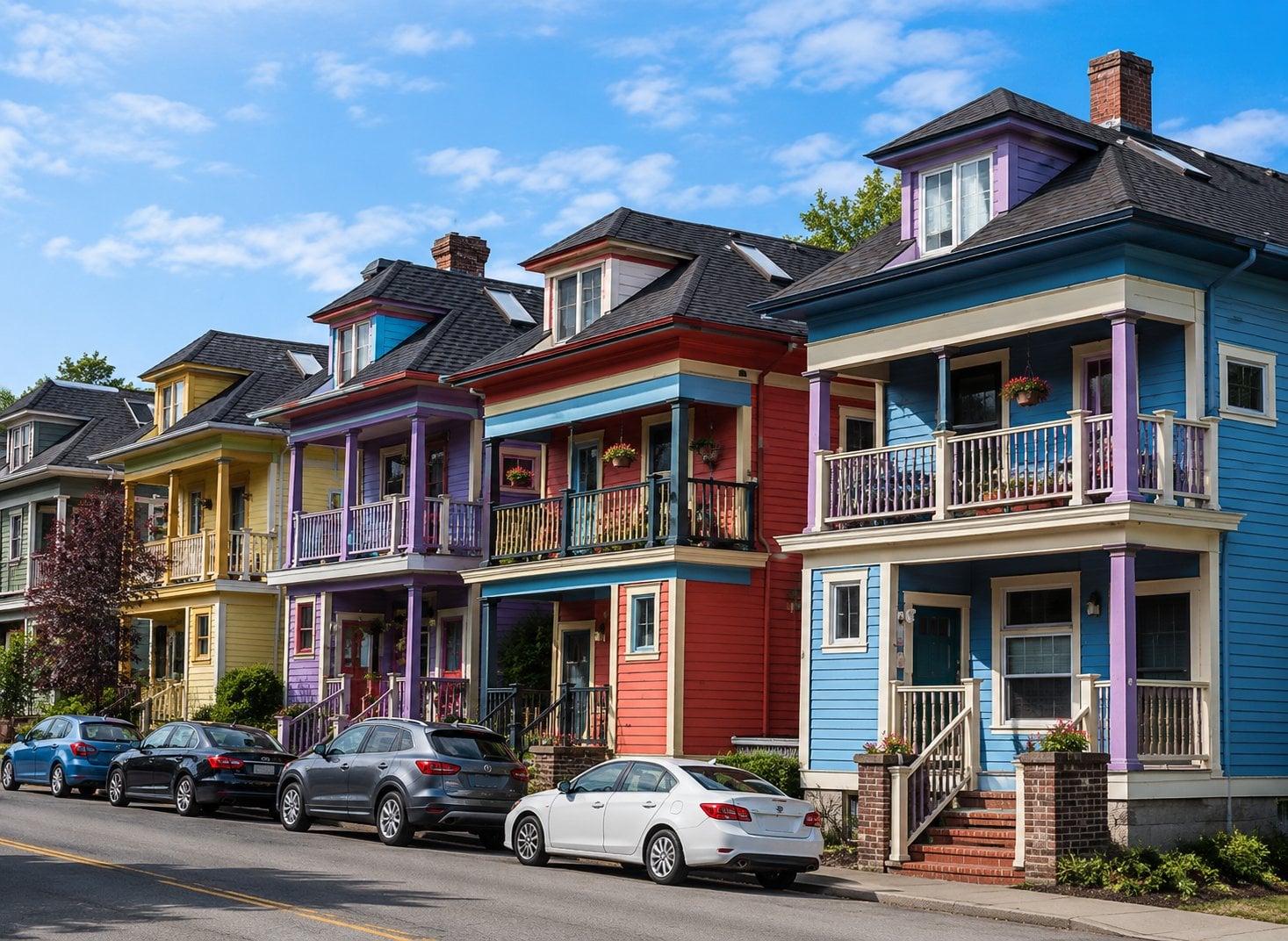
The neighborhood's street naming convention — the Alphabet District, where parallel east-west streets run alphabetically from Burnside north through Flanders, Glisan, Hoyt, Irving, Johnson, Kearney, Lovejoy, Marshall, and beyond — is both a navigational asset and a reflection of the neighborhood's age and planning coherence. These streets were laid out when Portland was establishing its permanent residential character, and the homes that line them reflect that era — Victorians, Craftsmans, classic foursquares, and early apartment buildings that give the residential streets a visual continuity and architectural quality that newer Portland neighborhoods cannot replicate regardless of design budget.
The NW District is served by Portland Public Schools, with the neighborhood's residential population including a meaningful proportion of families alongside the young professionals, established Portlanders, and downsizers who round out the community's demographic character. PPS school choice and focus option programs are the relevant framework for families with school-age children, and engaging with those options early rather than relying on proximity-based assignment alone is the right approach for any household where school quality is a meaningful factor in the purchase decision.
Portland International Airport is approximately 14 to 20 miles from the NW District, typically a 25 to 40 minute drive depending on traffic, time of day, and your specific route — east through downtown and north via I-5, or through the city surface streets toward I-205 and east to PDX. The MAX Red Line connection from the adjacent Pearl District and Union Station provides a transit option to the airport — approximately 40 to 50 minutes from nearby downtown stations — for residents who prefer to avoid the drive. The NW District's position on the west side of the city means that the airport is not among its practical advantages the way it is for neighborhoods in north and northeast Portland, and buyers for whom PDX proximity is a daily quality-of-life factor should weigh that honestly alongside the neighborhood's considerable other strengths.
What Your Money Gets You: Homes at Every Price Point
The NW District's housing market is one of the most architecturally varied and price-stratified in Portland — a reflection of the neighborhood's long residential history, its mix of Victorian single-family homes on the hillside streets, its dense supply of historic apartment buildings and converted multi-family properties on the flat Alphabet District blocks, and the condominium inventory that has developed along the neighborhood's commercial corridors over the last two decades. Buyers approaching this market find genuine variety across property type, architectural era, and price point in a way that few Portland neighborhoods can match, alongside the consistency of location quality and walkability that defines the NW District regardless of which specific property type or price range a buyer is evaluating.
Here is a realistic look at what different price points deliver in this market:
$375,000 – $525,000 Entry-level NW District living is primarily accessed through the neighborhood's condominium and smaller apartment conversion inventory — studio to one-bedroom units in historic buildings along the Alphabet District blocks and the NW 23rd corridor, ranging from 500 to 900 square feet in configurations that reflect the era of the building as much as any deliberate design intention. Some units in this range occupy older apartment buildings converted to ownership that retain the architectural character — tall ceilings, original hardwood floors, large windows with divided light grids, and the proportion of rooms that early 20th century residential construction delivered — that buyers who appreciate historic buildings find genuinely compelling. Others are in more recent infill condominium construction where the finishes are contemporary and the character is efficient rather than distinctive. HOA fees in this range vary significantly by building age, amenity level, and management quality — a factor worth evaluating with the same attention given to unit condition. For buyers whose primary criteria are walkability, NW 23rd access, Forest Park proximity, and the full NW District lifestyle proposition at the most accessible price point the neighborhood offers, this range provides genuine entry into one of Portland's most desirable urban addresses.
$525,000 – $775,000 This is the most active and most varied price band in the NW District market, encompassing one-bedroom and two-bedroom condominiums in quality buildings, smaller single-family homes and rowhouse configurations on the neighborhood's flatter residential blocks, and in some cases ground-floor townhome units with private outdoor space that the neighborhood's denser residential fabric occasionally produces. Single-family homes in this range on the Alphabet District streets tend to be older properties — 1910s through 1940s construction — requiring varying degrees of updating and offering the kind of architectural detail that Portland's historic residential stock delivers when it has been respected rather than renovated into generic modernity. The value proposition at this price point in the NW District is the combination of walkability and architectural quality — buyers who compare what this range delivers in terms of daily lifestyle against comparable price points in outer SE or North Portland neighborhoods consistently find that the NW District commands its premium through the density of what is accessible on foot rather than through the size of the home or the lot it sits on.
$775,000 – $1,100,000 At this level, the NW District begins to deliver its most compelling residential product across both condominium and single-family categories. Two-bedroom and three-bedroom condominiums in the neighborhood's premium buildings, updated or extensively renovated single-family homes on the hillside streets with territorial or city views, and rowhouse and townhome configurations with meaningful outdoor space that the neighborhood's architectural variety occasionally makes possible. Single-family homes in this range on the West Hills streets — the elevated blocks that climb toward the Forest Park boundary above NW Thurman and beyond — deliver the combination of historic character, neighborhood position, and natural immediacy that represents the NW District's most distinctive residential proposition. Views of the city and the Willamette River corridor open from these streets at elevations that reward the buyers who chose them over the flat Alphabet District blocks, and Forest Park trail access from the neighborhood's upper residential streets becomes genuinely immediate at these addresses rather than accessible — the distinction between a 10-minute walk to a trailhead and walking out your door onto a trail is a meaningful one for outdoor-oriented households. Condition and finish quality vary across this range in the way that a neighborhood with housing stock spanning over a century always produces, and the inspection and renovation assessment investment at this price point is essential rather than advisory.
$1,100,000 – $1,600,000 Homes at this level represent the NW District's most desirable single-family residential inventory — fully renovated or extensively updated Victorian and Craftsman properties on the West Hills streets, where the combination of architectural distinction, hillside position, city or river views, Forest Park walking access, and the full NW District lifestyle proposition converges in the way that the neighborhood's most committed buyers have been waiting for. Three to four bedrooms, two to three baths, kitchens and primary baths rebuilt at a level that respects the home's period character while delivering contemporary function, and outdoor spaces — covered porches, terraced gardens on hillside lots, mature landscaping that has had decades to establish — that reflect a relationship with the Pacific Northwest's outdoor culture built into the architecture of the home rather than retrofitted onto it. These are properties where the setting and the structure are equally responsible for the price, and where the right buyer recognizes both simultaneously rather than requiring an explanation of either.
$1,600,000 and above The upper end of the NW District market is defined by the neighborhood's most architecturally significant properties — fully restored Victorians and early Craftsmans on premier West Hills streets, custom-renovated homes with exceptional city and river view corridors, and in some cases properties that combine historic residential significance with the kind of site quality — mature gardens, territorial sightlines, rare lot depth on the hillside — that makes them genuinely irreplaceable within the Portland residential landscape. These properties attract buyers who have been specific about wanting the most complete version of the NW District experience — historic character, natural immediacy, urban walkability, and architectural quality simultaneously — and who have the patience and the resources to wait for a property that delivers all of it without compromise. When they surface, they do not sit.
Median home price in the NW District: The median in this market sits in the $590,000 to $690,000 range — a figure that reflects the neighborhood's mix of condominium inventory at accessible price points and single-family Victorian and Craftsman properties that command significant premiums, and that positions the NW District as one of Portland's more expensive established residential neighborhoods on a per-square-foot basis. Against the Pearl District to the east, the NW District trades vertical density and pure urban completeness for architectural character, residential scale, and Forest Park immediacy — a trade that different buyers evaluate differently, and that is worth thinking through honestly rather than assuming one neighborhood is categorically superior to the other.
What About Renting in This Area?
The NW District rental market is among the most competitive in Portland — a consistent reflection of the neighborhood's appeal to the professional and creative demographic that drives urban rental demand in Portland's most walkable and architecturally distinguished corridors. The inventory mix includes historic apartment buildings that have been rental properties for decades, condominium units offered by individual investor-owners, newer purpose-built apartment construction along the commercial corridors, and the occasional single-family home or garden apartment that surfaces through private landlord networks rather than conventional listing platforms.
Studio and one-bedroom apartments in the NW District typically rent between $1,500 and $2,400 per month depending on building age, unit size, finish level, and proximity to NW 23rd and the neighborhood's primary commercial amenities. Two-bedroom units run $2,200 to $3,500 per month depending on configuration, building quality, and whether the unit occupies a historic building with architectural character or a newer construction with contemporary finishes. Single-family rental homes in the neighborhood — where they surface, which is infrequently — command $3,200 to $5,500 per month depending on size, hillside position, view quality, and the condition and character of the specific property.
The NW District rental market operates with a vacancy rate that reflects genuine scarcity — this is a neighborhood where the combination of location, walkability, and architectural character produces consistent demand that the supply of available rental units does not easily absorb. Well-priced rentals in quality buildings at the desirable end of the market tend to lease within days rather than weeks, and renters approaching this market without organized documentation, clear timelines, and the willingness to commit when the right unit appears tend to lose properties to applicants who were simply better prepared. Building in more runway than feels necessary and treating the search as a prepared and active process rather than a casual browse is the right posture regardless of how much lead time your relocation timeline appears to offer.
Things to Do In and Around the NW District
The NW District's defining quality as a residential environment is the simultaneity of what it offers — the ability to walk to Powell's Books and then walk to a Forest Park trailhead in the same afternoon without a car, without a plan, and without the sense that you are making a special effort rather than simply living where you live. That simultaneity is what its residents consistently describe as the thing that surprised them most about the neighborhood after they arrived, and it is the thing that makes leaving it, when the time comes, consistently harder than they anticipated.
Forest Park begins at the literal end of the NW District's upper residential streets — at the Thurman Street trailhead, at the end of NW Leif Erikson Drive, and at multiple access points that thread through the hillside neighborhood and into over 5,000 acres of Douglas fir and western red cedar forest containing more than 80 miles of trail. It is the largest urban forest in the United States and one of the great ecological accidents of American city-building — a landscape that exists within the Portland city boundary because the West Hills terrain was too steep for the residential development that consumed the more accessible land around it, and that has been preserved and expanded into a natural resource of extraordinary scale and quality. For NW District residents whose addresses sit near the Forest Park boundary, the trail system is a daily physical practice rather than a weekend destination — the Wildwood Trail, the Leif Erikson gravel road, and the network of connector trails accessible from the neighborhood's upper streets make the urban-to-wilderness transition one of the shortest and most complete of any residential neighborhood in any American city.
NW 23rd Avenue is the neighborhood's primary commercial corridor and one of Portland's most consistently alive and independently owned retail streets — a mix of clothing boutiques, home furnishing shops, specialty food stores, independent restaurants, coffee roasters, wine bars, and the kind of street-level commercial variety that reflects decades of community investment rather than a development cycle's worth of programming. It is the street that visitors to Portland are consistently surprised to find operating at the level it does — independent, high-quality, and genuinely local in a way that commercial streets in most American cities have been unable to sustain against the pressure of national retail and e-commerce. For NW District residents, NW 23rd is not a destination — it is the infrastructure of daily life, the route taken to the coffee shop, the place where the Saturday errand run becomes an hour of browsing that was never planned and always worthwhile.
NW 21st Avenue runs parallel to NW 23rd one block east and delivers a second commercial corridor with a distinctly different character — more restaurant-dense, more evening-oriented, and reflecting the neighborhood's dining culture in a way that complements rather than duplicates what NW 23rd offers. The two corridors together give NW District residents a walkable commercial footprint that most Portland neighborhoods cannot assemble within a single corridor, let alone two parallel ones within a block of each other.
Wallace Park and Couch Park provide the neighborhood's primary community green spaces within the Alphabet District residential blocks — functional, well-maintained parks that serve the surrounding residential density with athletic facilities, playground infrastructure, and the open lawn that urban parks need to function as actual community gathering places rather than designed objects. Wallace Park's Saturday Farmers Market draws residents from across the neighborhood and reflects the community's investment in the local food economy in a way that has become a weekly rhythm for a significant portion of the NW District's residential population.
The Portland Streetcar runs along NW 23rd and connects NW District residents to the Pearl District, downtown Portland, Portland State University, the South Waterfront, and the Lloyd District without a car — a transit infrastructure that makes the neighborhood's urban completeness genuinely car-optional for residents whose daily movement falls along the Streetcar's route. For households with one car or buyers who commute to the central city by transit, the Streetcar's connection through the NW District is a daily utility rather than a novelty.
The West Hills trail network beyond Forest Park extends into the Tualatin Mountains and connects to a broader system of regional trails accessible from the neighborhood's upper residential streets — the Marquam Trail, the Balch Creek Trail running through a ravine to the north, and the network of paths that thread through the hillside terrain above the Alphabet District in ways that reward residents who take the time to explore them rather than defaulting to the more trafficked Leif Erikson and Wildwood corridors.
The Willamette River waterfront is accessible from the NW District via the Pearl District to the east — the Tom McCall Waterfront Park esplanade, the Steel and Burnside Bridges, and the river-level path connecting to the Eastbank Esplanade providing a walk or cycle along the water that gives the neighborhood a river connection despite its position on the west side of the city away from the riverfront.
Washington Park is accessible from the NW District via the West Hills trail network or a short drive up the Burnside hill — a major Portland park complex that contains the Oregon Zoo, the International Rose Test Garden, the Japanese Garden, the Portland Children's Museum, and the Hoyt Arboretum, collectively representing one of the most complete urban park complexes in the Pacific Northwest and a legitimate destination for NW District residents whose daily outdoor range extends beyond Forest Park.
Powell's Books at the Pearl District's southern edge is a ten-minute walk east — and the proximity of one of the great independent bookstores in America to the NW District's residential streets is the kind of neighborhood amenity that does not appear on any official list of neighborhood attributes but that shapes the daily cultural texture of living here in ways that residents describe as quietly significant over time.
Downtown Portland is a 15 to 20 minute walk east or a Streetcar ride — the full urban infrastructure of the central city, including the cultural institutions on the South Park Blocks, the Arlene Schnitzer Concert Hall, the Portland Art Museum, the Pearl District's gallery and dining landscape, and the professional and commercial center of the Portland metro. For NW District residents, downtown is a neighborhood away rather than a destination requiring a commute.
Columbia River Gorge is 40 to 50 minutes east — accessible and genuinely worth the drive from the NW District, though the neighborhood's position on the west side of the city makes the Gorge slightly less spontaneous than it is from NE or SE Portland. Most NW District residents develop a Gorge relationship built around intentional day trips rather than spontaneous afternoon visits, which reflects the neighborhood's orientation toward its own immediate outdoor infrastructure more than any meaningful limitation on Gorge access.
Where to Eat
The NW District's dining landscape is one of the most established and consistently high-quality in Portland — a reflection of both the neighborhood's long residential history and the income level of the community it serves. NW 21st Avenue in particular has built a reputation as one of Portland's premier restaurant streets, and the broader NW District dining ecosystem reflects a neighborhood that has been supporting quality independent restaurants long enough to have developed genuine institutions rather than simply a current restaurant cycle.
Paley's Place is the NW District's most celebrated fine dining anchor and one of Portland's most enduring restaurant institutions — a Victorian house on NW 21st converted into a dining room that has been serving Pacific Northwest cuisine with French technique and genuine farm-to-table commitment since before that phrase became a marketing term. The kitchen's relationship with Oregon's agricultural producers and its consistency over decades of Portland's constantly shifting restaurant landscape reflect the kind of institutional quality that cannot be manufactured on a development timeline. A reservation restaurant on weekend evenings and worth every effort to secure one.
Elephant's Delicatessen is a NW District institution in the most literal sense — a gourmet market, prepared food counter, and catering operation that has been serving the neighborhood's residential community for decades with the kind of food quality and variety that reflects the NW District's relationship with eating well as a daily practice rather than an occasional event. The prepared foods counter alone justifies its neighborhood institution status for residents who want a quality weeknight dinner without the table service commitment.
Café Mingo on NW 21st delivers Italian in the intimate neighborhood trattoria format — a small dining room, a focused menu, and the kind of consistently excellent execution that earns the loyal following that has kept it operating on a street where restaurant turnover elsewhere reflects how competitive Portland's dining landscape has become. Make a reservation. The room is small and the demand is consistent.
Ataula brings a Spanish tapas program to the NW District that has earned recognition well beyond the neighborhood's residential base — a kitchen with genuine technique and a wine program oriented toward the Spanish regions that the menu draws from, executed with the kind of specificity that differentiates a serious restaurant from one using a cuisine as a format. One of Portland's most consistently excellent dining experiences at any price point.
Bluehour occupies the Pearl District's immediate eastern boundary and functions as the dining and cocktail anchor for the transition between the Pearl and the NW District — a beautiful room, a Pacific Northwest menu with genuine ambition, and a bar program that has been a destination for Portland's cocktail culture across multiple trend cycles. Accessible from the NW District on foot in a way that makes it a neighborhood restaurant rather than a drive-to destination for residents of the upper Alphabet District streets.
Ken's Artisan Pizza on NW 21st has built one of Portland's most devoted pizza followings through the simple and difficult discipline of making the same wood-fired Neapolitan-influenced pizza extraordinarily well for long enough that the line outside has become as much a part of the NW 21st experience as the pizza itself. Worth the wait. Bring patience or a reservation strategy.
Kornblatt's Delicatessen is the neighborhood's Jewish deli institution — a New York-style deli operating on NW 23rd that has served the NW District's morning and lunch needs for decades with the kind of institutional confidence that comes from a restaurant category that does not need to evolve to justify its existence. The pastrami alone has a constituency.
Luce Wine Bar and the broader wine bar and craft cocktail infrastructure that has developed along the NW 21st and 23rd corridors give the NW District an evening drinking culture that reflects the neighborhood's income and taste level — independent, quality-focused, and unpretentious in the way that Portland's best neighborhood bars have always been when they are operating at their most honest.
The coffee culture along NW 23rd — including multiple independent roasters and cafes that have taken root on and around the corridor — provides the daily coffee infrastructure that an NW District morning routine depends on with enough variety to develop genuine preferences among residents who have been there long enough to try them all and form an opinion about which one they return to on days when it matters.
The honest framing: the NW District is one of Portland's most complete dining neighborhoods — not the most cutting-edge or the most adventurous, but among the most consistently excellent and the most deeply rooted in institutional quality rather than the current restaurant cycle's enthusiasms. Buyers for whom dining quality and walkable food access are genuine priorities will find the NW District delivers that combination better than almost anywhere else in the city at any price point, with the additional advantage that the restaurants here have been good long enough to stop needing to prove it.
Who Buys in the NW District?
After nearly three decades working both sides of the river, the NW District buyer is one of the most consistently clear-eyed and deliberate profiles in the Portland residential market. They have typically looked at the full inner Portland landscape, understood what each neighborhood offers and at what cost, and arrived at the NW District through a process of elimination that consistently produces the same conclusion: that for a specific combination of architectural quality, walkable commercial density, natural immediacy, and neighborhood maturity, the NW District has no genuine competitor within the Portland city limits regardless of price point.
They are established Portland professionals and creative households who have been in the city long enough to understand the neighborhood's particular value proposition — buyers who spent years in inner SE or the Pearl and found, eventually, that the NW District's combination of Forest Park access and NW 23rd walkability is not a feature set they can replicate through proximity to either one individually. The neighborhood is greater than the sum of its parts in a way that is difficult to communicate to buyers who have not lived it, and these buyers have typically lived enough of Portland's residential options to recognize the difference.
They are downsizers relocating from larger West Hills or Lake Oswego properties who want to remain close to the natural environment and the architectural quality they have become accustomed to without the maintenance overhead of a larger property — buyers who have lived well for decades and are making a deliberate choice to trade square footage for walkability without trading the quality of either their indoor or outdoor environment in the process. The NW District is frequently the only Portland neighborhood that closes that transaction without requiring a meaningful compromise.
They are buyers from San Francisco, Seattle, and other West Coast urban markets who have been calibrating their Portland search against prior urban experience and who found, upon investigation, that the NW District most closely replicates the combination of neighborhood character, walkable infrastructure, and natural access that made their prior addresses feel livable rather than merely convenient. They are not buyers who moved to Portland to live in the suburbs. They moved to Portland to live in the NW District, and they often knew that before they arrived.
They are outdoor-oriented households for whom Forest Park's 80-plus miles of trail accessible from the end of their street is not a lifestyle bonus but an organizing principle — buyers for whom the difference between a neighborhood with trail access and a neighborhood where the trail begins at their doorstep is the difference between a good address and the right one.
What You Should Know Before You Commit
The NW District rewards honest evaluation and resists projection in the way that only genuinely complete neighborhoods can — because its actual strengths are substantial enough that buyers who inflate them discover the inflation was unnecessary, and buyers who overlook them tend to realize what they missed after they have purchased somewhere else.
The neighborhood's hillside streets — the properties closest to Forest Park, with the views and the trail access that command the highest premiums — come with the terrain that makes those views and that access possible. Steep driveways, limited street parking, hillside lots that require more maintenance attention than flat residential lots, and winter driving conditions that the Pacific Northwest's rain and occasional freezing temperatures make more consequential on steep grades than on flat streets are all practical realities worth understanding specifically for any hillside property rather than discovering after the first winter. The trade for most buyers who have thought it through is entirely worth it. The conversation is still worth having before the offer rather than after.
The Alphabet District blocks closest to NW 23rd Avenue carry the commercial corridor's noise profile — street activity, delivery traffic, and the evening energy that a successful urban commercial street generates. Properties on the blocks immediately adjacent to the corridor versus the residential blocks one or two streets removed reflect meaningfully different acoustic environments, and understanding which you are purchasing rather than assuming they are equivalent is basic due diligence that pays for itself before closing.
Parking in the NW District is a genuine urban scarcity rather than an occasional inconvenience — the neighborhood's density, its limited off-street parking supply relative to the residential population that depends on it, and the commercial demand generated by NW 23rd and 21st Avenues create a parking environment that requires either a property with dedicated off-street parking, a comfortable relationship with the neighborhood's residential permit parking system, or a household that has genuinely committed to the car-light or car-free lifestyle that the Streetcar and the neighborhood's walkability make genuinely viable. Knowing which of those describes your household before the offer rather than after is essential.
Condominium purchases in the neighborhood carry the same HOA due diligence requirements that apply across Portland's urban condo market — reserve fund health, special assessment history, building maintenance quality, and management competence are as important as the unit's condition, and buyers who skip that layer of investigation in a market where building quality varies significantly across the neighborhood's historic and contemporary residential inventory tend to find the consequences of that decision reflected in their resale rather than their purchase.
Thinking About a Home in the NW District?
The NW District's most desirable inventory — particularly the hillside single-family homes with Forest Park access and the premium condominiums in well-managed buildings along the commercial corridors — moves with the momentum of a neighborhood that serious Portland buyers have been targeting consistently for over a generation. Well-priced properties in genuinely good condition at the quality end of the market do not sit while buyers organize themselves. I work both sides of the river, I know the NW District at the level this neighborhood deserves, and I will give you a straight read on what you are looking at — the property, the building if applicable, the location within the neighborhood, and the honest total cost of ownership picture — before you write anything.
See more about The NW District
Want to learn more about the NW District neighborhoods and homes?
Homes for sale in The NW District: https://jamiemeushawrealestate.com/properties/neighborhood-Northwest%20District,%20Portland,%20OR/
Watch more local real estate insights on my YouTube channel:
https://www.youtube.com/@JamieMeushaw
Sign up for my weekly newsletter for real estate tips and market updates:
https://jamiemeushawrealestate.com/newsletter
Check out this article next