


Where Exactly Is the Pearl District?
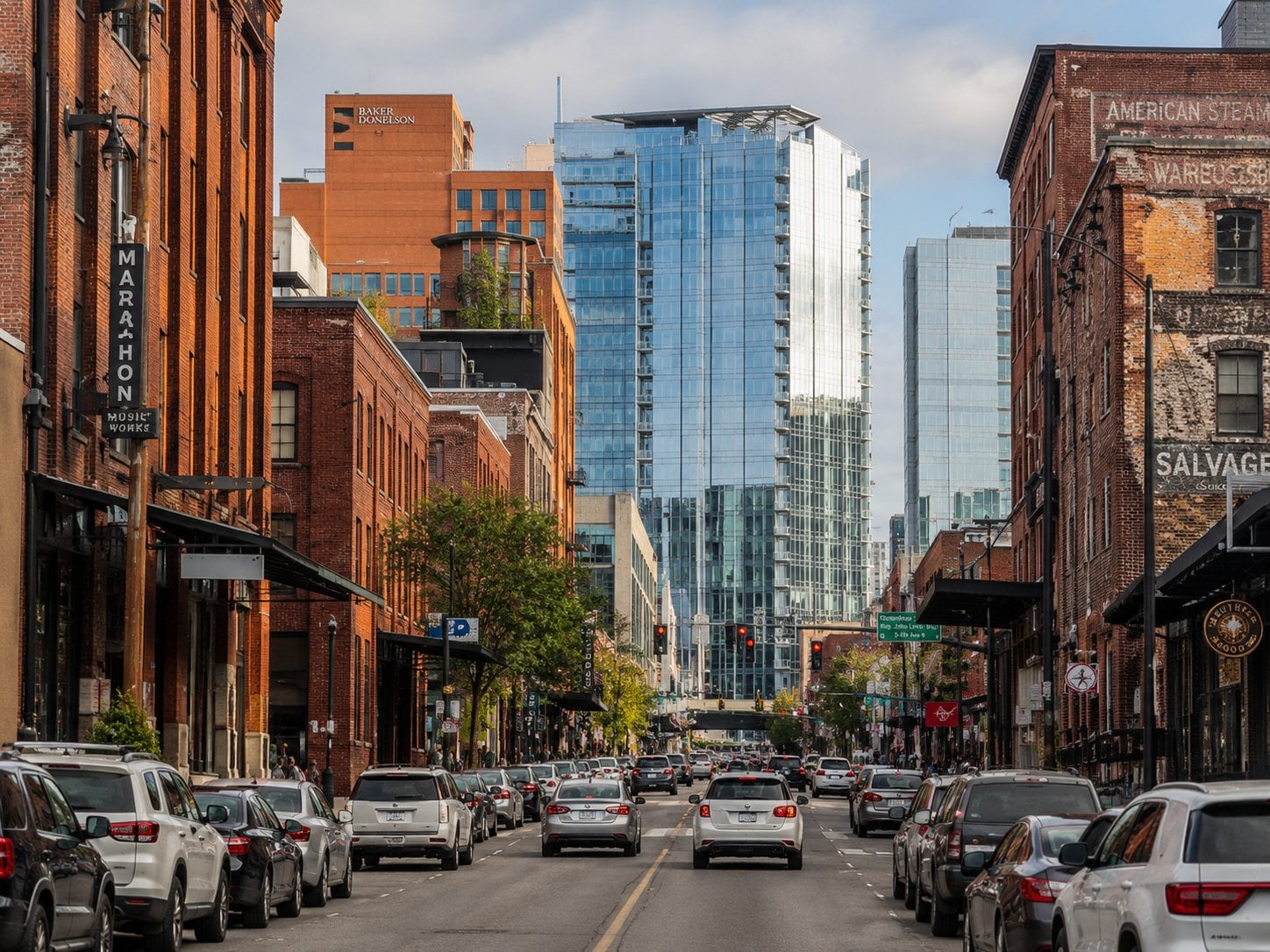
The Pearl District occupies the northwest quadrant of inner Portland, bounded roughly by Burnside Street to the south, NW Lovejoy Street and the Broadway Bridge approach to the north, NW 14th Avenue to the west, and the Willamette River waterfront to the east. It sits immediately north of downtown Portland's core, connected to the rest of the city by the Portland Streetcar, the MAX light rail at the nearby Union Station and Old Town stations, and the walkable street grid that makes the Pearl one of the most pedestrian-functional neighborhoods in the Pacific Northwest.
The neighborhood's transformation from industrial rail yard to urban residential district is one of the more significant urban redevelopment stories in American city-building over the last thirty years — a public-private partnership between the city of Portland and private developers that produced a neighborhood of largely mid-to-high-rise residential towers, converted warehouse lofts, ground-floor retail, and public spaces including Jamison Square and Tanner Springs Park, all built on land that had been functionally abandoned by the rail economy that originally gave it purpose. The result is a neighborhood that feels intentional because it was — planned at a level of design and infrastructure investment that most American urban neighborhoods never receive, and that shows in the quality of the public realm, the street-level experience, and the overall coherence of the built environment.
The Pearl is served by Portland Public Schools, though the neighborhood's residential population skews toward adults without school-age children in a proportion that reflects the urban condo and high-rise residential character of the housing stock. Families with children who choose the Pearl typically engage actively with PPS school choice and focus option programs rather than relying on proximity-based assignment, and doing so early in the process is the right approach for any household where school quality is a meaningful factor in the purchase decision.
Portland International Airport is approximately 12 to 18 miles from the Pearl District, typically a 20 to 35 minute drive depending on traffic, time of day, and your specific route — north on I-405 to I-5 and east toward PDX, or through the city via surface streets to the I-205 corridor. The MAX Red Line connects the Pearl's adjacent Union Station to PDX directly without a car — a transit connection that gives Pearl District residents one of the most friction-free airport access options of any Portland neighborhood, with a ride time of approximately 38 to 45 minutes from downtown stations. For frequent travelers who are comfortable with transit airport runs, that connection is a genuine and meaningful quality-of-life asset that compensates partially for the drive time that the Pearl's position on the west side of the city creates relative to the northeast and north Portland neighborhoods that sit geographically closer to the airport.
What Your Money Gets You: Homes at Every Price Point
The Pearl District's housing market is almost entirely vertical — high-rise and mid-rise condominium towers, converted warehouse loft buildings, and a small number of ground-floor townhome configurations represent the overwhelming majority of available residential inventory. Single-family homes in the conventional sense do not exist within the Pearl's boundaries in any meaningful number. Buyers approaching this market from a suburban or conventional residential background need to reframe their evaluation framework entirely — this is a market where square footage is measured differently, where outdoor space means a balcony or rooftop terrace rather than a yard, where parking is a separate line item rather than an assumed inclusion, and where the building's amenities, HOA structure, and management quality are as important to the purchase decision as the unit's interior configuration.
Here is a realistic look at what different price points deliver in this market:
$350,000 – $525,000 Entry-level Pearl District condominium living delivers studio to one-bedroom units in well-located buildings — typically 500 to 850 square feet, open-concept layouts that maximize the functional use of urban square footage, and finishes that reflect the building's construction era and the level of any subsequent updates. Some units in this range are in older converted loft buildings with the exposed concrete, timber beams, and industrial window grids that defined the Pearl's initial residential aesthetic in the 1990s and early 2000s — a character that buyers either find compelling or dated depending on their aesthetic orientation, and that is worth evaluating honestly rather than projecting expectations onto. Others are in newer high-rise towers where the finishes are contemporary, the layouts are efficient, and the building amenities — fitness facilities, rooftop decks, concierge services — compensate for the unit sizes that the price point produces at this level of the market. HOA fees in Pearl District buildings are real and significant — typically ranging from $400 to $700 per month for units in this range depending on the building, its amenities, and its reserve fund health — and need to be incorporated into the total housing cost calculation rather than treated as a secondary number. Parking, where it exists, is frequently a separate monthly cost or a separate purchase rather than an included feature. For buyers downsizing from suburban properties, making their first urban purchase, or seeking a Portland pied-à-terre rather than a primary residence, this range provides access to one of the most walkable and culturally complete urban environments in the Pacific Northwest.
$525,000 – $800,000 This is the most active and most varied price band in the Pearl market — one-bedroom to larger one-bedroom configurations in premium buildings, two-bedroom units in mid-tier towers, and some of the more distinctive loft conversions in the neighborhood's older warehouse buildings where ceiling heights, window scale, and industrial character justify the price against newer construction alternatives. Units in this range tend to offer more intentional layouts, higher-quality finish packages, dedicated building amenities that have been maintained rather than deferred, and in some cases meaningful outdoor space — private terraces, larger balconies, or access to building rooftop amenities that extend the usable living footprint beyond the unit's interior square footage. The best properties in this range combine genuine design quality with building infrastructure that holds up under a thorough HOA financial review — a distinction that matters significantly more in a vertical condo market than in single-family residential, where building reserve fund adequacy and special assessment history are as important to evaluate as the unit's condition. For buyers moving to Portland from other major metro areas with strong urban condo market experience, this range delivers the Pearl at a level that makes the neighborhood's full lifestyle proposition accessible rather than aspirational.
$800,000 – $1,200,000 At this level, the Pearl District delivers its most compelling residential product — two-bedroom and some three-bedroom configurations in the neighborhood's premium buildings, full-floor or penthouse-adjacent units with meaningful outdoor terraces, and the converted warehouse loft spaces that represent the neighborhood's most architecturally distinctive residential offering. Units in this range tend to occupy the upper floors of their buildings, delivering the city and river views that Portland's compressed urban geography and relatively modest skyline make available from a lower elevation than comparable views require in denser American cities. Kitchens and baths at this tier are finished at a level that requires no immediate investment — professional-grade appliances, stone countertops, walk-in primary closets, and bath configurations that function as genuine retreats rather than efficient urban necessities. Building amenities at this price point tend to be comprehensive and well-funded — staffed lobbies, guest suites, fitness and spa facilities, dedicated parking — and the HOA structures that support them tend to be more professionally managed and more financially sound than the entry-tier building landscape. For buyers whose primary criteria are walkability, cultural proximity, design quality, and the ability to live without a car as a daily necessity, this range delivers the most fully realized version of Pearl District living.
$1,200,000 and above The upper end of the Pearl District market is defined by penthouse configurations, full-floor units in the neighborhood's premier towers, and the most exceptional converted industrial spaces in the neighborhood's loft building inventory — properties where the combination of square footage, ceiling height, view orientation, finish quality, and building positioning place them in a category of their own within the Portland residential landscape. These are residences for buyers who have lived in major American urban markets and are calibrating their Portland purchase against that experience rather than against the broader Portland market — buyers for whom the relevant comparison is a San Francisco, Seattle, or New York urban condo rather than a Camas single-family home. When these properties come available, they attract buyers who have been specific about what they want long enough to recognize it without needing time to decide.
Median home price in the Pearl District: The median in this market sits in the $520,000 to $620,000 range — a figure that reflects the condominium-dominant nature of the inventory and positions the Pearl as the most expensive established residential neighborhood in Portland on a per-square-foot basis while remaining meaningfully more accessible than comparable urban neighborhoods in San Francisco, Seattle, or New York. For buyers evaluating the Pearl against the broader Portland market, the per-square-foot comparison to outer SE or North Portland is significant and intentional — you are paying a premium per square foot for the walkability, the cultural proximity, the architectural quality, and the urban lifestyle infrastructure that the Pearl delivers and that no other Portland neighborhood replicates at the same level. Whether that premium represents value depends entirely on how central those factors are to the life you are trying to build.
What About Renting in This Area?
The Pearl District rental market is among the most active and most competitive in Portland — a reflection of the neighborhood's consistent appeal to the professional demographic that drives urban rental demand in the city's most walkable corridors. The inventory is predominantly condominium units offered by individual investor-owners alongside purpose-built apartment towers that have been developed specifically for the rental market, with building amenities, professional management, and lease structures that reflect the premium nature of the neighborhood.
One-bedroom apartments and condominiums in the Pearl District typically rent between $1,800 and $2,800 per month depending on building quality, floor level, view orientation, unit size, and included amenities. Studio units in well-located buildings start around $1,400 to $1,900 per month. Two-bedroom configurations run $2,600 to $4,200 per month depending on square footage, building tier, and the specific unit's position within the building. Penthouse and premium full-floor units when they appear in the rental market command $4,500 and above — a figure that reflects the scarcity of the inventory relative to the demand it attracts.
Parking in the Pearl is a separate monthly expense in most buildings — typically $150 to $300 per month for a dedicated space — and is worth factoring into total housing cost calculations explicitly rather than assuming inclusion. Many Pearl District residents choose to live car-free or car-light, using the Streetcar, MAX, and the neighborhood's walkability for daily movement and relying on car-share services for the trips that require one, which changes the parking calculus significantly for the right household.
Rental vacancy in the Pearl runs tighter than most outer Portland neighborhoods and considerably tighter than Clark County markets — well-priced units in quality buildings with strong management tend to lease within days of listing, and renters approaching this market without organized documentation, clear decision timelines, and a willingness to commit when the right unit surfaces tend to lose properties they wanted to buyers who were simply more prepared.
Things to Do In and Around the Pearl District
The Pearl District's defining characteristic as an urban living environment is the density and quality of what exists within walking distance — and that density is genuine rather than curated. This is a neighborhood where the car is genuinely optional for the majority of daily life rather than theoretically optional in the way that many neighborhoods marketed as walkable actually operate.
Powell's Books anchors the southern edge of the Pearl at the corner of NW 10th and Burnside in a way that few independent bookstores anchor anything anywhere in America — a full city block of new and used books across multiple floors, organized by subject with a specificity that rewards browsing, staffed by people who have read the books they are recommending, and operating as a genuine community institution rather than a retail destination. It is, without meaningful competition, the finest independent bookstore in the Pacific Northwest and one of the finest in the country. For Pearl District residents, it is a neighborhood resource available on a Tuesday afternoon as easily as a Saturday morning. That proximity compounds over time in ways that readers who have lived near it understand and readers who have not cannot fully anticipate.
Jamison Square is the Pearl's most successful public space — a park with an interactive fountain that fills and empties on a timed cycle, creating a wading experience for children and a gathering point for adults that the surrounding residential population uses with the casual frequency that good urban parks earn from communities invested in their own public realm. Summer afternoons at Jamison Square reflect the Pearl's community character as accurately as any single observation point in the neighborhood.
Tanner Springs Park is the Pearl's ecological park — a restored wetland habitat created on the site of a former rail yard, with native plantings, a boardwalk through wetland vegetation, and a wall of reclaimed rail steel that references the industrial history of the site in a way that is genuinely moving rather than merely decorative. It operates as a complement to Jamison Square — quieter, more contemplative, and reflecting a different dimension of what thoughtful urban design can accomplish on reclaimed industrial land.
The Fields Park on the northern edge of the Pearl delivers the neighborhood's largest open green space — a lawn-dominated park with athletic facilities and the kind of open acreage that the more sculptural parks to the south do not provide. Dog owners, fitness-oriented residents, and families with children who need room to run find The Fields the most practically useful green space in the Pearl's park system.
The Portland Streetcar runs through the Pearl on the A and B Loop and connects residents to the South Park Blocks, Portland State University, the South Waterfront, and the Lloyd District without a car, a bus transfer, or a scheduling concern — a transit asset that functions as a genuine daily mobility tool rather than a weekend novelty for residents who structure their lives around its route.
The Willamette River waterfront is walkable from the Pearl's eastern edge — the Tom McCall Waterfront Park esplanade, the Hawthorne and Steel bridges, and the river-level path that connects the Pearl to the Eastbank Esplanade across the Burnside Bridge for a loop walk or cycle that delivers river access and city views simultaneously in a way that few American cities can offer from a central residential neighborhood.
NW 23rd Avenue — the neighborhood called Nob Hill immediately to the Pearl's west — delivers one of Portland's most established and diverse retail and dining corridors within easy walking distance. Independent boutiques, established restaurants, coffee roasters, and the kind of neighborhood commercial continuity that reflects decades of community investment rather than a recent development cycle. For Pearl District residents, NW 23rd is the neighborhood commercial extension that the Pearl's own ground-floor retail does not fully replicate.
The Pearl's own gallery district — concentrated along NW 13th Avenue, historically the center of Portland's art gallery community — has evolved over the years as real estate economics have shifted gallery operators to other parts of the city, but the neighborhood retains a significant creative and design presence that manifests in architecture firms, design studios, and the cultural sensibility that informs the Pearl's built environment at every scale.
Forest Park is accessible from the Pearl within 20 to 30 minutes on foot or by Streetcar toward NW Thurman Street — one of the largest urban forests in the United States, with over 80 miles of trail through Douglas fir and western red cedar forest that begins within the city boundary and extends into a natural landscape that feels entirely disconnected from the urban environment at its trailhead. For Pearl District residents who want nature access alongside urban density, Forest Park is the answer that the neighborhood's own designed parks cannot provide, and its accessibility on foot or by transit from the Pearl is one of the most significant outdoor quality-of-life advantages of living on Portland's northwest side.
The Oregon Museum of Science and Industry, the Portland Art Museum on the South Park Blocks, the Oregon Historical Society, and the full cultural institution landscape of central Portland are within a short Streetcar or walking distance — the kind of urban cultural infrastructure that defines the experience of living in a walkable city center rather than adjacent to one.
Columbia River Gorge is 35 to 45 minutes east from the Pearl — accessible via I-84 to the Historic Columbia River Highway or continuing to the Washington side via the I-205 corridor. The drive from the Pearl to the Gorge is longer than from outer NE or SE Portland neighborhoods, but the Gorge's scale and the Pearl's urban completeness mean that residents tend to approach the Gorge as a deliberate day rather than a spontaneous afternoon — which is the right orientation for a destination that rewards full engagement rather than a two-hour visit.
Downtown Portland is not a destination from the Pearl — it is the Pearl's immediate neighbor. The cultural, commercial, and professional infrastructure of Portland's central city is the neighborhood's most immediate amenity, available by foot or Streetcar without the planning that makes downtown access from outer neighborhoods a deliberate choice rather than a casual one.
Where to Eat
The Pearl District has one of the more concentrated and consistently high-quality restaurant environments of any Portland neighborhood, anchored by the neighborhood's own ground-floor dining and drinking alongside the NW 23rd corridor to the west and the broader central city restaurant landscape to the south and east.
Oven and Shaker brings a wood-fired pizza and craft cocktail concept to the Pearl that has built a following strong enough to make weeknight reservations worth making — the kind of neighborhood restaurant that operates as both a casual regular and a destination for visitors, which is the balance that the best urban neighborhood restaurants achieve and sustain.
Blue Star Donuts occupies a category of its own in Portland's deeply competitive donut landscape — a brioche-based donut program with rotating flavors executed at a level that earns the national attention it receives, available in the Pearl in a way that rewards living within walking distance more than almost any other food product in the neighborhood.
Headwaters at the Heathman Hotel brings the full Pacific Northwest fine dining commitment — seasonal ingredients, sophisticated technique, and a dining room that has served Portland's most celebrated meals for decades in a setting that reflects the cultural weight the Heathman carries in the city's hospitality history. Worth the occasion it requires.
Jake's Famous Crawfish is a Portland institution accessible from the Pearl that has been serving Pacific Northwest seafood since 1892 with the kind of institutional confidence that comes from a restaurant that has outlasted every trend that has emerged and subsided around it. The oyster bar alone justifies the walk.
Tasty n Daughters and Tasty n Alder — the breakfast and brunch programs from John Gorham's restaurant group — operate in the Pearl and adjacent Burnside corridor with all-day menus that reflect the Pacific Northwest's commitment to quality ingredients applied to comfort food formats. The waits on weekends are real and worth it.
Bullard brings a Texas barbecue sensibility to the Pearl in a way that took Portland by surprise and earned a loyalty that reflects how thoroughly it delivered on a promise the city's food scene hadn't yet made. Brisket in a Pearl District condominium neighborhood is an unlikely combination that turned out to be exactly right.
Grassa handles the pasta need with a fast-casual approach to handmade pasta that delivers quality without the table service overhead — the kind of operation that earns weekday lunch regulars and weekend date night visits in equal measure and that reflects the food-serious casual dining culture that Portland has developed into one of its most distinctive culinary identities.
The NW 23rd Avenue dining corridor immediately to the west adds a full second restaurant ecosystem within walking distance — Paley's Place for Pacific Northwest fine dining at its most established, Café Mingo for Italian in the intimate neighborhood format, and a range of independent restaurants across price points and cuisines that give Pearl District residents a walking dining radius that most Portland neighborhoods cannot assemble within driving distance.
The honest framing: the Pearl District is one of Portland's most complete dining neighborhoods — not the most adventurous or the most cutting-edge, but among the most consistently high-quality and the most densely concentrated within walking distance of a residential address. Buyers for whom dining variety and walkable food access are genuine quality-of-life priorities will find the Pearl delivers that combination better than any other Portland neighborhood at any price point.
Who Buys in the Pearl District?
After nearly three decades working both sides of the river, the Pearl District buyer is one of the most consistently defined profiles in the Pacific Northwest residential market — and that consistency reflects how clearly the neighborhood communicates who it is for and how well it delivers on what it promises to the buyers who belong there.
They are Portland professionals — attorneys, physicians, executives, architects, and creative professionals whose careers have produced the income and the equity to choose the most complete urban lifestyle the Portland market offers and who have decided that the urban lifestyle is what they want rather than what they are settling for. They are not buyers who looked at Camas and decided the Pearl was a compromise. They are buyers who looked at Camas and decided the Pearl was the point.
They are downsizers who have spent decades in suburban properties with yards to maintain, cars to manage, and the logistical overhead of a residential lifestyle they no longer need or want, and who have arrived at the Pearl with a clear-eyed understanding that they are trading square footage and outdoor space for a walkability and cultural density that gives them back the hours they were spending on the things that suburban living requires rather than the things that they actually want to do with their time.
They are buyers from San Francisco, Seattle, New York, and other major American urban markets who have relocated to Portland and who are calibrating their Portland purchase against their prior urban experience — buyers for whom the Pearl's per-square-foot premium is immediately legible as value relative to what comparable urban living costs in the markets they came from, even when it looks expensive against the broader Portland residential landscape.
They are buyers who have specifically decided that car-light or car-free living is not an aspiration but a daily practice, and who have found that the Pearl's combination of Streetcar access, walking distance to downtown, proximity to Powell's and Forest Park and the waterfront, and ground-floor retail density makes that practice genuinely sustainable in a way that most Portland neighborhoods marketed as walkable cannot actually deliver for the full range of daily needs.
They tend to be deliberate and researched buyers who arrive at the Pearl having already eliminated the alternatives rather than still comparing options. When they call, they know what they want. The job is to find it and to navigate the HOA and condo-specific due diligence framework that the Pearl's vertical residential market requires with enough fluency to protect them before the purchase rather than after.
What You Should Know Before You Commit
The Pearl District requires a due diligence framework that is meaningfully different from single-family residential purchases, and buyers who apply the wrong framework — either because they have not purchased urban condominiums before or because they underestimate how much building-level factors matter relative to unit-level factors in a vertical market — tend to discover the gaps after closing rather than before.
The HOA financial health of any building you are considering purchasing within is as important to evaluate as the unit's condition — more important in some cases. Reserve fund adequacy, special assessment history, pending litigation, deferred maintenance on building systems, and the management quality of the HOA determine the long-term cost of ownership and the resale trajectory of the unit as directly as any factor visible on a showing. Requesting and reviewing the HOA financial documents, reserve study, and meeting minutes before making an offer is not optional due diligence — it is the essential starting point.
Parking is a separate financial and logistical question that deserves explicit resolution before an offer rather than an assumption. Some buildings include parking in the purchase price. Others sell it separately. Others have no parking at all and depend on the neighborhood's street parking and commercial parking infrastructure. Knowing which situation you are in and whether it works for your life is a first-week question, not a post-offer discovery.
HOA fees in Pearl District buildings are real, ongoing, and variable across buildings in ways that dramatically affect the total cost of ownership calculation. A unit priced at $600,000 with $800 per month in HOA fees has a meaningfully different total cost profile than a unit priced at $625,000 with $450 per month in fees, and understanding that difference before the comparison is made rather than after is the buyer's responsibility — and a competent agent's job to help them make.
Noise profiles in high-rise buildings vary significantly by floor, orientation, and building construction quality — the streetcar line, the Burnside Bridge corridor, and the NW industrial and rail infrastructure that continues to operate in the northern sections of the Pearl all have acoustic footprints that manifest differently depending on exactly where in the building and the neighborhood your unit sits. Visiting the unit at different times and understanding the building's orientation relative to the noise sources that matter to you is the right pre-offer process.
None of these are reasons to avoid the Pearl District. They are the honest context that makes an informed purchase possible — and in a market where the building matters as much as the unit, that context is everything.
Thinking About a Home in the Pearl District?
Pearl District inventory at the quality end of the market moves with the rhythm of a neighborhood that serious urban buyers have been targeting consistently for over two decades — well-priced units in premium buildings with strong HOA financials do not sit while buyers get organized. I work both sides of the river, I know the condo market due diligence framework at the level this market requires, and I will give you a straight read on what you are looking at — the unit, the building, the HOA, and the total cost of ownership picture — before you write anything.
See more about the Pearl District
Want to learn more about the Pearl District neighborhoods and homes?
Homes for sale in the Pearl District: https://jamiemeushawrealestate.com/properties/neighborhood-Pearl%20District,%20Portland,%20OR/
Watch more local real estate insights on my YouTube channel:
https://www.youtube.com/@JamieMeushaw
Sign up for my weekly newsletter for real estate tips and market updates:
https://jamiemeushawrealestate.com/newsletter
Check out this article next