


Where Exactly Is North Plains?
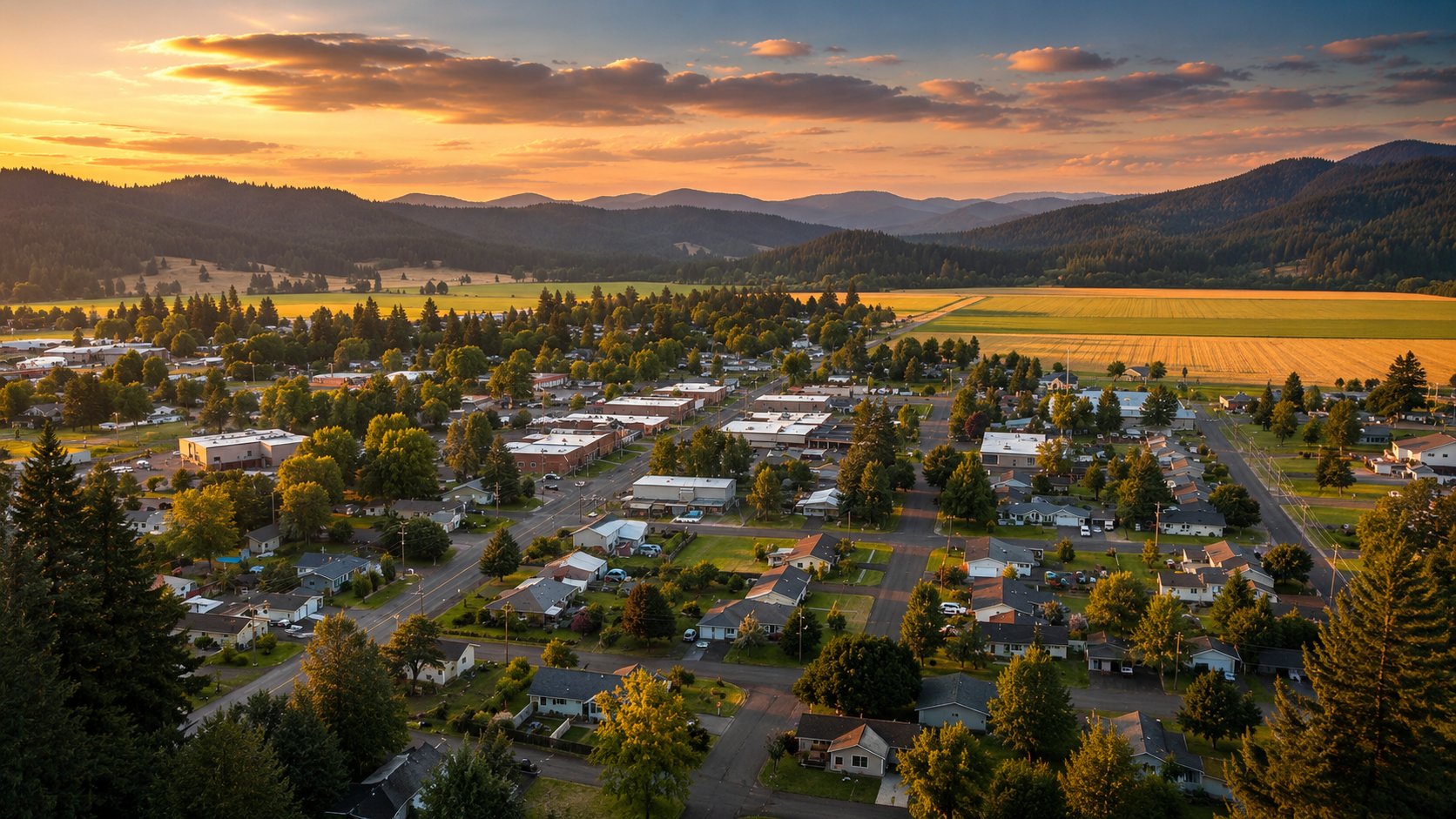
North Plains is an incorporated city in Washington County, Oregon, situated approximately 20 miles northwest of downtown Portland and 8 to 10 miles north of Hillsboro along US Highway 26 — the Sunset Highway corridor that connects Portland to the Oregon Coast and that gives North Plains its most direct access to the metro. The city occupies the flat agricultural plain at the northern edge of the Tualatin Valley, where the farmland of Washington County's most productive growing region meets the first foothills of the Coast Range to the west. The Tualatin Mountains — the range that forms Forest Park's western ridge in Portland — define the eastern horizon from North Plains, and the broader pastoral landscape of nurseries, berry farms, and vegetable operations that surrounds the city gives it a visual and agricultural character that no amount of suburban development in the closer-in suburbs has been able to replicate.
North Plains falls within the Hillsboro School District — one of the stronger public school systems in the Portland metro area, with a district footprint that reflects Washington County's significant investment in educational infrastructure over the last two decades. For families with school-age children, the Hillsboro School District's reputation for academic programming, dual-language immersion options, and the overall quality of its facilities makes the district a genuine draw rather than a concession to geography.
Portland International Airport is approximately 22 to 30 miles from North Plains, typically a 30 to 45 minute drive depending on traffic, time of day, and your specific route. The most direct path runs east on US-26 through the Sunset Highway tunnel and into the Portland metro, then north toward PDX via I-405 or surface street connections to I-5 and I-205 east. For occasional travelers and households with a manageable travel cadence, the airport run is entirely workable and predictable outside of peak commute windows. For buyers who travel weekly for work, the drive is real and worth thinking through honestly — it is not the 15-minute PDX run that north Portland neighborhoods deliver, and the Sunset Highway's tunnel and peak-hour traffic dynamics require a realistic time buffer on early morning departures. MAX light rail does not currently serve North Plains directly, making the airport commute a driving equation rather than a transit option for residents of this community.
What Your Money Gets You: Homes at Every Price Point
North Plains is a market in active and visible growth — a combination of established residential neighborhoods built across several decades of the city's organic expansion and newer planned development that has arrived as Washington County's broader growth pressure has pushed buyers north along the Highway 26 corridor in search of price points that the Hillsboro and Beaverton markets have left behind. The result is a housing inventory with genuine variety — older single-family homes on established lots, newer construction in planned subdivisions, and the occasional agricultural or large-lot property at the city's residential edges that reflects North Plains' continued proximity to working farmland. It is a market where the gap between what your money gets here and what it gets ten miles closer to Portland is visible, real, and growing in the direction that rewards buyers who arrive early rather than late.
Here is a realistic look at what different price points deliver in this market:
$375,000 – $480,000 Entry-level North Plains delivers a combination of older single-family homes from the 1970s through the 1990s and smaller newer construction in the 1,200 to 1,700 square foot range — two to three bedrooms, one to two baths, and lots that are consistently more generous than comparable price points in Hillsboro or Beaverton produce. Condition at the lower end of this range reflects the honest variability of older residential stock — some homes have been maintained by long-term owners who understood what they had, others carry the deferred work that accumulates on properties held through tight budgets or changing ownership without active upkeep. The value here is legible and real: you are getting more square footage, more lot, and more neighborhood stability per dollar than anything the Washington County markets immediately to the south deliver at this number. For first-time buyers who have been running the Portland metro math and finding the entry-level inventory progressively less accessible, North Plains consistently surfaces as the market that makes ownership possible at a price that does not require stretching into a financial structure with no margin for the rest of life.
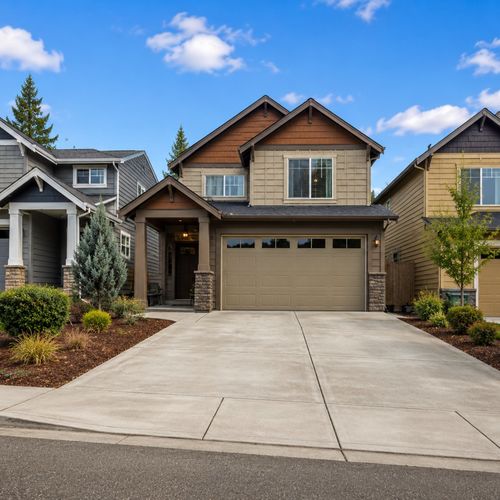
$480,000 – $620,000 This is the most active and most revealing price band in the North Plains market, where the city's value proposition becomes most clearly readable against the broader Washington County context. Homes in this range tend to be updated or newer construction single-family properties in the 1,700 to 2,400 square foot range — three to four bedrooms, two to two and a half baths, open-concept main floors with kitchens that reflect the price point rather than apologize for it, and yards that take advantage of North Plains' lot-size advantage over closer-in suburbs in ways that feel qualitatively different from what comparable money buys in Hillsboro or Tanasbourne. Newer construction in this range — of which North Plains has a meaningful and growing supply — delivers the energy efficiency, the contemporary floor plans, and the finish packages that buyers moving from older suburban stock consistently find compelling, at price points that comparable new construction in more established Washington County markets has largely abandoned. For move-up buyers, dual-income households setting a firm budget ceiling, and relocators from higher-cost markets who want the full suburban package without the suburban premium, this is the range where North Plains starts to feel like a decision made with clear eyes rather than a settlement.
$620,000 – $800,000 Homes at this level represent the strongest residential product that North Plains currently offers — newer construction or fully updated single-family properties on the most desirable lots in the city's established and newer residential areas, in the 2,400 to 3,200 square foot range. Four bedrooms, two and a half to three baths, main-floor offices or flex spaces that reflect how households actually use their homes rather than how developers imagined they might in an earlier decade, and finish packages that deliver genuine quality rather than catalog minimums. Some homes in this range back to open space, greenways, or the agricultural land at the city's edges in ways that deliver privacy and natural outlook that no amount of landscaping can replicate on a standard suburban lot. Covered outdoor living spaces, three-car garages, and the kind of primary suite configuration that buyers at this level have earned the right to insist on are standard expectations at this tier in North Plains new construction — and the builders operating in this market know it.
$800,000 and above The upper end of the North Plains market reflects the city's growth trajectory more than its current inventory depth — executive-level new construction and larger custom or semi-custom homes on premium lots that represent the leading edge of what North Plains is becoming rather than what it has historically been. Four to five bedrooms, three-plus baths, upward of 3,200 to 4,000 square feet on lots with genuine space and in some cases agricultural or pastoral outlooks that give these homes a setting no comparable price point inside the closer-in Washington County markets delivers. These properties attract buyers from Beaverton, Lake Oswego, and the broader Portland west side who have run the comparison honestly and found that the premium for a closer-in address is not returning what it cost in livable difference. When the right property surfaces at this level, it moves to buyers who have been watching and waiting rather than sitting for buyers who are still deciding.
Median home price in North Plains: The median sits in the $500,000 to $570,000 range — a figure that positions North Plains as meaningfully more accessible than Hillsboro, Beaverton, or Lake Oswego at comparable property sizes while delivering lot dimensions, neighborhood character, and the kind of small-town civic identity that the larger Washington County suburbs have traded away in exchange for the density and infrastructure their growth required. For buyers who have been running the west side suburban math and finding it progressively less favorable, North Plains' median represents a genuine value recalibration that rewards the buyer willing to extend their search radius by ten miles.
What About Renting in This Area?
The North Plains rental market reflects the city's character — smaller in absolute inventory than the larger Washington County suburbs, active enough to offer genuine options for relocators and renters who approach the search with organization and realistic timelines, and competitive at the quality end in the way that smaller Oregon cities with growing demand and limited rental stock tend to be. The inventory mix includes single-family homes offered by individual landlords, a modest apartment supply that reflects the city's scale, and newer rental construction that has come online as the city's growth has begun to attract investment in purpose-built rental product.
Single-family rental homes in North Plains typically run between $1,900 and $3,000 per month depending on size, condition, age of construction, and lot character. A three-bedroom, two-bath home in solid condition rents around $1,900 to $2,400. A larger, newer four-bedroom home with quality finishes and meaningful outdoor space pushes into the $2,400 to $3,000 range. Apartment and smaller unit rentals in the city start around $1,200 to $1,800 for one to two bedroom configurations depending on building age, finish level, and included amenities — a figure that represents genuine value relative to comparable product in Hillsboro or Beaverton to the south.
The honest guidance for renters approaching this market: North Plains' rental inventory is smaller than its larger Washington County neighbors, which means that the best options at the quality end of the market find tenants through relatively brief public exposure rather than extended availability. Being organized, having your documentation ready, and being prepared to commit when the right property surfaces is the right posture — not because the market is frantic, but because the supply of genuinely good rentals in a small city with growing demand is narrow enough that the prepared applicant has a consistent advantage over the one who is still deciding.
Things to Do In and Around North Plains
North Plains' location in the agricultural northwest corner of Washington County places residents within reach of a genuinely varied outdoor, agricultural, and regional recreational landscape — one that reflects the Tualatin Valley's particular combination of farmland, wine country, Coast Range access, and Portland metro cultural infrastructure in proportions that buyers from both urban and suburban backgrounds consistently find more complete than the city's small population would suggest.
Pumpkin Ridge Golf Club is North Plains' most nationally recognized amenity and one of the most significant golf facilities in the Pacific Northwest — a 36-hole complex comprising the Ghost Creek and Witch Hollow courses that has hosted multiple USGA championships and PGA Tour events and that draws serious golfers from across the region who understand what they are looking at when they see the courses. For residents of North Plains, Pumpkin Ridge is a neighborhood amenity rather than a destination trip — a fact that registers differently once you understand the caliber of the facility and what comparable access costs anywhere else in the Pacific Northwest.
Sauvie Island is 15 to 20 minutes east and delivers one of the most complete rural day-trip experiences accessible from any major American metro — farmland and wildlife refuge, beaches along the Columbia River, seasonal berry and pumpkin picking, bird watching through the wildlife refuge's wetland habitat, and the agricultural landscape of an island that has resisted the development pressure surrounding it in a way that reflects genuine community commitment to preservation. For North Plains residents already oriented toward the agricultural landscape that surrounds their city, Sauvie Island is a natural extension of the outdoor environment they have already chosen.
The Tualatin Valley agricultural corridor — the working farmland of nurseries, berry operations, vegetable farms, and specialty crops that surrounds North Plains on multiple sides — provides a direct-to-farm purchasing culture, seasonal harvest opportunities, and the kind of food system connection that urban markets simulate expensively and that North Plains residents access simply by living where they live. The Washington County farm stand and u-pick ecosystem is one of the most productive and varied in Oregon, and North Plains sits at its geographic center.
Banks-Vernonia State Trail is approximately 20 to 25 minutes west — a converted rail trail running 21 miles through the Coast Range foothills between Banks, Oregon and Vernonia on a wide, paved surface that serves cyclists, walkers, and runners across the full range of fitness levels and cycling configurations. The tunnel at the Buxton trailhead, the trestle bridges, and the old-growth forest sections of the trail deliver a natural environment that surprises first-time visitors with how quickly the agricultural plain at the trail's eastern end transitions into genuine Coast Range forest and elevation. For cycling-oriented buyers, the Banks-Vernonia Trail is one of the more significant regional trail assets accessible from North Plains and the broader Highway 26 corridor.
Hagg Lake — Scoggins Valley Park — is 20 to 25 minutes south and delivers a reservoir recreation experience that serves the western Washington County community as its primary open-water amenity — boating, fishing, swimming, and a loop trail around the reservoir that draws walkers and cyclists across the full outdoor season. The reservoir's setting in the Coast Range foothills gives it a natural character that feels genuinely removed from suburban Washington County despite sitting within practical distance of it.
The Oregon Coast is approximately 60 to 75 minutes west on Highway 26 — a drive through the Sunset Highway corridor and the Coast Range that delivers the Oregon coast from Seaside to Cannon Beach to Manzanita within a distance that most North Plains residents consider entirely practical for a day trip or a weekend rather than a vacation requiring a hotel and a plan. For buyers who moved to Oregon for the coast access that defines the state's outdoor identity, North Plains' position directly on the Highway 26 corridor makes the coast more accessible than almost any other Washington County address.
Wine country in the Tualatin Valley and the broader northern Willamette Valley wine region is immediately accessible from North Plains — Ponzi, Adelsheim, Elk Cove, and dozens of other Oregon Pinot Noir and Pinot Gris producers whose tasting rooms sit within 20 to 40 minutes of the city. For buyers who value wine country proximity as a lifestyle asset, North Plains' location places them inside the Willamette Valley AVA's northern reach in a way that inner Portland addresses cannot replicate regardless of how short the drive to Newberg appears on a map.
Hillsboro is 8 to 12 minutes south and provides the full Washington County commercial and dining infrastructure — the Intel campus corridor, the Hillsboro Hops minor league baseball experience at Ron Tonkin Field, the Washington County Fairgrounds, and the retail and dining footprint of a substantial Washington County city that serves as the practical service anchor for North Plains residents who need more than the small city's immediate commercial footprint delivers.
Portland is 25 to 35 minutes east on Highway 26 for the full urban experience — concerts at the Moda Center, the Pearl District dining landscape, the Oregon Museum of Science and Industry, Powell's Books, the waterfront, and the professional sports and cultural institutions that make Portland a genuine Pacific Northwest destination. For North Plains residents, Portland is accessible when it serves them without defining the pace of daily life in a way that reflects the city's size and energy rather than the community they have chosen.
Where to Eat
North Plains is a small city with a dining scene that reflects its scale honestly — a handful of locally owned options within the city proper, supplemented meaningfully by the Hillsboro dining corridor to the south and the broader Washington County restaurant landscape that the Highway 26 connection makes practically accessible.
Helvetia Tavern is the most beloved dining institution in the immediate North Plains area and one of the most genuinely iconic roadhouse experiences in the entire Portland metro — a burger institution operating in the agricultural flatlands between North Plains and Portland that has been serving the surrounding community and drawing pilgrims from across the region for decades. The Helvetia Burger has a mythology in Washington County food culture that is entirely justified by the product, and the tavern's setting — a historic roadhouse in the middle of working farmland — delivers an experience that no urban restaurant can approximate regardless of its interior design budget. For North Plains residents, Helvetia Tavern is a neighborhood resource. For everyone else in the Portland metro, it is worth the drive.
North Plains local dining along the city's commercial corridor provides the everyday casual options — pizza, Mexican, and the casual dining infrastructure that a growing small city develops as its residential population reaches the scale that makes neighborhood restaurant investment viable. The city's dining footprint is visibly growing alongside its residential base, and the trajectory is clear even if the current inventory is lean relative to larger Washington County cities.
Hillsboro's restaurant corridor along the Tanasbourne and downtown Hillsboro areas — 10 to 15 minutes south — provides a full range of dining options across cuisine and price point that effectively serves as North Plains' extended dining ecosystem. The Hillsboro dining scene has developed meaningfully over the last decade alongside the city's tech sector growth, and the variety and quality available within a short drive south reflects a restaurant market supported by a substantial and food-literate residential and professional community.
The Beaverton and Tanasbourne dining corridor extends the accessible restaurant range further — a concentration of Asian dining in particular that reflects Washington County's demographic diversity and that draws food-oriented diners from across the region for Vietnamese, Korean, Chinese, and Japanese restaurants that have built genuine reputations within the broader Portland food culture.
Portland at 30 to 35 minutes east is the destination for serious dining nights — the full Portland restaurant landscape across every price point and cuisine, accessible when the occasion calls for it without defining the weekly rhythm of life in North Plains in a way that reflects the city's actual relationship with its residents rather than its proximity on a map.
The honest framing that serves buyers best: North Plains is a community where the immediate dining footprint is developing rather than established, where Helvetia Tavern is the clear neighborhood institution worth knowing and protecting, and where Hillsboro effectively fills the gap between the small city's current commercial scale and the full dining variety that residents accustomed to larger suburban markets expect. Buyers who make peace with that dynamic quickly tend to find that it reflects the broader trade they made in choosing North Plains — and that the trade consistently delivers more than it costs.
Who Buys in North Plains?
After nearly three decades working both sides of the river and across the full Portland metro landscape, the North Plains buyer is a profile I recognize for a combination of practicality and intentionality that is increasingly common as the closer-in Portland and Washington County markets have continued to price out the buyers who built their value.
They are frequently move-up buyers from Hillsboro and Beaverton who have run the comparison honestly — same commute distance to Intel and Nike campuses, meaningfully more house, meaningfully more lot, and a small-town community character that the larger Washington County suburbs traded away in the growth cycle that produced their current price tags. The commute math from North Plains to the major Washington County tech employers along the US-26 and 217 corridors is not significantly worse than from southern Hillsboro, and the price differential at comparable property sizes is real enough to matter in household financial planning over a decade.
They are relocators from California, the Bay Area, and Seattle who have looked at the full Portland metro landscape, understood that Washington County's tech employment base and school infrastructure make it the practical anchor for their household, and found that North Plains delivers the value equation they came to the Pacific Northwest to access — more space, more land, more community, and a price point that leaves margin for the life they are building rather than consuming it entirely in the mortgage.
They are young families for whom the Hillsboro School District's reputation and the affordability of North Plains at the entry and mid tiers of the market make the combination of school quality and homeownership attainability possible in a way that neither the closer-in Portland market nor the established Hillsboro and Beaverton markets at comparable school district quality levels currently offer.
They are outdoor-oriented households for whom Pumpkin Ridge, the Banks-Vernonia Trail, Hagg Lake, and direct Highway 26 coast access represent a recreational portfolio that shapes how they experience every week they live here — buyers who chose Washington County for the wine country, the farmland, and the Coast Range access that the Tualatin Valley's northwestern corner delivers better than any other part of the metro.
They are, consistently, buyers who did the research rather than the default — who looked past the neighborhoods with the most name recognition and found a city that delivers more per dollar, more per mile, and more per year than the markets they were initially considering, provided they were willing to extend their search radius by the distance that separates the ordinary from the genuinely good deal.
What You Should Know Before You Commit
North Plains is a city in growth, which means it delivers the advantages of that growth — new construction options, improving commercial infrastructure, and rising property values as the market catches up to what the location has always offered — alongside the realities that growth always brings: active construction in and around residential neighborhoods, infrastructure investment that is running behind the population it is serving in some areas, and a commercial and dining footprint that is developing rather than established in the way that longer-settled Washington County cities can claim.
The Highway 26 corridor is North Plains' lifeline to the metro and its most consistent practical variable — the Sunset Highway's peak-hour congestion in the tunnel and the West Hills section is a real and recurring feature of the eastbound morning commute that buyers who work in inner Portland or the Pearl District should understand specifically rather than assuming it mirrors the shorter Hillsboro-to-Portland drive time. Driving the route at the time you would actually use it before you commit to a specific property is the right pre-offer due diligence rather than an approximation based on off-peak navigation estimates.
MAX light rail does not currently serve North Plains, which makes the city's accessibility to the broader metro transit network meaningfully car-dependent for residents whose daily movement requires transit connectivity. For households with two cars and two drivers, this is a non-issue. For households organized around transit as a primary daily mobility strategy, it is a genuine and important factor that deserves honest evaluation before the purchase rather than a workaround discovered after it.
The agricultural setting that defines North Plains' character and visual appeal also produces the seasonal realities of working farmland — equipment traffic on surrounding roads during planting and harvest seasons, the occasional olfactory reminder that the land surrounding the city is working rather than decorative, and the kind of rural-urban interface that buyers who have lived only in developed suburban environments sometimes find more present than they anticipated. For buyers who chose North Plains for the agricultural character, these are features rather than limitations. For buyers who chose it primarily for the price point without fully engaging with the setting, they are worth thinking through before closing.
None of these are disqualifying factors for the right buyer with clear eyes. They are the honest terms of the trade, stated plainly — because that conversation is only useful before the offer rather than after, and I have been having it long enough to know the difference.
Thinking About a Home in North Plains?
North Plains inventory at the quality end of the market moves with more momentum than buyers new to this city expect — newer construction phases sell through on the builder's timeline rather than the buyer's, and well-priced resale inventory in genuinely good condition does not develop extended days on market the way it did before Washington County's broader growth pressure reached this far north along the Highway 26 corridor. I know Washington County, I know the west side market at the level this community deserves, and I will give you a straight read on what is available, what it is worth, and whether North Plains is the right fit for the specific life you are building rather than the one you thought you were shopping for when the search started.
See more about North Plains
Want to learn more about North Plains neighborhoods and homes?
Homes for sale in North Plains: https://jamiemeushawrealestate.com/properties/city-North%20Plains,%20OR/
Watch more local real estate insights on my YouTube channel:
https://www.youtube.com/@JamieMeushaw
Sign up for my weekly newsletter for real estate tips and market updates:
https://jamiemeushawrealestate.com/newsletter
Check out this article next