


Where Exactly Is Rainier?
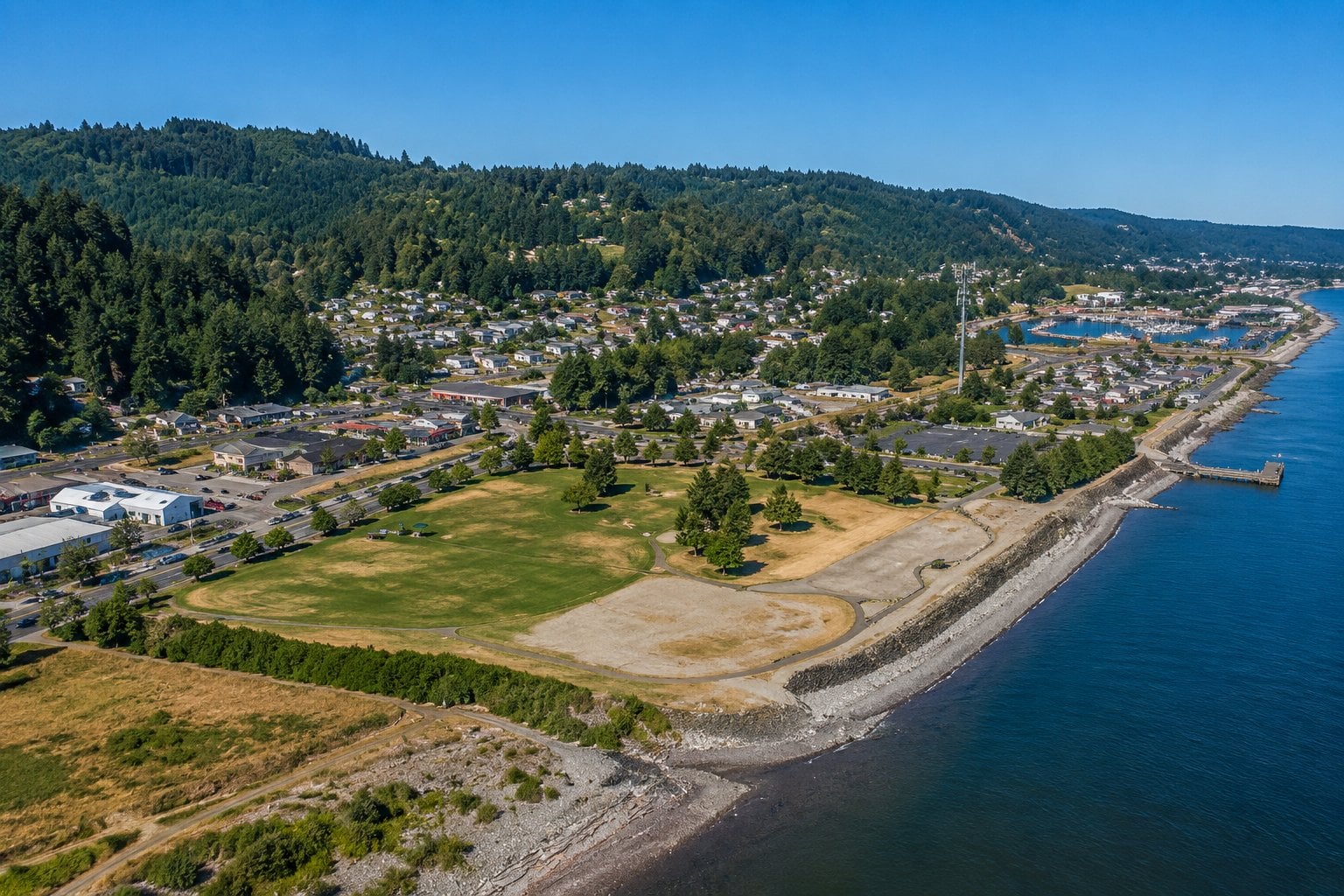
Rainier is an incorporated city in Columbia County, Oregon, positioned approximately 55 to 62 miles northwest of downtown Portland along US Highway 30 — the historic Columbia River Highway that follows the river's south bank from Portland through the Columbia River county communities all the way to Astoria at the river's mouth. The city sits directly on the Columbia River south bank at a point where the river is broad, deep, and navigable by large commercial vessels — the river here is not the recreational Columbia of the Gorge's windsurfing and waterfall hikes but the working Columbia of barge traffic, commercial fishing operations, industrial waterfront facilities, and the tidal influence that the river's proximity to the Pacific begins to assert this far downstream from the Portland metro's dam system.
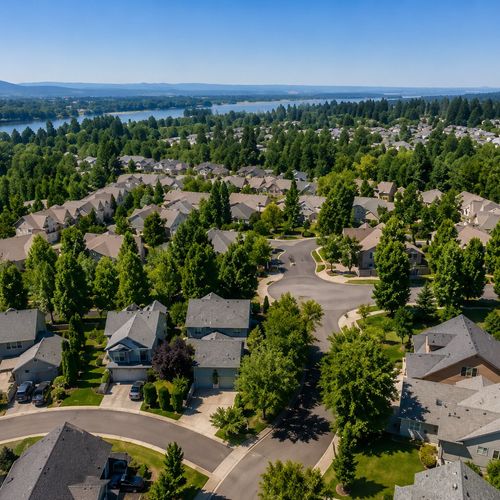
The city's residential fabric occupies the hillside terrain above the river's south bank — streets climbing from the waterfront commercial corridor along Highway 30 up into the wooded hillside above, providing elevated residential positions with Columbia River views from upper streets and the immediate riverfront character of a working waterfront community from the lower commercial and residential areas adjacent to the water. The combination of working waterfront below and wooded hillside residential above gives Rainier a geographic layering that most Columbia County river communities do not independently produce — a community where the river is not a backdrop visible from a distance but a working presence felt from the residential streets that sit above it.
Rainier is served by the Rainier School District — a small independent district serving the Rainier community with the K-12 community-embedded school culture and the direct teacher-student relationship quality that small Columbia County districts consistently produce. The district's enrollment reflects the city's modest population — small enough that the school community is genuinely integrated with the broader city community in the specific and personal way that only very small Oregon school districts achieve, and small enough that the extracurricular culture and the overall school character reflect the community rather than an institutional programming agenda. The Rainier School District is not a large suburban district with programmatic breadth or specialized curriculum depth — and buyers for whom those specific features are meaningful criteria should engage with that comparison honestly. What it is, genuinely and consistently, is a district whose schools reflect the working Columbia River community they serve with the directness and the community investment that Rainier's civic character has always produced in its educational institutions.
Portland International Airport is approximately 52 to 62 miles from Rainier, typically a 65 to 85 minute drive depending on traffic, time of day, conditions on Highway 30, and the specific approach through the Portland metro corridor toward PDX. The most practical driving paths run southeast along Highway 30 through Columbia City, Scappoose, and the north Portland approach, connecting to I-5 north or Marine Drive and Columbia Boulevard toward the airport. This is the longest airport drive of any community in this content library — a genuine 65 to 85 minute commitment under normal conditions and longer during the peak-hour dynamics that a two-lane river highway delivering traffic into a major metropolitan airport approach produces under the worst timing. For occasional travelers the run is entirely workable with appropriate planning and realistic time budgeting. For buyers whose professional life requires weekly or more frequent air travel, the airport distance from Rainier is a genuine and significant lifestyle factor that deserves the most honest possible pre-purchase evaluation — not because the community cannot support a frequent flyer's residential life, but because the buyers who make that life work from a Rainier address have always done so with full advance knowledge of the commute rather than the optimistic assumption that distance will feel shorter once you live it.
What Your Money Gets You: Homes at Every Price Point
Rainier's housing market reflects the city's history, its Columbia River working waterfront character, and its position as one of the more remote incorporated Oregon cities within the Portland metro's theoretical accessible radius. The housing stock is the accumulated result of the timber and fishing economy's construction eras — homes built for working families across the early to mid-20th century when Rainier's economy was defined by timber processing, fishing, and the industrial activities that a Columbia River working waterfront community supported at its peak employment. Mid-century residential additions as the community grew and then contracted with the industrial and timber economy cycles, and the more recent modest residential investment that the community's Columbia River setting and its price point have begun attracting from buyers whose search criteria include genuine waterfront community character at genuine affordability. New construction within Rainier proper is limited — the community's small geographic footprint, its hillside terrain, and the economic trajectory of a post-industrial Columbia River community have not generated the developer investment that would produce phased residential additions at scale — making this primarily a resale market with genuine character, genuine condition variability, and the specific charm and specific challenges that multi-era small-city Columbia River residential stock always produces.
Here is a realistic look at what different price points deliver in this market:
$200,000 – $290,000 Entry-level Rainier delivers the community's most original and least-updated residential stock — primarily early to mid-20th century and 1950s through 1970s construction in the 800 to 1,400 square foot range, two to three bedrooms, one bath in most cases, and the functional residential configurations that working Columbia River community development produced without architectural pretension but with the structural character that building for permanence and for working families historically provided. Some properties in this range carry the genuine historic character that Rainier's timber and fishing economy origins produced — older Oregon vernacular residential styles on lots that reflect the city's original platting and that deliver the hillside positioning above the Columbia River that the city's geography makes available to its lower-priced residential inventory. Lots at this range are consistently more generous than anything comparable pricing produces anywhere in the Washington County or Clackamas County market — deeper, more naturally vegetated, and in some cases positioned to deliver Columbia River views from elevated lots that the city's hillside terrain makes available to residential addresses that would cost multiples of their current market value in any recognized Pacific Northwest waterfront community. Condition is the honest variable — some homes have been maintained by long-term Rainier residents whose relationship with the property reflects genuine community stewardship. Others carry the deferred work that older residential properties in small river communities accumulate through extended ownership cycles without active maintenance investment. For first-time buyers, retirees organizing their finances around the most direct possible access to the Columbia River community lifestyle at the lowest sustainable ownership cost, and buyers whose renovation capacity and competence make an older property an opportunity — this range produces the most specific and most financially accessible version of the Rainier value proposition available anywhere in the Columbia County northwest corridor.
$290,000 – $400,000 This is the most active and most revealing price band in the Rainier market — the range where the community's full residential value proposition becomes most clearly legible and where buyers who have run the Columbia County northwest corridor comparison honestly tend to arrive with their most grounded conviction. Homes in this range tend to be the community's best-maintained or most recently updated single-family properties — three bedrooms, two baths in most cases, kitchens that have been addressed with genuine intention in the last decade, and the outdoor spaces that a Columbia River hillside residential setting produces when it has been engaged with rather than neglected. Some homes in this range access the elevated hillside positions that give Rainier's upper residential streets their Columbia River view character — lots where the river's broad expanse, the Washington State shoreline across the water, and the working waterfront activity of barges and commercial vessels moving through the shipping channel create a daily visual relationship with one of the Pacific Northwest's great rivers that no property in the Portland metro at this price range can approximate. For remote workers, Columbia River fishing and outdoor enthusiasts, buyers whose school district priorities align with the Rainier District's small-community character, and relocators from higher-cost markets whose primary criterion is the most direct and most authentic Columbia River community life available within a theoretical Portland metro radius — this range delivers the clearest and most complete version of what Rainier offers.
$400,000 – $550,000 Homes at this level represent Rainier's strongest residential product in its conventional single-family inventory — the most extensively updated or best-positioned properties in the community, where renovation quality, lot character, river view orientation, and overall livability come together at the standard that distinguishes the community's most compelling residential assets from its more modestly situated inventory. Updated three to four bedroom homes with genuine finish quality, meaningful outdoor spaces oriented toward the Columbia River views that the hillside terrain makes possible from the upper residential streets, and the specific lot positioning within Rainier's geography that delivers the most complete version of the Columbia River residential experience the city provides. Some properties in this range sit on elevated hillside lots where the river view corridor is unobstructed across the full width of the Columbia — the working shipping channel, the Longview-Kelso metropolitan area and the Cowlitz River confluence visible to the north across the water, and the broad Pacific-bound horizon visible in both directions along the river's course. For buyers who have identified the Columbia River view residential experience as the organizing criterion of their search and who have run the honest comparison between what Rainier's hillside inventory provides and what comparable Columbia River view access costs in any other Pacific Northwest river community — this range delivers an extraordinary value proposition.
$550,000 and above The upper end of Rainier's market is defined by the most site-specific and most view-advantaged properties in the community — the hillside residences where the Columbia River view corridor is most commanding and most unobstructed, the properties combining residential quality with the largest lot footprints in the city's established residential fabric, and in some cases the rural residential and acreage properties at Rainier's edges where the Columbia County agricultural and forested landscape begins. These properties surface infrequently in a community this small and this specific, attract buyers whose criteria are specific enough to recognize the right property without deliberation, and move to buyers who were already prepared and connected.
Median home price in Rainier: The median sits in the $250,000 to $320,000 range — making Rainier one of the most financially accessible incorporated Oregon cities with direct Columbia River orientation, working waterfront identity, and genuine small-city community character within any distance of the Portland metro, however extended that distance is honestly understood. The absolute price gap between what the Rainier median delivers in terms of Columbia River community experience — hillside residential positions with river views, walking distance to the waterfront, genuine working river character, and the small-city authenticity that the working Columbia County river community has always produced — and what comparable Columbia River access costs in any other recognized Pacific Northwest waterfront community is the most direct and most specifically compelling expression of the Rainier value proposition. That gap reflects the community's distance from the Portland metro and its post-industrial economic trajectory rather than any meaningful deficiency in what the river, the views, and the community character actually deliver.
What About Renting in This Area?
The Rainier rental market is limited in the way that small post-industrial Columbia County river communities consistently are — a modest inventory of privately held single-family homes and older apartment units offered by individual landlords and small property management operations, with turnover that reflects the community's stable long-term ownership culture and the absence of the purpose-built rental development that requires larger population and commercial density to justify investment.
Single-family rentals in Rainier typically run between $1,000 and $1,800 per month depending on the size of the home, the lot character, the elevation and river view quality, and the condition and recency of any updates. A modest two to three bedroom home in solid condition rents around $1,000 to $1,400. A larger, updated home with meaningful outdoor space and any river view or elevated hillside positioning pushes toward $1,400 to $1,800. Smaller apartment units in Rainier's limited multi-family inventory start around $800 to $1,200 for one to two bedroom configurations — figures that reflect the genuine affordability that a small post-industrial Columbia County river city at Rainier's distance from the metro core produces relative to any market closer to Portland, and that represent the most financially accessible rental entry point in the entire Columbia County content library.
The adjacent Longview-Kelso metropolitan area across the Columbia River in Washington State — accessible via the Lewis and Clark Bridge connecting Rainier to Longview — provides a significantly more varied rental inventory across apartment, townhome, and single-family configurations at price points that start and extend above Rainier's own limited supply, making the cross-river community a practical resource for buyers who want to orient themselves to the lower Columbia River corridor before committing to a Rainier purchase. For relocators planning to rent while identifying the right Rainier property, the Longview-Kelso rental market provides the inventory depth that Rainier's own small rental supply cannot independently generate.
Things to Do In and Around Rainier
Rainier's position on the Columbia River's south bank in the lower Columbia County corridor places residents within one of the Pacific Northwest's most specifically working-river and lower-Columbia-estuary-oriented outdoor and community recreational landscapes — a setting that delivers the most direct and most authentic Columbia River community life available within any practical driving distance of the Portland metropolitan area.
The Columbia River is Rainier's defining presence — and at this point in the river's course, approximately 45 miles from its mouth at Astoria, the Columbia has the broad, deep, tidal-influenced character of a river completing its journey to the Pacific rather than the energetic mountain-fed character of the Gorge or the commercially managed character of the mid-Columbia. The river here is wide enough to create a genuine horizon, deep enough to host large commercial vessels in the shipping channel, influenced enough by Pacific tidal dynamics to produce the daily tidal variation that lower Columbia River communities experience as a living connection to the ocean rather than a hydrological abstraction. For Rainier residents oriented toward the river as a daily presence rather than a recreational destination, this specific point in the Columbia River's geography delivers the most ocean-like and most biologically productive version of the river available from any Oregon residential community not situated at the estuary itself.
Columbia River fishing from Rainier's location in the lower river corridor is among the most productive and most specifically serious fishing access available in the Portland metro's extended range — the lower Columbia River's salmon and steelhead runs, its sturgeon fishery, and the tidal-influenced habitat that supports the species diversity of a river approaching its productive estuary provide a fishing experience that the mid-Columbia River communities to the southeast can only partially replicate in terms of run timing, species access, and the particular character of lower-river fishing. For the serious Columbia River angler whose residential criteria include the most direct access to the most productive fishing available within a Portland metro driving radius — Rainier is the answer.
The Lewis and Clark Bridge connecting Rainier to Longview, Washington extends the community's practical daily range across the Columbia River to the Cowlitz County seat city of Longview and the broader Southwest Washington commercial and service infrastructure that makes the lower Columbia River corridor a genuinely binational residential environment. The bridge crossing creates the particular dynamic of lower Columbia River border communities — where Oregon residency and Washington accessibility combine to produce the income tax and commercial access advantages that the Clark County communities covered earlier in this content library deliver at a different point along the river. For Rainier residents whose professional or commercial life takes them regularly to the Longview-Kelso area's healthcare, retail, and commercial infrastructure, the bridge is a daily practical asset that significantly extends the community's effective service radius.
The Longview-Kelso metropolitan area across the river is a substantial Southwest Washington community with approximately 75,000 combined residents — providing the full commercial and service infrastructure that a significant regional city delivers, including major grocery, medical facilities, specialty retail, professional services, and the dining and entertainment variety that Rainier's own small commercial footprint does not independently generate. For Rainier residents, Longview-Kelso functions as the most immediately accessible commercial hub regardless of its Washington State address — closer in drive time than St. Helens to the south and significantly more commercially complete than any Oregon community within comparable driving distance.
Rainier's own waterfront and riverfront park infrastructure provides the community's most immediate outdoor gathering space — the Columbia River access points, the walking areas along the bank, and the waterfront character that a working Columbia River city maintains as the social and recreational center of its daily outdoor life. The working waterfront's mix of industrial facility, commercial fishing infrastructure, and public access reflects the genuine character of a lower Columbia River community rather than the curated waterfront park experience that larger and more tourism-oriented river cities produce.
The Columbia River Estuary and Lewis and Clark National Wildlife Refuge corridor — accessible via Highway 30 northwest toward Astoria — is more directly accessible from Rainier than from any other community in this content library, delivering one of the Pacific Northwest's most biologically significant and most ecologically productive estuary environments within a practical drive northwest. The estuary's migratory bird populations — including the Pacific Flyway's most significant waterfowl concentrations during migration seasons — the salmon and steelhead spawning habitat of the lower river tributaries, and the wetland landscape of the Columbia River estuary's remaining natural areas provide a natural experience of extraordinary ecological significance that becomes a regular rather than exceptional outdoor commitment from a Rainier residential address.
Fort Stevens State Park in Clatsop County, Oregon — approximately 35 to 45 minutes northwest via Highway 30 toward Astoria and the coast — is one of Oregon's most historically significant and most fully developed state parks, with Civil War-era military fortification remains, direct Pacific Ocean beach access, the wreck of the Peter Iredale accessible on the beach at low tide, camping, hiking, and the full state park infrastructure of one of Oregon's most visited coastal destinations. For Rainier residents, Fort Stevens is a regular rather than exceptional destination — the kind of park that most Portland metro residents make an annual trip to visit and that Rainier residents add to their monthly recreation rotation.
Astoria, Oregon — approximately 45 to 55 minutes northwest along Highway 30 — is the most significant small city accessible from Rainier's position in the lower Columbia County corridor, with the Victorian residential architecture, the nationally recognized seafood and food culture, the Columbia River Maritime Museum, the Astoria Column, the working waterfront character, and the particular creative and cultural energy that a historic Oregon coastal city at the mouth of the Columbia River has developed into one of the Pacific Northwest's most genuinely distinctive and most specifically compelling small-city experiences. For Rainier residents, Astoria functions as the nearest destination city for serious dining, arts and cultural programming, coastal access, and the full range of what a vibrant small Oregon city with genuine historical significance delivers — and the 45 to 55 minute drive along the scenic Highway 30 river corridor makes the relationship genuinely regular rather than requiring the planning commitment that a longer drive would impose.
Hunting and outdoor recreation in the Columbia County and Wahkiakum County landscape surrounding Rainier reflects the working rural character of the lower Columbia River corridor — waterfowl hunting in the Columbia River bottomland and wetland habitat that the lower river produces in extraordinary abundance, upland bird hunting in the agricultural and managed timber land of the surrounding county, and the kind of outdoor culture that working river communities in the Pacific Northwest have organized their recreational lives around across generations. For buyers whose outdoor practice includes hunting as a primary activity, Rainier's position in the lower Columbia River corridor provides access to some of the Pacific Northwest's most productive waterfowl habitat from a residential address that no closer-in Columbia County community delivers with the same proximity to the estuary's most productive areas.
The Trojan Nuclear Plant historical site and the Goble community area immediately south of Rainier on Highway 30 reflect the lower Columbia County corridor's industrial history — the decommissioned plant's cooling tower was a Lower Columbia River landmark for decades before its demolition, and the site's current status as a remediated industrial facility in the Columbia River corridor reflects the broader economic transformation of the lower Columbia's south bank from industrial employment center to natural and recreational resource.
St. Helens — approximately 20 to 25 minutes southeast on Highway 30 — is the Columbia County seat and the most immediately accessible substantial commercial center for Rainier residents, providing the county services, grocery and retail infrastructure, medical, and dining options that St. Helens' established commercial corridor delivers for the broader north Columbia County community. For Rainier residents whose routine commercial needs require more than the city's own modest commercial footprint provides, St. Helens fills the gap within a drive that most residents make weekly rather than treating as an occasion.
Portland is 60 to 75 minutes southeast via Highway 30 — the full urban infrastructure of a major Pacific Northwest city accessible when the occasion genuinely calls for it. The Highway 30 approach deposits Rainier residents in North Portland's St. Johns neighborhood first, making the Occidental Brewing and the St. Johns commercial corridor the natural first stop before continuing into Portland proper for the occasions that require the city's full urban scale.
Where to Eat
Rainier's dining scene reflects the community's scale, its working river character, and its post-industrial trajectory with the directness that a small Columbia County river city of its size honestly produces — limited independent dining infrastructure within the city itself, meaningful expansion of the practical dining orbit through the Longview-Kelso cross-river connection and the St. Helens corridor to the southeast, and the particular food culture that lower Columbia River fishing access and the surrounding agricultural landscape develops in residents who have built their food relationship around what the river and the land produce.
Rainier's own commercial corridor along Highway 30 and the city's primary commercial street carries the casual dining options that serve the immediate community's everyday needs — taverns, casual restaurants, and the quick-service options that a small working river community's commercial infrastructure maintains for the resident population and the highway traffic passing through. The specific establishments evolve with the market, but the character consistently reflects a working Columbia River city's unpretentious relationship with food and community rather than the curated dining culture of a destination community positioning itself for outside discovery.
The Elbow Room and similar Rainier waterfront and commercial corridor establishments reflect the lower Columbia River working-community bar and dining culture in its most direct and most authentic form — places where the commercial fishermen, the trades workers, the longtime Rainier residents, and the river community's social fabric gather in the way that working waterfront communities have always organized their social lives around the establishments closest to the water. For Rainier residents, these are the community dining institutions that define the social texture of daily life rather than restaurants requiring occasion or advance planning.
The Longview-Kelso commercial and restaurant corridor across the Lewis and Clark Bridge — 10 to 15 minutes by car — is the primary dining destination for Rainier residents seeking genuine variety and sit-down quality without a longer drive southeast. Longview's commercial infrastructure includes a full range of casual and mid-range dining options that reflect a Southwest Washington regional city's commercial development over decades of serving the lower Columbia River's combined Oregon-Washington residential community. The cross-river commute that the Lewis and Clark Bridge makes routine for Rainier residents turns Longview's dining options into practical extensions of the city's own commercial footprint rather than separate destination trips.
Astoria's restaurant scene — 45 to 55 minutes northwest — is the most genuinely distinctive and most specifically Pacific Northwest dining destination accessible from Rainier, with the Columbia River seafood culture, the locally sourced food identity, and the creative culinary investment of a small Oregon coastal city that has developed one of the Pacific Northwest's most celebrated small-city restaurant ecosystems. For Rainier residents who treat serious dining as a regular rather than occasional practice, Astoria's restaurant community — including the Columbian Cafe, Street 14 Cafe, and the broader Astoria culinary landscape — provides the dining destination experience that the lower Columbia River corridor delivers from the most historically and culturally significant city at the river's mouth.
St. Helens' downtown dining corridor — 20 to 25 minutes southeast — provides the most immediately accessible expanded casual dining within the Oregon side of the corridor for Rainier residents making routine southeast runs toward Portland. The St. Helens waterfront commercial street and its Columbia River dining establishments serve the broader north Columbia County community as the primary Oregon-side dining hub between Rainier and the Portland metro.
The Portland metro dining landscape — 60 to 75 minutes southeast — provides the full James Beard-recognized restaurant culture, the Pearl District dining corridor, and the comprehensive culinary infrastructure of a nationally recognized food city for the occasions that genuinely call for it. Most Rainier residents describe Portland's restaurant culture as an occasional deliberate destination rather than a routine dining extension — which reflects the honest relationship that a community at Rainier's distance from the metro maintains with the city's urban amenities.
The honest framing: Rainier is a community where the food culture is organized around the river's fishing, the agricultural surroundings' direct produce access, and the lower Columbia corridor's specific food traditions — fresh salmon and Dungeness crab from the river community's fishing culture, garden produce from the Pacific Northwest's most productive growing climate, and the preservation and direct-food-system culture that lower Columbia River communities have maintained as a practical and cultural tradition across generations. Buyers who make that transition tend to find it not just adequate but specifically and deeply satisfying in a way that the metro's restaurant culture, however excellent, does not independently produce.
Who Moves to Rainier?
After nearly three decades working markets across the Pacific Northwest on both sides of the Columbia River and across the full Oregon metro, rural, and coastal corridor, the Rainier buyer is the most remote-location-committed and the most specifically Columbia River-oriented residential profile in this entire content library. They have not arrived at Rainier by accident, by default, or by the progressive exhaustion of closer-in options. They have arrived by a process of identifying what they actually want with a specificity that only the lower Columbia River's working waterfront community character satisfies — and following that process to its geographic conclusion with the full honest knowledge of what the distance, the commute, and the community's post-industrial trajectory require in exchange for what the river, the views, the fishing, and the working waterfront authenticity deliver.
They are working river fishing enthusiasts in the most committed sense — buyers whose primary outdoor identity is organized around the Columbia River's salmon and steelhead fisheries, whose recreational calendar is structured around the fall Chinook run and the winter steelhead season, and whose residential criteria include the most productive and most directly accessible lower Columbia River fishing available from a residential address within any driving distance of the Portland metro. For the serious Columbia River angler who has been maintaining a boat slip and driving to the lower river for decades, Rainier is the residential address that eliminates the drive and integrates the fishing into the daily residential routine rather than treating it as a destination commitment. These buyers know exactly what they are choosing and they choose it with the conviction of someone who has been working toward the decision for years.
They are remote workers whose professional lives are fully compatible with Rainier's distance and connectivity infrastructure — the buyers who have confirmed their internet options for a specific Rainier address, whose professional practice operates entirely from a home office, and whose connection to the Portland metro is occasional and deliberate rather than regular and obligatory. For these buyers, Rainier's distance is not a limitation but a specification — the distance is precisely what creates the lower Columbia River working waterfront environment that no closer-in community can produce at any price, and the remote work economy has made that distance professionally sustainable for a growing category of buyer whose professional life previously required Portland proximity that their personal life never actually wanted.
They are lower Columbia River community seekers — the households who have specifically identified the working waterfront character, the fishing culture, the cross-river binational community dynamic, and the particular authenticity that a small post-industrial Columbia River city produces when its residents are genuinely invested in remaining rather than transitioning somewhere else. These buyers are not romanticizing working waterfront community life from a Portland coffee shop — they have visited Rainier, they have spent time on the river, they have talked to the people who live there, and they have concluded that the community's specific character is what they are looking for rather than a version of it available at a shorter drive from the airport.
They are retirees and pre-retirees who have spent careers building equity in higher-cost markets and who have arrived at the Pacific Northwest with the financial clarity to recognize that Rainier's combination of Columbia River views from a hillside residence, walking distance to the waterfront, and the most financially accessible price point in this entire content library represents a retirement quality of life that the metro's most recognized waterfront communities charge multiples of Rainier's median to approximate. They have run that comparison honestly — what does Columbia River view residential access cost in the Pearl District, in Lake Oswego waterfront, in the recognized Pacific Northwest waterfront communities — and they have found that Rainier delivers the river, the views, and the community in a configuration that their retirement financial planning can sustain comfortably rather than heroically.
They are, consistently, buyers who find Rainier more than they expected and leave it less often than they anticipated. The river does not diminish. The views do not depreciate. The lower Columbia River's fishing remains among the Pacific Northwest's most productive. And the working waterfront community character that Rainier has maintained through its post-industrial transition is not a fragile amenity dependent on economic conditions but the fundamental character of a place defined by its position on the Columbia River in ways that no market cycle can change. Rainier's retention reflects that structural stability — and the residents who have been in the community through its post-timber and post-industrial transition are consistently the ones who describe the decision as having delivered more than the price suggested it would.
What You Should Know Before You Commit
Rainier is the most honestly demanding trade in this entire content library — the community that requires the most pre-purchase due diligence honesty, the clearest understanding of the distance and its practical implications, and the most specific alignment between what the buyer actually values and what the community actually delivers.
The distance from the Portland metro is the defining variable for any Rainier buyer whose professional or family life includes any regular physical connection to the city's infrastructure. The 65 to 85 minute drive to Portland is the longest in this content library — a genuine commitment of time and fuel that compounds over repeated trips in ways that the community's many other merits cannot fully offset for households whose professional or family obligations require Portland more than occasionally. Drive it. Drive it at morning peak hour in the direction toward Portland that you would actually use for work, medical appointments, or family obligations. Drive it on a Tuesday in November when the coast range weather has reached the Columbia County corridor and the Highway 30 two-lane approach is producing the conditions that the scenic drive photographs do not include. The assessment that experience produces is the foundation of a sound decision. The assessment produced from a Sunday afternoon visit in August is not.
The Longview-Kelso cross-river dynamic is a practical asset worth understanding specifically — the Lewis and Clark Bridge connecting Rainier to Longview creates a daily commute and service access option that effectively doubles Rainier's practical commercial and service radius without adding significant drive time. Buyers who factor the Longview-Kelso commercial infrastructure into their practical daily planning — grocery, medical, retail, restaurant access — find Rainier's commercial footprint considerably more complete than its Oregon-only commercial corridor independently delivers. Buyers who plan exclusively around Oregon-side commercial access find the community's own limited footprint more constraining than necessary.
Flooding and Columbia River tidal and high-water considerations are more specifically significant at Rainier's lower Columbia River position than at any other community in this content library — the tidal influence at this point in the river, combined with the Columbia's periodic high-water dynamics during spring runoff years, creates flood zone designations and practical land use considerations for the community's lowest-elevation properties that affect insurance requirements, financing options for certain loan programs, and the seasonal experience of riverside property ownership. Confirming the specific flood zone designation of any Rainier property being seriously considered is essential pre-offer due diligence, and understanding the specific tidal and seasonal water dynamics of any waterfront or near-waterfront property specifically rather than generally is the practical pre-purchase homework that riverside community buyers who have never lived near the lower Columbia River's tidal reach consistently discover matters more than they anticipated.
Internet infrastructure carries the same rural Columbia County variability addressed throughout this content library — specific confirmation for any specific address through direct provider inquiry rather than general coverage maps is the remote work-dependent buyer's most important pre-offer step. Rainier's connectivity options have developed over the last several years alongside the broader Columbia County broadband investment, but the specific technologies and providers available at any given residential address vary in ways that general community-level assessments cannot capture.
The working waterfront character — the industrial facilities, the commercial fishing infrastructure, the barge traffic on the shipping channel, and the working waterfront noise and activity that a lower Columbia River port community produces — is a specific ambient environmental feature of Rainier's daily living reality that some residential properties in the community are more directly affected by than others depending on their specific location and orientation. Understanding specifically how the working waterfront's activity profile affects the specific property being considered — rather than evaluating it abstractly from the community's attractive hilltop views — is the pre-purchase site evaluation that distinguishes buyers who engage with Rainier's industrial waterfront character as a feature of the community they chose from buyers who discover it as a limitation after closing.
Thinking About a Home in Rainier?
Rainier inventory is as specific and as limited as the community itself — a small market where quality properties surface infrequently, where the river-view hillside positions and the waterfront-adjacent properties that define the community's most compelling residential proposition turn over slowly, and where genuine local connection and knowledge of what is approaching the market provides far more practical value than platform monitoring in identifying the right opportunity before it is broadly listed. I know Columbia County, I know the Highway 30 corridor from Scappoose through Columbia City and St. Helens to Rainier, and I will give you a straight read on what you are looking at — the property, the flood zone confirmation, the internet infrastructure, the tidal and waterfront character, the cross-river dynamics, the commute reality at the times you would actually experience it, and the complete total cost of ownership picture — before you write anything.
See more about Rainier
Want to learn more about Rainier neighborhoods and homes?
Homes for sale in Rainier: https://jamiemeushawrealestate.com/properties/city-Rainier,%20OR/
Watch more local real estate insights on my YouTube channel:
https://www.youtube.com/@JamieMeushaw
Sign up for my weekly newsletter for real estate tips and market updates:
https://jamiemeushawrealestate.com/newsletter
Check out this article next