


Where Exactly Is Raleigh Hills?
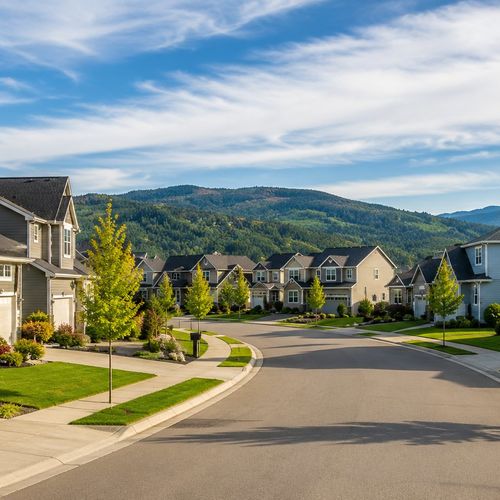
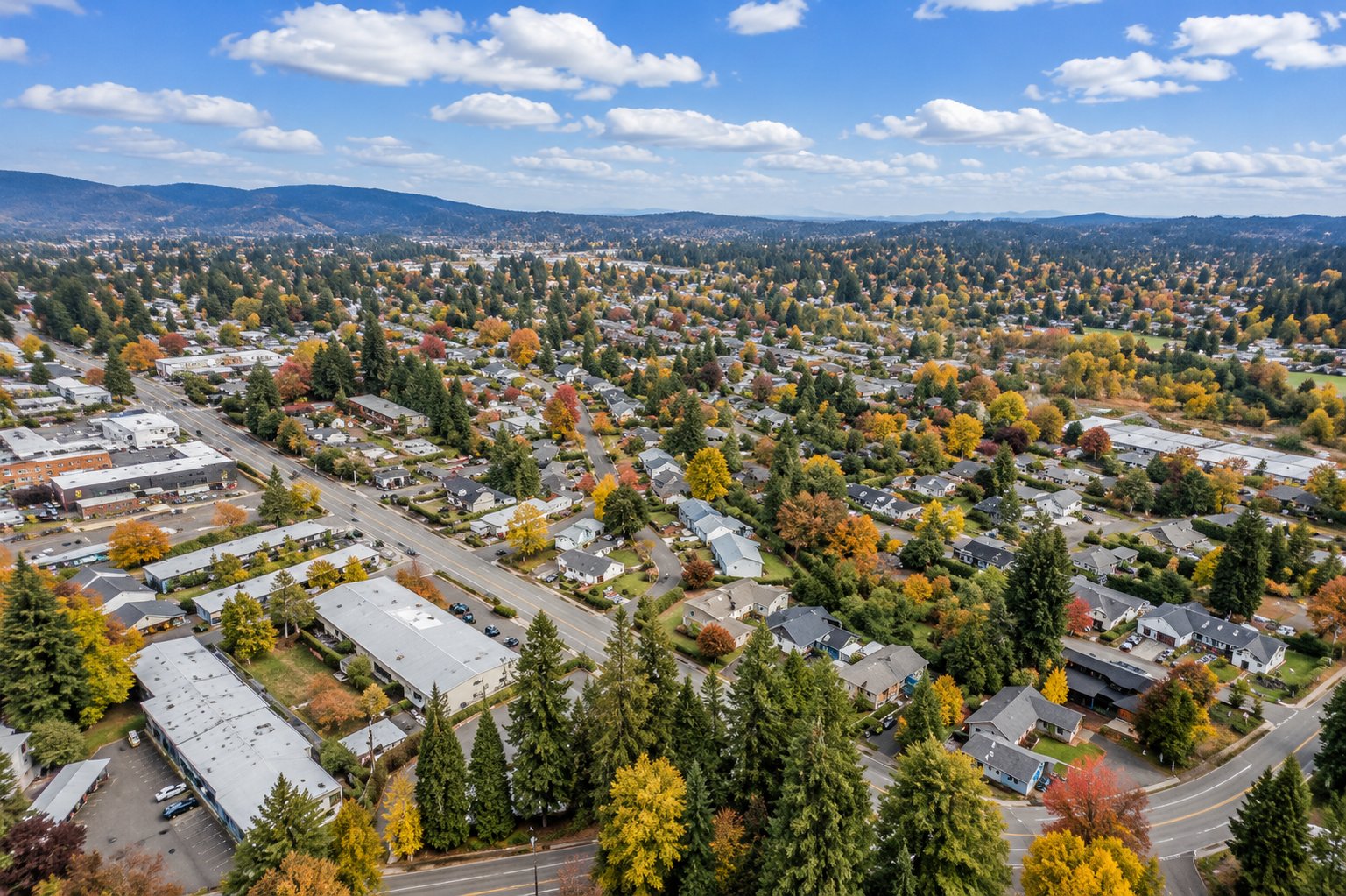
Raleigh Hills is an unincorporated community in Washington County, Oregon, positioned in the southwestern Portland metro along the SW Canyon Road corridor — Highway 8 — that runs from downtown Portland's west side through Beaverton toward Hillsboro. The community sits at the base of the Tualatin Mountains — the range that contains Forest Park on its eastern face and that defines the visual and geographic boundary between the Portland urban core and the broader Washington County suburban fabric — with its residential streets climbing the hillside terrain above SW Canyon Road and spreading across the rolling topography that gives the neighborhood its visual distinctiveness within the otherwise flat Tualatin Valley landscape.
The community is bordered by the West Hills residential neighborhoods and the Portland city boundary to the north and east, Beaverton to the west, and the broader southwest Washington County suburban fabric pushing toward Tigard to the south. It is close enough to Portland that residents with Portland addresses describe Raleigh Hills as effectively adjacent, and far enough from the city's density and pace that residents of Raleigh Hills describe Portland as accessible rather than omnipresent — a distinction that the unincorporated community's residential character enforces naturally without requiring any deliberate effort.
Raleigh Hills falls within the Beaverton School District — one of the strongest and most comprehensively resourced public school systems in Oregon, with a district reputation that consistently ranks among the top in the state for academic programming, dual-language immersion options, and the quality of facilities and extracurricular infrastructure that a well-funded district in one of Oregon's wealthiest counties produces. For families with school-age children, the Beaverton School District is one of the primary drivers of purchase decisions in Raleigh Hills and one of the most significant practical advantages the community delivers over comparable residential neighborhoods in the Portland city limits served by Portland Public Schools. The combination of Beaverton School District quality, Washington County's property tax structure, and Portland's cultural and employment infrastructure accessible minutes away is the core of Raleigh Hills' value proposition for family buyers, and it is a combination that no other community in the immediate metro delivers with the same completeness.
Portland International Airport is approximately 16 to 22 miles from Raleigh Hills, typically a 25 to 40 minute drive depending on traffic, time of day, and your specific route. The most direct paths run east on SW Canyon Road into downtown Portland and north via I-5 to PDX, or via Highway 217 north to I-5 and east toward the airport. The MAX Red and Blue Lines are accessible from nearby Beaverton and the Washington County transit corridor — the Blue Line runs east toward downtown Portland and connects at the Gateway Transit Center to the Red Line serving PDX — providing a transit airport option for residents who prefer to avoid the drive. For frequent travelers and households where airport access is a meaningful daily quality-of-life factor, Raleigh Hills delivers workable and predictable airport proximity without the flight path noise that characterizes communities in north and northeast Portland positioned significantly closer to PDX.
What Your Money Gets You: Homes at Every Price Point
Raleigh Hills' housing market reflects the community's age, its topography, and the income level of the residential base that has been choosing and staying in this neighborhood for decades. The primary housing stock is single-family residential — a mix of mid-century homes from the 1950s through 1970s that defined the community's original development era, ranch-style and split-level properties that reflect the hillside terrain's influence on residential design, more recent construction from the 1980s through 2000s on the remaining buildable parcels that the West Hills terrain has made available over time, and in some cases custom-built properties on larger hillside lots where the combination of elevation, tree coverage, and territorial view corridors justify the premium that the most desirable sites in this geography command. This is a market where architectural variety and lot character vary meaningfully by street and elevation, where the difference between a flat-lot ranch on the valley edge and a hillside home with Portland city views reflects a meaningful price gap, and where knowing the neighborhood at a granular level matters more than aggregate statistics suggest.
Here is a realistic look at what different price points deliver in this market:
$525,000 – $675,000 Entry-level Raleigh Hills delivers older single-family homes — primarily 1950s through 1970s ranch-style and split-level construction — in the 1,400 to 1,900 square foot range. Three bedrooms, one to two baths, and the single-level or modest split-level layouts that mid-century residential construction in the West Hills corridor tended to produce in response to the terrain. Lots at this price point tend to be more flat and accessible — the properties on the valley-floor edges of the community rather than the elevated hillside streets — and reflect Raleigh Hills' original residential development before the hillside parcels were opened and valued for their view potential. Condition varies with the honest reality of housing stock this age — some homes have been maintained and incrementally updated by long-term owners who understood what they had. Others carry the accumulated deferred work that mid-century residential properties develop when ownership turnover has been infrequent and maintenance investment has been inconsistent. The value here is genuine: you are getting into the Beaverton School District, the Washington County tax structure, and the established Raleigh Hills residential community at a price point that the neighborhood's premium tier has left behind — and for buyers who can evaluate a mid-century home for its structure and systems rather than its surface presentation, this range consistently produces the kind of opportunity that buyers shopping only for visual readiness overlook.
$675,000 – $875,000 This is the most active and most revealing price band in the Raleigh Hills market, where the community's full value proposition becomes most clearly legible and where the buyers who have done the comparison honestly against inner Portland and other Washington County alternatives tend to land with the most conviction. Homes in this range tend to be updated or well-maintained single-family properties in the 1,800 to 2,600 square foot range — three to four bedrooms, two to two and a half baths, kitchens that have been addressed with genuine intention in the last decade rather than cosmetically refreshed for a sale, and the kind of outdoor space — established trees, mature landscaping, private yards with genuine separation from neighboring properties — that the neighborhood's age and lot culture produces in ways that newer suburban developments spend decades trying to grow into without fully achieving. Some homes at the upper end of this range begin to access the hillside terrain and the elevated lot positions that give Raleigh Hills' most desirable streets their character — tree coverage, privacy from the street, and in some cases territorial sightlines across the Tualatin Valley that open as the elevation rises. For move-up buyers, families prioritizing the Beaverton School District, and relocators from higher-cost markets who want the full southwest Portland metro package without the inner Portland price per square foot, this is the range where Raleigh Hills most clearly delivers on what it promises.
$875,000 – $1,150,000 At this level, Raleigh Hills begins to deliver its most distinctive residential product — updated or extensively renovated properties on elevated hillside lots where the combination of architectural quality, mature natural setting, and territorial or Portland city view corridors comes together in the way that makes the most desirable streets in this community genuinely irreplaceable within the Washington County market. Three to four bedrooms, two and a half to three baths, kitchens and primary baths rebuilt at a level that reflects genuine investment rather than cosmetic updating, and outdoor spaces — decks and terraces oriented toward view corridors, established gardens on hillside lots where the landscaping has had decades to mature into genuine privacy and visual impact — that reflect the Pacific Northwest's relationship with outdoor living built into the site rather than retrofitted onto it. Some homes in this range have been fully transformed from their mid-century foundations into properties that compete directly with new construction on finish quality while retaining the lot depth, the tree coverage, and the hillside positioning that no new development parcel in Washington County can replicate at any price. For buyers who have been specific about wanting the West Hills character, the Beaverton School District quality, and the Washington County financial structure simultaneously — and who have the budget to access all three without compromising any of them — this range delivers the clearest version of Raleigh Hills at its best.
$1,150,000 – $1,600,000 Homes at this level represent the most compelling properties in the Raleigh Hills market — the fully realized hillside residences where site quality, architectural investment, finish level, and view orientation converge at a standard that positions them at the top of the Washington County southwest residential hierarchy. Four bedrooms, three-plus baths, primary suites with genuine scale and separation, kitchens with professional-grade appliance packages and the kind of spatial generosity that the best hillside lots make possible when an architect has engaged seriously with what the site offers rather than simply placing a standard floor plan on a non-standard terrain. Portland city lights visible from primary living spaces and outdoor terraces, Forest Park's forested ridgeline defining the northeastern horizon, Mount Hood visible on clear days from elevated positions — these are the homes where the Raleigh Hills hillside premium is fully legible and fully justified. They do not come available frequently, and when they do, they attract buyers who have been watching and waiting with clear criteria rather than beginning the evaluation process when the listing appears.
$1,600,000 and above The upper end of the Raleigh Hills market is defined by the most architecturally significant and most dramatically sited properties in the community — custom-built or comprehensively custom-renovated hillside residences on premier lots where the combination of Portland skyline views, mature old-growth tree coverage, and architectural investment places them in a category that the broader Washington County market cannot replicate regardless of price. These properties attract buyers for whom the relevant comparison is not the Raleigh Hills median but the most exceptional hillside residential properties in the Portland metro — the Lake Oswego lakefront, the West Hills custom homes, and the Dunthorpe estates — and who find that Raleigh Hills delivers the natural setting and the architectural ambition of those comparisons at a price that reflects Washington County's tax and market structure rather than Multnomah County's. When these properties surface, they do not sit for buyers who are still deciding. They move to buyers who were already ready.
Median home price in Raleigh Hills: The median sits in the $720,000 to $810,000 range — a figure that reflects the community's established quality, its West Hills adjacency, its Beaverton School District positioning, and the consistent demand that the combination of those factors generates from buyers who understand what they are purchasing and why it commands what it does. Against inner Portland neighborhoods in the same price range, Raleigh Hills consistently delivers more square footage, more lot, better school district performance by most measured metrics, and a lower state and local tax burden through the Washington County structure. Against Washington County suburban alternatives at comparable prices in Beaverton or Hillsboro, Raleigh Hills delivers the hillside character, the mature landscape, and the Portland city adjacency that planned suburban developments in the valley floor cannot approximate regardless of their amenity packages. The premium is earned rather than aspirational, and it has been sustained through multiple market cycles in a way that reflects durable structural advantages rather than trend-driven demand.
What About Renting in This Area?
The Raleigh Hills rental market reflects the community's predominantly owner-occupied character — this is a neighborhood where people purchase with the intention to stay, where turnover is slower than the broader metro average, and where the rental inventory that does exist is primarily composed of single-family homes offered by individual landlords rather than purpose-built rental developments or apartment complexes. The residential character of the community and the price point of its housing stock means that the rental market here serves a relatively specific tenant — typically households in transition, relocating professionals establishing themselves before purchasing, or families whose income supports the Raleigh Hills rental range while they orient to the market.
Single-family rental homes in Raleigh Hills typically run between $2,400 and $4,200 per month depending on size, condition, lot character, elevation, and the presence of any view component that commands a premium in the rental market as meaningfully as in the purchase market. A three-bedroom, two-bath home in solid condition on a flat or modest hillside lot rents around $2,400 to $3,200. A larger, updated four-bedroom home with quality finishes, meaningful outdoor space, and any elevated positioning or view orientation pushes into the $3,200 to $4,200 range. Homes at the upper end of the Raleigh Hills quality spectrum, when they do appear as rentals — typically in corporate relocation or short-term owner-absence situations — command the top of that range and lease quickly to well-qualified tenants who recognize the value relative to the purchase market.
The broader Beaverton rental market immediately to the west provides a significantly larger and more varied inventory of apartment and townhome configurations at price points ranging from $1,400 to $2,800 per month for one to three bedroom configurations — a practical alternative for renters who want the Beaverton School District access and the Washington County southwest corridor lifestyle without the single-family rental price point that Raleigh Hills' housing stock produces. For buyers planning to rent while orienting to the purchase market, establishing in Beaverton while actively searching in Raleigh Hills is a common and practical approach.
Well-priced single-family rentals in Raleigh Hills move quickly — not with the multi-application frenzy of inner Portland's rental competition, but with enough momentum that organized and decisive applicants with complete documentation have a meaningful advantage over those who are still evaluating options when the right property becomes available. Building more search runway than feels necessary and treating the process as an active pursuit rather than a casual browse is the right posture for any renter approaching this specific community.
Things to Do In and Around Raleigh Hills
Raleigh Hills' position at the base of the Tualatin Mountains and on the western edge of the West Hills corridor places residents within reach of one of the most naturally rich and culturally complete residential environments in the Portland metro — a landscape where Forest Park's 5,000 acres of urban wilderness, the Tualatin Valley's agricultural and wine country infrastructure, and Portland's full cultural ecosystem all fall within a radius that makes genuinely varied daily programming possible without the kind of extended commute that most metro-adjacent communities require for the same access.
Forest Park is accessible from Raleigh Hills via the SW Leif Erikson corridor and multiple West Hills trailheads that thread through the hillside residential fabric above SW Canyon Road — placing the largest urban forest in the United States within walking or short driving distance of most Raleigh Hills residential addresses. The Wildwood Trail, the Leif Erikson gravel road, and the network of connector trails accessible from the West Hills corridor provide the same 80-plus miles of Douglas fir and western red cedar forest that defines the NW District's outdoor access proposition, at a proximity that reflects Raleigh Hills' own hillside positioning rather than requiring the NW 23rd corridor approach that NW District residents use as their primary Forest Park entry. For outdoor-oriented buyers who want daily trail access from a Washington County address with a Beaverton School District assignment, Raleigh Hills offers a combination that no other community in Washington County provides at any price.
Tualatin Hills Nature Park is directly accessible from Raleigh Hills — a 222-acre natural area managed by the Tualatin Hills Park and Recreation District with wetland trails, boardwalk access through riparian habitat, bird watching infrastructure, and the kind of accessible natural experience that urban nature parks deliver for residents who want consistent outdoor contact without the elevation gain and terrain variability of the West Hills trail system. For Raleigh Hills residents whose outdoor practice includes a regular morning walk through natural habitat, Tualatin Hills Nature Park provides exactly that infrastructure within a short distance from most residential addresses in the community.
The Tualatin Hills Park and Recreation District — THPRD — is one of the most comprehensive and well-funded parks and recreation districts in Oregon, serving the Washington County communities including Raleigh Hills with an infrastructure of community centers, swimming pools, fitness facilities, athletic fields, trail systems, and organized recreation programming that most comparable communities in Oregon cannot match in breadth or quality. For families with children, active adult residents, and anyone whose daily or weekly routine includes organized recreation, the THPRD's proximity to Raleigh Hills is one of the most significant and least-marketed practical quality-of-life advantages of living in this part of Washington County.
Progress Lake Park and the surrounding green spaces within the THPRD system provide community park access within the immediate Raleigh Hills vicinity — walking paths, open green space, and the accessible outdoor infrastructure that established residential neighborhoods depend on for daily quality of life in ways that are easy to take for granted until they are not available.
SW Canyon Road — Highway 8 runs through the base of the Raleigh Hills community and functions as the neighborhood's primary commercial artery — retail, grocery, restaurants, medical offices, and the everyday commercial infrastructure that makes a residential community practically functional without requiring a drive to a larger commercial center. The concentration of commercial services along SW Canyon Road within and immediately adjacent to the Raleigh Hills community reflects decades of commercial development calibrated to the purchasing power and daily needs of the surrounding residential base.
Washington Square Mall in Tigard is 10 to 15 minutes south — the regional retail anchor for the Washington County southwest corridor, providing department stores, specialty retail, and the full commercial infrastructure that a major regional mall delivers to the surrounding residential market. For Raleigh Hills residents whose retail needs extend beyond the SW Canyon Road corridor, Washington Square is the practical answer that most residents use regularly and rarely describe as inconvenient.
The Nike World Headquarters campus in Beaverton is 10 to 15 minutes west — and for residents whose employment or professional relationships involve the Nike campus, the short commute from Raleigh Hills to one of the largest corporate campuses in Washington County is a practical and meaningful quality-of-life factor. The same proximity applies to Intel's Hillsboro campus facilities, accessible via Highway 8 or Tualatin Valley Highway within 20 to 30 minutes — distances that make Raleigh Hills a realistic residential choice for households where one partner works in Washington County's significant technology employment base.
The Beaverton Farmers Market — one of the most established and well-attended farmers markets in the Portland metro — is accessible in Beaverton at 15 to 20 minutes and provides the direct-farm produce, artisan food, and local vendor culture that Pacific Northwest residents with a serious relationship with local food systems treat as a weekly essential rather than an occasional outing. For Raleigh Hills residents oriented toward the regional food economy, the Beaverton Farmers Market is the primary expression of that culture within practical distance.
Willamette Valley wine country is accessible from Raleigh Hills via the SW Scholls Ferry Road or the Newberg-Dundee approach — the Chehalem Mountains AVA, the Dundee Hills, and the broader northern Willamette Valley wine region's tasting rooms and winery operations within 30 to 50 minutes of the community. For households who place genuine lifestyle value on wine country proximity, Raleigh Hills' position on the western edge of the metro makes the Yamhill County wine trail more practical than it is from inner Portland addresses that appear closer on a map but navigate through more traffic to reach.
The Oregon Coast is approximately 75 to 90 minutes west via Highway 8 through Hillsboro and into the coast range — a drive that places Cannon Beach, Tillamook, and the northern Oregon coast within range for day trips and extended weekend visits that residents with flexible schedules can execute with a casualness that hourly wage earners cannot. For Raleigh Hills residents who came to Oregon for the coast access that defines the state's outdoor identity, the Highway 8 corridor's direct western approach makes that access more convenient than downtown Portland addresses that must navigate through city traffic before reaching the same highway.
Downtown Portland is 20 to 30 minutes east on SW Canyon Road — the full urban cultural infrastructure of the Pearl District, the South Park Blocks, the Arlene Schnitzer Concert Hall, the Portland Art Museum, the waterfront, Moda Center, and the comprehensive dining and entertainment landscape of a major Pacific Northwest city. For Raleigh Hills residents, Portland is the adjacent city they access deliberately rather than the ambient urban environment they navigate daily — a relationship with the city that most residents describe as exactly the right distance.
Forest Heights and the West Hills corridor immediately adjacent to Raleigh Hills extend the community's effective neighborhood range into one of Portland's most established hillside residential communities — a residential fabric of larger custom homes, mature landscaping, and the elevated terrain sightlines that define the West Hills lifestyle at its most complete, accessible from Raleigh Hills through the hillside street network that connects the two communities without requiring a descent to SW Canyon Road and a separate climb.
Where to Eat
Raleigh Hills' dining landscape is built from a combination of the community's own SW Canyon Road commercial corridor and the broader Washington County and southwest Portland dining ecosystem that its location makes accessible in multiple directions — a dining radius that delivers more variety and more quality than the community's unincorporated, residential character would initially suggest to buyers arriving from neighborhoods with more concentrated dining footprints.
The SW Canyon Road corridor within and immediately adjacent to Raleigh Hills carries a range of casual dining options — independent restaurants, pizza, Asian dining, and the everyday casual infrastructure that a well-established residential corridor at this income level develops and sustains over time. The specific tenants along this corridor evolve with the market, but the commercial density and the purchasing power of the surrounding residential community ensures a consistent baseline of accessible dining without requiring a drive to Beaverton or into Portland for weeknight meals.
Beaverton's restaurant corridor — 10 to 15 minutes west along Highway 8 and the surrounding commercial fabric — provides one of Washington County's most varied and genuinely accomplished dining ecosystems, anchored significantly by the exceptional Asian dining culture that Washington County's demographic diversity has produced along the Beaverton and Tanasbourne corridors. The concentration of Vietnamese, Korean, Chinese, and Japanese restaurants along the Beaverton commercial corridors is among the finest in the Pacific Northwest outside of larger metro areas — a food culture that draws diners from across the Portland metro and that Raleigh Hills residents access with a short drive that most inner Portland residents would describe as unreasonably convenient.
Koji and the broader Japanese dining presence along the Washington County corridors near Beaverton represent the kind of serious, specific Japanese cuisine — ramen, izakaya, sushi — that the Portland metro's Japanese-American community has built into one of the region's most quietly distinguished culinary traditions, accessible from Raleigh Hills within a practical drive that reflects the geographic good fortune of living this close to Washington County's most concentrated Asian dining district.
Meriwether's Restaurant — accessible in the broader southwest Portland corridor — brings a Pacific Northwest farm-to-table dining sensibility to the west side in a setting and with a kitchen consistency that earns it as a regular destination for Raleigh Hills residents who want quality without the downtown Portland commute that the equivalent dining experience would require on the east side of the metro.
The Lake Oswego dining corridor — 15 to 20 minutes southeast — provides an upscale suburban dining experience that complements Beaverton's casual and ethnic dining variety with a set of independent restaurants, wine bars, and quality casual dining options that reflect Lake Oswego's income level and the culinary investment that follows it. For proper dinner nights out within Washington County and the southwest Portland metro, Lake Oswego's downtown restaurant corridor is the destination that most Raleigh Hills residents use when the occasion calls for more intention than SW Canyon Road or Beaverton's casual corridors deliver.
The NW District and Pearl District dining corridors — 20 to 30 minutes east — bring the full inner Portland dining landscape within reach for the occasions that call for it. Paley's Place, Ken's Artisan Pizza, Ataula, and the NW 21st Avenue restaurant corridor specifically are the inner Portland dining destinations that Raleigh Hills residents most naturally access given their SW Canyon Road entry into Portland, which deposits them on the west side of downtown within walking distance of the NW District's commercial streets rather than requiring a cross-town navigation to reach the inner eastside or southeast corridors.
McMinnville and Yamhill County wine country — 45 to 60 minutes southwest — provide the most ambitious and most specifically Pacific Northwest dining available within day-trip distance, anchored by Joel Palmer House in Dayton, Thistle in McMinnville, and the growing roster of farm-to-table and wine-country restaurants that Oregon's wine tourism has attracted to the northern Willamette Valley. For Raleigh Hills residents who want a proper culinary excursion that combines great food with the Oregon wine country landscape, the southwest approach via Scholls Ferry Road makes the wine country dining trip more direct than it is from most inner Portland addresses.
The honest framing: Raleigh Hills' dining experience is assembled rather than concentrated — a combination of the SW Canyon Road corridor's everyday practical options, Beaverton's exceptional Asian dining diversity, Lake Oswego's upscale suburban dinner destination, and Portland's full restaurant landscape for the occasions that call for it. Residents who engage with that assembled radius rather than expecting a walkable neighborhood dining strip consistently find the variety more than adequate — and the quality at the higher end of what the radius delivers significantly better than the community's unincorporated character initially suggests.
Who Buys in Raleigh Hills?
After nearly three decades working markets across the Portland metro on both sides of the Columbia River, the Raleigh Hills buyer is one of the most consistently clear-headed profiles I encounter in the Washington County market. They have typically done the full comparison — inner Portland versus Washington County, Beaverton School District versus Portland Public Schools, hillside character versus valley-floor suburban development — and arrived at Raleigh Hills through a process that eliminated alternatives rather than stumbled upon an overlooked option.
They are families for whom the Beaverton School District's documented performance advantage over PPS is a genuine and meaningful factor in the purchase decision — not an abstract preference for suburban schools but a specific evaluation of the programming, the facilities, the extracurricular depth, and the measured academic outcomes that the district produces relative to the alternatives available in the same price range. They have done that research, they understand what they found, and they have concluded that the Beaverton School District access that Raleigh Hills provides is worth the Washington County address and the SW Canyon Road commute into Portland that the location requires.
They are buyers from California, Seattle, and the Bay Area who have looked at the full Portland metro market and found that Washington County's property tax structure, the absence of Oregon's highest marginal income tax rates for residents earning above certain thresholds, and the housing value per dollar relative to comparable communities in their origin markets makes the Washington County southwest corridor a financially superior choice even when the inner Portland neighborhoods they initially considered appeared culturally more aligned with their prior urban experience. They run the math. The math consistently points west.
They are professionals whose employment is in Washington County — at Nike, Intel, or the broader technology and healthcare employment base that Washington County has built into one of Oregon's most significant regional economies — and for whom Raleigh Hills offers the combination of West Hills character, Forest Park adjacency, and short Washington County commute that no other residential community in the immediate market delivers simultaneously without requiring a meaningful sacrifice of any one element for the others.
They are downsizers relocating from larger West Hills, Lake Oswego, or Dunthorpe properties who want to remain in the southwest Portland metro's quality tier without the maintenance overhead of their current property — buyers whose relationship with square footage and yard management has appropriately shifted and who have found that Raleigh Hills' established character, mature landscaping, and manageable lot sizes at the mid-range of the market offer the right residential footprint for the chapter they are entering without requiring them to give up the neighborhood quality or the Forest Park proximity that has defined their residential experience for a generation.
What You Should Know Before You Commit
Raleigh Hills rewards buyers who engage with the community's hillside topography honestly rather than abstractly — and that engagement means understanding specifically which streets and which properties are flat and accessible versus steeply graded and terrain-dependent before falling in love with a specific address based on the interior photography.
The hillside terrain that gives Raleigh Hills its most desirable properties their character also produces the practical realities of hillside residential living — steep driveways that require attention in winter weather conditions, parking configurations that reflect the terrain rather than a flat suburban lot's design assumptions, and the kind of hillside lot maintenance that flat-yard properties do not require and that buyers arriving from flat suburban environments occasionally underestimate in scope and cost. None of these are disqualifying factors for the right buyer who has thought them through. They are the terms of the hillside residential trade, stated plainly before the offer rather than discovered after the first winter.
The community's unincorporated status means that planning, zoning, and land-use decisions flow through Washington County rather than a city government, which produces both advantages — greater flexibility in some land-use situations, fewer urban density pressures in others — and the occasional uncertainty about long-term annexation or incorporation questions that unincorporated communities adjacent to growing cities periodically face. Understanding the current planning context for the specific area of Raleigh Hills you are considering, and whether any annexation discussions are active or anticipated, is worth a brief conversation with your real estate professional before the offer rather than a post-closing discovery.
The SW Canyon Road commercial corridor is the community's primary artery and, on peak commute hours, reflects the traffic dynamics of a road that handles a meaningful share of the Washington County to downtown Portland daily movement. Understanding the timing of that traffic pattern as it affects your specific daily commute — whether you are headed east toward Portland or west toward Beaverton and the tech campuses — and driving the route at the times you would actually use it is the right pre-offer diligence rather than a navigation app approximation.
Thinking About a Home in Raleigh Hills?
Raleigh Hills inventory at the quality end of the market moves with the momentum of a community where serious buyers have been making deliberate decisions for decades — well-priced properties in genuinely good condition with honest lot character do not sit while buyers organize themselves, and the gap between being ready when the right property surfaces and beginning to get ready when it does is the difference between the home you wanted and the contingency search you did not plan for. I know the Washington County southwest corridor at the level this community deserves, I know the difference between a hillside property priced honestly for what the site delivers and one priced for what the photography suggests, and I will give you the straight read before you write anything.
See more about Raleigh Hills
Want to learn more about Raleigh Hills neighborhoods and homes?
Homes for sale in Raleigh Hills: https://jamiemeushawrealestate.com/properties/place-Raleigh%20Hills,%20OR/
Watch more local real estate insights on my YouTube channel:
https://www.youtube.com/@JamieMeushaw
Sign up for my weekly newsletter for real estate tips and market updates:
https://jamiemeushawrealestate.com/newsletter
Check out this article next