


Where Exactly Is Scappoose?
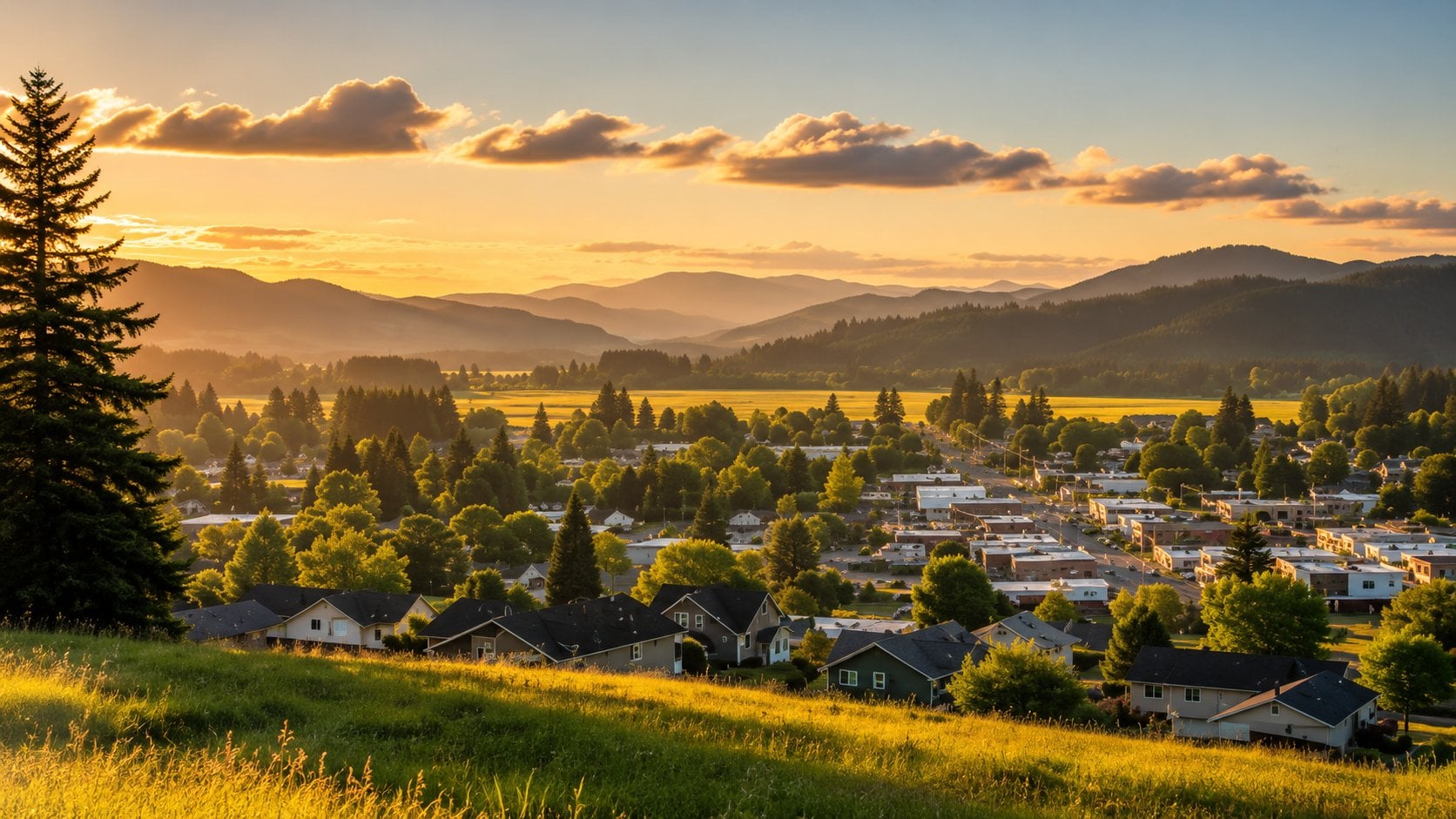
Scappoose is an incorporated city in Columbia County, Oregon, positioned approximately 18 to 22 miles northwest of downtown Portland along US Highway 30 — the historic Columbia River Highway that runs from Portland through the Columbia River Gorge to the west and through the Columbia River county communities of Sauvie Island, Scappoose, St. Helens, and Rainier to the northwest toward the Washington border. The city sits on the flat agricultural plain between the Columbia River to the north and the Tualatin Mountains' western slopes to the south, with the Columbia River's broad expanse visible from the city's northern edges and the forested ridgeline of the coastal mountain foothills rising visibly to the south and west.
The city's character is shaped by its Columbia River orientation, its agricultural surroundings — nursery operations, berry farms, grass seed fields, and the pastoral Scappoose Creek drainage that threads through the surrounding farmland — and the Scappoose Industrial Airpark that sits adjacent to the city's residential and commercial fabric, providing the aviation community character that gives Scappoose one of its most distinctive and most specific lifestyle assets. The airpark is not incidental to the community's identity — it is central to it, producing a resident pilot and aviation-enthusiast community that gives Scappoose a specific and self-reinforcing character that most small Oregon cities do not share and that buyers for whom aviation access is a primary lifestyle criterion find essentially nowhere else in the Portland metro at this proximity to the city's core.
Scappoose is served by the Scappoose School District — a smaller independent district serving the Scappoose community and the surrounding rural Columbia County area with a K-12 program that reflects the close-knit character of the community it serves. The district's small enrollment produces the teacher-student relationship quality and the community-embedded school culture that families who have experienced small-district education describe consistently as one of the more significant and least anticipated advantages of raising children in a community like Scappoose. The district is not the Beaverton School District — it does not have the programmatic breadth, the dual-language immersion options, or the specialized curriculum depth of a large Washington County district — and buyers for whom those specific features are genuinely meaningful criteria should engage with that comparison honestly. What the Scappoose School District is, genuinely and durably, is a community-centered educational environment where the school reflects the city and the city reflects the school in ways that large suburban districts rarely achieve regardless of their per-pupil funding or their facility quality.
Portland International Airport is approximately 16 to 22 miles from Scappoose, typically a 25 to 38 minute drive depending on traffic, time of day, and your specific route along Highway 30 east toward the Portland metro and the airport approach via I-5 north or the Marine Drive and Columbia Boulevard corridor. For a community of Scappoose's character and distance from the metro, the PDX proximity is genuinely favorable — the Highway 30 corridor approach to the airport is one of the more direct and least freeway-dependent airport drives available from any Columbia County community, and outside of peak commute windows it runs cleanly and predictably. For buyers who travel frequently for work or who maintain family connections in other states, Scappoose's proximity to PDX is a practical advantage that distinguishes it from more remote Columbia County communities to the northwest while retaining the small-city character that defines its appeal over the closer-in Portland metro neighborhoods that comparable airport proximity would otherwise require. The Scappoose Industrial Airpark provides the additional aviation asset that the buyer community it serves values separately from PDX proximity — a general aviation airport with instrument approaches, a runway capable of handling a broad range of aircraft types, hangars available for purchase and lease, and the fly-in community culture that a functioning general aviation airport adjacent to a small Oregon city develops when its residents are genuinely engaged with aviation rather than merely adjacent to it.
What Your Money Gets You: Homes at Every Price Point
Scappoose's housing market reflects the city's character — a mix of established residential homes in the city's core neighborhoods from multiple development eras, newer construction in planned residential additions that have come online as Columbia County's growth pressure has pushed buyers northwest along the Highway 30 corridor, and the agricultural and rural residential properties at the city's edges that reflect Scappoose's continued adjacency to working Columbia County farmland and the Columbia River's natural corridor. New construction has arrived in Scappoose with more regularity over the last decade as the community's combination of Portland proximity, river access, and price point has attracted buyers from the closer-in markets who found the combination unavailable at prices that allowed the rest of their lives to function financially. The result is a housing market with genuine variety — from mid-century residential stock in the city's established neighborhoods to contemporary production builds in newer planned additions to the occasional river-access or agricultural property at the community's edges that reflects what the Columbia County landscape actually offers beyond the city limits.
Here is a realistic look at what different price points deliver in this market:
$325,000 – $425,000 Entry-level Scappoose delivers the city's established residential stock in its most original or modestly updated form — primarily 1960s through 1980s single-family construction in the 1,000 to 1,600 square foot range, two to three bedrooms, one to two baths, and the straightforward residential configurations that small Oregon city development in this era produced without architectural ambition but with the structural honesty and lot generosity that reflected land costs and community scale before the Portland metro's growth pressure extended this far northwest. Lots at this price point are consistently more generous than anything comparable pricing produces in Washington County or the closer-in Clackamas County suburban corridor — deeper, more usable, and in some cases large enough to support the accessory structures, garden operations, and outdoor lifestyle uses that buyers from the metro consistently find difficult to access at entry-level price points anywhere within twenty miles of the Portland core. Condition at this range is the defining variable — some homes have been maintained by long-term Scappoose community members who treated the property as a permanent address rather than a transitional investment. Others carry the deferred maintenance that older residential properties develop through extended ownership cycles without active systems investment. The value is real and unambiguous: Columbia County setting, Columbia River orientation, Scappoose community character, and a price point that the Portland metro's entry-level market stopped producing within a generation of normal growth. For first-time buyers, buyers who can evaluate a home for its structure rather than its surface, and investors evaluating the Scappoose corridor's long-term trajectory — this range produces genuine opportunity.
$425,000 – $560,000 This is the most active and most revealing price band in the Scappoose market — the range where the city's full residential value proposition becomes most clearly legible and where buyers who have run the Portland metro northwest corridor comparison honestly tend to arrive with the most conviction. Homes in this range tend to be updated or well-maintained single-family properties in the 1,500 to 2,200 square foot range — three to four bedrooms, two to two and a half baths, kitchens that have been addressed with genuine intention in the last decade, and yards that take full advantage of Scappoose's lot culture in ways that feel qualitatively different from what comparable money produces anywhere within fifteen miles of the Portland metro core in any direction. Some homes in this range back to agricultural land, the Scappoose Creek drainage, or the open space at the city's residential edges — lot orientations that deliver privacy, natural outlook, and the daily visual relationship with working Columbia County landscape that suburban developments in closer-in markets cannot replicate regardless of their landscaping investment. Newer construction in this range — of which Scappoose has a meaningful and growing supply in its more recently developed residential additions — delivers the energy efficiency, the contemporary floor plans, and the finish packages that buyers moving from older suburban stock find immediately livable at price points that comparable new construction in Beaverton, Hillsboro, or the closer-in Washington County markets has largely left behind. For move-up buyers, families whose school district priorities align with the Scappoose District's community-centered character, remote workers seeking the Columbia River lifestyle at a price that the Portland metro's growth cycle cannot replicate this close to the city's employment and cultural infrastructure — this range delivers the clearest and most complete version of what Scappoose offers.
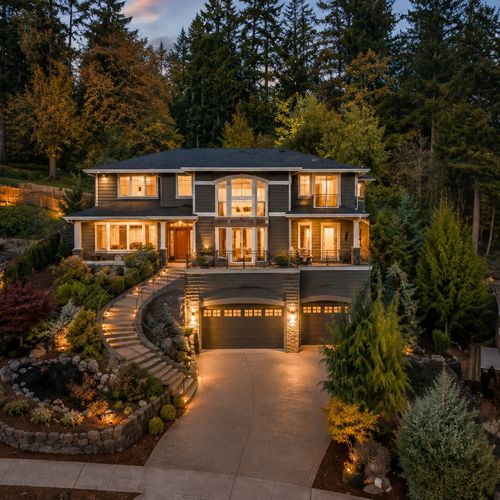
$560,000 – $725,000 Homes at this level represent the strongest established and newer residential product Scappoose currently offers in its conventional single-family inventory — updated or newer construction single-family properties on the most desirable lots in the city's established and newer residential areas, in the 2,000 to 2,800 square foot range. Four bedrooms, two and a half to three baths, main-floor layouts that reflect how Columbia County families actually use their homes, finish packages that deliver genuine quality, and outdoor spaces that reflect the Pacific Northwest's serious relationship with outdoor living in configurations that Scappoose's lot culture makes genuinely accessible rather than aspirationally marketed. Some properties in this range access the elevated terrain at the city's southern edges where the Tualatin Mountain foothills begin their rise above the Scappoose plain — lot positions that deliver territorial views across the agricultural lowlands toward the Columbia River that the city's flat residential core does not provide and that represent some of Scappoose's most compelling residential positioning.
$725,000 – $950,000 At this level, Scappoose's market transitions toward the properties that most clearly reflect what Columbia County's landscape offers beyond the city's conventional residential additions — acreage parcels adjacent to the city with agricultural or Columbia River bottom land character, custom or extensively renovated homes on the most desirable sites within the community, and the aviation-oriented residential properties with hangar access or airpark adjacency that represent Scappoose's most specific and most irreplaceable residential asset for the buyer demographic that values direct aircraft access from a residential address. Homes in this range on properties with hangar access to the Scappoose Industrial Airpark command a premium that reflects the scarcity and the specific lifestyle asset they deliver — the ability to walk from the residence to the aircraft without a drive to a remote general aviation airport is a residential proposition that exists at very few locations within the Portland metro at any price point, and Scappoose's airpark proximity makes it available here in a way that no other Columbia County or Washington County community in the region replicates.
$950,000 and above The upper end of the Scappoose market is defined by the most exceptional and most site-specific properties in the community and its immediate surroundings — custom-built homes on significant acreage with Columbia River access, aviation-oriented properties with private hangar infrastructure, or rural residential properties combining residential quality with agricultural or natural landscape assets that the Columbia County foothills corridor produces at its most compelling. These properties surface infrequently, attract buyers who have been specific about their criteria long enough to recognize the right property without deliberation, and move to buyers who were already prepared. If you are in this range and serious about what the Scappoose and Columbia County corridor offers at its most exceptional, being connected and ready is the only correct posture.
Median home price in Scappoose: The median sits in the $430,000 to $510,000 range — a figure that positions Scappoose as one of the most financially accessible incorporated Oregon cities within a practical commute distance of Portland while significantly understating the lifestyle value it delivers on a per-acre, per-community-character, and per-Columbia-River-access basis relative to the closer-in metro markets that its absolute price point is most frequently compared against. The gap between what the Scappoose median buys in terms of total property and lifestyle — lot size, community character, river access, airpark proximity, Columbia County setting — and what comparable money delivers in Washington County, Clackamas County, or the Portland city market is among the most visible value differentials in the entire northwest Portland metro corridor. That gap reflects a genuine geographic and distance trade rather than an oversight in how the market has priced the community, and it has been available in Scappoose's market long enough that buyers who find it early tend to feel retrospectively fortunate.
What About Renting in This Area?
The Scappoose rental market is active in proportion to the community's growing appeal to the remote work and lifestyle-oriented buyer demographic — more inventory and more variety than strictly rural Columbia County communities to the northwest, competitive at the single-family quality end in the way that established small Oregon cities with generous lots and Columbia River orientation consistently are when the purchase market has moved above the reach of households who might otherwise own.
Single-family rentals in Scappoose typically run between $1,600 and $2,600 per month depending on size, condition, lot character, and the presence of any updated systems or finishes that command a premium in the rental market. A three-bedroom, two-bath home in solid condition with a usable yard rents around $1,600 to $2,100. A larger, updated four-bedroom home with quality finishes, meaningful outdoor space, and any elevated or river-adjacent positioning pushes into the $2,100 to $2,600 range. Smaller and older inventory without recent updates tends to sit at the lower end of that range and can represent genuine value for renters who prioritize Columbia River community access and lot space over contemporary interior finishes.
Apartment and smaller unit rentals in Scappoose's limited multi-family inventory start around $1,000 to $1,600 for one to two bedroom configurations — a figure that reflects the genuine affordability that a Columbia County small city at Scappoose's distance from the metro core produces relative to any market closer in, and that represents real value for renters whose budget requires the lowest entry point that an incorporated Oregon city with its own school district and community infrastructure can provide.
The honest guidance for renters approaching this market: Scappoose's rental inventory is smaller than its Washington County and closer-in Oregon county neighbors, which means quality single-family rentals in genuinely good condition move within a relatively brief window of becoming available. Being organized, having documentation ready, and being willing to commit when the right property surfaces rather than waiting to see if something better emerges is the right posture — not because the market is frantic, but because the supply of genuinely good rentals in a small city with growing demand is narrow enough that the prepared applicant has a consistent advantage.
Things to Do In and Around Scappoose
Scappoose's location on the Columbia River south bank in the northwestern Portland metro places residents within reach of one of the Pacific Northwest's most varied and most specifically Columbia River-oriented outdoor, aviation, agricultural, and community recreational landscapes — a range that the city's modest population and its distance from the metro's most trafficked recreational corridors consistently underrepresents to buyers researching from a distance.
The Columbia River is Scappoose's defining natural asset and the geographic feature that gives the community its most specific and most irreplaceable lifestyle character — a broad, powerful, commercially active river with fishing access, recreational boating, wildlife viewing, and the kind of daily visual and experiential relationship with a major Pacific Northwest waterway that most Portland metro residential communities cannot offer at any price. The Columbia River's salmon and steelhead fishing draws serious anglers from across the Pacific Northwest to the Columbia County bank during run seasons, and the river's recreational boating infrastructure — boat ramps, marina facilities, and the access points that Columbia County's riverfront communities maintain — gives Scappoose residents a working relationship with the water that the Willamette River communities to the south can only partially approximate.
Scappoose Industrial Airpark is the community's most distinctive and most specific recreational and lifestyle asset — a functioning general aviation airport adjacent to the city with instrument approaches, a runway capable of handling a broad range of light and sport aircraft, hangar facilities available for purchase and lease, and the fly-in community culture that a well-maintained general aviation airport adjacent to a small Oregon city develops when its resident and transient pilot community is genuinely engaged with aviation as a lifestyle rather than a professional obligation. The Scappoose Airpark hosts fly-in events, supports an active pilot community that treats the airpark as a social and recreational hub rather than simply a transportation facility, and attracts the aviation-oriented buyer who is willing to extend the Portland metro search radius specifically and substantially in exchange for the residential proximity to a general aviation airport that the closer-in metro markets cannot provide. For pilots and aviation enthusiasts whose residential criteria include hangar access and active fly-in community culture, Scappoose is not one option among many — it is the specific option that the broader Portland metro market makes available in this geography at this price point.
Sauvie Island is approximately 10 to 15 minutes southeast of Scappoose and provides one of the Pacific Northwest's most complete rural day-trip experiences from within a reasonable distance of a major American city — farmland and wildlife refuge, beaches along the Columbia River, seasonal u-pick berry and pumpkin operations, bird watching through the wildlife refuge's wetland habitat, and the agricultural landscape of a river island that has preserved its character against the development pressure surrounding it with a deliberateness that reflects genuine community commitment. For Scappoose residents already oriented toward the Columbia River and the agricultural surroundings that define their community's character, Sauvie Island is a natural and proximate extension of the landscape they chose rather than a separate destination requiring a drive of any consequence.
Columbia County Riding Club and the broader equestrian and agricultural recreational infrastructure of the Scappoose Creek and Columbia County farmland corridor reflects the community's working agricultural character in its recreational programming — an equestrian and outdoor culture that urban and suburban buyers occasionally encounter for the first time in communities like Scappoose and that reflects the genuine agricultural landscape surrounding the city rather than a lifestyle amenity appended to a suburban development.
The Scappoose Bay — the protected bay and wetland area at the mouth of the Scappoose Creek where it meets the Columbia River — provides kayaking, paddling, bird watching, and the kind of still-water Columbia River access that the main river channel's commercial traffic and current do not deliver. The bay's wetland character supports significant bird populations year-round and provides a paddling environment that rewards the resident who knows it at a level that passing visitors rarely access. For Scappoose residents oriented toward paddle sports and natural observation, the Scappoose Bay is the immediate local resource that the broader Columbia River experience provides in its quietest and most intimate form.
Stub Stewart State Park is approximately 15 to 20 minutes west — one of Oregon's newer state parks, opened in 2007 with the full state park infrastructure of camping, mountain biking trails, hiking, and equestrian facilities built into the Coast Range foothills terrain of Washington County's western corridor. The Stub Stewart trail system provides one of the more complete mountain biking experiences accessible from the Portland metro's northwest corridor, and the park's camping infrastructure serves the Scappoose community as a local overnight destination rather than a regional park requiring advance planning.
Banks-Vernonia State Trail — the 21-mile converted rail trail running from Banks through the Coast Range foothills to Vernonia — is approximately 20 to 25 minutes south of Scappoose via the rural highway corridor through Banks. The trail's tunnel section, its trestle bridges, and the Coast Range forest corridor it traverses make it one of Oregon's most rewarding and most specifically Pacific Northwest trail experiences, and Scappoose residents access it with a short drive that residents of closer-in Portland neighborhoods make as a half-day commitment.
Hagg Lake — Scoggins Valley Park — is approximately 25 to 30 minutes southeast and delivers Washington County's primary open-water recreation experience — boating, fishing, swimming, and the 15-mile perimeter trail — at a proximity that makes it a practical regular destination for Scappoose residents whose outdoor practice includes open-water recreation and the specific cycling or running environment that the reservoir perimeter road provides.
St. Helens is approximately 15 to 20 minutes northwest — the Columbia County seat and the largest commercial center in the county's northwest corridor, with a genuine historic downtown on the Columbia River, county services, grocery and retail infrastructure, medical facilities, and the community commercial footprint that serves as the primary service anchor for the Scappoose corridor. St. Helens' Columbia River waterfront and its historic downtown district have developed a genuine community character that makes it a dining and cultural destination for Scappoose residents as well as a commercial service hub.
The Coast Range and Tillamook State Forest are accessible from Scappoose via the rural highway corridors west and southwest — the working forest landscape of the Coast Range providing dispersed hiking, hunting, mountain biking, and the unstructured outdoor access that managed Oregon state forest land offers with a generosity that most states' public land systems do not match. The approach to Tillamook State Forest from the Columbia County corridor is one of the less-trafficked and more naturally scenic approaches available in the northwest Oregon market.
The Oregon Coast is approximately 75 to 90 minutes west via Highway 26 through the Sunset Highway and Coast Range or via the more rural Highway 47 south and Highway 6 west through the Tillamook County approach — the north Oregon coast from Seaside to Manzanita accessible within day-trip range at drive times that Scappoose residents with flexible schedules execute with the casualness that the Pacific Northwest's coast-oriented outdoor culture encourages.
The Columbia River Gorge is accessible via Marine Drive and the east-bound Highway 30 approach — 35 to 45 minutes from Scappoose to the Gorge's western entry, providing waterfall hike access, Hood River, Cape Horn, and the full Gorge outdoor corridor from the Columbia County bank in an approach that most Portland metro residents do not use and that gives Scappoose residents a less-trafficked access to one of North America's great outdoor corridors.
Portland is 25 to 35 minutes southeast via Highway 30 — the full urban experience of a major Pacific Northwest city accessible when the occasion calls for it. The Highway 30 approach to Portland runs through the St. Johns Bridge and the North Portland waterfront corridor, providing one of the more scenically distinctive urban approaches available from any Portland-adjacent residential community and putting Scappoose residents in the St. Johns and North Portland neighborhoods rather than the downtown core on their first exit from the metro's traffic system.
Where to Eat
Scappoose's dining scene reflects the city's character and its size — a small incorporated Oregon city with a commercial corridor that serves the community's everyday needs with the genuine local character that small Columbia County cities develop when their restaurant culture is built on community use rather than visitor traffic or demographic aspiration.
The Scappoose commercial corridor along Highway 30 and the city's primary commercial streets carries the casual dining rotation that a small Oregon city's residential population depends on for weeknight meals — pizza, Mexican, casual American, and the quick-service options that make everyday dining practical without requiring a drive to St. Helens or Portland for routine meals. The specific tenants evolve with the market, but the commercial character reflects the community it serves honestly rather than the demographic it might aspire to attract.
Cornelius Pass Roadhouse — accessible via the rural highway corridor south of Scappoose toward the Hillsboro and Cornelius Pass approach — is one of the Portland metro's most beloved and most specifically Pacific Northwest roadhouse dining institutions, operated by McMenamins in a historic farmstead setting that includes brewery operations, multiple bar and dining areas, and the kind of atmospheric dining experience that the McMenamins brand delivers at its most historically grounded. For Scappoose residents oriented toward the south and west, the Cornelius Pass Roadhouse is a regular dining destination that reflects the rural highway corridor's commercial character more authentically than most restaurant options in either direction.
St. Helens' downtown dining corridor — 15 to 20 minutes northwest on Highway 30 — provides the most concentrated and most characterful dining experience accessible from Scappoose without reaching Portland. The St. Helens waterfront and its historic downtown district have developed a genuine small-city restaurant scene that reflects Columbia County's character — casual, locally rooted, and built on the community use patterns of a Columbia River city that has invested in its own commercial district rather than defaulting to the suburban retail corridor that most Oregon small cities develop along their highway approaches. For Scappoose residents who want a proper dining evening with genuine local character within a practical drive, St. Helens' downtown is the primary destination that delivers at that level within the Columbia County corridor.
The St. Johns neighborhood dining corridor in North Portland — accessible via Highway 30 southeast approximately 20 to 25 minutes — puts the walking Man Brewing, Occidental Brewing, Puffin Cafe, and the broader St. Johns restaurant and brewery scene within reach as a regular rather than occasional Portland dining destination. The Highway 30 approach deposits Scappoose residents directly into St. Johns' commercial district without requiring navigation through the Portland metro's broader traffic patterns — a routing advantage that makes the St. Johns dining corridor more practically accessible from Scappoose than from most Portland neighborhoods south of the St. Johns Bridge.
Hillsboro and Beaverton's restaurant corridor — 30 to 40 minutes southeast via Highway 30 and the Cornelius Pass Road approach — brings the Washington County Asian dining corridor within reach for Scappoose residents whose culinary orientation includes the exceptional Vietnamese, Korean, Chinese, and Japanese dining that Washington County's demographic diversity has produced along its commercial arteries. The approach is longer from Scappoose than from Washington County's residential communities, but the destination justifies the occasional drive for residents who treat great Asian food as a regular dining priority.
Portland's full restaurant landscape — accessible in 25 to 35 minutes southeast via Highway 30 — provides the full Portland dining culture for occasions that call for James Beard-recognized restaurants, the Pearl District's dining corridor, and the comprehensive culinary infrastructure of a nationally recognized food city. The St. Johns Bridge approach delivers Scappoose residents to North Portland first, making the Pearl District and inner Portland dining destinations a somewhat longer final approach than the commute time suggests — but entirely workable for the occasions that genuinely call for what the city's full dining culture produces.
The honest framing: Scappoose is a community where the immediate dining footprint is practical rather than exceptional, where St. Helens fills the gap between the city's own commercial corridor and a proper dining destination, and where Portland's restaurant culture is accessible for the occasions that require it without being so close that it defines the weekly dining rhythm of a community that has organized itself around a different pace and a different relationship with the Columbia River landscape it inhabits. Most Scappoose residents develop a dining calendar that combines the city's local options for routine meals, St. Helens for proper local evenings, and Portland for the occasions that genuinely call for the city's full culinary depth — and most describe finding that calendar more than adequate within the first several months of living it.
Who Moves to Scappoose?
After nearly three decades working markets across the Pacific Northwest on both sides of the Columbia River and across the full Oregon metro and rural corridor, the Scappoose buyer is among the most self-aware and most specifically motivated residential profiles I encounter anywhere in the region. They have not arrived at Scappoose by accident, by budget exhaustion in closer-in markets, or by a process of elimination that left it as the last affordable option standing. They have arrived by a specific process of identifying what they actually want — the Columbia River, the aviation access, the small-city community character, the price point that leaves room for the life alongside the mortgage — and following that process honestly to a geographic conclusion that the broader market's attention patterns have not yet fully caught up with.
They are pilots and aviation enthusiasts — the most specific and most self-selecting buyer demographic that Scappoose attracts — for whom the Scappoose Industrial Airpark's proximity to the residential community is the primary criterion that organizes the entire location search. They have been looking at Oregon general aviation airports and the residential communities adjacent to them with the specific criteria of hangar access, fly-in community culture, and proximity to the Portland metro's employment and cultural infrastructure — and they have found that Scappoose satisfies that criteria set more completely than any other community in the Portland metro's accessible radius. For the pilot buyer who has been maintaining an aircraft in a remote hangar forty minutes from home and whose quality of life would improve meaningfully from residential proximity to a functioning general aviation airport with an active fly-in community, Scappoose is not a compromise — it is the answer.
They are remote workers and self-employed professionals who recognized during the broader shift to distributed work that their address was no longer constrained by their employer's geography and who asked themselves honestly where they would live if the commute requirement were removed. The Columbia River's answer — water, wildlife, agricultural surroundings, small-city community, and the kind of daily visual relationship with a significant natural system that most metro residential communities cannot provide — is the answer that Scappoose produces for a growing category of buyer whose professional life is fully compatible with the community's distance from the metro core and whose personal life is specifically improved by it.
They are Columbia River-oriented outdoor enthusiasts whose primary recreational activities — fishing, boating, paddling, wildlife observation — are organized around river access in a way that Portland's Willamette River neighborhoods approximate but do not fully replicate at the scale and the working river character that the Columbia River's south bank in Columbia County delivers. They want to launch a boat from a ramp within minutes of their residence, fish the Columbia during salmon season from a community where salmon fishing is not an unusual hobby but a regular community practice, and live in a place whose outdoor identity is organized around the river rather than adjacent to it.
They are families who value small-district education — the households who have evaluated the Scappoose School District's community-embedded culture honestly and concluded that the small school environment, the teacher-student relationship quality, and the close-knit district character is what they want for their children rather than a compromise they are making for the price point. These buyers are not filtering out larger school district options because they are unaware of them — they have run the comparison, they have visited the schools, and they have concluded that the Scappoose district's small-city community character is the educational environment that aligns with the values they are building their family's life around.
They are buyers from California, Seattle, and the Bay Area who came to Oregon with real equity and the financial clarity to recognize that Scappoose's combination of Columbia River access, aviation infrastructure, small-city community character, and price point represents a Pacific Northwest lifestyle value that the closer-in metro markets stopped offering years ago. They are purchasing the Columbia River and the small Oregon city identity that Oregon's outdoor and agricultural character promises — not the urban approximation of it that Portland delivers with considerable sophistication but that ultimately remains urban in the ways that matter most to buyers whose primary orientation is the river and the land rather than the city and its services.
They are, consistently, buyers who stay. The Columbia River does not relocate. The airpark does not close. The small-city community character that Scappoose has maintained across multiple decades of Oregon's growth cycle is not a fragile amenity dependent on market conditions — it is the fundamental character of a place defined by its geography, its river, and its working landscape in ways that suburban communities simply are not. Scappoose's retention reflects that structural stability, and the community's long-term residents are consistently the ones most eager to tell the next buyer why they chose it and why they are still there.
What You Should Know Before You Commit
Scappoose is an honest trade, and the buyers who are happiest here are consistently the ones who understood the terms before they arrived rather than after the first winter of living them.
The Highway 30 commute is the primary variable for any Scappoose buyer maintaining any professional relationship with the Portland metro that requires regular physical presence. Highway 30 is a two-lane highway through much of its approach to Portland from Scappoose — scenic, predictable outside of peak windows, and genuinely slower than freeway access in both the speed it maintains and the traffic dynamics it produces during peak commute periods. The approach to Portland through the St. Johns Bridge corridor and into the North Portland street network adds navigation time beyond what the mileage alone suggests, and the early morning and late afternoon peak window compression on the two-lane sections of Highway 30 is a real and recurring factor that buyers who drive the route at the times they would actually use it — not estimate from a navigation app on a Sunday afternoon — understand specifically before the purchase rather than discovering generally after it.
Flooding considerations in Scappoose and the surrounding Columbia River bottom land reflect the Columbia River's periodic high-water dynamics — the flat agricultural plain between the city and the river is subject to flooding during high-water years, and specific properties within and adjacent to Scappoose carry FEMA flood zone designations that affect insurance requirements, mortgage qualification for certain loan programs, and the practical reality of low-water-season and high-water-season access and land use on affected parcels. Confirming the specific flood zone designation of any Scappoose property being seriously considered — and understanding what that designation means for insurance costs, financing options, and the specific land use implications for the parcel in question — is essential pre-offer due diligence rather than a post-closing orientation.
Internet infrastructure in Scappoose and the surrounding Columbia County corridor has improved meaningfully over the last several years but varies by provider, technology, and specific address in ways that matter enormously for remote workers whose professional lives depend on reliable high-speed connectivity. Confirming the specific internet options for any address being seriously considered before the offer — through direct provider inquiry rather than general county coverage maps — is the pre-purchase step that remote work-dependent buyers in particular cannot afford to skip.
Agricultural and industrial surroundings — the working farmland, the Columbia River commercial traffic, and the Scappoose Industrial Airpark's operational activity — produce the ambient environmental character of a working Columbia County community rather than the quiet residential environment that planned suburban developments curate deliberately. Aircraft operations at the airpark, agricultural equipment on surrounding roads during planting and harvest seasons, and the Columbia River's commercial barge and tugboat traffic are features of the community's character for the buyer who chose Scappoose for what it is — and potentially discoveries for the buyer who chose it for the price point without fully engaging with the working landscape that produces it.
Rural utilities for properties at Scappoose's residential edges — well and septic rather than city water and sewer service — carry the same due diligence requirements addressed across the rural Oregon community guides in this content library. Well condition, water quality, septic capacity and condition, and the relationship between specific land uses and the utility infrastructure supporting them are the inspection components that rural and semi-rural properties require thorough evaluation of before the offer rather than during the post-acceptance inspection period.
Thinking About a Home in Scappoose?
Scappoose inventory at the quality end of the market — aviation-adjacent properties with airpark access, updated single-family homes on generously sized lots, and the best of the newer construction in the city's planned residential additions — moves with more momentum than the city's modest size and Columbia County address might suggest to buyers new to the northwest Portland metro corridor. The combination of genuine value relative to the broader metro, the Columbia River access, the airpark lifestyle asset, and the small-city community character has accelerated Scappoose's discovery without yet fully closing the gap between its value and its price — and that gap is where the most motivated and most prepared buyers in the Columbia County corridor are currently finding the purchase decision that their metro-adjacent counterparts can no longer access. I know Columbia County, I know the Highway 30 corridor market at the level Scappoose deserves, and I will give you a straight read on what you are looking at — the property, the flood zone confirmation, the internet infrastructure, the commute reality, and the complete total cost of ownership picture — before you write anything.
See more about Scappoose
Want to learn more about Scappoose neighborhoods and homes?
Homes for sale in Scappoose: https://jamiemeushawrealestate.com/properties/city-Scappoose,%20OR/
Watch more local real estate insights on my YouTube channel:
https://www.youtube.com/@JamieMeushaw
Sign up for my weekly newsletter for real estate tips and market updates:
https://jamiemeushawrealestate.com/newsletter
Check out this article next