


Where Exactly Is Columbia City?
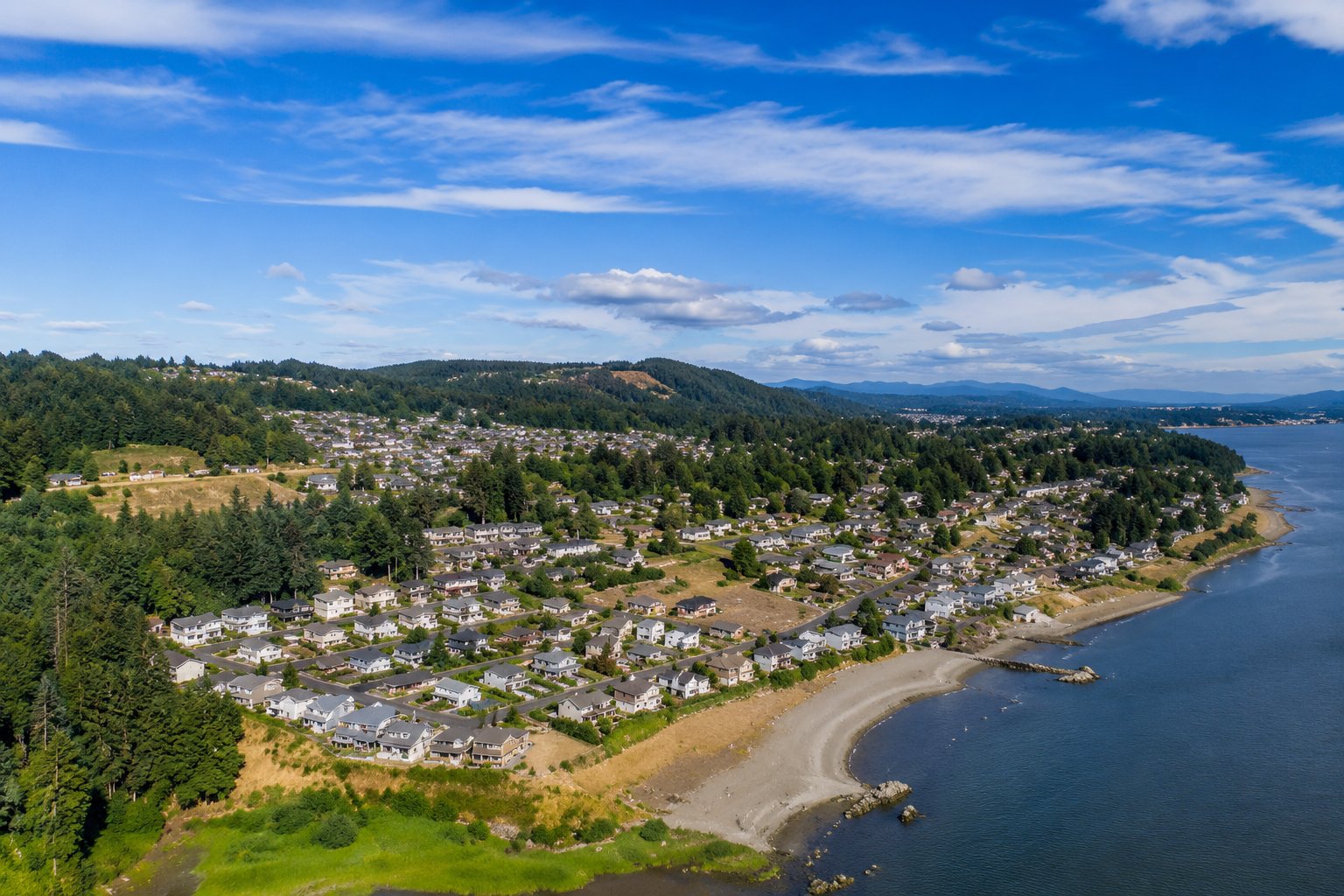
Columbia City is an incorporated city in Columbia County, Oregon, positioned approximately 28 to 32 miles northwest of downtown Portland along US Highway 30 — the historic Columbia River Highway that follows the river's south bank from Portland through the Columbia County communities of Sauvie Island, Scappoose, Columbia City, St. Helens, Rainier, and Clatskanie toward the Oregon-Washington border and the Pacific Coast beyond. The city sits directly on the Columbia River's south bank, with its residential and historic commercial fabric occupying the narrow shelf of flat to gently rolling terrain between the river to the north and the Coast Range foothills rising to the south and west.
Columbia City's geographic position on the river is its defining characteristic — not the proximity to the river that most Pacific Northwest communities market as a lifestyle amenity, but the actual riverfront identity of a community whose streets, whose parks, whose commercial history, and whose residential character are organized around the Columbia River's presence in a way that reflects decades of genuine community relationship with the water rather than developer positioning. The city's historic waterfront area, its river access points, and the Columbia River's broad expanse visible from residential streets throughout the community give Columbia City a daily water relationship that most Oregon river communities aspire to and few fully deliver.
The city is served by the St. Helens School District — the Columbia County district centered in the adjacent county seat community of St. Helens immediately to the north. St. Helens School District serves the broader north Columbia County community with a K-12 program that reflects the working-class and agricultural character of the region it serves, with the community-embedded school culture, the teacher-student relationship quality, and the small-district intimacy that Columbia County's residential character produces and sustains. The district is not a large suburban district with the programmatic breadth of the Beaverton or Hillsboro systems — and buyers for whom specialized curriculum depth, dual-language programming, or large district extracurricular infrastructure are meaningful criteria should engage with that comparison honestly before the school district assumption informs the purchase decision. What the St. Helens School District is, genuinely and consistently, is a district whose schools reflect the community they serve in the direct and personal way that small Columbia County communities have always organized their educational institutions — and that reflection is precisely what the buyers who belong in Columbia City have typically concluded they want for their children rather than an alternative they are accepting in exchange for the price point.
Portland International Airport is approximately 26 to 34 miles from Columbia City, typically a 38 to 55 minute drive depending on traffic, time of day, and your specific route along Highway 30 east toward the Portland metro and the airport approach via the Marine Drive and Columbia Boulevard corridor or via the St. Johns Bridge and I-5 north connector. The Highway 30 corridor approach to PDX from Columbia City is one of the more direct and least freeway-dependent airport drives available from any Columbia County community — the river highway runs east with relatively few significant traffic disruptions outside of peak commute windows, and the Marine Drive approach to the airport provides a final corridor that avoids the most congested I-5 and I-205 approach dynamics that close-in metro residents navigate daily. For occasional travelers and households with a manageable flight cadence, the airport run is entirely workable and consistently predictable. For buyers who travel multiple times weekly for work, the distance is a real factor that deserves the same honest pre-purchase evaluation that serves buyers in every rural and semi-rural community in this content library — the drive is genuinely more than it appears on a map when the peak-hour dynamics of a two-lane river highway approach to a major metropolitan airport are factored into the timing rather than estimated from a Sunday afternoon navigation approximation.
What Your Money Gets You: Homes at Every Price Point
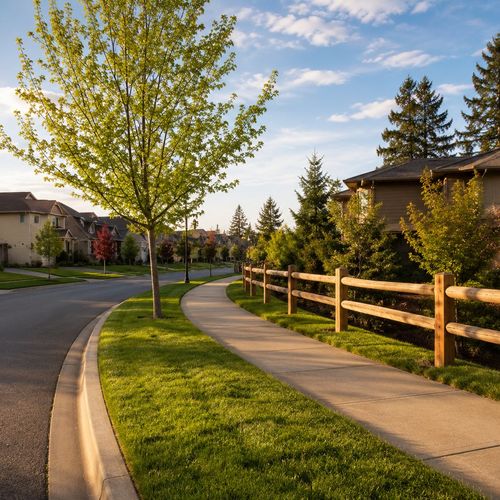
Columbia City's housing market reflects the community's character with the direct honesty that very small Oregon river cities tend to produce when their housing stock has been shaped more by the land and the water than by developer phasing schedules and absorption rate projections. The residential inventory is a genuine mix of the historic and the modest — older Oregon river community housing from the early to mid-20th century on the streets closest to the waterfront, mid-century and later residential construction in the city's established neighborhoods, newer construction on the remaining buildable parcels within the city's compact geographic footprint, and the rural residential and acreage properties at the city's edges where the Columbia County agricultural and forested landscape begins. New construction within Columbia City proper is limited by the city's small geographic footprint and the terrain constraints of the riverside setting — the community is not a growth machine producing phased subdivisions on an absorption schedule, and the residential inventory reflects that constrained and organic development pattern in ways that produce genuine variety rather than the homogeneous product that production builder communities deliver.
Here is a realistic look at what different price points deliver in this market:
$275,000 – $375,000 Entry-level Columbia City delivers the community's older residential stock in its most original or modestly updated form — primarily early to mid-20th century and 1960s through 1970s construction in the 900 to 1,500 square foot range, two to three bedrooms, one to two baths, and the straightforward residential configurations that small Oregon river city development produced across its various construction eras without architectural ambition but with the structural character and lot generosity that building in a community this size and this setting historically allowed. Some properties in this range carry the genuine historic character that Columbia City's riverfront origins produced in the early community's residential fabric — older Oregon craftsman and bungalow styles on lots that reflect the city's original platting rather than subdivision era efficiency. Condition at this range is the honest variable — some homes have been maintained by long-term Columbia City residents whose relationship with the property reflects the community's ownership culture and whose stewardship reflects genuine care for a permanent address. Others carry the deferred work that older residential properties in small river communities accumulate through extended ownership without active maintenance investment. The value at this price point is entirely genuine: Columbia River community identity, genuine historic Oregon small-city character, direct river access within walking distance, and a price point that the Portland metro stopped producing for properties with comparable natural and community assets at any distance meaningful to the buyer making the comparison. For first-time buyers, buyers who can evaluate a home for its structure and its setting rather than its surface presentation, and buyers whose primary criterion is the most direct financial access to the Columbia River community lifestyle at the lowest possible ownership cost — this range produces real and specific opportunity.
$375,000 – $495,000 This is the most active and most varied price band in Columbia City's market — the range where the community's full residential value proposition becomes most clearly legible and where buyers who have run the Columbia County northwest corridor comparison honestly tend to arrive with the most conviction. Homes in this range encompass the best of the older established residential stock in updated or well-maintained form alongside the newer construction that Columbia City's modest residential growth has produced within its constrained geographic footprint. Three to four bedrooms, two baths, kitchens that reflect genuine renovation investment rather than cosmetic refreshment for a sale, and the outdoor spaces — river-view decks, established yards with the Columbia River visible or accessible within a short walk, and in some cases direct river or slough access infrastructure — that reflect how Columbia River community residential living actually works when it is engaged with fully rather than treated as background to a conventional suburban lifestyle. Some properties in this range deliver the specific and irreplaceable asset that Columbia City's river orientation makes possible — residential lots or homes with direct Columbia River views or genuine waterfront orientation that the city's compact riverside position makes available at price points that no other Pacific Northwest river community at comparable proximity to a major American metro can replicate. For move-up buyers, remote workers who have identified the Columbia River community lifestyle as the organizing principle of their residential search, and relocators from higher-cost markets who want genuine river community character at a price that the metro's river-adjacent neighborhoods cannot approach for the specific quality of Columbia River experience this community delivers — this is the range where Columbia City starts to feel not just appealing but specifically and completely right.
$495,000 – $650,000 Homes at this level represent the strongest residential product Columbia City currently offers in its conventional and riverfront-adjacent inventory — the most extensively updated or best-positioned properties in the community, where renovation quality, lot character, river proximity, and overall livability come together at a standard that positions them at the top of the small Columbia County river city residential hierarchy. Updated three to four bedroom homes with genuine finish quality, meaningful outdoor spaces oriented toward the Columbia River or the surrounding natural landscape, and the specific lot positioning within Columbia City's compact geographic footprint that delivers the most direct and most complete version of the riverfront community experience the city provides. Some properties in this range carry Columbia River views from primary living spaces and outdoor decks that would command a premium multiple times their Columbia City price in any other Pacific Northwest river community at comparable proximity to a major metropolitan center — a value differential that reflects the community's modest name recognition and its Columbia County address more than any meaningful difference in what the river experience itself delivers. For buyers who have run that comparison honestly and arrived at the conclusion that the Columbia River looks and feels the same from Columbia City as it does from a property priced three times as high in a more recognized waterfront community — this range delivers the most complete and most specific version of the Columbia City proposition.
$650,000 and above The upper end of Columbia City's market is defined by the rarest and most site-specific properties in the community — riverfront or river-view properties with the most direct Columbia River access, the most commanding waterfront positions, and the combination of residential quality and natural setting that Columbia City's riverside geography produces at its most exceptional. These properties surface infrequently in a community this small, attract buyers who have been specific about their criteria long enough to recognize the right property without deliberation, and move to buyers who were already prepared and connected rather than beginning to organize when the listing appeared. If you are in this range and serious about what Columbia City's most exceptional riverfront inventory offers, connection and preparation are the only correct postures in a market this small and this specific.
Median home price in Columbia City: The median sits in the $375,000 to $440,000 range — a figure that positions Columbia City as one of the most financially accessible incorporated Oregon cities with genuine Columbia River waterfront community identity within a practical distance of Portland, while significantly understating the lifestyle and experiential value it delivers on a per-river-access and per-community-character basis relative to any Pacific Northwest riverfront community at comparable metropolitan proximity. The gap between what the Columbia City median delivers in terms of total Columbia River community experience and what comparable waterfront access costs in recognized Pacific Northwest river markets is among the most visible and most durable value differentials in the entire Portland metro corridor. That gap exists because Columbia City's name recognition has not kept pace with what its Columbia River setting, its small-city authenticity, and its Highway 30 proximity to the Portland metro actually represent for the buyer whose criteria center on the river rather than the metro — and buyers who find it before the broader market fully catches up tend to feel, with justification, that they were paying attention while others were looking elsewhere.
What About Renting in This Area?
The Columbia City rental market is among the most limited in the entire Columbia County corridor — reflecting the city's very small residential population, its predominantly owner-occupied community character, and the near-total absence of the multi-family and purpose-built rental development that requires commercial density and population concentration to justify investment. What rental inventory exists in Columbia City is almost entirely privately held single-family homes offered by individual landlords who know their properties, know their neighbors, and tend to fill vacancies through personal community connections before any public-facing listing process begins — if a public-facing listing process begins at all in a community this small.
Single-family rentals in Columbia City when they surface typically run between $1,400 and $2,400 per month depending on the size of the home, the lot character, the river proximity or view orientation, and the condition and recency of any updates. A modest two to three bedroom home in solid condition rents around $1,400 to $1,800. A larger, updated home with meaningful outdoor space, genuine river views, or proximity to the waterfront that Columbia City's position makes available to its most advantageously sited properties pushes into the $1,900 to $2,400 range. Properties with direct Columbia River access or exceptional waterfront positioning command the top of that range and surface with a rarity that reflects how seldom owners of such properties choose to rent them rather than occupy them.
The adjacent St. Helens rental market — 5 to 8 minutes north — provides a significantly larger and more varied rental inventory across apartment and single-family configurations at price points that start meaningfully below Columbia City's limited single-family range, making St. Helens the practical rental staging community for buyers who want to orient themselves to the Columbia County north corridor before committing to a Columbia City purchase. For relocators planning to rent while identifying the right property in Columbia City, establishing in St. Helens while searching actively in Columbia City is the approach that most buyers in this specific corridor find practical and that the short drive between the two communities makes entirely workable as a transitional arrangement.
The honest guidance for anyone planning to rent in Columbia City itself: approach the search as a community orientation project rather than a listing platform exercise. Connect with local real estate professionals who know the Columbia City community, engage with the small-city social fabric that a community of 2,000 residents develops and maintains through genuine neighbor relationships rather than digital platforms, and be prepared to move decisively when something appropriate becomes known — because in a community this small, the rental opportunity that exists and the rental opportunity that becomes publicly listed are often not the same property.
Things to Do In and Around Columbia City
Columbia City's position on the Columbia River south bank in the northwest Portland metro places residents within the most specifically Columbia River-oriented outdoor and community recreational landscape available at any accessible distance from the Portland metropolitan area — a setting that delivers what most Pacific Northwest outdoor buyers have been assembling as their criteria list from a single residential address on one of North America's great rivers.
The Columbia River is Columbia City's entirety — the defining natural presence, the community's organizing geographic feature, the view from the residential streets, the sound that accompanies the morning coffee on the deck, and the working river landscape of commercial barge traffic, recreational fishing boats, migratory waterfowl, and the broad west-facing horizon that the Columbia River's south bank delivers in the late afternoon light in a way that neither photograph nor description adequately captures. The river is not an amenity for Columbia City residents — it is the address. Every other outdoor and recreational asset in the community and its surroundings operates in relationship to that primary fact, and buyers who understand it before they arrive understand Columbia City correctly.
Columbia City's waterfront park and river access infrastructure provides the community's most immediate and most used outdoor gathering point — river access, walking and sitting areas along the bank, and the kind of small-city waterfront park that a community with genuine river identity maintains as the social and recreational center of its daily outdoor life. For Columbia City residents whose morning walk, evening stroll, or weekend recreation involves the river at its most accessible and most social, the waterfront park is the community infrastructure that reflects the city's character most directly.
Fishing the Columbia River is not a hobby for Columbia City residents in the way that recreational fishing is a hobby for urban residents who drive to a stocked lake on a Saturday — it is a regular practice organized around the Columbia River's genuinely significant salmon, steelhead, sturgeon, and walleye fisheries that draw serious anglers from across the Pacific Northwest to the Columbia County bank during run seasons. The river's south bank access from Columbia City and the surrounding community provides the kind of fishing opportunity that the Portland metro's Willamette River corridor cannot replicate in terms of species variety, run size, or the working river character that serious Columbia River fishing requires and produces.
The Columbia City Riverwalk — the pedestrian path along the river's edge within and adjacent to the city — provides the daily walking and community connection infrastructure that a Columbia River city of this size maintains as both a recreational resource and a social gathering place. The riverwalk's development and ongoing improvement reflects the community's investment in its own waterfront character — a signal of civic health that small Oregon river cities produce when their residents are genuinely engaged with the place they live rather than simply occupying it.
St. Helens — 5 to 8 minutes north on Highway 30 — is Columbia City's immediate and most functionally complete neighboring city, providing the commercial, service, and dining infrastructure that Columbia City's small size does not independently generate. St. Helens' Columbia River waterfront and its historic downtown corridor on Highway 30 have developed a genuine community character that makes the short drive north as much a destination experience as a service run — the historic buildings along the St. Helens riverfront, the Columbia River views from the downtown commercial street, and the small-city dining and social culture that St. Helens has sustained across multiple Oregon economic cycles give Columbia City residents a proximate community hub that most small Oregon river cities rely on a larger adjacent community to provide.
The Columbia City Arts organization and the community's cultural programming reflect the small-city cultural investment that a Columbia County waterfront community with Columbia City's character develops when its residential base includes creative professionals, remote workers, and the culturally engaged newcomers that the community's particular combination of river setting and affordability has attracted over the last decade. Art shows, community events, and the cultural calendar of a small Oregon city invested in its own identity rather than dependent on the metro's programming provide Columbia City residents with a community cultural life that its size would not independently predict.
Sauvie Island is approximately 15 to 20 minutes southeast — the Columbia River island agricultural and wildlife refuge community that delivers seasonal farm stand access, wildlife refuge bird watching, Columbia River beaches, and the pastoral agricultural day-trip experience that Columbia County residents access more directly than most of the Portland metro given the Columbia River corridor's continuity from Columbia City south to the island. For Columbia City residents already oriented toward the Columbia River's agricultural and natural character, Sauvie Island is a natural extension of the landscape they inhabit rather than a separate recreational destination.
Scappoose Industrial Airpark is approximately 10 to 15 minutes south of Columbia City — the general aviation airport addressed in the Scappoose guide that gives the Columbia County northwest corridor its most specific aviation lifestyle asset. For Columbia City residents in the pilot and aviation enthusiast demographic, the Scappoose airpark's proximity extends the community's aviation culture access to within a short drive rather than requiring a longer cross-county trip to the nearest general aviation facility.
The Columbia River Estuary and Lewis and Clark National Wildlife Refuge corridor — accessible via the Highway 30 northwest approach toward Cathlamet and the Oregon-Washington border — delivers one of the Pacific Northwest's most significant and most biologically productive estuary environments within a practical drive of Columbia City. The estuary's migratory bird populations, its salmon and steelhead spawning habitat, and the wetland landscape of the lower Columbia River valley provide a natural experience of genuinely extraordinary ecological significance that Columbia City's location in the Columbia County river corridor makes accessible as a regular rather than exceptional recreational commitment.
Stub Stewart State Park is approximately 20 to 25 minutes south — one of Oregon's newer and most complete state parks, with mountain biking trails, hiking, camping, and equestrian facilities built into the Coast Range foothills terrain that serves the Columbia County and northwest Washington County recreational community as the primary developed outdoor recreation facility within its accessible range.
Banks-Vernonia State Trail — the 21-mile converted rail trail — is approximately 25 to 30 minutes south via the Scappoose corridor and Banks approach, providing the Coast Range trail experience addressed in the Scappoose guide for residents who want a developed trail system complementing the more informal Columbia River recreational infrastructure the community's riverfront position directly provides.
The Oregon Coast is approximately 80 to 100 minutes west via Highway 30 west to Astoria or via the southern approach through Clatskanie and Highway 202 toward the Tillamook and Lincoln City corridors — the north Oregon coast accessible within day-trip range at drive times that reflect the Highway 30 corridor's rural two-lane character rather than freeway speed, but that deliver a coastal experience through one of Oregon's most historically significant and most scenically varied coastal approach routes rather than the freeway-to-interchange coastal drive that the Highway 26 corridor produces.
Astoria, Oregon — approximately 55 to 65 minutes northwest along Highway 30 — is one of the Pacific Northwest's most historically significant and most characterful small cities, sitting at the mouth of the Columbia River where it meets the Pacific Ocean with a Victorian residential architecture, a vibrant arts and food scene that has developed dramatically over the last decade, and the particular cultural energy that a small river city at the confluence of a great river and the Pacific Ocean develops when its residents are as invested in where they live as Astoria's community has proven to be. For Columbia City residents whose social and cultural orbit extends to the northwest, Astoria functions as a destination city rather than a service hub — the kind of place worth the hour drive specifically rather than incidentally.
Portland is 35 to 50 minutes southeast via Highway 30 — the full urban experience of a major Pacific Northwest city accessible when the occasion calls for it and not so present in daily life that it defines the rhythm of a community that has organized itself around the river rather than the city.
Where to Eat
Columbia City's dining scene reflects the community's scale with the honest directness that a city of 2,000 residents on the Columbia River produces — limited independent dining infrastructure of its own, a complete reliance on St. Helens as the primary dining community for routine meals and proper dinner occasions, and the particular food culture that proximity to the Columbia River, the surrounding agricultural landscape, and the community's direct connection to fishing and natural food systems develops in residents who have settled into the rhythm of small-city Columbia County life.
Columbia City's own commercial corridor along Highway 30 provides the most basic everyday convenience — a limited range of casual options serving the immediate community and the highway traffic passing through, without developing the restaurant density that incorporated cities with larger residential populations generate and sustain. What exists is functional and occasionally characterful in the way that small Oregon highway community dining can be when it reflects genuine community use rather than visitor-oriented programming — but it is not the basis of a dining life, and most Columbia City residents have long since oriented their dining expectations toward St. Helens rather than toward what their own small commercial corridor independently produces.
St. Helens' downtown dining and commercial corridor — 5 to 8 minutes north on Highway 30 — is the primary dining ecosystem for Columbia City residents and the most directly accessible example of what Columbia County small-city restaurant culture produces when a community of St. Helens' character and size invests in its own commercial district. The St. Helens waterfront area and its historic Highway 30 commercial street carry independent restaurants, taverns, and the casual dining infrastructure of a Columbia River county seat city with a genuine civic identity — options that serve the Columbia City community as effectively as a neighborhood restaurant strip would, at a drive distance that most residents describe as negligible given the scenic Highway 30 river approach between the two cities.
The Nob Hill Tavern and similar St. Helens waterfront and commercial corridor establishments reflect the Columbia River working-community dining culture of north Columbia County — unpretentious, locally rooted, and built on the community use patterns of a river city whose dining culture reflects the fishermen, trades workers, and longtime Columbia County residents who built it rather than the demographic aspiration of a community positioning itself for outside discovery. For Columbia City residents, these establishments are the social dining infrastructure of daily life rather than destinations requiring occasion.
Astoria's restaurant scene — 55 to 65 minutes northwest on Highway 30 — has become one of the Pacific Northwest's most celebrated and most specifically place-oriented small-city culinary environments, with restaurants that reflect the Columbia River estuary's seafood culture, the city's historic fishing and maritime industry identity, and the creative investment of a community that has attracted food-serious residents and visitors who understand what Astoria's natural and historical setting makes possible. For Columbia City residents willing to make the river highway drive northwest, Astoria provides a dining destination experience that is specifically and completely Pacific Northwest in a way that Portland's nationally recognized food culture approximates from a different geographic and cultural orientation.
Scappoose's commercial corridor — 10 to 15 minutes south on Highway 30 — provides additional casual dining variety for Columbia City residents making runs toward the Portland metro corridor, with the Highway 30 commercial infrastructure that the broader Columbia County northwest community depends on for practical everyday dining access between the county's smaller residential communities and the larger city dining options that St. Helens provides at a shorter distance.
The Cornelius Pass Roadhouse and the broader northwest Washington County and Portland dining corridor — accessible via the rural highway approach south through Scappoose and Sauvie Island toward Portland approximately 40 to 55 minutes — brings the McMenamins institution and the broader Portland metro dining culture within reach for Columbia City residents whose culinary orientation extends toward the city on the occasions that call for it.
Portland's full restaurant landscape — 35 to 50 minutes southeast via Highway 30 — provides the James Beard-recognized restaurants, the Pearl District dining corridor, and the comprehensive dining infrastructure of a nationally recognized food city for the occasions that genuinely call for it. The Highway 30 approach deposits Columbia City residents in North Portland's St. Johns neighborhood first — making the Occidental Brewing, the St. Johns commercial corridor dining, and the Lombard Street restaurant scene the most natural first stop before continuing into the broader Portland dining landscape for occasions that require it.
The honest framing that serves Columbia City buyers most accurately: this is a community where the food culture is organized primarily around what the Columbia River and the surrounding landscape produce rather than what restaurants curate from it. Fresh salmon from the river during run season, Dungeness crab from the coastal community connections that Columbia County residents maintain, garden produce from the agricultural surroundings that a Columbia River community's land access makes genuinely available — these are the food relationships that Columbia City residents develop when they have been there long enough to participate in the community's natural food systems rather than standing adjacent to them. Buyers who make that transition tend to discover it is one of the more unexpectedly satisfying aspects of the Columbia River community life they chose, and one that arrives earlier and more naturally than they expected.
Who Moves to Columbia City?
After nearly three decades working markets across the Pacific Northwest on both sides of the Columbia River and across the full Oregon metro and rural corridor, the Columbia City buyer is one of the most specifically self-aware and most water-oriented residential profiles I encounter anywhere in the region. They have not arrived at Columbia City by accident, by default, or by a process of progressive budget elimination that left it as the last affordable option after the more recognized communities proved unavailable. They have arrived by a process of deciding what they actually want from the place they live — and that process, followed honestly and followed to its conclusion, consistently produces the Columbia River as the answer and Columbia City as the specific community where the Columbia River's most accessible and most authentic small-city residential expression is available at a price that makes the decision financially sustainable rather than financially heroic.
They are Columbia River-oriented outdoor enthusiasts in the most specific and most primary sense — buyers whose recreational lives are organized around the river's fishing, boating, paddling, and wildlife observation opportunities in a way that the Willamette River corridor approximates but does not deliver at the scale, the species diversity, and the working river character that the Columbia River's main channel at Columbia City provides. They want to launch a boat from a ramp five minutes from their residence, fish for Chinook salmon during the fall run from a community where the salmon run is a community event rather than a tourist attraction, watch bald eagles work the river corridor in winter from a residential deck oriented toward the water, and live in a place whose identity is the river rather than adjacent to a river on the way to something else.
They are creative professionals and remote workers — the demographic that the broader shift to distributed work has made the Columbia County northwest corridor's most rapidly growing buyer category — who recognized that their address could finally reflect their values rather than their commute requirements and who found, after an honest search of the Pacific Northwest's river community residential landscape, that Columbia City offers the specific combination of Columbia River waterfront identity, small-city authenticity, genuine community scale, and price point accessibility that no other incorporated Oregon river community at comparable proximity to the Portland metro provides simultaneously. They are the buyers who moved to Columbia City before it was obvious, who describe the decision as one of the better ones they have made, and who tell the next buyer about it with the genuine enthusiasm of someone who found something real rather than the performed enthusiasm of someone defending a choice they are still working to believe in.
They are small-city community seekers — the households who have lived in Portland, in Seattle, in the Bay Area, or in other markets where the community is too large to know and have concluded that what they actually want is a place small enough to develop genuine relationships with their neighbors, a community where the city council meetings are attended by people who know each other's names, and a civic identity that reflects genuine community investment rather than institutional programming. Columbia City's 2,000-person scale delivers that community intimacy with a completeness that larger communities in the Columbia County corridor — Scappoose, St. Helens — approximate but cannot fully replicate, and the buyers who find that scale specifically appealing rather than merely acceptable tend to be exactly the buyers who stay in Columbia City longest and contribute most to the community identity that makes it what it is.
They are buyers from California, the Bay Area, and other Pacific Northwest growth markets who came to Oregon with real equity and the financial clarity to recognize that Columbia City's combination of Columbia River waterfront access, small-city authenticity, and price point represents one of the most specific and most undervalued lifestyle propositions in the entire Pacific Northwest residential market — not because the community has hidden deficiencies that justify its modest price, but because its Columbia County address and its very small population have kept it below the market recognition threshold that its actual residential quality and its Columbia River setting would otherwise have produced. They are purchasing the gap between what Columbia City is and what the market currently thinks it is, and that gap is closing in the direction that makes the timing of a Columbia City purchase the kind of decision that rewards the buyer who was paying attention before the discovery happened rather than after.
They are, consistently and most revealingly, the residents who become Columbia City's most committed community members — who join the arts organization, who show up to the city council meetings, who launch boats together during the salmon run, who know their neighbors well enough to call them neighbors in the way the word is supposed to mean. The community that Columbia City produces from the buyers who choose it deliberately and for the right reasons is one of the more genuinely connected small-city communities in the Oregon metro corridor, and its character reflects the specific and self-selecting buyer profile that the Columbia River and the community's small-city scale has always attracted and always retained.
What You Should Know Before You Commit
Columbia City rewards buyers who engage with the community's small size, its Columbia River location, and its Columbia County geography honestly — and allocates its forgiveness generously to buyers who understood all three before they arrived rather than discovering their practical implications after closing.
The community's very small size is the factor that most consistently produces either the community's deepest appeal or its most significant limitation depending entirely on who is evaluating it. Columbia City at 2,000 residents is small enough that the commercial infrastructure within the city limits is genuinely limited — no major grocery, no pharmacy, no medical clinic, no restaurant variety, and a commercial footprint that reflects a very small incorporated city's economic reality rather than the service expectations of suburban buyers accustomed to having every routine errand met within a five-minute drive. St. Helens provides the practical commercial complement that makes Columbia City's residential life sustainable — but St. Helens is a five to eight minute drive rather than a walk, and buyers who approach Columbia City with the service expectation of a suburban community will find a persistent gap between that expectation and the community's actual commercial scale that no amount of time makes fully comfortable. Buyers who approach it with the expectation of a genuinely small Oregon river city — which is exactly what it is — find that the gap between expectation and reality is not a gap at all but simply an accurate description of a life organized around the river rather than around a commercial corridor.
The Highway 30 commute from Columbia City to Portland is the primary variable for any buyer maintaining any professional relationship with the metro that requires regular physical presence — and it deserves the same honest pre-purchase evaluation addressed in the Scappoose guide, with the additional acknowledgment that Columbia City sits 5 to 8 miles further northwest on the same corridor. The Highway 30 two-lane approach to Portland produces the peak-hour commute dynamics of a rural river highway rather than a suburban freeway, and the community's distance from the metro core means that the commute is both longer in absolute time and more variably affected by the highway's traffic patterns than the mileage alone suggests. Drive it. Drive it at the time you would actually use it. The assessment you produce from that specific experience is the foundation of a good decision. The assessment you produce from a navigation app on a weekend afternoon is not.
Flooding and Columbia River high-water considerations are the geographic realities of a community situated on the Columbia River's south bank — the same considerations addressed in the Scappoose guide, amplified by Columbia City's more direct riverfront position and the Columbia River bottom land character of the terrain immediately adjacent to the city's waterfront. FEMA flood zone designations affect specific Columbia City properties — particularly those closest to the river and the lowest-elevation parcels — in ways that affect insurance requirements, financing options for certain loan programs, and the practical land use considerations of low-water-season and high-water-season property management. Confirming the specific flood zone designation of any Columbia City property being seriously considered is essential pre-offer due diligence.
Internet infrastructure in Columbia City carries the same rural Columbia County variability addressed across the rural Oregon community guides in this content library — specific confirmation for any specific address through direct provider inquiry rather than county coverage map approximation is the pre-purchase step that remote work-dependent buyers cannot afford to skip in a community at Columbia City's distance from the metro's broadband infrastructure core.
The community's governance and infrastructure scale reflects its very small population — the city's public services, road maintenance, and civic programming are produced by a budget and a staff that reflects a community of 2,000 residents rather than a suburban city of 20,000. Buyers who have been living in communities with well-resourced suburban municipal services occasionally find the transition to a very small city's civic infrastructure more noticeable than they anticipated, and engaging with what Columbia City's municipal services actually provide before the purchase rather than assuming them from prior experience is worth the brief orientation.
Thinking About a Home in Columbia City?
Columbia City inventory is as small as the community itself — a limited market where the right property surfaces infrequently, where the riverfront and river-view properties that define the community's most compelling residential proposition turn over slowly and attract prepared buyers when they do surface, and where connection to the community and to the local real estate professionals who know it is consistently more valuable than platform monitoring in identifying what is actually available versus what is about to become available. I know Columbia County, I know the Highway 30 corridor market from Scappoose through Columbia City and St. Helens, and I will give you a straight read on what you are looking at — the property, the flood zone confirmation, the internet infrastructure, the commute reality, the community scale transition, and the complete total cost of ownership picture — before you write anything.
See more about Columbia City
Want to learn more about Columbia City neighborhoods and homes?
Homes for sale in Columbia City: https://jamiemeushawrealestate.com/properties/place-Columbia%20City,%20OR/
Watch more local real estate insights on my YouTube channel:
https://www.youtube.com/@JamieMeushaw
Sign up for my weekly newsletter for real estate tips and market updates:
https://jamiemeushawrealestate.com/newsletter
Check out this article next