


Where Exactly Is Lents?
Lents is a neighborhood in outer Southeast Portland, Multnomah County, Oregon, positioned roughly between SE Foster Road to the north, SE Holgate Boulevard to the north and west, SE 82nd Avenue to the west, and the city boundary pushing toward the Johnson Creek corridor and the Springwater on the east and south. It is one of Portland's larger neighborhoods by geographic footprint — a fact that reflects its origins as a streetcar suburb built at a scale that assumed residents would have yards, driveways, and the kind of residential breathing room that inner Portland neighborhoods gave up to density a generation ago.
The neighborhood is anchored commercially by the Lents Town Center along SE Foster Road and the 92nd Avenue corridor, which has been the focus of sustained urban renewal investment over the last decade and a half and reflects — imperfectly but genuinely — the kind of neighborhood commercial revival that brings independent businesses, improved infrastructure, and increasing community investment to a corridor that had spent years operating below its potential.
Lents is served by Portland Public Schools, with the neighborhood's school assignments drawing from the PPS network across elementary, middle, and high school levels. As with all PPS neighborhoods, the district's focus option and magnet program landscape offers families meaningful choices beyond proximity-based assignment, and engaging with those options early in the process is the right approach for households where school quality is a meaningful part of the purchase decision.
Portland International Airport is approximately 8 to 14 miles from Lents, typically a 18 to 30 minute drive depending on traffic, time of day, and your specific route through the outer southeast corridor toward PDX. The most direct paths run you north toward I-205 and east toward the airport — a route that is predictable outside of peak commute windows and meaningfully faster than the airport run available to most inner westside or Southwest Portland neighborhoods. For frequent travelers and households where airport access is a practical daily factor, Lents delivers a commute to PDX that most SE Portland neighborhoods at comparable price points cannot match.
What Your Money Gets You: Homes at Every Price Point
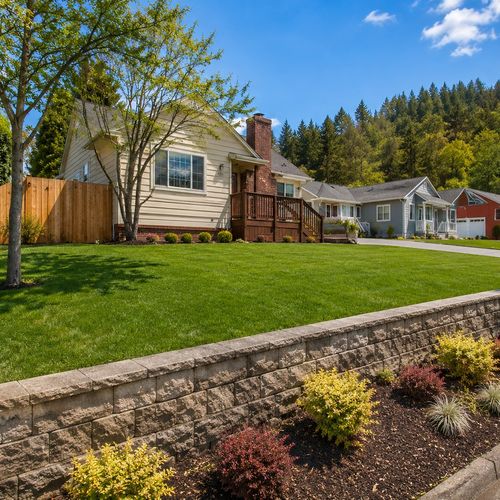
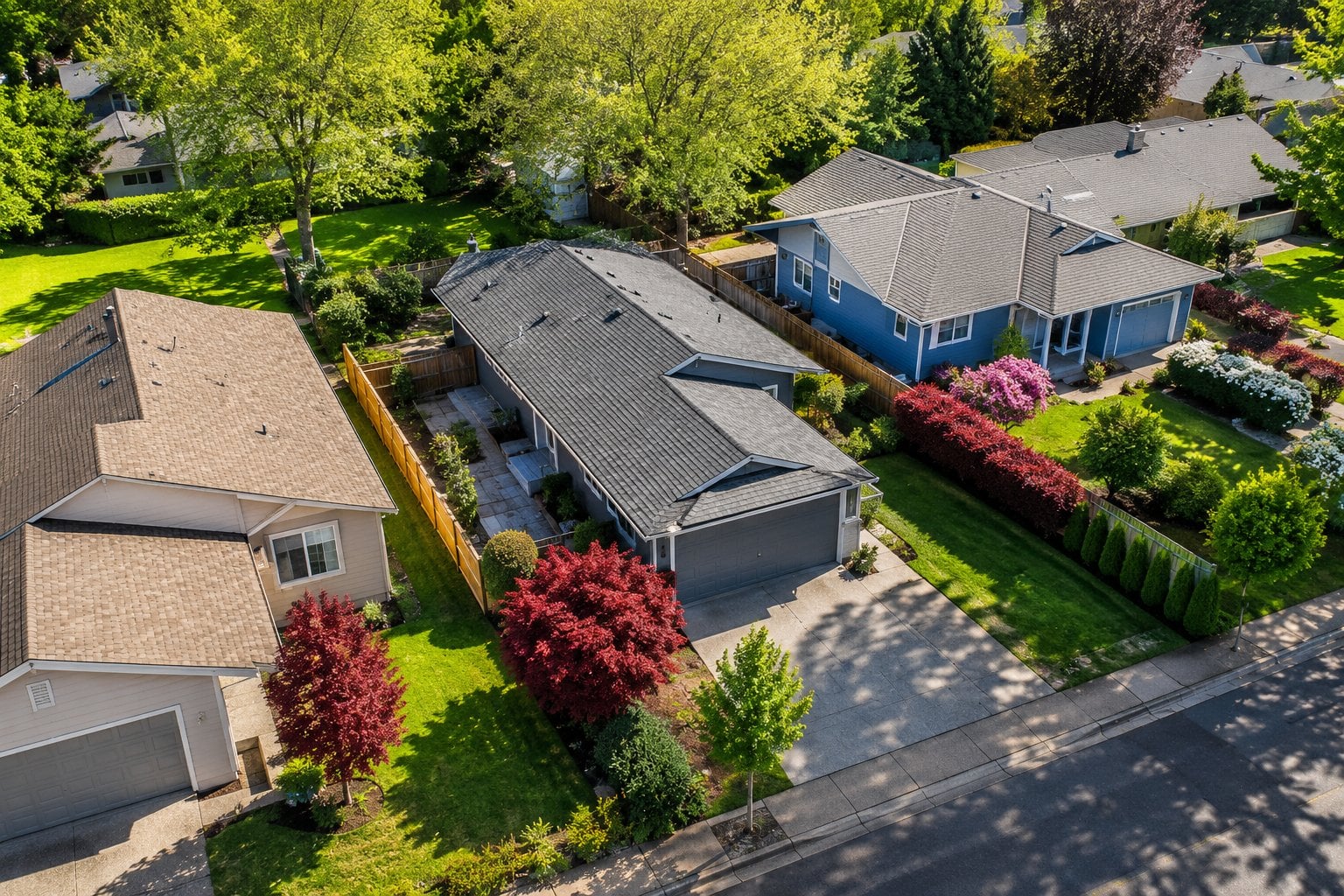
Lents is a neighborhood where the housing stock tells the story of who built this part of Portland and when — primarily early to mid-20th century single-family homes, a significant number of post-war bungalows and ranch-style properties, and more recent infill construction that ranges from thoughtfully integrated to generically inserted depending on who built it and with what level of care for the surrounding context. The lots here are consistently more generous than inner eastside counterparts at comparable price points — deeper yards, more usable outdoor space, and the kind of residential footprint that families with children or buyers who simply want room to exist without negotiating every square foot of their property find increasingly difficult to locate anywhere inside the Portland city limits at these numbers.
Here is a realistic look at what different price points deliver in this market:
$325,000 – $425,000 Entry-level Lents delivers older single-family homes — primarily 1920s through 1950s construction — in the 900 to 1,400 square foot range. Two to three bedrooms, one bath in most cases, and lots that consistently outperform what comparable money buys anywhere west of 82nd Avenue or north of Foster. Condition at this price point is variable in the honest way that older residential stock always is — some homes have been maintained by long-term owners who understood what they had and took the work seriously. Others carry the accumulated deferred maintenance of properties held through tight budgets or handed down without active upkeep. The architectural bones at this price point in Lents are frequently more interesting than the surface suggests — original wood floors under carpet, covered front porches with genuine proportion, built-in cabinetry that newer construction stopped building into homes a generation ago, and the kind of structural solidity that early 20th century Portland residential construction delivered when it was built to last rather than built to deliver a margin. Buyers who can read a home for its structure rather than its staging consistently find real opportunity in this range that buyers shopping for visual presentation overlook — and the inspection investment at this price point pays for itself in negotiating clarity before the offer rather than in surprises after closing.
$425,000 – $550,000 This is the most active and most revealing price band in the Lents market, where the neighborhood's value proposition becomes most clearly readable against the broader Portland context. Homes in this range tend to be updated or thoughtfully maintained single-family properties in the 1,200 to 1,800 square foot range — two to three bedrooms, one to two baths, kitchens that have been addressed with genuine intention in the last decade rather than flipped for resale margin, and yards that take advantage of Lents' lot-size advantage in ways that feel qualitatively different from what comparable money delivers anywhere closer to the city center. Some homes at the upper end of this range have been renovated with real care — original woodwork preserved and refinished rather than painted over, baths updated without erasing the home's period character, kitchens opened and modernized without destroying the spatial logic that made the house functional in the first place. These are the properties that reflect the best of what Lents' renovation wave has produced, and they represent a value proposition against inner SE Portland alternatives that is increasingly difficult to argue with as prices in those neighborhoods continue to move upward while Lents continues to close the gap on livability without closing the gap on price at anywhere near the same rate.
$550,000 – $700,000 Homes at this level represent the strongest residential product that Lents currently offers — fully renovated or custom-upgraded properties where owners have invested seriously and intelligently in bringing early 20th century structures to a contemporary living standard without sacrificing the architectural character that makes them worth the investment. Three bedrooms, two baths, kitchens and primary baths rebuilt at a level that competes directly with new construction on function and finish quality while retaining the proportions, the woodwork, the covered front porch presence, and the deep lot that newer builds cannot replicate at any price within the Portland city limits. Outdoor spaces at this tier reflect genuine Pacific Northwest outdoor living investment — covered decks, mature landscaping that has had decades to establish, privacy that newer construction neighborhoods spend years trying to grow and frequently never fully achieve. For buyers coming from higher-cost markets with real equity to deploy, or for buyers trading down from larger suburban properties who want to be inside Portland proper without paying inner eastside prices for less lot than Lents delivers at this number, this range offers the most complete version of what the neighborhood has to offer.
$700,000 and above The upper end of the Lents market is defined by the most extensively transformed properties in the neighborhood — homes where significant capital has been applied with genuine architectural intelligence, where additions have been executed in a way that honors the original structure's character rather than overwriting it, and where the combination of location, lot depth, finish quality, and neighborhood trajectory justifies the price for buyers who have been paying attention to what Lents is becoming rather than evaluating it against what it was. These properties are not common in Lents, which reflects both the neighborhood's still-evolving market position and the genuine scarcity of properties where every relevant variable comes together at this level simultaneously. When they surface, they attract buyers who have been watching the neighborhood long enough to understand what they represent — and those buyers tend to move with conviction rather than hesitation.
Median home price in Lents: The median sits in the $420,000 to $490,000 range — a figure that positions Lents as one of the most accessible inner-outer Portland neighborhoods with a genuine commercial corridor, MAX light rail access, and consistent lot sizes, while still reflecting the appreciation trajectory the neighborhood has sustained across multiple market cycles. Against inner SE Portland neighborhoods trading at $600,000 to $800,000 for comparable or smaller property footprints, Lents consistently delivers more per dollar across every metric that matters for actual daily livability — and the gap between where it prices and where it competes qualitatively is the core of the investment thesis that buyers who have been paying attention have already made.
What About Renting in This Area?
The Lents rental market is active in a way that reflects the neighborhood's growing desirability and its position as one of the more accessible entry points into outer SE Portland for renters who have been priced out of the neighborhoods immediately to the north and west. The inventory mix includes single-family homes, older duplexes and triplexes that reflect the neighborhood's early 20th century development pattern, newer apartment construction that has come online along the Foster Road and 92nd Avenue corridors as the neighborhood's commercial revival has attracted investment, and accessory dwelling units on single-family lots that reflect Portland's sustained effort to add gentle density to established residential neighborhoods.
Single-family rentals in Lents typically run between $1,700 and $2,800 per month depending on size, condition, lot character, and proximity to the Foster Road commercial corridor and MAX access. A two to three bedroom home in solid condition with a usable yard rents around $1,700 to $2,200. A larger, updated three to four bedroom home with quality finishes and meaningful outdoor space pushes into the $2,200 to $2,800 range. Apartments and smaller units along the neighborhood's commercial corridors start around $1,100 to $1,600 for studio and one-bedroom configurations, with two-bedroom units in newer construction running $1,500 to $2,100.
The neighborhood's MAX Green Line access — with the Lents Town Center and Foster Road stations connecting residents to downtown Portland and the broader light rail network — creates a baseline of transit-oriented demand that supports rental occupancy rates and makes well-located properties within walking distance of MAX access consistently competitive regardless of broader market fluctuations. For renters who commute by transit, Lents' light rail connectivity is a genuine and meaningful practical advantage over comparable price point neighborhoods in outer SE without the same access.
Well-priced rentals in good condition in Lents move quickly — not with the frantic multi-application dynamics of inner Portland rental competition, but with enough momentum that organized and decisive applicants have a meaningful advantage over those who are still evaluating options when the right property becomes available.
Things to Do In and Around Lents
Lents' position in outer Southeast Portland places residents within reach of one of the most trail-rich and creek-connected natural corridors in the Portland urban area, alongside the commercial and cultural infrastructure that the neighborhood's own commercial revival and its proximity to inner SE delivers.
Lents Park is the neighborhood's primary community green space and one of the most genuinely functional neighborhood parks in outer SE Portland — open athletic fields including a regulation baseball stadium that hosts amateur and semi-professional baseball through the summer season, playground infrastructure, open lawn, and the kind of community gathering capacity that reflects the investment the neighborhood has made in its own public spaces. The Lents International Farmers Market operates seasonally in the park and has built a following that draws from across the outer SE corridor.
Springwater Corridor Trail is the defining outdoor asset of the Lents area and one of the great urban trail accomplishments in the Pacific Northwest — a 21-mile multi-use trail running from the Willamette River waterfront in the Eastbank Esplanade eastward through the Johnson Creek corridor, through Lents and the Powell Butte area, and continuing through the outer SE landscape toward the city boundary and beyond. For cyclists, runners, and walkers, the Springwater is not a destination trail that requires a drive — it is the everyday outdoor infrastructure of Lents, accessible from within the neighborhood and connecting residents to the river, to Powell Butte, and to the broader outer SE trail network in both directions without leaving the path. It is the single most significant outdoor quality-of-life asset the neighborhood possesses, and buyers who use it regularly describe it as the thing they most underestimated about living here before they arrived.
Powell Butte Nature Park is accessible from the Springwater Corridor and delivers one of the most surprising natural experiences available within the Portland city limits — a volcanic butte rising above the outer SE landscape with summit meadows, forested trails, and panoramic views of five Cascade peaks including Mount Hood, Mount St. Helens, Mount Rainier, Mount Adams, and Mount Jefferson on clear days. The butte encompasses over 600 acres of natural area within the city boundary, and the trail network on and around it provides more variety and more genuine natural immersion than most Portland residents who have never visited it expect to find this close to their address.
Johnson Creek Corridor runs through the Lents area and has been the subject of sustained restoration work over the last two decades — stream daylighting, riparian habitat restoration, and the reconnection of the creek to a more natural hydrological function that has meaningfully improved the corridor's ecological value and the walking and cycling access along its banks. For residents of the surrounding neighborhoods, the creek corridor functions as a linear natural area that threads through the residential fabric in a way that makes the neighborhood feel less urban than the map suggests.
SE Foster Road commercial corridor has been the focus of the Lents Town Center urban renewal effort and has developed meaningfully over the last decade — independently owned restaurants, bars, coffee shops, and retail that reflect genuine community investment rather than developer-driven retail programming. The corridor is not finished — it is visibly in process in the way that neighborhoods undergoing genuine commercial revival always are — but the direction is clear and the businesses that have committed to it reflect a quality and character consistent with what the surrounding community is becoming rather than what it has historically been.
SE 82nd Avenue is immediately to the west and functions as one of the most diverse and genuinely interesting food streets in Portland — a commercial corridor that has built a reputation for ethnic dining and independent restaurants representing a range of cuisines that makes it a destination for food-oriented Portlanders from across the metro. For Lents residents, 82nd Avenue is a neighborhood resource rather than a drive-to destination, which is one of the underappreciated practical advantages of living this close to a corridor that draws diners citywide.
The MAX Green Line connects Lents to the Gateway Transit Center, downtown Portland, and the broader TriMet light rail network from the Foster Road and Lents Town Center stations — providing car-free access to inner Portland, the Pearl District, and the city's major employment and cultural centers for residents whose daily routine can accommodate transit. For households with one car or buyers who commute to inner Portland employment centers, the light rail access meaningfully changes the cost and convenience calculation of living in outer SE versus paying the inner eastside premium for the same transit connection.
The Columbia River Gorge is 25 to 35 minutes from Lents via I-205 north toward the Vista House approach on the Oregon side, or east along the Historic Columbia River Highway — one of the most accessible Gorge approaches available from a Portland address, placing waterfall hikes, Cape Horn, Hood River, and the full Gorge corridor within practical reach for a spontaneous Saturday plan rather than a committed expedition.
Downtown Portland is 25 to 35 minutes by car or accessible via the MAX Green Line — the Pearl District, the waterfront, Moda Center, OHSU, major medical at Legacy Emanuel and Providence, and the full urban infrastructure of a Pacific Northwest city available when the occasion calls for it without defining the pace of daily life in outer SE the way it does for residents of inner neighborhoods.
Where to Eat
Lents and the surrounding Foster Road and 82nd Avenue corridors have developed a food scene that reflects the neighborhood's character — unpretentious, locally rooted, ethnically diverse, and better than the neighborhood's outer Southeast address leads visitors arriving with inner eastside expectations to assume.
Luce on SE Foster is the neighborhood's most celebrated restaurant — a wood-fired Italian kitchen that has earned a devoted following well beyond Lents' own residential base and demonstrated clearly that the Foster Road corridor can support genuinely excellent food in a way that skeptics questioned when it opened. The kind of restaurant that changes how people think about a neighborhood simply by being there and being as good as it is.
Foster Beer Works anchors the craft beer presence on the Foster corridor — a taproom and brewery that has built genuine community traction as a neighborhood gathering point, with a beer program serious enough to draw visitors from across Portland's competitive craft beer landscape while remaining accessible and unpretentious enough to function as a regular local for residents who live within walking distance.
Driftwood brings a Pacific Northwest comfort food sensibility to the Foster corridor with a menu and atmosphere that reflects the neighborhood it sits in — warm, unpretentious, and executed with enough care to earn the regulars that define a neighborhood restaurant's success over time rather than its opening weekend.
Boke Bowl brings a creative ramen and Pacific Rim bowl concept to outer SE in a way that has connected with the neighborhood's residents and drawn visitors from the inner eastside who made the drive and found it worth making again. Casual, distinctive, and consistently good in a way that reliable neighborhood restaurants earn through repetition rather than novelty.
The SE 82nd Avenue dining corridor is the immediate western neighbor of Lents and one of Portland's most genuinely diverse and celebrated food streets — Vietnamese restaurants including some of the finest pho in the city, Korean barbecue, Chinese dim sum, Mexican, Ethiopian, and a rotating cast of independent operators representing cuisines from across Southeast Asia and Latin America. For Lents residents, this corridor functions as a neighborhood dining resource of extraordinary variety and value that most Portland neighborhoods considerably further from it treat as a destination worth the drive.
Taqueria Los Gorditos on SE Powell brings one of Portland's most beloved Mexican food institutions within reach of Lents residents — a taqueria with a following that crosses every demographic and every Portland neighborhood and that earns its reputation through the consistency of what comes out of the kitchen rather than through the energy of what surrounds it.
Expatriate — a bar and Southeast Portland institution known as much for its cocktail program as for its bar snacks — is accessible from Lents and represents the kind of craft cocktail culture that inner Portland neighborhoods have built their evening reputations around, available to outer SE residents without the inner eastside drive or the inner eastside prices.
Coffee infrastructure along Foster Road and the 92nd corridor has developed enough independent coffee shop presence to support a genuine daily routine without leaving the neighborhood — the kind of coffee culture that reflects a neighborhood's confidence in its own commercial future rather than its reliance on national chains to anchor its retail.
The honest framing: Lents is a neighborhood where the immediate dining scene is developing genuinely and visibly without yet being exhaustive. The Foster corridor has momentum, the 82nd Avenue corridor immediately to the west compensates for any gap in local variety with extraordinary diversity, and inner Southeast Portland is 20 to 25 minutes for anything more ambitious. Residents who engage with what is already here and treat 82nd Avenue as a neighborhood resource rather than a separate destination tend to find the dining experience of living in Lents significantly richer than the neighborhood's outer SE address initially suggests.
Who Buys in Lents?
After nearly three decades working both sides of the river, the Lents buyer is a profile I find increasingly interesting and increasingly diverse — a reflection of a neighborhood that is attracting a wider range of buyers than it did a decade ago without losing the working-class community roots that give it the character buyers are increasingly paying a premium to access in neighborhoods that have already lost them.
They are Portland professionals and creative households who have been priced out of Division, Belmont, Mississippi, and the inner eastside neighborhoods they originally targeted and who found, upon honest investigation, that Lents delivers more of what they were actually looking for — lot size, architectural character, community identity, MAX access, and Springwater Trail connectivity — at a price that the inner eastside stopped offering years ago. They are buyers who have done the math and found that the additional 15 minutes of drive time to inner Portland is compensated many times over by the additional square footage, the additional yard, and the additional financial breathing room that buying in Lents rather than in inner SE provides.
They are first-time buyers who have been watching the Portland market long enough to understand that the neighborhoods with the most Instagram recognition are not always the neighborhoods with the most durable value trajectory, and who have found Lents through the process of looking honestly at what their budget can deliver across the city rather than limiting the search to the corridors that most buyer conversations start in and many buyer budgets cannot sustain.
They are buyers from California, Seattle, and other high-cost markets who have come to Portland with real equity and enough market sophistication to recognize that outer SE Portland's best neighborhoods are in the middle of an appreciation cycle that inner SE completed a decade ago — and who are buying with the clear-eyed understanding that Lents today occupies a market position relative to the rest of Portland that Division occupied in 2008, with the Springwater Trail and the light rail access providing structural advantages that Division never had.
They are outdoor-oriented households for whom the Springwater Corridor's 21-mile trail network, Johnson Creek, and Powell Butte's summit meadows represent daily quality-of-life assets rather than weekend options — buyers who want to walk out their door and onto a regional trail that connects them to the river without a car, and who found that Lents is one of the few Portland neighborhoods where that is genuinely true and genuinely close.
They tend to be buyers who stay. The combination of the trail access, the neighborhood trajectory, the lot sizes, and the financial structure of a purchase that left margin for the rest of their life means that buyers who arrive in Lents with conviction tend to build something there rather than treating it as a bridge to the next move.
What You Should Know Before You Commit
Lents is a neighborhood in genuine transition, and the buyers who engage with that fact honestly — rather than projecting either a fully arrived neighborhood or a neighborhood too uncertain to commit to onto what is actually a neighborhood in productive and visible forward motion — tend to find that the timing of their decision is one they look back on favorably.
The transition is real and it is uneven. The Foster Road corridor has blocks that reflect the neighborhood's investment and momentum directly alongside blocks that reflect its older commercial character more than its newer direction. Walking the neighborhood at different times and in different directions — not just the blocks nearest the listings you are considering, but the broader residential and commercial fabric — is the right pre-offer due diligence rather than an optional step.
The neighborhood's eastern and southern edges, where the residential fabric approaches the Johnson Creek floodplain, include some properties with flood zone designations that affect insurance requirements and in some cases structural considerations. Confirming the specific flood zone status of any property you are considering seriously in these areas before the offer rather than during the inspection period is the right sequence.
The MAX Green Line is a genuine asset and also a corridor — the elevated rail section through the Foster Road area has the acoustic footprint that urban light rail infrastructure produces, which registers differently depending on your specific property's orientation and distance from the line. Worth understanding specifically for the properties you are evaluating rather than as a general neighborhood characteristic.
None of these are disqualifying factors for the right buyer with clear eyes. They are the honest context that makes the conversation useful before the offer rather than after — which is the only time it is genuinely useful.
Thinking About a Home in Lents?
The Lents market is moving with the rhythm of a neighborhood that more buyers are discovering each year, and well-priced properties in good condition at the quality end of the market do not develop extended days on market the way they did a decade ago. I know outer SE Portland, I know the Foster Road and Springwater corridor at the level this neighborhood deserves, and I will give you a straight read on what is available, what it is worth, and whether Lents is the right fit for the specific life you are building rather than the neighborhood you thought you were looking for when the search started.
See more about Lents
Want to learn more about Lents neighborhoods and homes?
Homes for sale in Lents: https://jamiemeushawrealestate.com/properties/neighborhood-Lents,%20Portland,%20OR/
Watch more local real estate insights on my YouTube channel:
https://www.youtube.com/@JamieMeushaw
Sign up for my weekly newsletter for real estate tips and market updates:
https://jamiemeushawrealestate.com/newsletter
Check out this article next