


Where Exactly Is Maywood Park?
Maywood Park is a small incorporated city in Multnomah County, Oregon, completely encircled by the city of Portland in the northeast quadrant of the metro. It sits north of NE Sandy Boulevard, east of NE 102nd Avenue, and is bordered on its northern edge by the Portland Airport corridor — making it one of the most uniquely positioned residential communities in the entire Pacific Northwest. The city was incorporated in 1967 specifically to preserve its residential character and prevent annexation by Portland, a decision that has defined its identity ever since and continues to distinguish it from every surrounding neighborhood.
The community is served by Portland Public Schools, giving residents access to the full PPS network of schools, programs, and resources that the district provides across the metro. For families with school-age children, specific school assignments and magnet or focus option programs available through PPS are worth researching early, as Portland's school choice landscape offers more variation than a standard neighborhood assignment system and rewards buyers who engage with it deliberately.
Portland International Airport is approximately 2 to 4 miles from Maywood Park — and that proximity deserves both celebration and honest acknowledgment simultaneously. PDX is closer to Maywood Park than it is to most Portland neighborhoods by a significant margin. A typical drive to the airport runs 8 to 15 minutes depending on traffic and time of day, which for frequent travelers, households with family in other states, or anyone who values airport access as a practical daily asset is a genuine and meaningful quality-of-life advantage. The honest counterpart to that proximity is aircraft noise — Maywood Park sits within the flight path corridor that serves PDX, and the sound of commercial aircraft overhead is a real and consistent feature of daily life here. It is not overwhelming for everyone, and many residents genuinely stop noticing it with time. But it is real, it is audible, and buyers who are sensitive to ambient noise should spend time in the neighborhood at different hours before committing rather than discovering its significance after closing.
What Your Money Gets You: Homes at Every Price Point
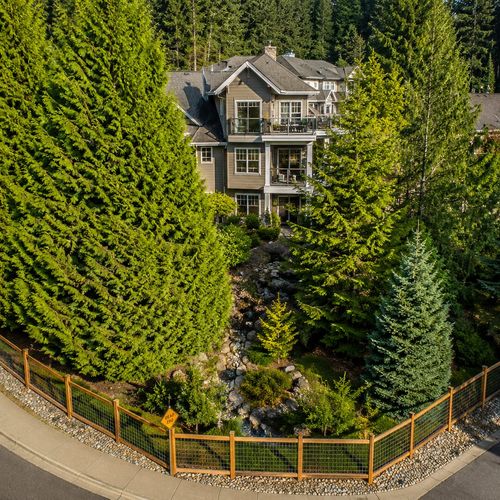
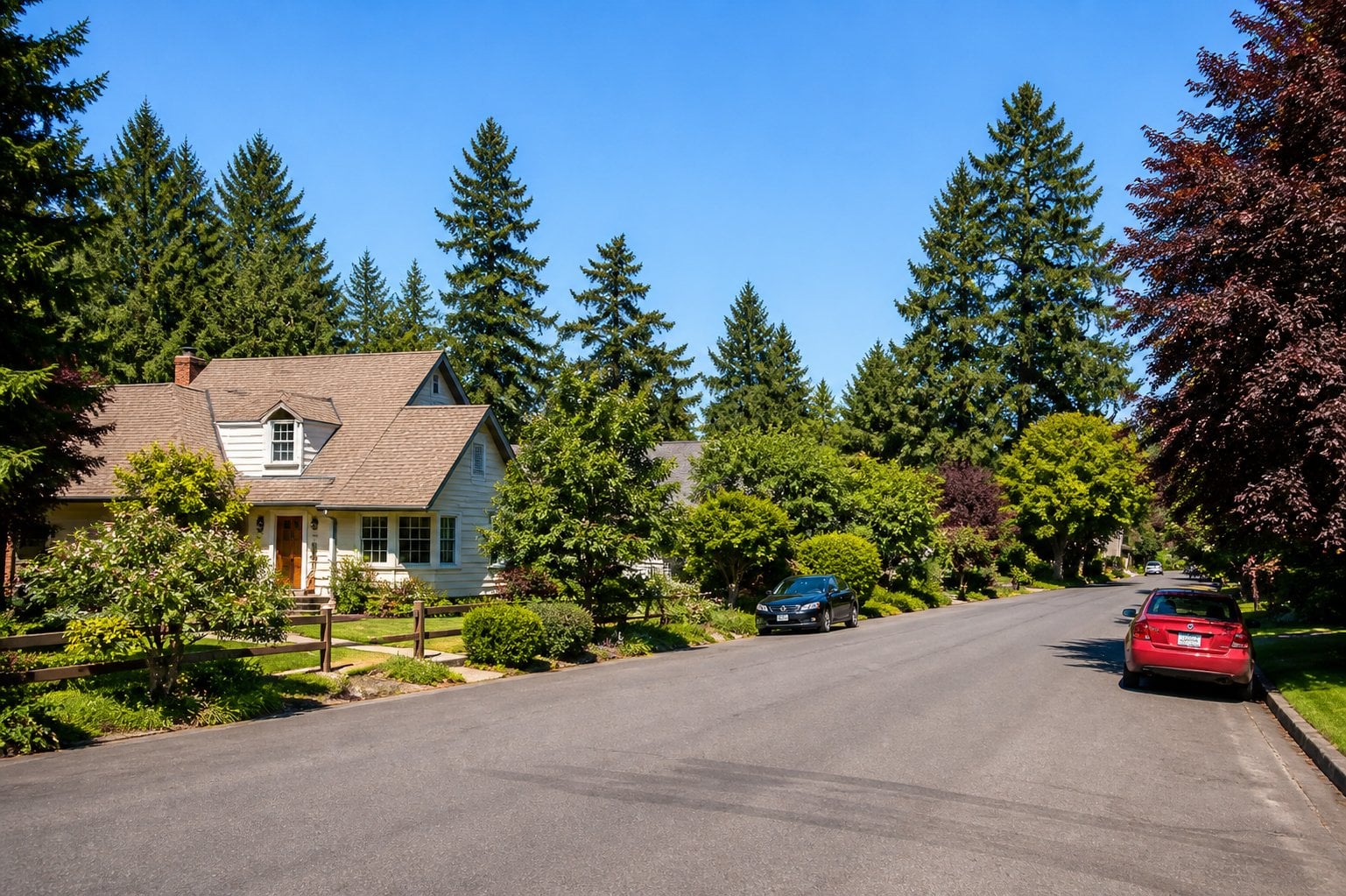
Maywood Park is a small, established residential community with a housing stock that reflects its origins — primarily mid-century single-family homes built from the late 1940s through the 1960s on lots that are generous by inner-Portland standards, in a neighborhood that prioritized residential stability over density from the moment it incorporated. New construction is essentially nonexistent within the city's tight geographic boundary. What the market offers is resale inventory with genuine character, meaningful lot sizes, and the kind of neighborhood maturity that newer developments spend decades trying to grow into.
Here is a realistic look at what different price points deliver in this market:
$350,000 – $450,000 At the entry level for Maywood Park, you are looking at the older residential stock that defines the community's core — mid-century homes in the 900 to 1,400 square foot range, two to three bedrooms, one bath in most cases, and lots that tend to be more generous than anything comparable in denser inner Portland neighborhoods at this price point. Condition at this range varies with honesty. Some homes have been maintained thoughtfully by long-term owners who treated them as permanent investments. Others carry deferred maintenance that surfaces in an inspection and needs to be priced into both the offer and the post-closing budget. The value here is in the lot size, the neighborhood stability, and the location — not in turnkey finishes. Buyers who can evaluate a mid-century home for its structure and systems rather than its surface tend to find real opportunity in this range that buyers shopping only for visual appeal consistently overlook.
$450,000 – $575,000 This is the most active price band in the Maywood Park market and where the neighborhood's value proposition becomes most clearly readable. Homes in this range tend to be updated or well-maintained single-family properties in the 1,200 to 1,800 square foot range — two to three bedrooms, one to two baths, kitchens that have been refreshed with genuine intention in the last decade, and yards with usable space that reflects Maywood Park's lot-size advantage over the denser Portland neighborhoods that surround it. Some homes at the upper end of this range have been renovated thoughtfully — new roofs, updated electrical and plumbing, remodeled baths and kitchens — and represent the clearest examples of what this market delivers at a price point that remains accessible relative to comparable Portland neighborhoods with more name recognition. Buyers who do their homework here find a neighborhood that rewards specificity over brand awareness.
$575,000 – $725,000 Homes at this level represent the best of what Maywood Park offers in terms of condition, size, and overall livability. Updated or extensively renovated single-family properties in the 1,600 to 2,200 square foot range — three bedrooms, two baths, kitchens and baths that reflect genuine investment, and outdoor spaces that take advantage of the lot sizes this neighborhood delivers in a way that inner Portland properties at comparable prices typically cannot match. Some homes in this range have been fully transformed from their mid-century bones into properties that compete directly with new construction on finish quality while retaining the lot depth, mature tree coverage, and neighborhood character that new builds elsewhere in the metro cannot replicate. For buyers coming from higher-cost markets or trading down from larger suburban properties, this range delivers a compelling combination of quality, location, and value that is difficult to find anywhere else this close to downtown Portland and PDX simultaneously.
$725,000 and above The upper end of the Maywood Park market is defined by the most extensively renovated or custom-upgraded properties in the neighborhood — homes where owners have invested significantly in bringing mid-century structures to a contemporary standard without erasing the architectural character that makes them worth preserving. Four bedrooms, multiple living areas, fully rebuilt kitchens, primary suites added through thoughtful additions, and outdoor spaces that function as genuine extensions of the living footprint. Properties at this level in Maywood Park represent the intersection of Portland metro location, PDX proximity, neighborhood stability, and finish quality — a combination that justifies the price point for buyers who place high value on all four simultaneously.
Median home price in Maywood Park: The median in this market sits in the $470,000 to $540,000 range — a figure that positions Maywood Park as genuinely accessible relative to many inner Portland neighborhoods with higher name recognition while delivering lot sizes, neighborhood character, and airport proximity that those neighborhoods cannot match. For buyers who have been running Portland metro numbers and finding that what they want costs more than what they have, Maywood Park consistently surfaces as the option that makes the math work without requiring a meaningful lifestyle concession.
What About Renting in This Area?
The rental market in Maywood Park reflects the community's predominantly owner-occupied character — turnover is slow, inventory is limited, and well-priced rentals in good condition find tenants quickly through a combination of local networks and brief public-facing exposure. This is not a neighborhood with large apartment complexes or purpose-built rental communities. What rental inventory exists is almost entirely single-family homes offered by individual landlords, many of whom are long-term area residents who know the neighborhood and select tenants accordingly.
Single-family rentals in Maywood Park and the immediately surrounding northeast Portland corridor typically run between $1,800 and $3,000 per month depending on size, condition, lot character, and recency of updates. A two to three bedroom home in solid condition with a usable yard rents around $1,800 to $2,400. A larger, updated three to four bedroom home with meaningful outdoor space and quality finishes pushes into the $2,400 to $3,000 range. Smaller and older inventory without recent updates tends to sit at the lower end of that range and can represent strong value for renters who prioritize location and space over contemporary finishes.
The broader northeast Portland rental market immediately surrounding Maywood Park provides additional options across apartment, duplex, and single-family configurations at price points that reflect the neighborhood's position — more accessible than inner SE or NW Portland, closer to PDX than almost any other established residential neighborhood in the metro.
If you are relocating and planning to rent before purchasing, Maywood Park and the surrounding corridor give you a realistic shot at finding something worthwhile without an extended search — provided you are organized, decisive, and ready to commit when something appropriate surfaces. The best rentals in this area do not develop waiting lists, but they do move within days of becoming available to qualified applicants who are ready to act.
Things to Do In and Around Maywood Park
Maywood Park's location in northeast Portland puts residents within reach of one of the most activity-rich urban environments in the Pacific Northwest, with the added benefit of the Columbia River corridor and its natural amenities immediately to the north.
Columbia Slough Trail runs along the waterway system north of the neighborhood and provides multi-use trail access through wetland habitat, open water, and the natural landscape of the Columbia River floodplain that sits in productive tension with the urban development surrounding it. Bird watching, cycling, and walking access through a natural corridor that most Portland residents drive past without knowing it exists at the level it does.
Columbia Park in the broader north Portland area provides open green space, athletic fields, and community park infrastructure that serves the surrounding residential neighborhoods as a gathering point and recreational anchor. Accessible and well-maintained in the way that established Portland parks tend to be.
Gateway Discovery Park is a short distance from Maywood Park and functions as one of the more significant community green spaces in the outer northeast Portland corridor — a developed park with walking paths, open lawn, and the kind of accessible outdoor infrastructure that urban residential neighborhoods depend on for daily quality of life.
The 205 Multi-Use Path runs along the I-205 corridor and provides one of the better urban cycling and walking connections in the Portland metro — a dedicated path that links neighborhoods from the Columbia River south toward the Springwater Corridor and gives residents a car-free option for recreational movement that connects to the broader Portland trail network. For cycling-oriented buyers, this connectivity is a genuine and underappreciated asset of living in this corner of the city.
Marine Drive Trail follows the Columbia River along its south bank and delivers one of the most pleasant and scenically distinct cycling and walking experiences available in the Portland metro — wide open river views, Mount Hood and Mount St. Helens on clear days, and the kind of horizon that most Portland neighborhoods cannot offer regardless of how well-positioned they are in other ways. From Maywood Park, Marine Drive is minutes away and functions as a regular destination rather than a special trip.
Portland International Airport itself — acknowledged with a straight face — is genuinely a recreational and cultural asset for residents this close to it, in the sense that the Tom McCall Terminal building, the Japanese Garden within the terminal, and the airport's public art collection make PDX one of the more architecturally and culturally engaging airports in the United States. For residents of Maywood Park who travel even occasionally, the airport functions as a seamless extension of daily life rather than a logistical event.
The Hollywood District in northeast Portland is a short drive or bike ride away and provides one of the more vibrant and locally authentic commercial and dining corridors in the city — independent restaurants, bars, the historic Hollywood Theatre showing first-run and repertory film, and the kind of neighborhood commercial energy that reflects genuine community investment rather than planned development.
The Alberta Arts District is accessible to the west and remains one of Portland's most culturally alive neighborhood corridors — galleries, independent restaurants, Last Thursday art walk events, and a street-level energy that reflects the creative community that has built its life along Alberta Street for decades.
Downtown Portland is 20 to 30 minutes by car or accessible via MAX light rail from nearby stations — the full urban infrastructure of a Pacific Northwest city, including the Pearl District, the waterfront, concert venues, professional sports, major medical facilities, and the cultural institutions that make Portland a legitimate destination for visitors from across the region.
Columbia River Gorge is 25 to 35 minutes east — one of the great outdoor corridors in North America, with waterfall hikes, Cape Horn, Dog Mountain, Hood River, and the full Gorge experience accessible from Maywood Park faster than from almost any other established Portland neighborhood. The proximity to the Gorge entrance is one of the most underappreciated outdoor access advantages of living in northeast Portland versus any other Portland quadrant.
Vancouver, WA is across the river — and for Maywood Park residents who work or spend time in Clark County, the bridge crossing is as short as it gets from a Portland address. The reverse commute dynamic that makes Clark County an attractive base for Portland workers exists in useful form for Maywood Park residents who move in both directions professionally.
Where to Eat
Maywood Park sits within the broader northeast Portland dining ecosystem, which is one of the more varied, locally rooted, and genuinely good restaurant environments in the city. The immediate neighborhood is residential in character, so the dining experience draws from the surrounding corridors rather than from a walkable main street within the city's own boundaries — but those corridors are close, accessible, and deliver real quality.
The Hollywood District is the nearest concentrated dining destination and one of the better neighborhood restaurant corridors in all of Portland. A genuine mix of cuisines, price points, and dining formats — from casual neighborhood spots to serious restaurants worth planning a night around — with the Hollywood Theatre anchoring the street-level energy in a way that keeps the corridor active across the full week rather than just on weekend evenings.
Bangers and Brews and the broader craft beer and casual dining ecosystem along the northeast Portland corridors provide the everyday options that make residential life in this part of the city practical and enjoyable without requiring a drive to the west side or downtown for a reliable meal.
East Burnside and NE Sandy corridors between the neighborhood and the Hollywood District provide a continuous range of casual dining, coffee, and quick-service options that serve the surrounding community for weekday lunches, coffee routines, and the kind of low-commitment weeknight dining that urban residential neighborhoods depend on.
Pho and Vietnamese dining along the 82nd Avenue corridor — one of the most celebrated and diverse food streets in Portland — is immediately accessible from Maywood Park and represents one of the genuine culinary assets of living in this corner of the city. The 82nd Avenue food corridor delivers quality and variety that draws diners from across the metro, and residents of Maywood Park have it effectively as a neighborhood resource.
The Alberta Arts District to the west is the destination for a proper dining night out within the northeast quadrant — multiple independently owned restaurants across price points and cuisines, including some of Portland's most celebrated neighborhood spots, accessible within a reasonable drive.
Downtown Portland is 20 to 30 minutes for the full Portland dining landscape — James Beard-recognized restaurants, the Pearl District dining scene, the waterfront, and the broader culinary infrastructure of a city that takes food seriously. For Maywood Park residents, that access is available when it serves them without defining their daily experience.
The honest framing worth stating directly: Maywood Park is a residential enclave, not a dining destination. Its value is in what surrounds it — the Hollywood District to the west, the 82nd Avenue corridor to the south, and the broader northeast Portland dining ecosystem that is genuinely excellent by any regional standard. Residents who come from cities with walkable neighborhood main streets will find the adjustment to a driving-or-cycling dining culture natural within the Portland context.
Who Buys in Maywood Park?
After nearly three decades working both sides of the river, the Maywood Park buyer is a profile I recognize for a specific combination of qualities — they want to be inside the Portland metro rather than adjacent to it, they care about airport proximity in a way that most Portland buyers mention but few actually prioritize, and they have been looking carefully enough at the northeast Portland market to find a neighborhood that most buyers drive past without knowing it has its own identity.
They are frequently Portland professionals who want the Oregon side of the river for employment, lifestyle, or community reasons but have been priced out of the inner eastside neighborhoods they initially targeted and found, upon honest evaluation, that Maywood Park delivers a superior lot size and neighborhood stability at a price point that those neighborhoods no longer offer. They are buyers who have been running the math on Portland real estate long enough to understand that name recognition and actual livability are not the same thing.
They are frequent travelers or households with one partner who flies regularly for work, for whom 10 minutes to PDX is not a marketing line but a weekly quality-of-life factor that compounds meaningfully over a career. The difference between a 12-minute airport run and a 45-minute airport run across the lifetime of a frequent flyer is not trivial — it is hundreds of hours and a measurable reduction in the friction that travel imposes on the rest of life.
They are buyers who have thought about the aircraft noise question seriously, spent time in the neighborhood at different hours, and concluded — correctly for their specific sensitivity level — that the trade is worth it. And they are buyers who appreciate that they have found a community with genuine identity and genuine governance in a small city that has protected its own character for over fifty years and shows no signs of stopping.
What You Should Know Before You Commit
Maywood Park asks one thing of buyers above all else, and it is the aircraft noise question. Everything else about this community — the lot sizes, the neighborhood stability, the PDX proximity, the price point, the access to Portland and the Gorge simultaneously — works strongly in its favor. The noise is the variable, and it is genuinely variable: some residents find it negligible within weeks of moving in. Others find it a persistent presence that they never fully tune out. The honest answer is that you will not know which category you fall into until you spend meaningful time in the neighborhood at different times of day and on different days of the week.
I will always tell a buyer to do that before we write an offer here — not because I think the noise will disqualify it for them, but because the conversation is only useful before the purchase, not after. That is how I work across the board, and Maywood Park is a clear case where the pre-purchase visit matters more than the photography.
Beyond that, the community's small-city governance structure is worth understanding — Maywood Park has its own city government, its own planning process, and its own community character that has been deliberately maintained for decades. For buyers who value community stability and neighborhood identity, that structure is an asset. For buyers who want the anonymous flexibility of a large city, it may feel more close-knit than they anticipated.
Thinking About a Home in Maywood Park?
Inventory in this small community turns slowly and when it does surface, it tends to attract organized buyers quickly. I work both sides of the river and know the northeast Portland market well enough to give you a straight read on what is available, what it is actually worth, and whether Maywood Park is the right fit for the specific life you are trying to build.
See more about Maywood Park
Want to learn more about Maywood Park neighborhoods and homes?
Homes for sale in Maywood Park: https://jamiemeushawrealestate.com/properties/place-Maywood%20Park,%20OR/
Watch more local real estate insights on my YouTube channel:
https://www.youtube.com/@JamieMeushaw
Sign up for my weekly newsletter for real estate tips and market updates:
https://jamiemeushawrealestate.com/newsletter
Check out this article next